Children 12 and under walk into Hanauma Bay free. Their parents need a $25 reservation that opens 48 hours ahead at 7am Hawaiʻi time and is often gone within minutes, and that, more or less, is Hawaii with kids in miniature: the islands are wonderfully easy on families once the logistics are sorted, and surprisingly unforgiving when they aren’t.
The good news is that the logistics are finite. Choose the island for the ages you’re travelling with, book the handful of things that genuinely need booking, sort the car seats before you land, and leave the rest of each day loose. Children here need far less entertaining than parents expect. Give them calm water in the morning, a nap or a quiet hour after lunch and a shave ice somewhere around three o’clock, and most days run themselves.
Prices, hours and booking windows were checked in September and October 2026; where we couldn’t confirm a number, we’ve left it out rather than guess.
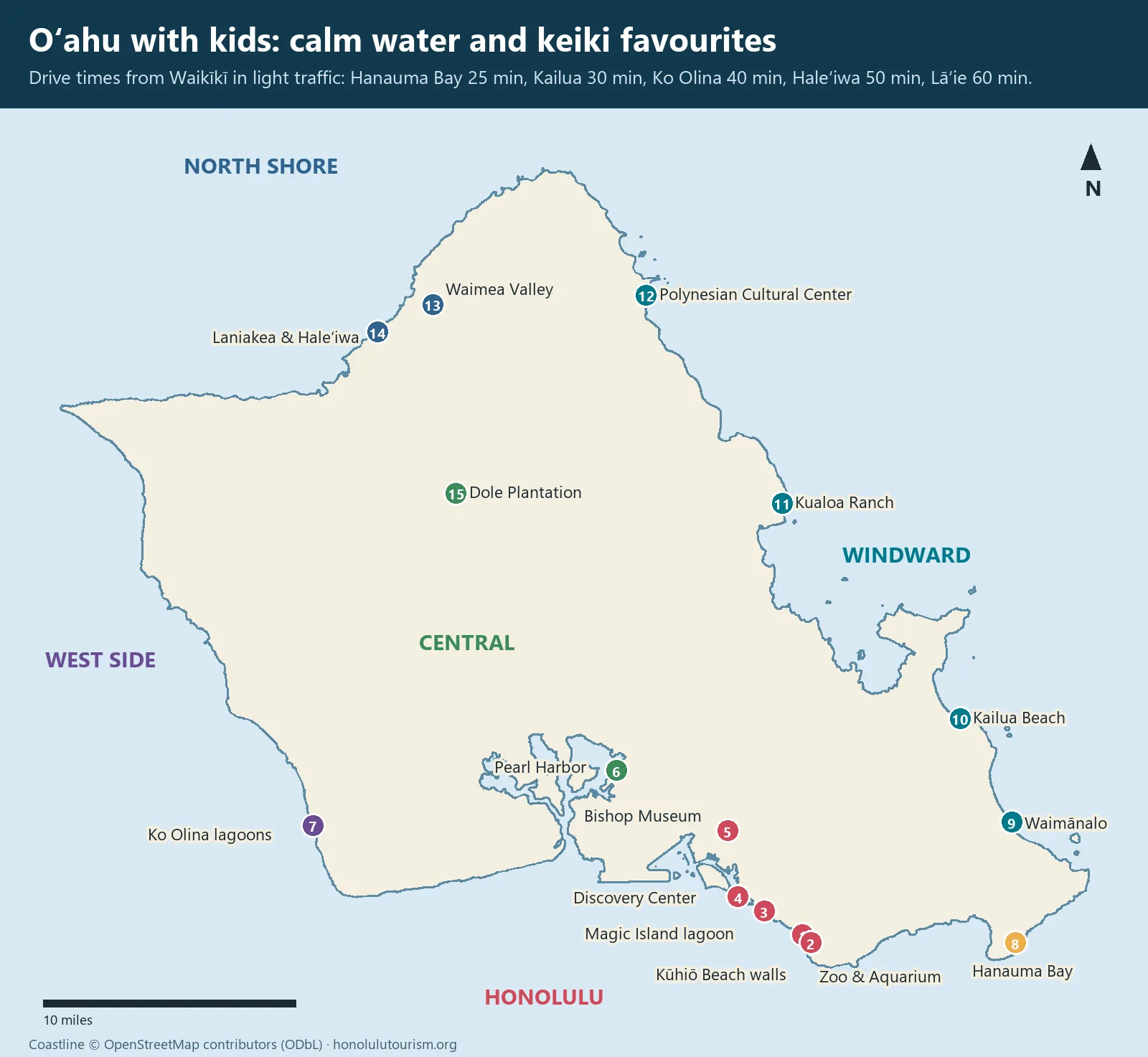
Hawaii with Kids: Which Island Suits Your Family
For a first family trip, start with Oʻahu. That’s not sentiment; it’s arithmetic. Oʻahu has the most lifeguarded beaches in the state (the city staffs 44 towers from 8am to 6:30pm every day), the most calm-water options within half an hour of a hotel, an aquarium and a zoo a short walk from Waikīkī’s sand, and it’s the one Hawaiian island where a car-free trip genuinely works. Elsewhere you’ll drive everywhere, usually with someone asking if you’re there yet.
Maui suits families who want a resort-and-beach week and don’t mind a hire car. The west and south coasts have long sandy beaches with hotels behind them, the Haleakalā sunrise is extraordinary for children old enough to survive a 3am alarm, and Molokini snorkel trips are well run (PacWhale Eco-Adventures’ starts at $174.95 with breakfast and lunch). Before you book, know that Maui County bans the use of non-mineral sunscreen, not just its sale. And Lahaina is still rebuilding after the 2023 fire: Front Street reopened to traffic on 1 August 2026, but the historic core is largely empty lots and construction fencing, and recovery areas are not a sightseeing stop.
Hawaiʻi Island, the Big Island, suits school-age children who love volcanoes and can handle long drives. Hawaiʻi Volcanoes National Park charges $30 per vehicle for seven days, and when Kīlauea’s episodic eruption is in an active phase, the glow from the caldera rim is something a ten-year-old talks about for years. But children under 13 shouldn’t go above the Maunakea visitor station, and vog, the volcanic haze, is hard on children with asthma.
Kauaʻi is the most beautiful and, for little ones, the least practical: fewer calm, guarded beaches, more north-shore rain, and headline sights that suit older children. It also took the worst of Hurricane Lowell; in mid-September 2026 every Kauaʻi state park, Waimea Canyon included, was closed until further notice. By DLNR’s 13 October update, Hāʻena State Park was reopening on 15 October, but Kōkeʻe Road and most other Kauaʻi state parks remained closed, so check the Division of State Parks’ current closures before you commit.
With children under six, stick to one island per week. Each interisland hop eats most of a day, and a tired four-year-old does not care which island the hotel pool is on. Our full comparison of which Hawaiian island to visit goes deeper; this is the family cut.
| Island | Best ages | Calm-water swimming | Driving | Big draws for kids | Watch out for |
|---|---|---|---|---|---|
| Oʻahu | Babies to teens | Best in the state: Kūhiō Beach, Ko Olina, Magic Island, Kailua | Least; bus and rail work | Aquarium, zoo, Hanauma Bay, Pearl Harbor, surf lessons | Booking windows, Waikīkī crowds |
| Maui | Toddlers to teens | Good on the west and south resort coasts | Car essential | Haleakalā sunrise, Molokini snorkel boats, whales in winter | Mineral-only sunscreen law, Lahaina recovery zone |
| Hawaiʻi Island | 6 and up | Limited; mostly Kona side | Long distances | Volcanoes National Park, manta night snorkel, black-sand beaches | Vog, Maunakea altitude |
| Kauaʻi | 8 and up | Limited and seasonal | Moderate | Nāpali boat trips, Waimea Canyon | Post-Lowell park closures, north-shore rain |
Hawaii with Kids, Age by Age
A baby, a five-year-old and a fifteen-year-old want completely different things from the same stretch of sand, and the logistics change at almost every birthday.
| Age | Works brilliantly | Save for later | Logistics that matter |
|---|---|---|---|
| Under 1 | Shady mornings at Kūhiō Beach or Ko Olina, Kapiʻolani Park stroller walks, the aquarium | Day tours, boats, Diamond Head without a carrier | Lap infants fly free on domestic flights; car seat required by law; shade above all |
| 1–3 | Kūhiō’s walled pools, Magic Island lagoon, the zoo, the Children’s Discovery Center | Snorkel tours, late lūʻau, long drives | Car seat by law; nap from about 12:30; one under-6 rides TheBus free |
| 4–5 | Dole Plantation’s maze and train, Hanauma Bay’s shallows, canoe rides | Pearl Harbor’s memorial, full-day tours | Booster or car seat; still free on the bus and at Hanauma |
| 6–9 | First snorkel at Hanauma, a surf lesson, Diamond Head, Kualoa Ranch’s film sites | Strenuous ridge hikes, UTV tours | Booster until 4 ft 9 in; youth bus fare $1.75 |
| 10–12 | Pearl Harbor and Ford Island, Makapuʻu Lighthouse Trail, Polynesian Cultural Center | Very little | Last years of free Hanauma entry and child rates |
| 13–17 | Kualoa UTVs, kayaking to the Mokulua islands, Koko Crater stairs, Haleakalā sunrise | Nothing, except the Haʻikū Stairs (closed, and not a hike) | Adult prices almost everywhere |
Babies and toddlers
Babies are, honestly, easier in Hawaiʻi than toddlers. They sleep in carriers and don’t need a lūʻau to be happy. The hard part is the sun: it’s strong all year, the calmest beaches often have the least shade, and very young skin burns fast. Bring a pop-up shade tent, use mineral sunscreen and a long-sleeved swimsuit, and save open sand for early morning and late afternoon.
Toddlers want water they can stand in, sand to dig and somewhere to nap. Waikīkī gives you all three within a short walk, which is why our toddler day plan below never leaves it. Keep to one outing in the morning, a nap, and one more in the late afternoon; it’s how local families with small children spend their weekends too.
Ages 4 to 9
This is the golden window. Children are old enough to snorkel, take a surf lesson and walk up Diamond Head, but young enough to be thrilled by a pineapple maze, and most attractions still charge child rates. The one skill worth practising before the trip is breathing through a snorkel in a pool. Children who arrive able to float face-down calmly have a wonderful first morning at Hanauma Bay; children who’ve never tried it often spend that morning crying in the shallows, and $50 of adult tickets goes with it.
Tweens and teens
Older children want something to brag about, and Oʻahu delivers. The best hikes on Oʻahu for this age are the Koko Crater stairs (about 1,048 old railway steps straight up, free, no shade; take more water than seems sensible), the Makapuʻu Lighthouse Trail (2 miles return, about 500 feet of climb) and Diamond Head at its 6am opening. Kailua Beach Adventures rents single kayaks for $74 a half day, and paddling out to Moku Nui, the larger of the two Mokulua islets, is a classic teenage morning. Landing needs a $3-per-person state permit and is allowed Monday to Saturday only; the smaller Moku Iki is always off-limits.
Teenagers raised on social media will have seen the Haʻikū Stairs, the “Stairway to Heaven”. It’s not a hike. The city began removing the structure in April 2024, and anyone trying to reach it is trespassing. Point them at Olomana, Kuliʻouʻou Ridge or Moanalua Valley instead.
The Best Things to Do with Kids on Oʻahu
These are the fifteen experiences that consistently work for families, roughly in order of how easy they are with young children. For the full island list, adults included, see our guide to things to do in Oʻahu.
1. Kūhiō Beach’s walled pools
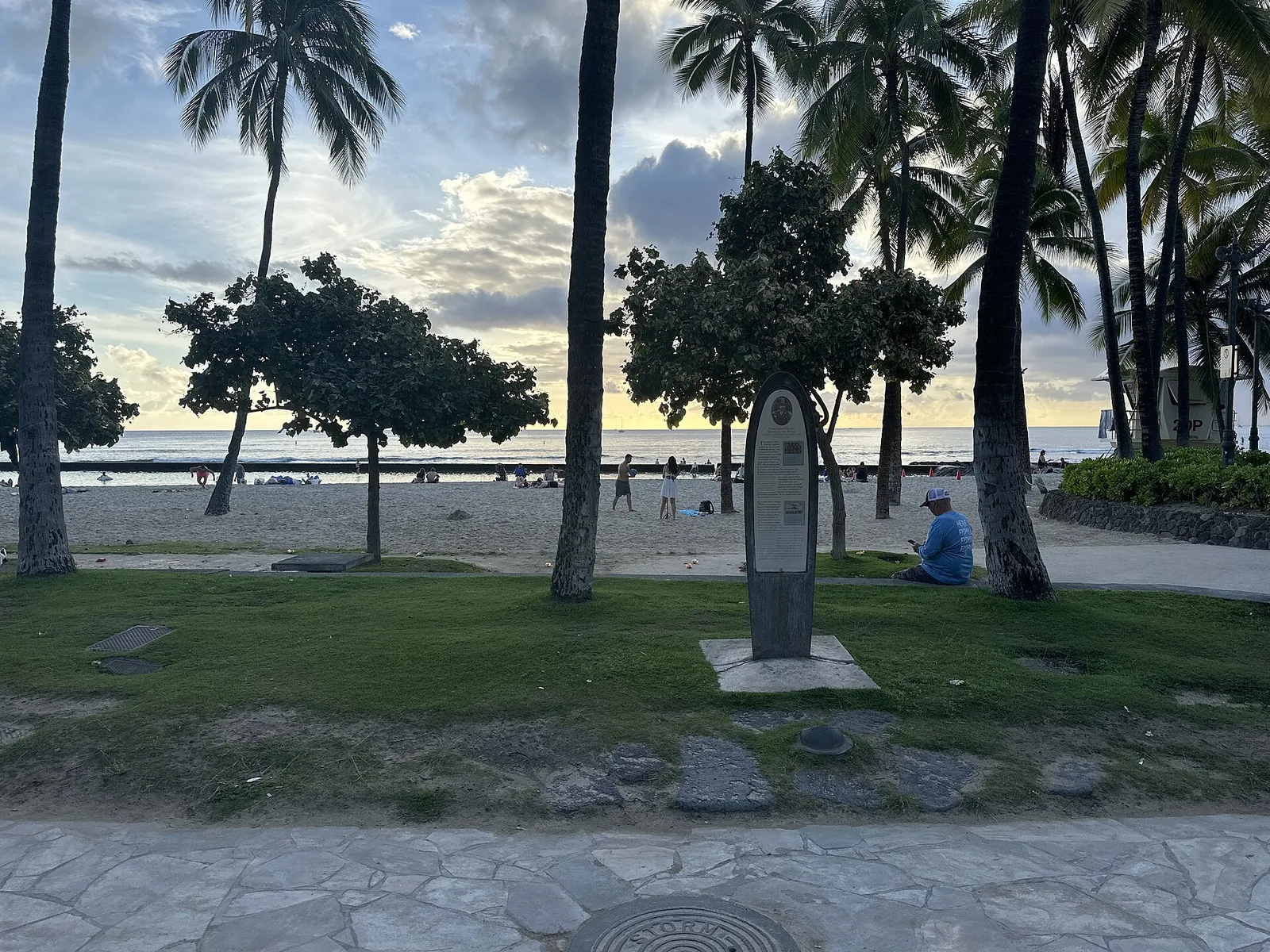
At the Diamond Head end of Waikīkī, a long concrete breakwater curls out from the shore and encloses two shallow basins. On most mornings the water inside is flat, warm and about waist-deep on an adult, which makes it the easiest first swim on the island for small children. Lifeguard towers line the beach, showers and toilets are steps away, and the Duke Kahanamoku statue is right there for the obligatory lei photo. On Saturday evenings the free Kūhiō Beach Hula Show runs from 6:30 to 7:30pm on the same stretch of sand (there’s no show on 17 or 31 October 2026).
The top of the wall is slippery and wave-washed, so it’s not a walkway, whatever the teenagers on it suggest, and the bottom deepens towards the openings, so keep small swimmers on the sand side. Our Waikīkī Beach guide covers the rest of the strip.
Cost: free · Hours: lifeguards 08:00–18:30 · Bus: walk from any Waikīkī hotel · Allow: 1–2 hours, ideally before 10:00
2. Honolulu Zoo
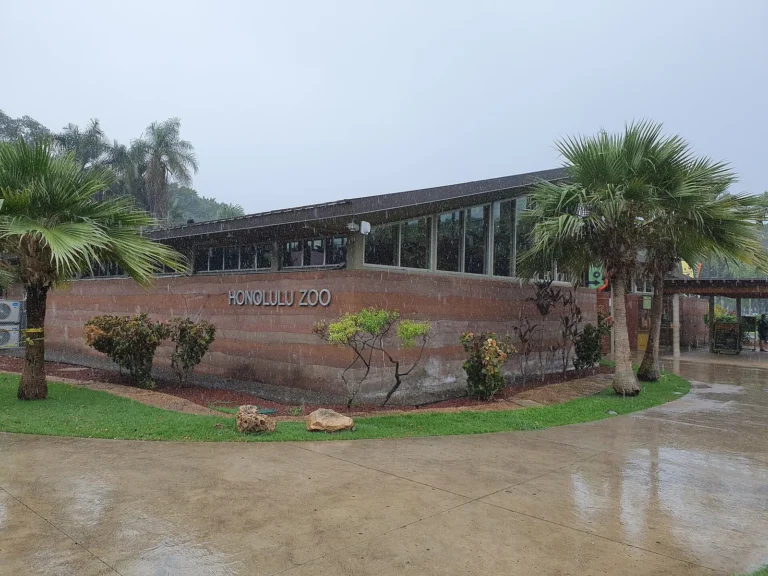
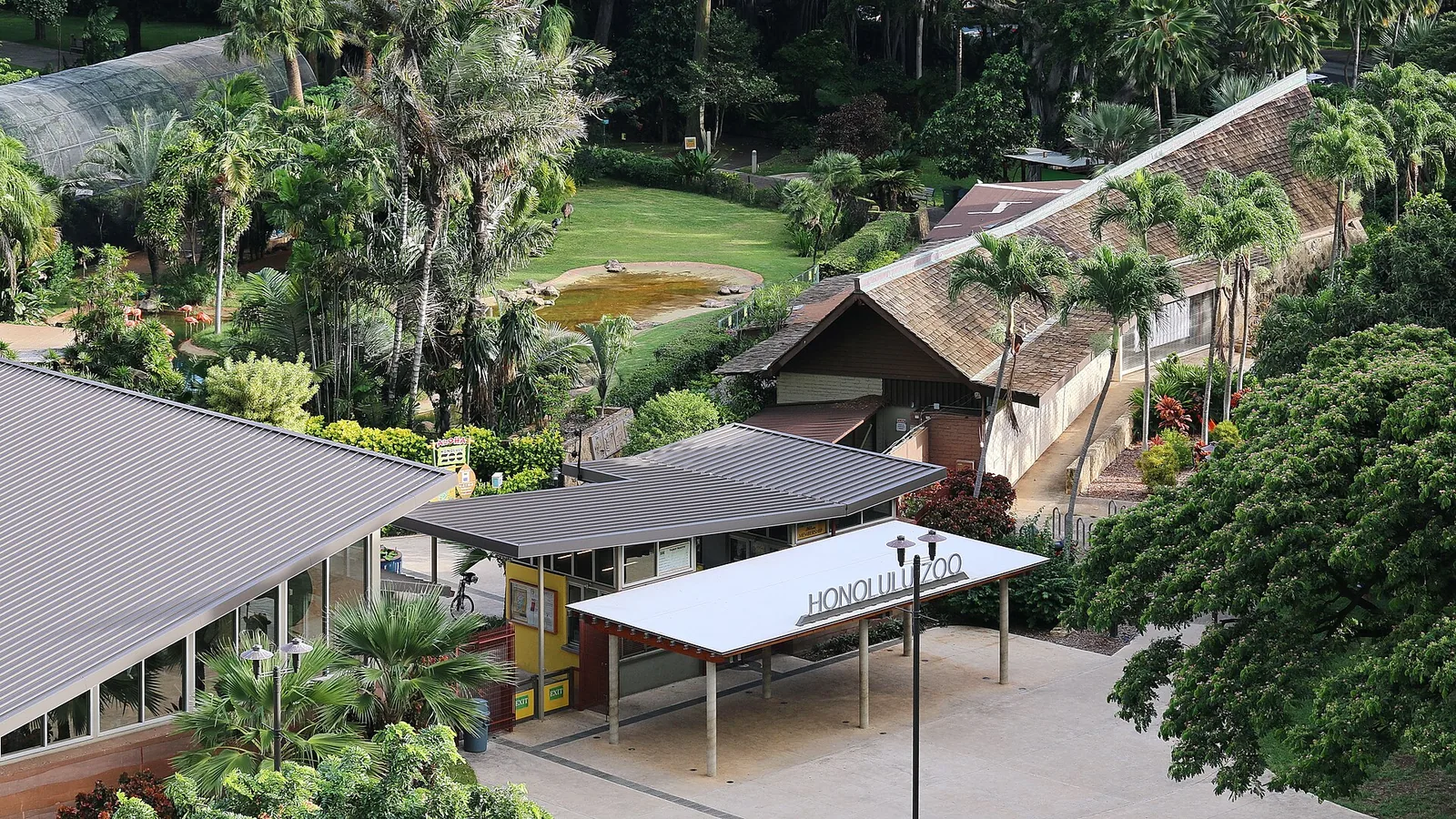
The zoo sits at the edge of Kapiʻolani Park, about ten minutes’ walk from Kūhiō Beach, and it’s the right size for small legs: flat paths, plenty of shade and a loop you can finish before anyone melts down. Go when it opens, while the paths are cool and the animals are more active, and you’ll be back at the hotel for lunch.
Cost: $21 adults, $13 ages 3–12 · Hours: entry 10:00–15:00, grounds close 16:00 · Parking: zoo lot $1.50 an hour, 4-hour maximum · Bus: walk from Waikīkī · Allow: 2 hours
3. Waikīkī Aquarium
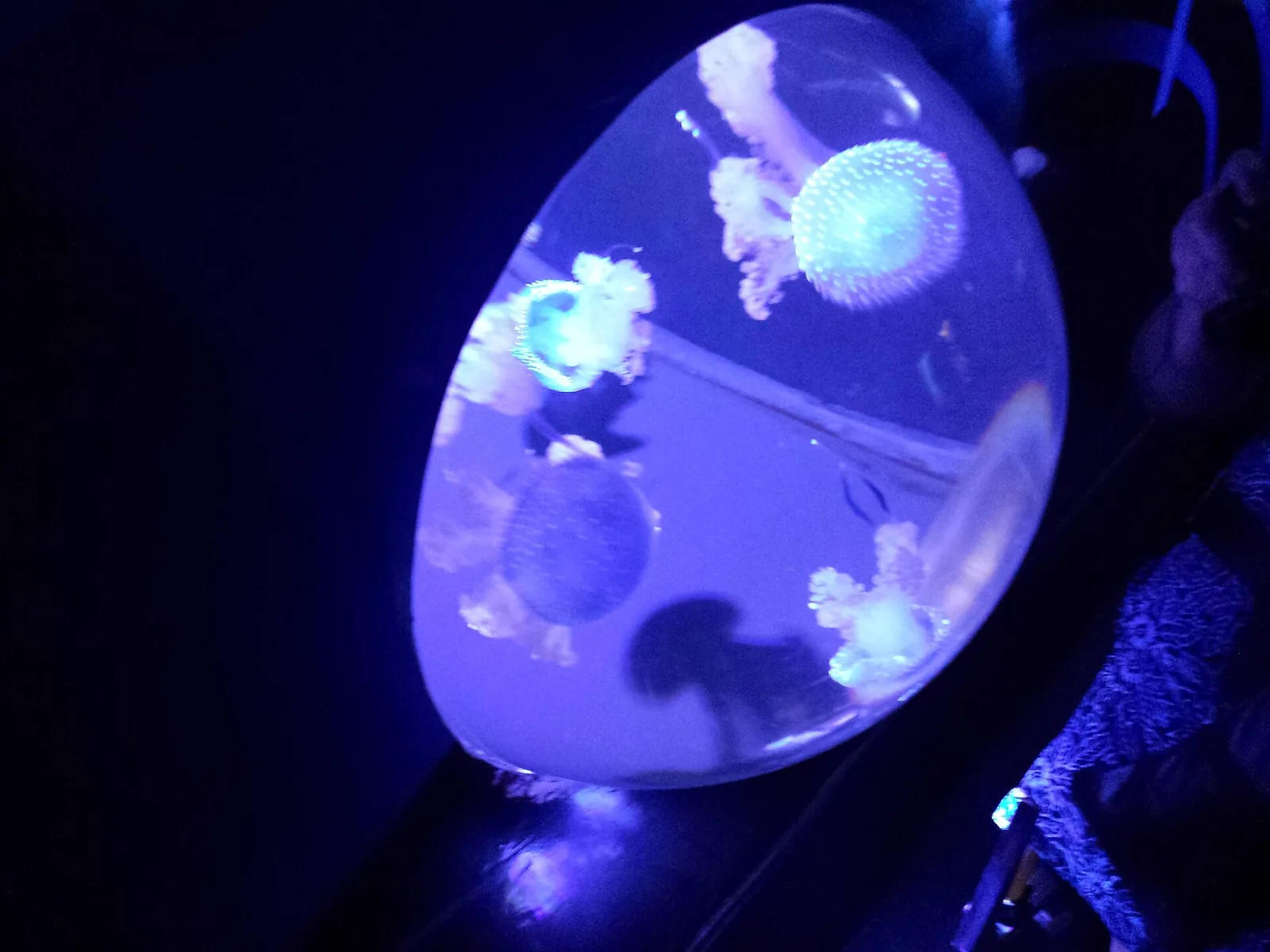
Founded in 1904, it’s one of the oldest public aquariums in the United States, and a toddler can see all of it in an hour. The jellyfish tanks and the reef exhibits are the hits, and every fish in them is one your children might spot later through a snorkel mask. It sits on the shoreline at the far end of Kapiʻolani Park, so pair it with the zoo or calm Kaimana Beach next door.
Cost: $12 adults, $5 children · Hours: 09:00–16:30; closed 13 Dec 2026 (Honolulu Marathon) and 25 Dec · Bus: a 20-minute walk from the Duke statue · Allow: 60–90 minutes
4. Ko Olina and Magic Island lagoons
When the open coast is choppy, head for a lagoon. On the west coast, Ko Olina’s four crescent lagoons sit behind rock breakwaters that turn the Pacific into something closer to a swimming pool. They’re open to the public, not just resort guests, with free parking from sunrise to sunset in the public lagoon lots that fill early. In town, Magic Island, at the ʻEwa end of Ala Moana Beach Park, encloses a smaller rock-ringed lagoon with grass and shade trees behind it, and Ala Moana Center across the road solves lunch and the afternoon rain shower in one go.
Cost: free · Hours: Ko Olina lagoon lots sunrise–sunset; Ala Moana Beach Park closed 22:00–04:00 · Bus: walk from Ala Moana Center to Magic Island; Ko Olina is a 40-minute drive from Waikīkī · Allow: half a day
5. Hanauma Bay
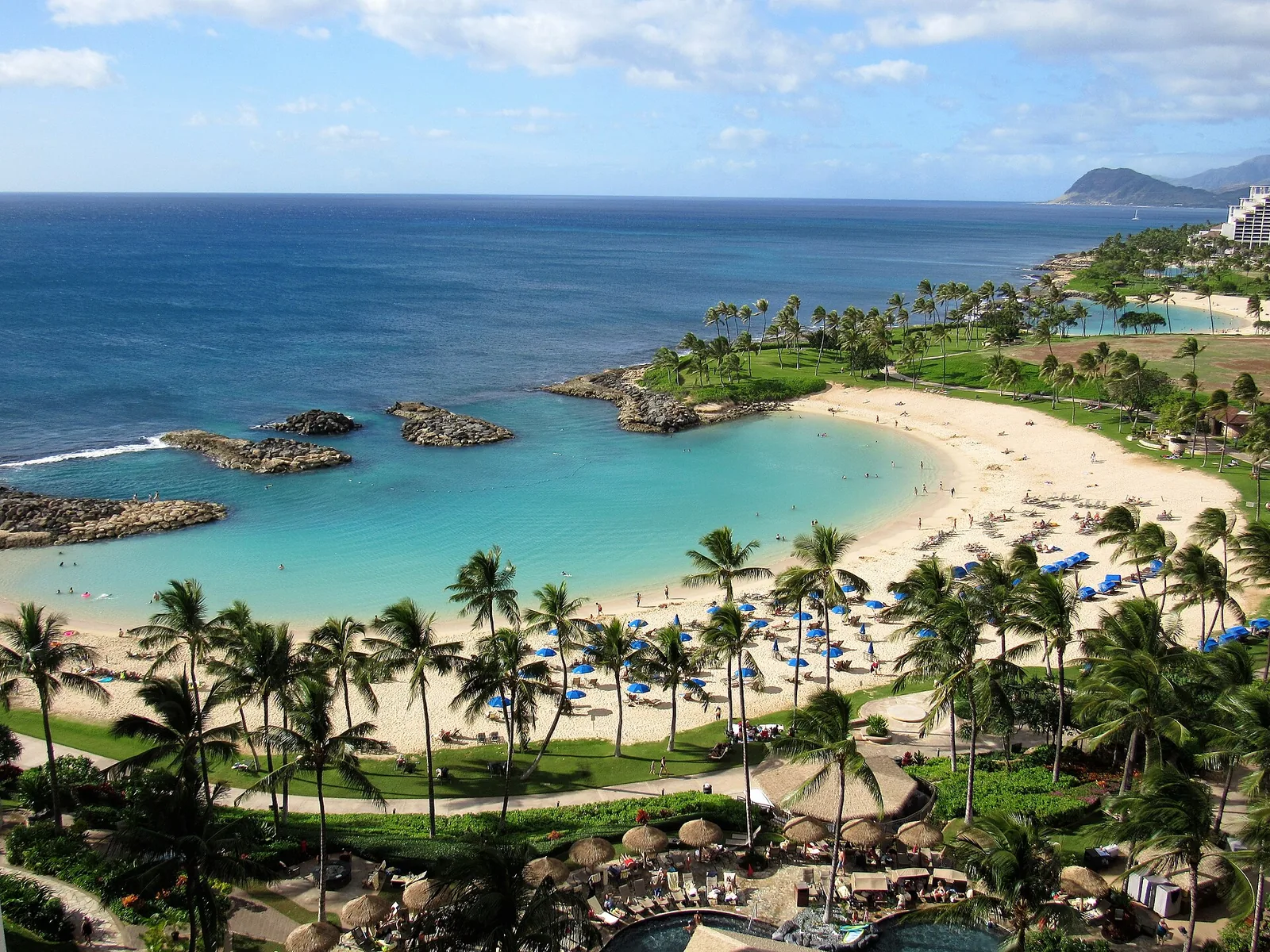
A flooded volcanic crater with a reef in its lap, Hanauma Bay is where most Oʻahu children see their first parrotfish. The inner reef is shallow and calm on most mornings, and children 12 and under get in free. The catch is the booking: reservations open 48 hours ahead at 7am Hawaiʻi time and sell out fast, so set an alarm and be logged in a few minutes early. Everyone watches a nine-minute safety video first; pay attention to it.
Bring your own snorkel gear sized for each child, plus a snorkel vest for anyone under about ten, and arrive at the 6:45am opening. By 11am the sun is fierce and the water busier. If you can’t get a reservation, Roberts Hawaii sells entry bundled with an electric shuttle from Waikīkī and Ala Moana for about $65 a person, bookable up to a month ahead. Our snorkelling guide covers the rest of Oʻahu’s reefs.
Cost: $25 ages 13 and up, 12 and under free; parking $3 · Hours: entry 06:45–13:30, closed Mon, Tue, 25 Dec and 1 Jan · Book: 48 hours ahead at 07:00 HST on the city’s reservation site · Bus: no direct route · Allow: 3–4 hours
6. A surf lesson or outrigger canoe ride
Waikīkī’s slow, rolling waves are where the world learns to surf, and children pick it up faster than their parents. Faith Surf School’s group lessons are $95 for 80 minutes, with four or five students per instructor; Waikiki Beach Services starts at $95 for 75 minutes. Children need to be confident swimmers, and schools set their own minimum ages, so ask when you book. For younger children, the better bet is an outrigger canoe ride: Waikiki Beach Services charges $48 a person for three waves, with the crew doing the work while your five-year-old shrieks in the middle seat.
Cost: group surf lesson $95; outrigger canoe ride $48 per person · Book: ahead in holiday weeks · Bus: on Waikīkī Beach · Allow: 2 hours
7. Diamond Head
The trail up Leʻahi, the crater the world calls Diamond Head, is 0.8 miles each way with about 560 feet of climb, finishing with steps and a tunnel and a view straight down Waikīkī. Children from about five usually walk it themselves; younger ones go in a carrier, because there’s no shade and the steps rule out strollers. Every out-of-state visitor needs a reservation, made up to 30 days ahead, and there are no walk-ins. Book the 6am slot, arrive within the first 30 minutes of it, and you’ll be down before the heat and the crowds arrive.
Cost: $5 per out-of-state person plus $10 per vehicle · Hours: 06:00–18:00, last entry slot 16:00 · Book: up to 30 days ahead at gostateparks.hawaii.gov · Bus: 2, 2L or 23 to Diamond Head Road, then walk in through the road tunnel · Allow: 2 hours
8. Pearl Harbor
For children of about eight and up, Pearl Harbor is the visit that sticks. The memorial is a grave, with more than 900 of the USS Arizona’s crew still entombed below it, and the free 45-minute programme (a short film, a Navy shuttle boat, time on the memorial) asks for quiet attention; younger children usually love the boat and find the rest baffling. Tickets are released on recreation.gov at 3pm Hawaiʻi time, 56 days ahead and again the day before. Walk-up tickets no longer exist, and the free standby line is a gamble with children.
Pack for the bag rule, which bans anything bigger than 1.25 × 2.25 × 5.5 inches unless it’s a clear bag; nappies and snacks go in a clear tote, or you pay $6 to store the bag ($10 for a large one). Older children who love ships and planes can add the Passport to Pearl Harbor, which covers the USS Bowfin submarine, the USS Missouri and the Pearl Harbor Aviation Museum on Ford Island, but not the Arizona. Our Pearl Harbor guide has the full plan.
Cost: Arizona programme free, $1 reservation fee per ticket; Passport to Pearl Harbor $99.99 adults, $49.99 ages 4–12 · Hours: visitor centre 07:00–17:00 · Book: 56 days or 24 hours ahead at 15:00 HST · Bus: 42 from Waikīkī · Allow: 2.5 hours for the Arizona; a full day with Ford Island
9. Hawaiʻi Children’s Discovery Center
This hands-on children’s museum in Kakaʻako is aimed squarely at under-tens, with play-based galleries built for climbing, pretending and pressing every button available. It’s the best rainy-morning plan in Honolulu for small children, but note the short weekday hours: on Tuesday to Friday it’s mornings only, so it slots neatly before a nap rather than after one.
Cost: $15 general admission, under-1s free · Hours: Tue–Fri 09:00–13:00, Sat–Sun 10:00–15:00, closed Mon · Book: details at discoverycenterhawaii.org · Allow: 2 hours, 10–15 minutes’ drive from Waikīkī
10. Bishop Museum
Hawaiʻi’s state museum of natural and cultural history is where children get the story behind everything else they’ll see: voyaging canoes, featherwork, the kingdom, the volcanoes. The three-storey Hawaiian Hall is the centrepiece, and there’s a planetarium for space-mad children. It’s best from about six and the obvious rainy-afternoon plan. Our guide to Hawaiian culture and history is the companion read for parents.
Cost: dynamic pricing; check online before you go · Hours: 09:00–17:00, last check-in 16:00 · Bus: 2 to School Street, then a short walk · Allow: 2–3 hours
11. Dole Plantation
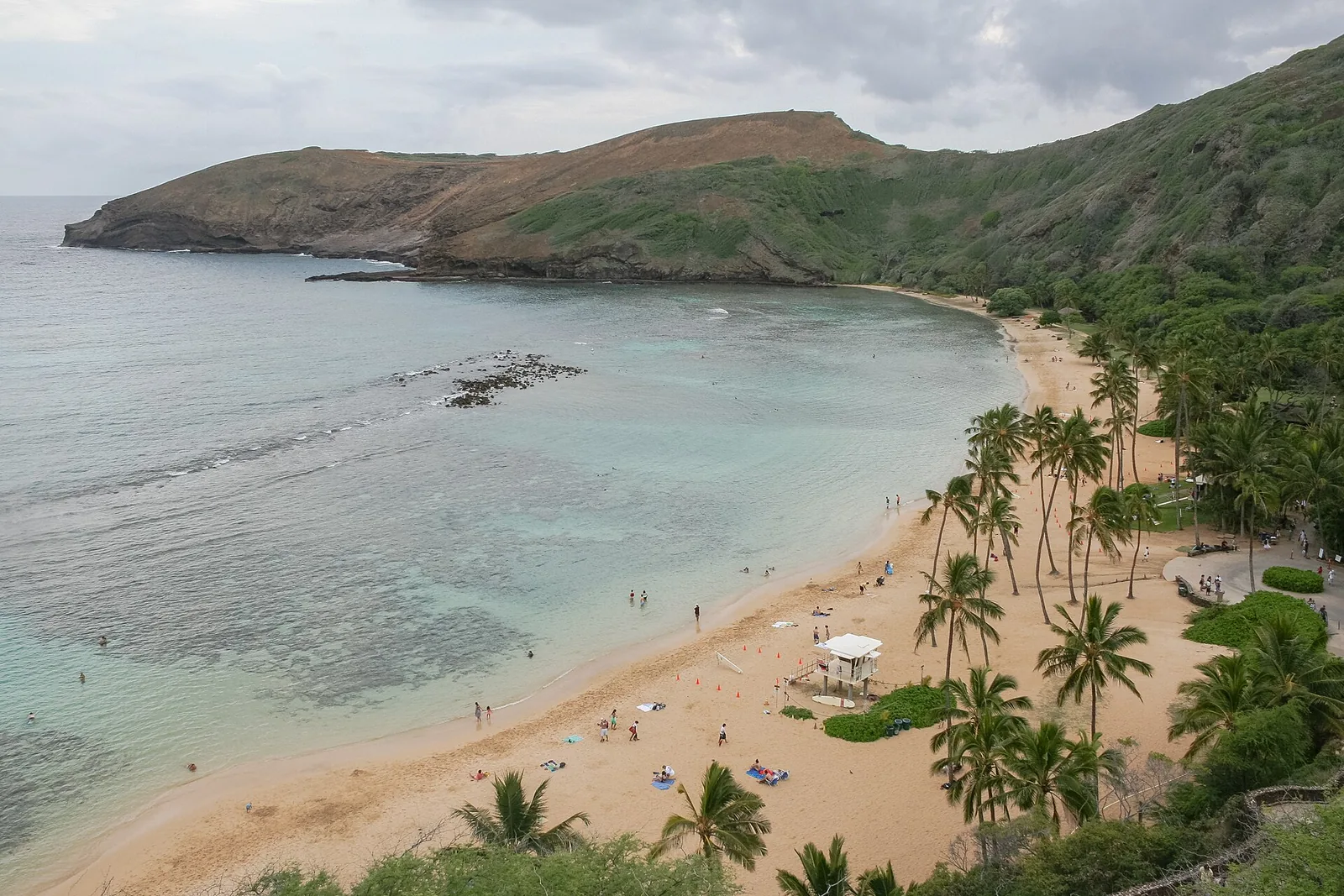
Yes, it’s touristy. It’s also free to enter, and the Pineapple Garden Maze and the Pineapple Express train win over almost every child under ten. Treat it as a pit stop on the way to or from the North Shore rather than a destination, spend an hour, split a pineapple soft-serve, and skip most of the gift shop.
Cost: free entry; train $15, maze $10 · Hours: 09:30–17:30 · Drive: on Kamehameha Highway between Wahiawā and the North Shore · Allow: 1–1.5 hours
12. Kualoa Ranch
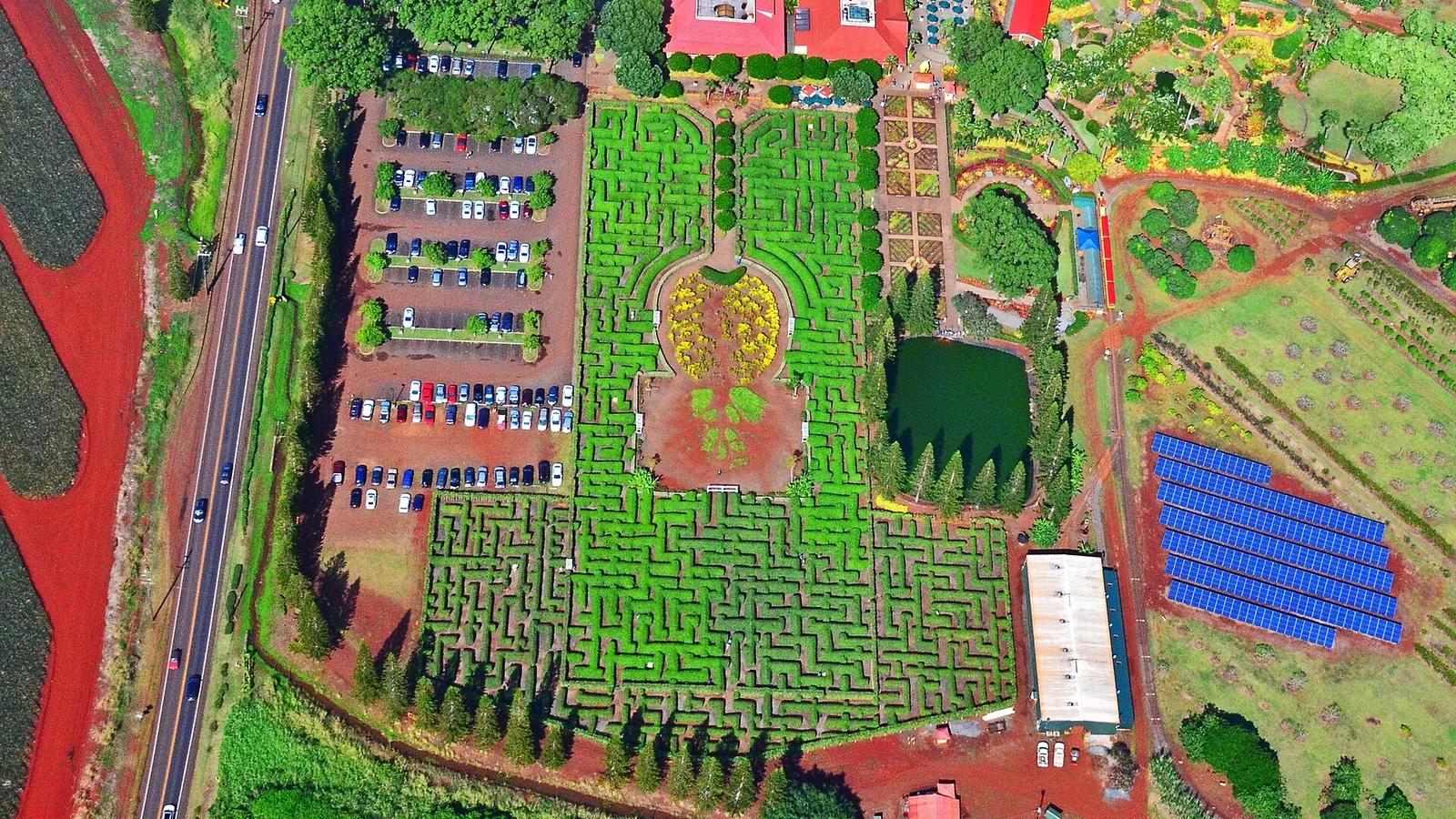
Kualoa’s valleys on the windward coast have stood in for Jurassic Park and a long list of other films. The Movie Sites and Jungle Expedition tours ($59.95 each) suit families with children from about six; the UTV Raptor tour ($149.95) is the one teenagers lobby for, and it sells out weeks ahead, so book early and check the age rules. More options are in our roundup of Oʻahu tours.
Cost: Movie Sites or Jungle Expedition $59.95; UTV Raptor $149.95 · Book: online; UTV slots go weeks ahead · Drive: windward coast, north of Kāneʻohe · Allow: half a day
13. Polynesian Cultural Center
In Lāʻie on the north-east shore, the centre recreates six Polynesian villages, with demonstrations children can join: fire-making, spear-throwing, canoe rides, drumming. It’s Oʻahu’s top-rated paid attraction, but a long day: noon to 9pm with the evening show. With small children, do the villages in the afternoon and leave by dinner; with tweens and teens, the Aliʻi Lūʻau package makes a full and memorable day of it.
Cost: villages $94.95; Aliʻi Lūʻau package $197.95 · Hours: 12:00–21:00, closed Sundays and Wednesdays · Bus: 60, or the centre’s coach from Waikīkī, $28 · Allow: 5–9 hours
14. Waimea Valley and the Laniakea turtles
Two easy wins on the North Shore. Waimea Valley is a botanical garden with a path up the valley to a waterfall; swimming at the falls happens only when the lifeguards allow it, decided each morning at 9am, and a life jacket is compulsory. A few miles along the coast, green sea turtles haul out to bask at Laniakea, most often between 11am and 2pm. Mālama na Honu volunteers have kept a 10-foot rope line since 2012; no touching, ever.
Cost: Waimea Valley $26 adults; Laniakea free · Hours: Waimea Valley Tue–Sun 09:00–16:00; turtles most often ashore 11:00–14:00 · Bus: 60 · Allow: 3 hours for both
15. A lūʻau
Children love the fire-knife dancing, but not a show that ends past bedtime, so choose by finishing time. Chief’s Luau in Kapolei runs 5pm to 8pm, from $135 for adults. Ka Moana Lūʻau at Aloha Tower starts at $129. The Waikīkī Starlight Lūʻau at the Hilton starts at $119 on Sundays, Tuesdays, Thursdays and Fridays. At the top end, the Royal Hawaiian’s ʻAhaʻaina costs $240–265 for adults (13 and over) and $150 for children 5 to 12. Expect the buffet to mix traditional Hawaiian dishes such as kālua pig and poi with local-style favourites, which are a different thing. For the real thing year-round, Helena’s Hawaiian Food in Kalihi, open since 1946 and a James Beard America’s Classics winner, serves kālua pig, laulau and poi.
Cost: $119–265 per adult; ʻAhaʻaina children 5–12 $150 · Hours: most run about 17:00–20:00 · Book: online, well ahead in holiday weeks · Allow: 3–4 hours
Ocean Safety for Families
Read this section twice. Drowning is the leading cause of injury death for visitors to Hawaiʻi, and snorkelling is involved in nearly 30% of visitor drowning deaths. Hanauma Bay alone recorded 16 snorkel-related drownings over a nine-year period. They aren’t there to scare you off the water; they’re why the rules below matter.
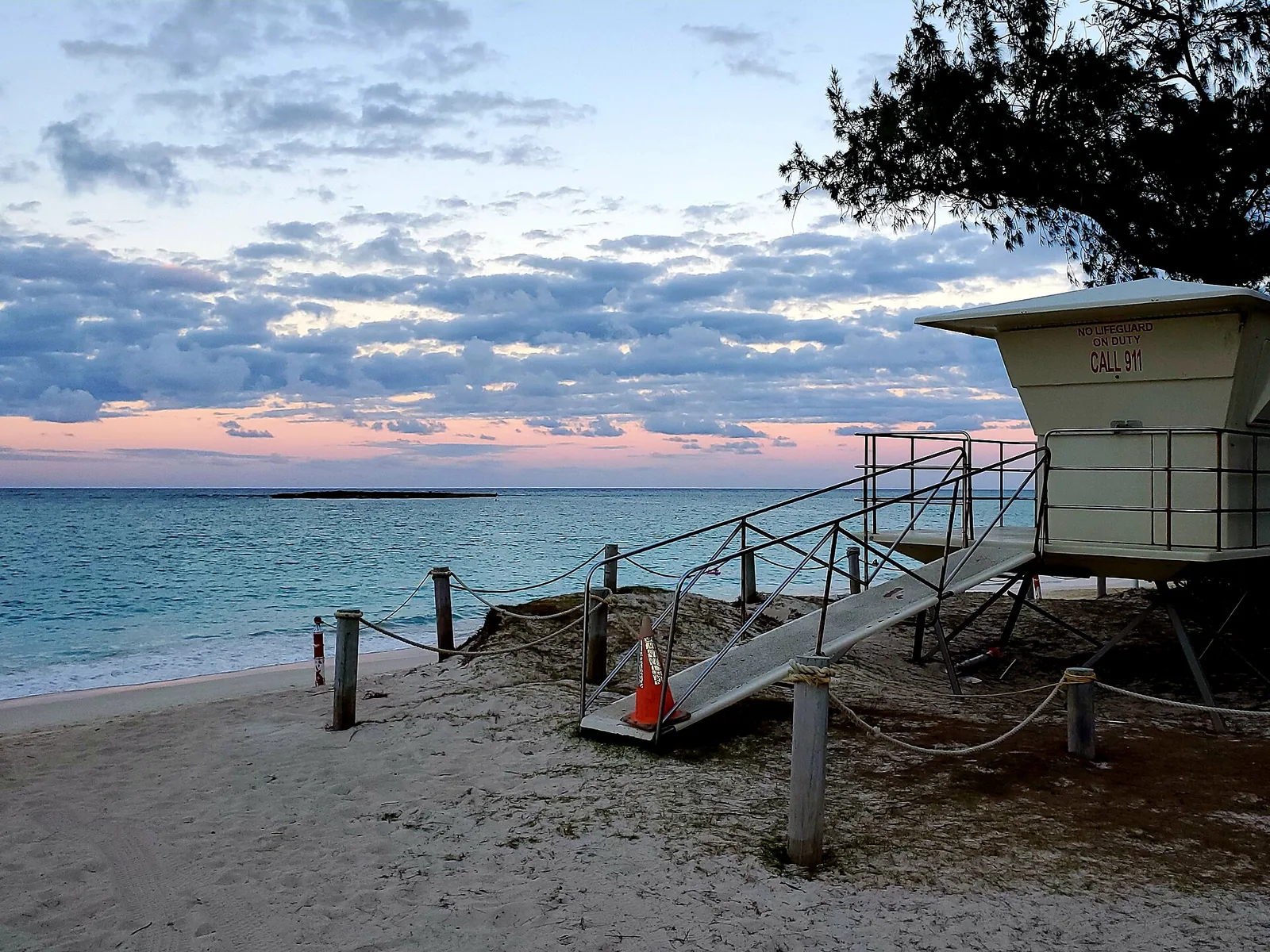
- Swim in front of a lifeguard tower. Honolulu’s Ocean Safety department staffs 44 towers on Oʻahu from 8am to 6:30pm daily; the official tower list is online. Ask the guard where it’s safe for children today; they’d far rather answer that than make a rescue.
- Match the coast to the season. North-facing shores get big surf roughly November to March and are often lake-calm in summer; south shores, Waikīkī included, are the reverse. Sharks Cove and most North Shore snorkelling are summer-only.
- Respect the shorebreak. Steep beaches such as Sandy Beach and Makapuʻu dump waves straight onto hard sand and cause serious neck and spinal injuries. They’re not for children, whatever the bodyboarders are doing.
- Snorkel with flotation and an adult within reach. Fit each child’s mask before the trip, give anyone under about ten a snorkel vest, and keep young children within arm’s length in the water.
- Follow the 72-hour rule. Hawaiʻi’s Department of Health advises staying out of the ocean for 72 hours after heavy rain, when runoff carries bacteria to the coast. Brown water means stay out.
- Know the box jellyfish calendar. They arrive on south-facing shores, Waikīkī among them, roughly eight to ten days after each full moon. By our count that’s around 2–4 November and 2–4 December 2026; the Waikīkī Aquarium publishes the official calendar.
- Give wildlife space. Stay 10 feet from green sea turtles and 50 feet from Hawaiian monk seals (150 feet from a mother and pup), and never swim with or approach spinner dolphins within 50 yards. It’s the law.
- Explain kapu before you need to. A sign reading kapu means do not enter. Don’t take lava rock or sand home, and don’t stack rocks.
The old local rule covers everything else: never turn your back on the ocean, and if in doubt, don’t go out. For sunscreen, Hawaiʻi bans the sale of oxybenzone and octinoxate statewide, so pack a mineral (zinc oxide or titanium dioxide) product and long-sleeved rash guards. The calm, guarded options are all in our guide to the best beaches in Oʻahu.
What Hawaii with Kids Costs: A Week for a Family of Four
Hawaiʻi’s reputation for expense is earned, and with children it compounds: every ticket multiplies, and the headline room rate is fiction. Here is how the bill actually builds for two adults and two children, aged 9 and 5, spending seven nights on Oʻahu, using published 2026 prices. We haven’t priced flights, car hire or food, which swing too much to quote honestly; we explain how to budget them instead. For the bigger budgeting picture, see our guide to planning a trip to Hawaiʻi.
The room: add the resort fee, then 18.7%
Oʻahu’s lodging taxes add up to roughly 18.7%: the state’s 11% transient accommodations tax, which since January 2026 includes Hawaiʻi’s new 0.75% “green fee” on visitors, plus Oʻahu’s 3% county tax and about 4.7% of passed-on general excise tax. Those taxes apply to the resort fee as well, and Waikīkī resort fees mostly run $50–60 a night. So a $250 room really costs you about $356 a night.
| Room rate | Resort fee | All-in per night | Seven nights |
|---|---|---|---|
| $250 (lean) | $50 | $356 | $2,493 |
| $370 (the 2025 statewide average, first half of the year) | $55 | $504 | $3,531 |
| $650 (oceanfront splurge) | $60 | $843 | $5,899 |
Getting around and activities
Car-free is cheapest. Two adult seven-day HOLO passes cost $45 each, the nine-year-old pays $1.75 cash per ride, and the five-year-old rides free, so a week on TheBus comes to about $115. Hire a car for three days and add three nights of hotel parking (about $45 a night is typical in Waikīkī) plus the hire. Keep one all week at a big resort and parking alone can reach $72.25 a night, Hilton Hawaiian Village’s self-park rate.
A realistic week of paid activities, at published prices:
| Activity | Family of four | How it adds up |
|---|---|---|
| Honolulu Zoo | $68 | $21 × 2 adults, $13 × 2 children |
| Waikīkī Aquarium | $34 | $12 × 2, $5 × 2 |
| Diamond Head, arriving by bus | $20 | $5 per out-of-state person |
| USS Arizona Memorial | $4 | Free programme, $1 fee per ticket |
| Hanauma Bay | $53 | $25 × 2 adults, children free, $3 parking |
| Children’s Discovery Center | $60 | $15 × 4 |
| Group surf lesson, one adult and the 9-year-old | $190 | $95 × 2 |
| Passport to Pearl Harbor | $300 | $99.99 × 2, $49.99 × 2 |
| Royal Hawaiian ʻAhaʻaina lūʻau | $780 | $240 × 2, $150 × 2 |
| Beaches, Kūhiō Beach Hula Show, Friday fireworks | $0 | Free |
Put together, three very different weeks emerge:
| Before food and flights | Lean | Middle | Splurge |
|---|---|---|---|
| Room, 7 nights all-in | $2,493 | $3,531 | $5,899 |
| Getting around | $115 (TheBus all week) | $250 plus 3 days’ car hire | $506 parking plus a week’s car hire |
| Activities | $126: zoo, aquarium, Diamond Head, Arizona | $429: adds Hanauma, Discovery Center, surf lesson | $1,509: adds Passport to Pearl Harbor and the ʻAhaʻaina |
| Subtotal | $2,734 | $4,210 + car | $7,914 + car |
Food and flights
A room with a fridge and a supermarket breakfast makes a real difference, and lunch is the meal to eat local: two large poke bowls from Ono Seafood ($13.75 each) split four ways is a $27.50 lunch, a garlic shrimp plate at Giovanni’s is $14, and a malasada at Leonard’s is $2.25. Our guide to the best restaurants in Honolulu has plenty more like them. As a sanity check, state figures put the average visitor’s spending in the islands at $296 per person per day in July 2026. A family of four at that average would spend about $8,300 over a week before flights. If you’re well over, the room is usually why.
Flights are usually the biggest line, and fares to Honolulu move by hundreds of dollars a seat with the season, so price four seats on a fare tracker before anything else. Children under two can fly on a parent’s lap free on domestic flights, US airlines check car seats and strollers free, and if you hop islands, Hawaiian Airlines’ first checked bag is $25 booked ahead and $35 at the airport.
Flights, Car Seats and Getting Around
Honolulu is five to six hours’ flying from the West Coast and ten to eleven nonstop from the East. Hawaiʻi doesn’t use daylight saving time, so from 1 November 2026 to 14 March 2027 it’s two hours behind the West Coast and five behind the East; the rest of the year, three and six. Mainland children will wake absurdly early for the first few days. Use it. Hanauma Bay opens at 6:45am, Diamond Head’s first slot is 6am, and in whale season the best sightings are between 7am and 10am.
On the plane, a lap infant is free, but the FAA’s advice is a seat of their own with an approved restraint: a car seat labelled as certified for aircraft, or a CARES harness for children of 22 to 44 pounds. On the ground, Hawaiʻi law puts every child under 10 in a car seat or booster unless they’re taller than 4 feet 9 inches and correctly belted with a lap-and-shoulder belt. The state transport department’s child passenger safety page has the detail, and keeping babies rear-facing as long as their seat allows remains the American Academy of Pediatrics’ advice.
Rental counters charge a daily fee per seat, so bringing your own is usually cheaper, and airlines check it free. Alternatively, several Oʻahu baby-gear companies deliver cribs, strollers, car seats and beach kits to hotels and the airport. Rideshare cars won’t come with a car seat, so on arrival either bring your own or book a shuttle and ask whether seats are supplied. Typical airport-to-Waikīkī prices are $25–45 by rideshare, $40–60 by taxi and about $18–20 a person on the Roberts Hawaii Express Shuttle.
TheBus is genuinely usable with children. One child aged 5 or under rides free with each fare-paying rider, provided they aren’t taking up a seat, which in practice means a lap on a busy bus. Youth fares (ages 6 to 17) are $1.75 cash, or $1.50 per two-hour pass on a Youth HOLO card. The card is issued only at Satellite City Halls (not the Ala Moana one) and the Transit Pass Office, so most visiting families pay cash, with exact change. The Skyline rail line now stops at the airport, and the W Line bus links it to Waikīkī for the standard $3.25 adult fare, though with a toddler and four suitcases, take the shuttle. Fares and routes are on thebus.org, and our guide to getting around Oʻahu covers the rest.
Where to Stay with Kids on Oʻahu
For families with children under ten, Waikīkī is the default. Within a short walk you have Kūhiō Beach’s pools, the zoo, the aquarium, Kapiʻolani Park’s lawns and hundreds of places to eat. Pick the Diamond Head end, near Kūhiō and the park, choose a hotel with a pool for the afternoons the ocean is choppy, and budget for the $50–60 resort fee and $44–72 parking if you keep a car.
The trap is the holiday house. On Oʻahu stays under 30 days are legal only in the resort-zoned areas (Waikīkī, Ko Olina and Turtle Bay), in some grandfathered hotel buildings and in roughly 793 properties holding a Nonconforming Use Certificate. If a listing outside those zones offers you a week, ask for its certificate number before you pay. Our guide to where to stay in Oʻahu compares every area, and Honolulu neighbourhoods explains what each is like day to day.
Three Day Plans Built Around Naps and Lunch
Each plan assumes mainland body clocks, lunch around noon and a proper break in the early afternoon. For a full week strung together, see our Oʻahu itinerary.
Waikīkī with a toddler, no car
- 06:00 Everyone’s awake anyway. Breakfast in the room.
- 07:00 Kūhiō Beach’s walled pools while the water is flat and the sun is low.
- 09:30 Snack and shade, then walk through Kapiʻolani Park to the zoo for its 10:00 opening.
- 11:45 Lunch on Kapahulu Avenue: poke from Ono Seafood (Tuesday to Saturday) or malasadas from Leonard’s.
- 12:30–14:30 Nap at the hotel. Non-negotiable.
- 15:00 Waikīkī Aquarium (open until 16:30), then Kaimana Beach next door.
- 17:30 Early dinner, before the restaurants fill.
- 18:30 On Saturdays, the free Kūhiō Beach Hula Show; on Fridays, Hilton Hawaiian Village’s fireworks at 19:45, best watched from the sand if bedtime allows.
The south-east coast with children aged 6 to 12
- 05:50 Leave Waikīkī with the Hanauma Bay reservation you booked 48 hours earlier (Wednesday to Sunday only).
- 06:45 Gates open: safety video, then snorkel the inner reef until about 09:30.
- 10:00 Hālona Blowhole lookout, a five-minute drive on.
- 10:30 Makapuʻu Lighthouse Trail, 2 miles return; whales below from December to May.
- 12:15 Lunch in Waimānalo or Kailua; younger children nap in the car on the way.
- 13:30 Kailua Beach Park, swimming in front of the lifeguard tower.
- 16:00 Back over the mountains to Waikīkī before the evening traffic.
The North Shore with tweens and teens
- 08:00 Leave Waikīkī by car, or catch Route 60 (about 1 hour 14 minutes from Ala Moana).
- 09:00 Waimea Valley as it opens (Tuesday to Sunday); walk to the falls and swim if the lifeguards allow it.
- 11:30 Laniakea for the turtles, from behind the 10-foot line.
- 12:30 Haleʻiwa: garlic shrimp from Giovanni’s truck (daily 10:30–17:00), then shave ice at Matsumoto’s.
- 14:00 Summer: snorkel Sharks Cove or swim at Waimea Bay below lifeguard Tower 29. Winter: watch the surf from the sand, and don’t go in.
- 16:00 Dole Plantation on the drive home (open to 17:30).
When to Take Kids to Hawaiʻi
If your children aren’t in school yet, go in September. It’s the quietest month of the year (690,858 visitors statewide in September 2025, against 903,891 in March), the cheapest for hotels (the statewide average room rate was $315 in September 2025 against $379 in February) and the warmest for the sea, at about 80–82°F off Waikīkī. The trade-off is the peak of hurricane season; direct hits are rare, but Hurricane Lowell’s near miss in September 2026 closed parks across the state, so buy travel insurance and book flexible rates.
For school-age children, late April and May is the sweet spot if you can manage it: warm, dry and with hotel rates 20–40% below peak. Otherwise, summer has the bonus of a calm North Shore for snorkelling, and winter, from 15 December to 15 May, brings humpback whales, best from January to March. The Star of Honolulu’s whale-watch cruise is $78.81 for the 2027 season (2 January to 20 March), or you can spot them free from the Makapuʻu and Hālona lookouts. Avoid spring-break March and the Christmas fortnight if you can; they’re the busiest and dearest weeks. Month-by-month detail is in our guide to the best time to visit Hawaiʻi.
For a cheap, easy family morning in Waikīkī, see our comparison of the Honolulu Zoo and the Waikīkī Aquarium, with ticket prices by age, stroller rental and the zoo’s keeper-talk schedule.
Frequently Asked Questions
Is Hawaii with kids worth it with a baby or toddler?
Yes, if you plan around them. Lap infants fly free on domestic flights, and Waikīkī puts calm water, a zoo and an aquarium within walking distance. The hard parts are the strong sun, the long flight and the car-seat law. Keep days to one morning outing and one afternoon outing, with a nap between.
Which Hawaiian island is best for families with young children?
Oʻahu, for most families. It has 44 lifeguard towers staffed daily, the most calm-water beaches near hotels, a working bus and rail network, and attractions designed with children in mind. Maui is a strong second for a resort-and-beach week with a car. Hawaiʻi Island suits volcano-curious children aged six and up, and Kauaʻi suits older, outdoorsy children.
Do children need a car seat in Hawaiʻi?
Yes. Hawaiʻi law requires every child under 10 to ride in a car seat or booster unless they’re taller than 4 feet 9 inches and properly restrained by a lap-and-shoulder belt. Rental companies charge daily for seats, so many families bring their own; US airlines check car seats free. Rideshare cars don’t supply them.
How much does a week in Hawaiʻi cost for a family of four?
On Oʻahu, before food and flights, a lean week costs about $2,700, a middle-of-the-road week about $4,200 plus car hire, and a splurge around $7,900 plus a car. That includes resort fees and about 18.7% lodging tax. State figures put average visitor spending at $296 per person per day, about $8,300 a week for four.
Is Hanauma Bay good for children?
It’s the best first snorkel on Oʻahu, and children 12 and under enter free. Book exactly 48 hours ahead at 7am Hawaiʻi time, arrive at the 6:45am opening, and remember it’s closed Mondays and Tuesdays. Bring well-fitted masks and a snorkel vest for younger children, and keep them within arm’s reach; snorkelling is involved in nearly 30% of visitor drownings.
Are Hawaiʻi’s beaches safe for kids?
Many are, if you choose well. Swim only in front of a staffed lifeguard tower, avoid north shores in winter and steep shorebreak beaches year-round, stay out of the water for 72 hours after heavy rain, and check the box jellyfish calendar. Drowning is the leading cause of injury death for visitors, so treat every swim as supervised.
Photo Credits
- Waimānalo Beach Park: AlaskaDave, CC BY-SA 3.0
- Map: honolulutourism.org; coastline data © OpenStreetMap contributors, ODbL
- Kūhiō Beach Park: Peaceray, CC BY-SA 3.0
- Honolulu Zoo: Robert Linsdell from St. Andrews, Canada, CC BY 2.0
- Waikīkī Aquarium jellyfish: Jackhill, CC0
- Ko Olina lagoons: Farragutful, CC BY-SA 4.0
- Hanauma Bay: Diego Delso, CC BY-SA 3.0
- Dole Plantation maze: Edmund Garman from Salem, Oregon, USA, CC BY 2.0
- Kailua Beach: HelgaVonSlapya, CC BY-SA 4.0