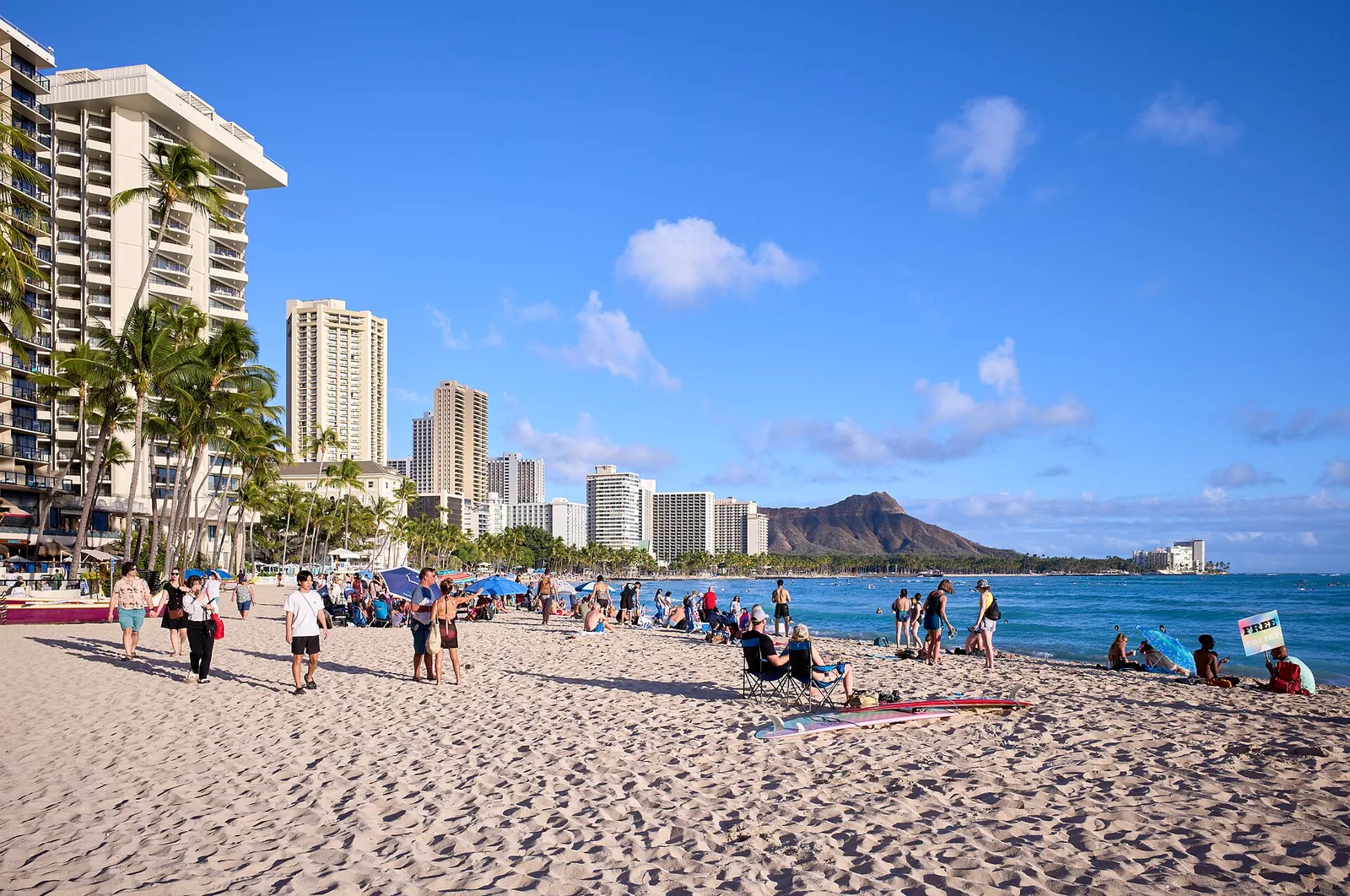
Most lists of things to do in Oahu were written before the island changed its rules. Diamond Head and Hanauma Bay now run on timed reservations, Pearl Harbor releases its free tickets at 3pm Hawaiʻi time, the rail line finally reaches the airport, and Paradise Cove, the lūʻau half the internet still recommends, closed on New Year’s Eve 2025. Below are 50 things worth your time on Oʻahu, grouped by coast, each with the price, hours, booking window, bus route and how long to set aside. Where something isn’t worth the money, we say so.
Update, 10 September 2026: Hurricane Lowell passed just west of the islands on 7 and 8 September. Oʻahu’s state parks reopened on 9 September with four exceptions: the Nuʻuanu Pali Lookout and its access road (closed until further notice), the Keawaʻula and Mākua sections of Kaʻena Point, the Mokulēʻia permit gate area and the Wahiawā Freshwater State Recreation Area. Farrington Highway is also shut through Nānākuli and Mākaha, which cuts off most of the Waiʻanae coast beyond Ko Olina for now. The Department of Health put a brown-water advisory on the waters around the whole island, Hanauma Bay and Waikīkī’s Kūhiō and Royal–Moana beaches included. Check Hawaiʻi State Parks and the health department’s Clean Water Branch advisories on the morning you go.
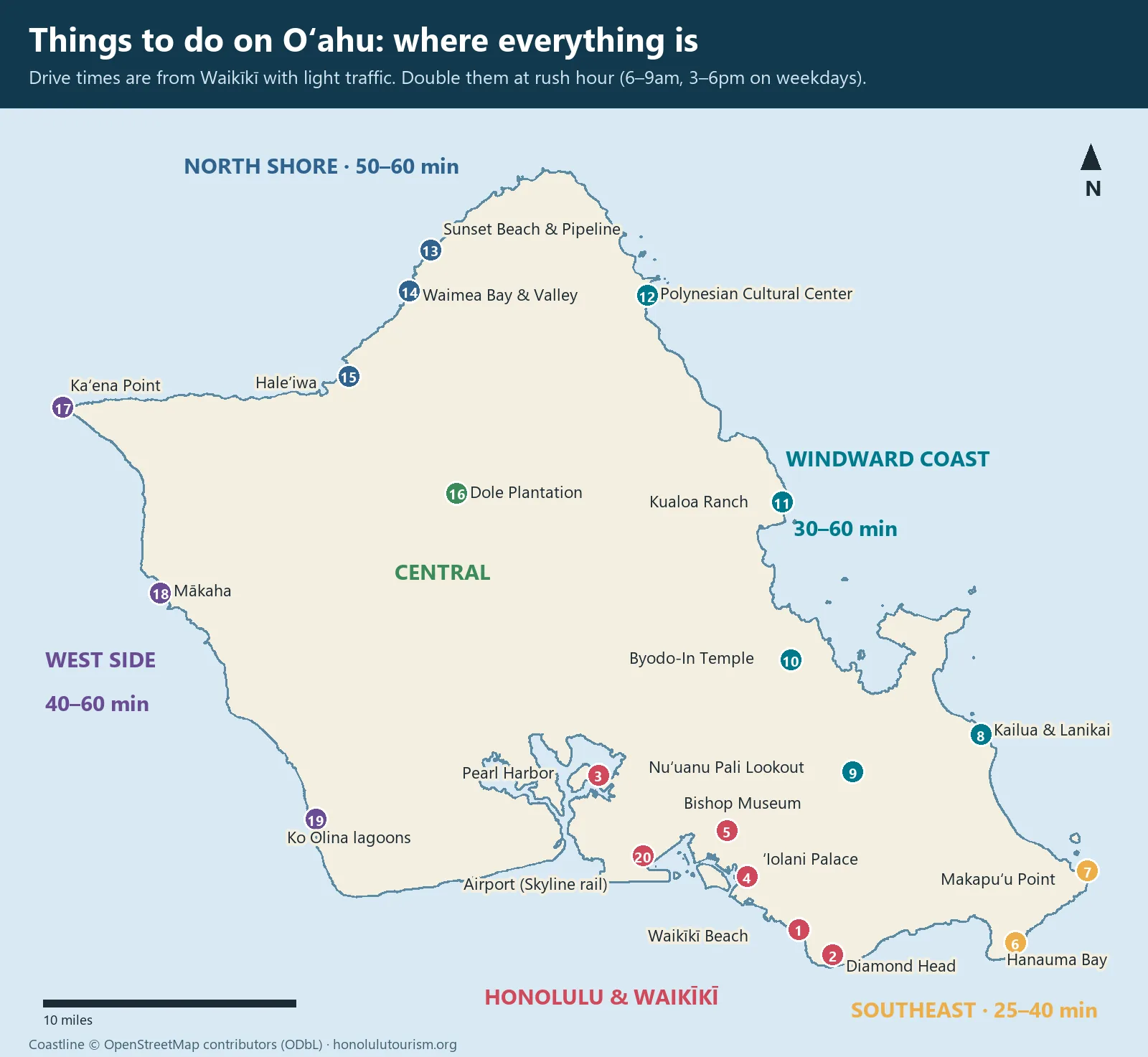
How to read each entry
Every entry ends with a line of practical detail. Cost is the 2026 adult price for visitors; Hawaiʻi residents (kamaʻāina) often pay less. Book says whether you need a reservation and how far ahead. Bus is the route from Waikīkī, where most visitors stay. Allow is time on site, not counting travel.
TheBus is Honolulu’s city bus: $3.25 cash per ride since July 2026, with no transfers. A HOLO tap card caps fares at $7.50 a day and also works on Skyline, the elevated railway that has served the airport’s Lelepaua station since October 2025. Skyline doesn’t reach Waikīkī yet; the W Line bus covers that last stretch.
With a car, weekday rush hour on the H-1 roughly doubles the map’s drive times, and Waikīkī hotel parking often costs $45 a night or more. Renting for two or three coastal days and going car-free otherwise suits most people.
The best things to do in Oahu at a glance
Short on time? Start with these twelve, and book the first three before you fly.
| Experience | Area | Adult cost (2026) | Book ahead? | Allow |
|---|---|---|---|---|
| USS Arizona Memorial | Pearl Harbor | Free ($1 booking fee) | Yes: 56 days or 1 day ahead, 3pm HST | 2–3 hours |
| Diamond Head summit | Waikīkī | $5, plus $10 per car | Yes: up to 30 days | 2 hours |
| Hanauma Bay snorkelling | Southeast shore | $25, plus $3 parking | Yes: 2 days ahead, 7am HST | 3–4 hours |
| Battleship Missouri | Pearl Harbor | $42.99 | Not usually | 2 hours |
| ʻIolani Palace | Downtown Honolulu | $28–$34 | Yes: online only, no same-day | 1–1.5 hours |
| Bishop Museum | Kalihi | Dynamic, online | No | 3 hours |
| Makapuʻu Lighthouse Trail | Southeast shore | Free | No | 1.5–2 hours |
| Byodo-In Temple | Windward coast | $10 | No | 45 minutes |
| Kualoa Ranch | Windward coast | $59.95–$149.95 | Yes: weeks ahead for UTVs | 2–4 hours |
| Polynesian Cultural Center | Lāʻie | $94.95 ($197.95 with lūʻau) | Yes | 6–9 hours |
| Waimea Valley | North Shore | $26 | No | 2–3 hours |
| Group surf lesson | Waikīkī | $95 | A day or two | 2 hours |
Waikīkī and Diamond Head
1. Hike Diamond Head (Lēʻahi)
The crater behind Waikīkī’s skyline gives the best return on effort on Oʻahu: 1.6 miles round trip, about 560 feet of climbing, a tunnel, two flights of stairs and a summit bunker looking down the coast. There’s almost no shade, so take the 6am slot and be down before the tour buses arrive. Walk-ins are turned away.
Cost: $5 per person plus $10 per car · Hours: 6am–6pm, last entry 4:30pm · Book: required, up to 30 days ahead at gostateparks.hawaii.gov; arrive within 30 minutes of your slot · Bus: 2 or 2L to Kapiʻolani Community College, then about 20 minutes uphill through the tunnel · Allow: 2 hours
2. Take a surf lesson or ride an outrigger canoe
Waikīkī’s breaks peel slowly over flat reef, which makes them some of the kindest learner waves anywhere. Faith Surf School’s group lesson is $95 for 80 minutes, with four or five students per instructor. If standing up sounds like too much, Waikīkī Beach Services’ outrigger canoe rides cost $48 with three waves guaranteed. It’s the most fun $48 on the beach.
Cost: $95 lesson, $48 canoe · Book: a day or two ahead in summer; early sessions are calmest · Bus: none needed from Waikīkī hotels · Allow: 2 hours
3. Catch Waikīkī’s free shows
The Kūhiō Beach Hula Show is free, local and genuinely good. It now runs on Saturdays only, 6:30–7:30pm, on the hula mound near the Duke Kahanamoku statue. There are no shows on 19 September, 17 October or 31 October. On Fridays at 7:45pm, Hilton Hawaiian Village sets off a short fireworks show you can watch from the sand in front.
Cost: free · Book: no; arrive 30 minutes early with a beach mat · Bus: walkable from anywhere in Waikīkī · Allow: 1 hour each
4. Sail out at sunset
Catamarans load straight off the sand for 90 minutes while the light goes gold over the Waiʻanae Mountains. Holokai charges $80 with an open bar. Its Friday sails are 21-and-over and catch the Hilton fireworks. Maitaʻi runs a similar trip for $79. Choose either over a dinner cruise, where the food rarely justifies the price.
Cost: $79–$80 · Hours: departs 5:30pm March–September, 5pm October–February · Book: a few days ahead; Fridays sell first · Bus: walk to the beach · Allow: 90 minutes
5. Snorkel Turtle Canyon
Just off Waikīkī, green sea turtles (honu) graze on reef shallow enough to watch from the surface. Holokai’s Turtle Canyon trip includes gear and a guide, leaves at 9am or noon, and makes a smart backup on Mondays and Tuesdays, when Hanauma Bay is closed. Stay 10 feet from turtles and never touch them.
Cost: $80 · Book: 2–3 days ahead · Bus: departs from Waikīkī beach · Allow: 2.5 hours
6. Waikīkī Aquarium
Small, cheap and run by the University of Hawaiʻi, the aquarium is the best hour you can spend learning what you’ll see underwater later. Its reef tanks hold the same fish you’ll meet at Hanauma Bay. At $12 it is better value than the zoo next door, and it publishes Honolulu’s box jellyfish calendar.
Cost: $12, children 4–12 $5 · Hours: 9am–4:30pm daily; closed 13 December 2026 (marathon) and Christmas Day · Book: no · Bus: a 20-minute walk along Kalākaua Avenue from central Waikīkī · Allow: 1 hour
7. Honolulu Zoo
The zoo at the Diamond Head end of Waikīkī is fine rather than great. Parts of it feel dated, and by midday the heat sends most animals into the shade. With children under about ten it still earns its place, especially first thing in the morning. Without children, spend the money elsewhere.
Cost: $21, children 3–12 $13 · Hours: entry 10am–3pm, grounds close 4pm · Book: no · Bus: walkable from Waikīkī · Allow: 2 hours
8. KCC Farmers Market
Every Saturday morning the car park at Kapiʻolani Community College fills with farm stalls and cooked-food vendors: cut pineapple, grilled corn, Kona coffee. It sits on the slope of Diamond Head, so hike first and eat here afterwards. By 9am the aisles are shoulder to shoulder.
Cost: free entry · Hours: Saturdays 7:30–11am, Parking Lot B, 4303 Diamond Head Road · Book: no · Bus: 2 or 2L · Allow: 1 hour
9. Choose a lūʻau with care
A lūʻau is a feast with a Polynesian revue, and Oʻahu’s range from moving to mass-produced. With Paradise Cove gone, the Aliʻi Lūʻau at the Polynesian Cultural Center is the one to beat: $197.95 buys the villages, dinner and the evening show, HĀ: Breath of Life. Toa Luau in Waimea Valley is smaller and more personal, from $125 with valley entry. Closest to Waikīkī is Ka Moana Luau at Aloha Tower, from $129. The Waikīkī Starlight Luau at Hilton Hawaiian Village starts at $119 for the show only.
Cost: $119–$230 with upgrades · Book: a week or more ahead; weekends fill first · Bus: most offer Waikīkī transfers ($28–$39 return) · Allow: 3–4 hours
10. Eat your way through local food
Honolulu eats well and cheaply if you know what to order. Start at Leonard’s Bakery on Kapahulu Avenue for a sugar-rolled malasada, the Portuguese doughnut brought by plantation-era immigrants. Then find poke at a supermarket counter, a plate lunch and shave ice. These are local-style foods from Hawaiʻi’s plantation mix of cultures, not traditional Native Hawaiian cooking. For that, look for laulau, kalua pig and poi on a Hawaiian food menu.
Cost: $2.25 a malasada · Hours: Leonard’s 5:30am–7pm daily · Book: no · Bus: 13 up Kapahulu Avenue · Allow: 30 minutes per stop
Downtown Honolulu, Chinatown and the valleys
11. ʻIolani Palace
King Kalākaua finished ʻIolani Palace in 1882, and it had electric light before the White House did. Two years after the 1893 overthrow of the Hawaiian Kingdom, his sister and successor, Queen Liliʻuokalani, was imprisoned in an upstairs room. No building on the island explains Hawaiʻi better. The docent-led tour ($34, Wednesday and Thursday mornings) is worth the extra over the self-led audio tour ($28).
Cost: $28–$34, children 5–12 $13–$16 · Hours: Tuesday–Saturday; closed Sunday and Monday · Book: online only, at least a day ahead, at iolanipalace.org · Bus: 2 or 13 to downtown, about 30 minutes · Allow: 1–1.5 hours
12. Bishop Museum
Founded in 1889 in memory of Princess Bernice Pauahi Bishop, the last heir of the Kamehameha line, this is Hawaiʻi’s state museum and home to the world’s largest collection of Hawaiian and Polynesian cultural objects. Hawaiian Hall, three storeys of koa-wood galleries, is the reason to come.
Cost: dynamic, online · Hours: 9am–5pm daily, last check-in 4pm · Book: no · Bus: a short walk from Route 2 on School Street · Allow: 3 hours
13. Honolulu Museum of Art and Shangri La
HoMA is a lovely building of courtyards and Asian, Pacific and European collections that rarely feels crowded. Its real prize is the tour to Shangri La, the heiress Doris Duke’s house of Islamic art at Black Point. Tours cost $45 with shuttle and museum entry, and leave from HoMA on Thursdays and Fridays and from Bishop Museum on Saturdays. Tickets go on sale at 10am HST on the first Thursday of each month and sell out fast.
Cost: HoMA $25; Shangri La $45 · Hours: HoMA Wednesday–Sunday 10am–6pm, Fridays until 9pm · Book: Shangri La a month ahead · Bus: 2 or 13 to Beretania Street · Allow: 2 hours; 3 with Shangri La
14. Chinatown by day, and First Friday
Come in the morning for lei stands on Maunakea Street, the fish and produce markets, dim sum and a bowl of pho. On the first Friday of each month, galleries and bars stay open 5–9pm; the next is 2 October 2026. Be realistic about the neighbourhood: some blocks have visible homelessness and drug use, so keep to the main streets after dark.
Cost: free to wander · Hours: markets are liveliest before noon · Book: no · Bus: 2 or 13 to Hotel Street · Allow: 2 hours
15. Foster Botanical Garden
On the edge of Chinatown, Foster is a quiet grove of huge old trees, orchids and palms that almost nobody visits. Free volunteer-led tours start at 10:30am on Mondays, Wednesdays, Fridays and Saturdays. Pair it with a Chinatown morning.
Cost: $5 · Hours: 9am–4pm daily · Book: no · Bus: 2 or 13 to Chinatown, then a short walk · Allow: 1 hour
16. National Memorial Cemetery of the Pacific (Punchbowl)
Inside Puowaina crater, rows of flat markers honour servicemembers and their families, many of them from the Pacific war. Walk up to the lookout on the crater rim for a view over downtown to Diamond Head. It is a working cemetery, so keep voices low and give funeral parties space.
Cost: free · Hours: 8am–6pm daily · Book: no · Bus: no convenient route; about 15 minutes by car · Allow: 1 hour
17. Mānoa Falls and Lyon Arboretum
The Mānoa Falls trail climbs 0.8 miles through rainforest to a tall, thin waterfall. It’s the easiest jungle walk near Waikīkī and also the muddiest. Don’t swim under the falls: rocks come down, and freshwater here can carry leptospirosis. Next door, Lyon Arboretum opens on weekdays with no reservation and a suggested $10 donation.
Cost: free trail; paid private lot at the trailhead or free street parking lower down · Hours: Lyon Monday–Friday 9am–3pm · Book: no · Bus: 5 from Ala Moana Center toward upper Mānoa · Allow: 2 hours
18. Puʻu ʻUalakaʻa lookout
Up the switchbacks of Round Top Drive, this state wayside looks across all of Honolulu from Diamond Head to Pearl Harbor. With the Pali lookout closed, it’s the best view you can drive to. The gate shuts at 6:45pm until the end of March, so winter visitors catch the sunset but should arrive 45 minutes before it.
Cost: $7 parking for non-residents · Hours: gate 7am–6:45pm (winter), 7am–7:45pm from 1 April · Book: no · Bus: none; drive · Allow: 45 minutes
19. Ala Moana Beach Park and Magic Island
This is where Honolulu goes to the beach: a long, lifeguarded strand behind an offshore reef, with the Magic Island lagoon at one end calm enough for small children. Weekday sunsets here are quieter than Waikīkī’s. Ala Moana Center, the state’s biggest mall, is across the road.
Cost: free · Hours: park daily; mall 10am–8pm · Book: no · Bus: 8, 13, 42 or the W Line to Ala Moana Center · Allow: 2–3 hours
20. Kakaʻako street art
Between Ala Moana and downtown, the warehouse walls of Kakaʻako carry dozens of murals, many painted during the yearly POW! WOW! Hawaiʻi festival. You can walk the best blocks in an hour, then eat at the Salt at Our Kakaʻako complex.
Cost: free · Hours: daylight for photos · Book: no · Bus: any route to Ala Moana Center, then a 15-minute walk · Allow: 1–1.5 hours
Pearl Harbor
21. USS Arizona Memorial
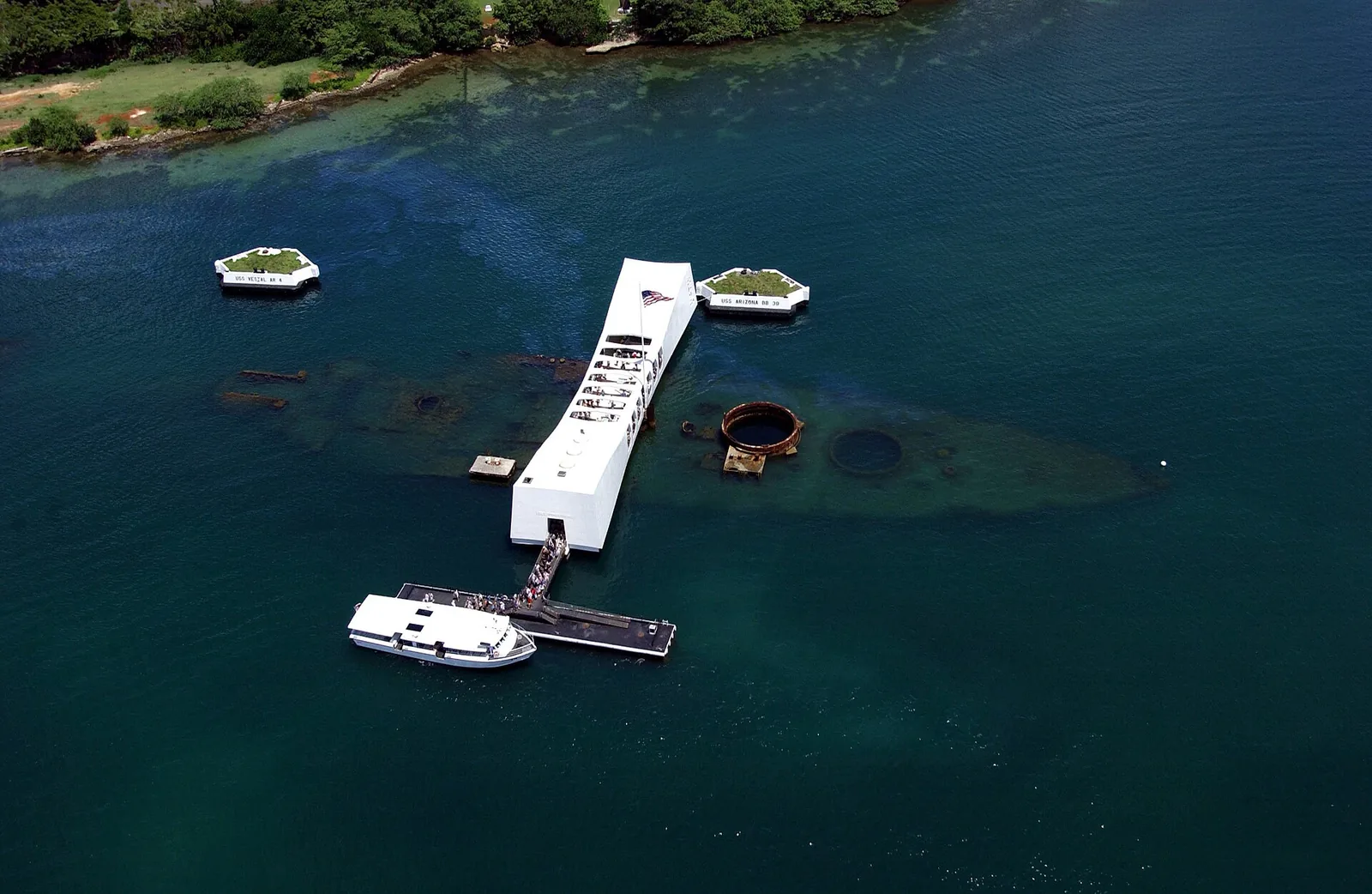
On 7 December 1941, 1,177 of the Arizona’s crew were killed. The 45-minute programme is a film, a Navy boat across the harbour and time standing over the hull. It’s free, but reservations on recreation.gov cost $1. They release at 3pm HST, 56 days ahead and again the day before, and go in minutes. No bags beyond a small clutch are allowed; clear bags are fine and storage costs $6.
Cost: free, $1 booking fee · Hours: visitor centre 7am–5pm; programmes 8am–3:30pm · Book: 56 days or 1 day ahead · Bus: 42, about an hour · Allow: 2–3 hours
22. Battleship Missouri
The Pacific war officially ended on this deck on 2 September 1945, and the ship is now moored a few hundred yards from the Arizona, so the war’s beginning and end sit side by side. A shuttle from the visitor centre crosses to Ford Island. If you add only one paid site to the Arizona, make it this one.
Cost: $42.99, children 4–12 $19.99 · Hours: 8am–4pm · Book: not usually needed · Bus: 42 · Allow: 2 hours
23. Pearl Harbor Aviation Museum and USS Bowfin
The aviation museum fills two wartime hangars on Ford Island, and the bullet holes in Hangar 79’s windows are original. The Bowfin, a submarine launched a year to the day after the attack, is a tight, claustrophobic tour beside the visitor centre. All four sites in one day is a lot; for most visitors, the Arizona and the Missouri make the right half day.
Cost: museum $29.99, Bowfin $25.99 · Hours: museum 9am–5pm; Bowfin 7am–5pm, last entry 4:30pm · Book: no · Bus: 42 · Allow: 1.5 hours each
Southeast shore: Hanauma Bay to Makapuʻu
24. Hanauma Bay
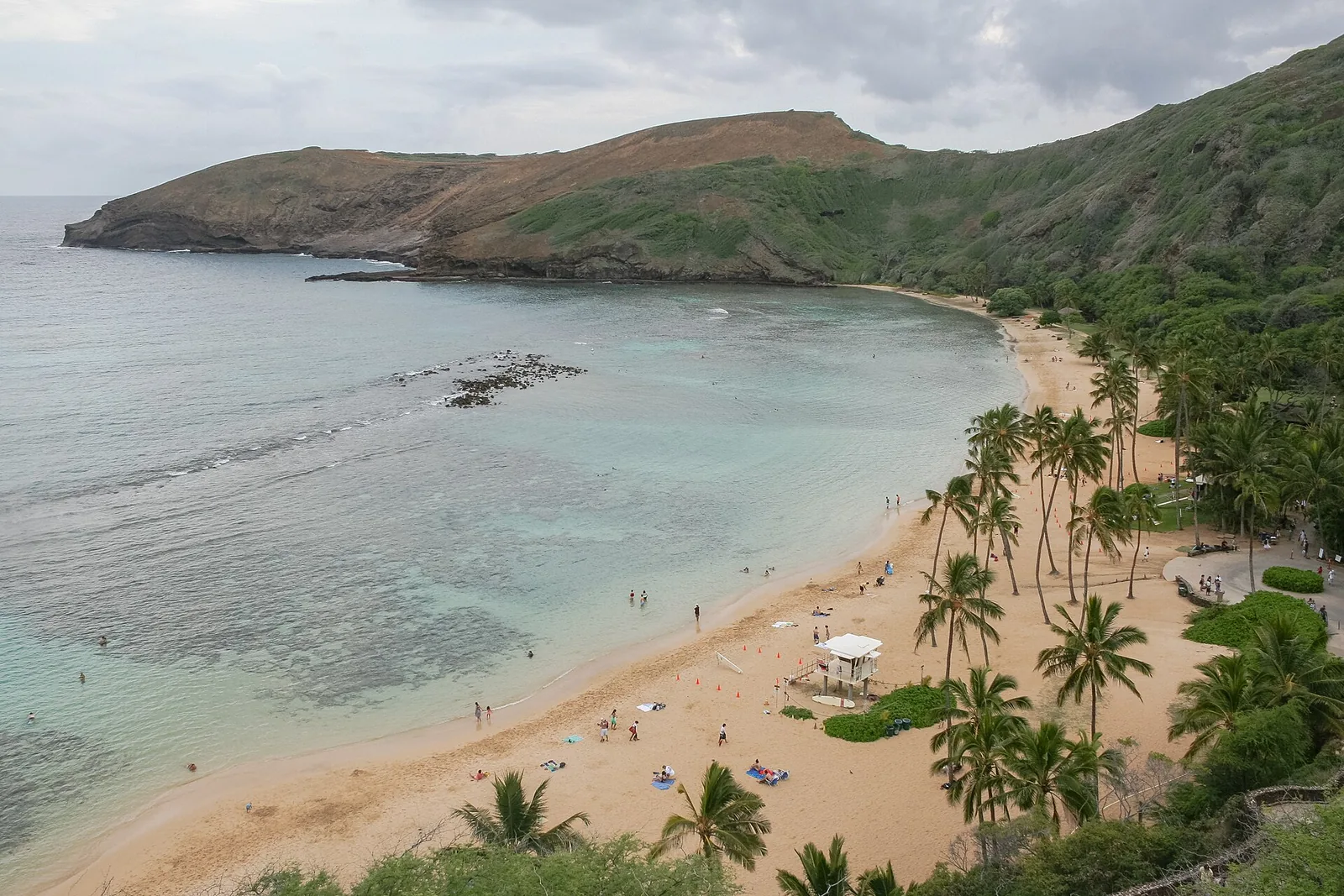
A flooded volcanic crater and marine preserve, Hanauma Bay is the easiest good snorkelling on Oʻahu. Reservations open online two days ahead at 7am HST and sell out almost immediately, so set an alarm for Hawaiʻi time. A short conservation video is mandatory on every visit. There’s no direct bus. Without a car, Roberts Hawaiʻi sells entry plus an electric bus from Waikīkī for about $65. After the storm, check the brown-water advisory first.
Cost: $25 (ages 13+), $3 parking · Hours: Wednesday–Sunday, entry 6:45am–1:30pm, everyone out by 4pm · Book: 48 hours ahead · Bus: none direct · Allow: 3–4 hours
25. Koko Crater stairs
Some 1,050 old railway sleepers, left by a wartime tramway, run straight up the side of Koko Crater. It’s roughly a thousand vertical feet of leg work with no shade. Start at sunrise, carry more water than you think you need, and take the bridge section slowly, where the sleepers span open air. The reward is the view over Hanauma Bay.
Cost: free · Hours: daylight · Book: no · Bus: drive or rideshare; 25 minutes from Waikīkī · Allow: 1.5–2 hours
26. Hālona Blowhole and winter whale watching
Swell forced through a lava tube throws water skyward beside the highway, best on a big south-east swell. The cove below looks inviting; its currents are not. From mid-December to mid-May, this headland and Makapuʻu are the island’s best shore spots for humpback whales, from 7 to 10am. The lot has a long history of break-ins, so leave nothing in the car.
Cost: free · Hours: daylight · Book: no · Bus: drive · Allow: 20 minutes
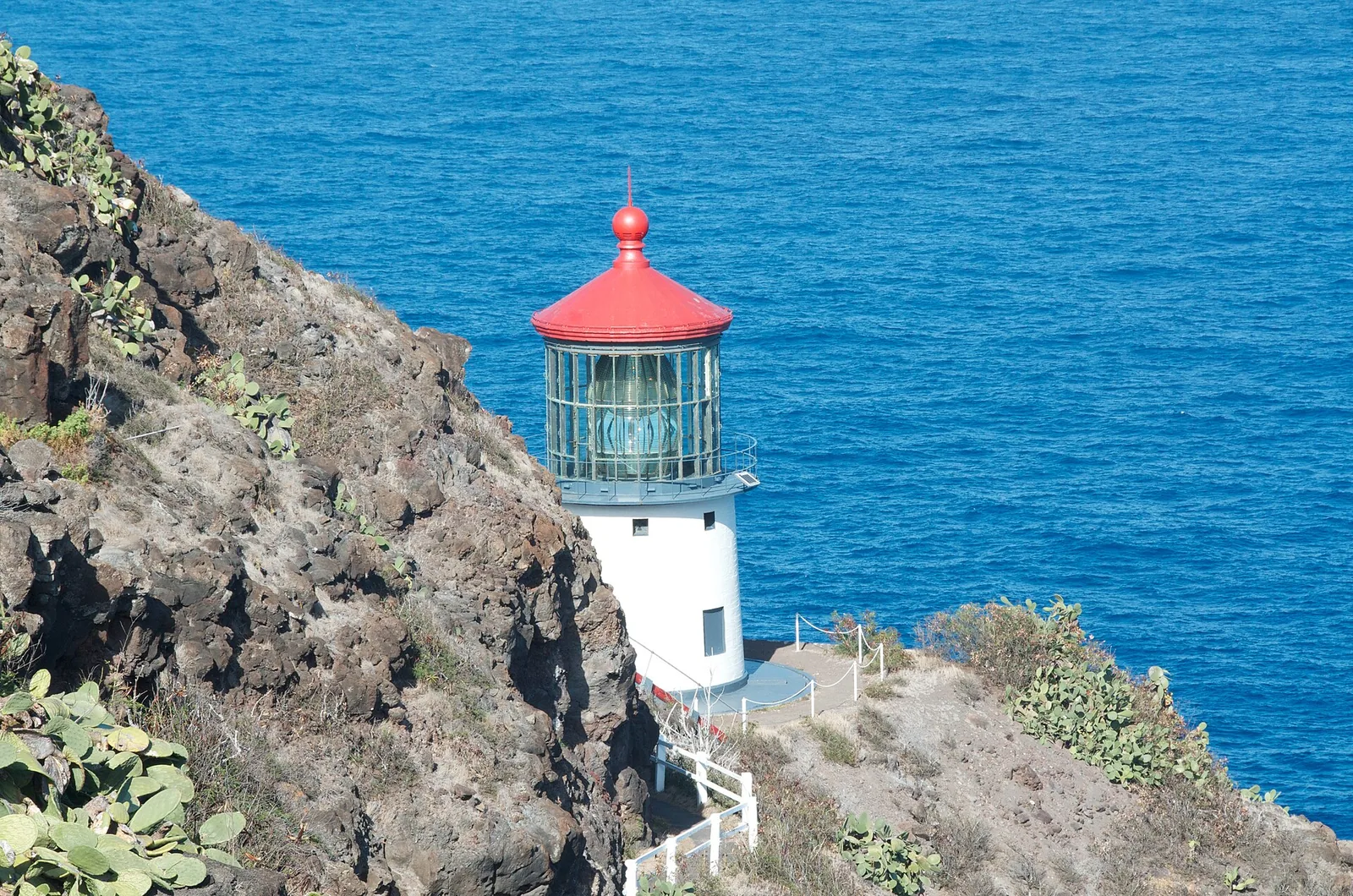
27. Makapuʻu Point Lighthouse Trail
A paved service road climbs two miles round trip and about 500 feet to a lookout above the red-roofed 1909 lighthouse. The view takes in Rabbit Island, the windward cliffs and, on clear days, Molokaʻi. It’s gentle enough for most families but completely exposed, so go early or late. In whale season, bring binoculars.
Cost: free · Hours: gate roughly 7am to dusk · Book: no · Bus: drive; 30 minutes from Waikīkī · Allow: 1.5–2 hours
28. Sandy Beach: watch, don’t swim
Sandy Beach is thrilling to watch and dangerous to enter. The shorebreak dumps straight onto shallow sand, and its lifeguards deal with a steady stream of neck and spinal injuries. Locals call it Broke Neck Beach for a reason. Watch the bodyboarders from the sand, then swim somewhere else.
Cost: free · Hours: lifeguards daytime · Book: no · Bus: drive · Allow: 30 minutes
29. Waimānalo Bay
Past Makapuʻu, the road drops to a long turquoise bay backed by the fluted Koʻolau cliffs. It’s one of the most beautiful beaches on the island and rarely crowded. Waimānalo is a proud Native Hawaiian community, not a resort. Swim near the lifeguard towers, buy lunch from local stands and take your rubbish with you.
Cost: free · Hours: daylight · Book: no · Bus: drive; 35 minutes from Waikīkī · Allow: 2–3 hours
The windward coast: Kailua to Lāʻie
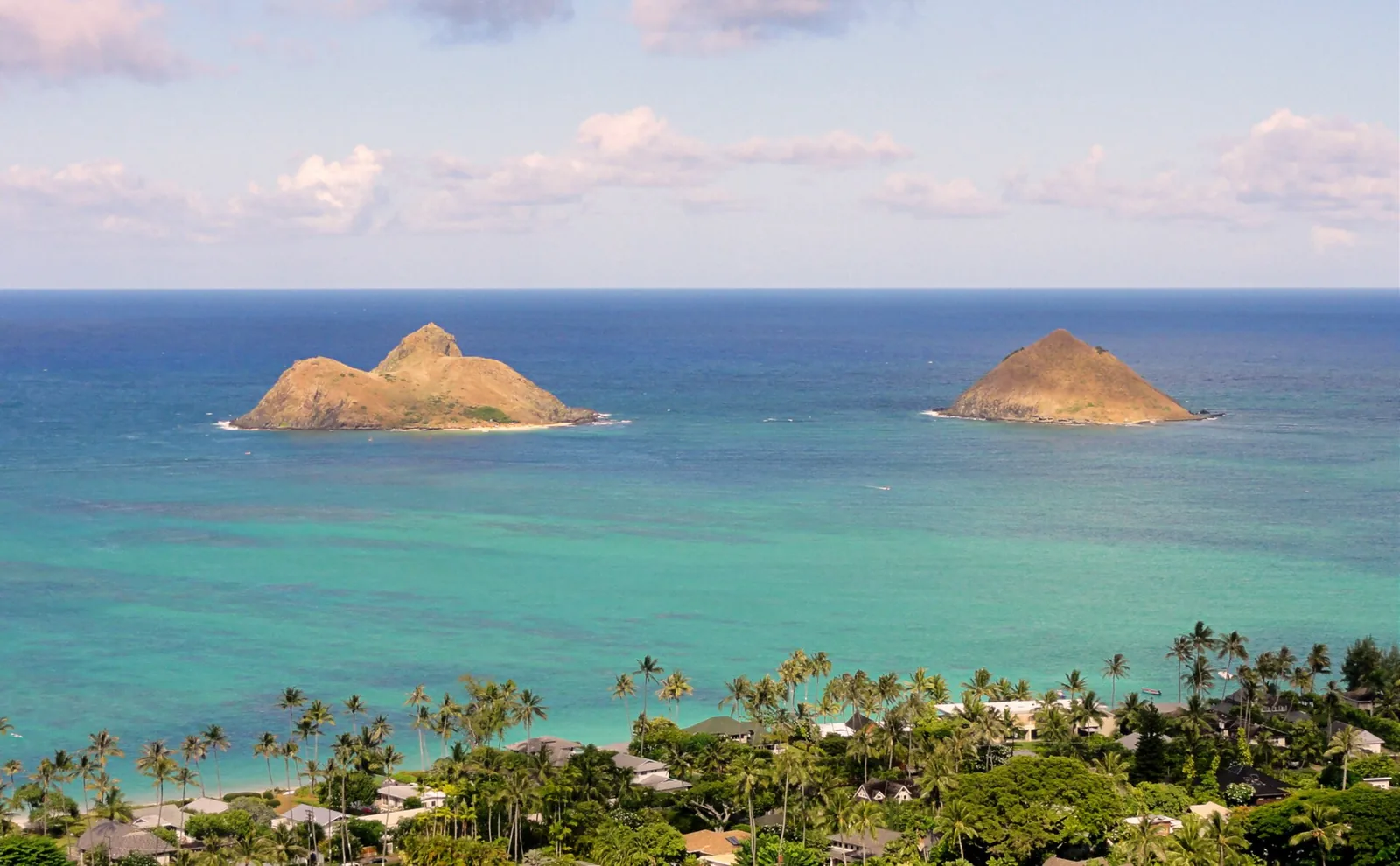
30. Kailua Beach and a kayak to Nā Mokulua
Kailua Beach is wide, soft and lifeguarded, and the classic morning is a paddle out to the Mokulua islets. Kailua Beach Adventures rents single kayaks for $74 a half day. Landing on Moku Nui needs a $3 state permit and is allowed Monday to Saturday only; its interior is a seabird sanctuary. Moku Iki is off-limits. Trade winds build by late morning, so start early.
Cost: $74 half-day kayak · Book: a day ahead · Bus: 67 from Ala Moana Center · Allow: half a day
31. Lanikai Beach and the Pillbox hike
The Kaʻiwa Ridge trail, better known as the Lanikai Pillbox, climbs about a mile and three-quarters round trip to old concrete bunkers above Lanikai and the Mokulua islets. It’s short, steep and slick after rain. Lanikai Beach has no lifeguard. Parking in the neighbourhood is heavily restricted and cars get towed, so park legally in Kailua and walk or cycle in, about 20 minutes.
Cost: free · Hours: sunrise is the draw; the state occasionally closes the trail for fire ant treatment · Book: no · Bus: 67 to Kailua, then walk · Allow: 1.5 hours
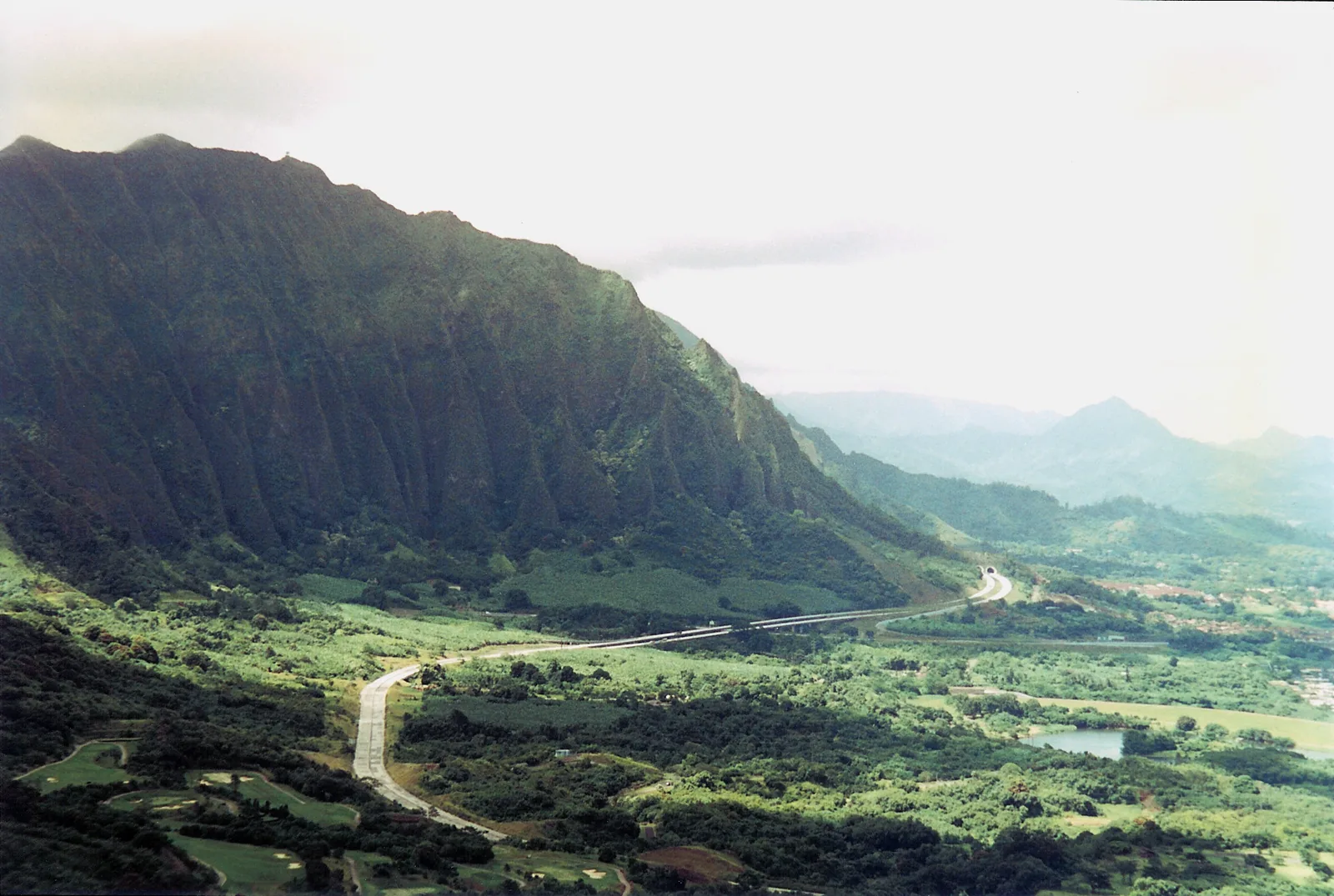
32. Nuʻuanu Pali Lookout (closed for now)
Normally this is Oʻahu’s most dramatic free view: the Koʻolau cliffs falling away to Kāneʻohe, above the valley where Kamehameha I won the 1795 Battle of Nuʻuanu. It has been closed until further notice since Hurricane Lowell. The Pali Highway still passes beneath the sheer green walls, and Puʻu ʻUalakaʻa (number 18) has the city view.
Cost: normally $7 per non-resident car · Hours: normally 6am–6pm · Book: no · Bus: none · Allow: 20 minutes once reopened
33. Byodo-In Temple
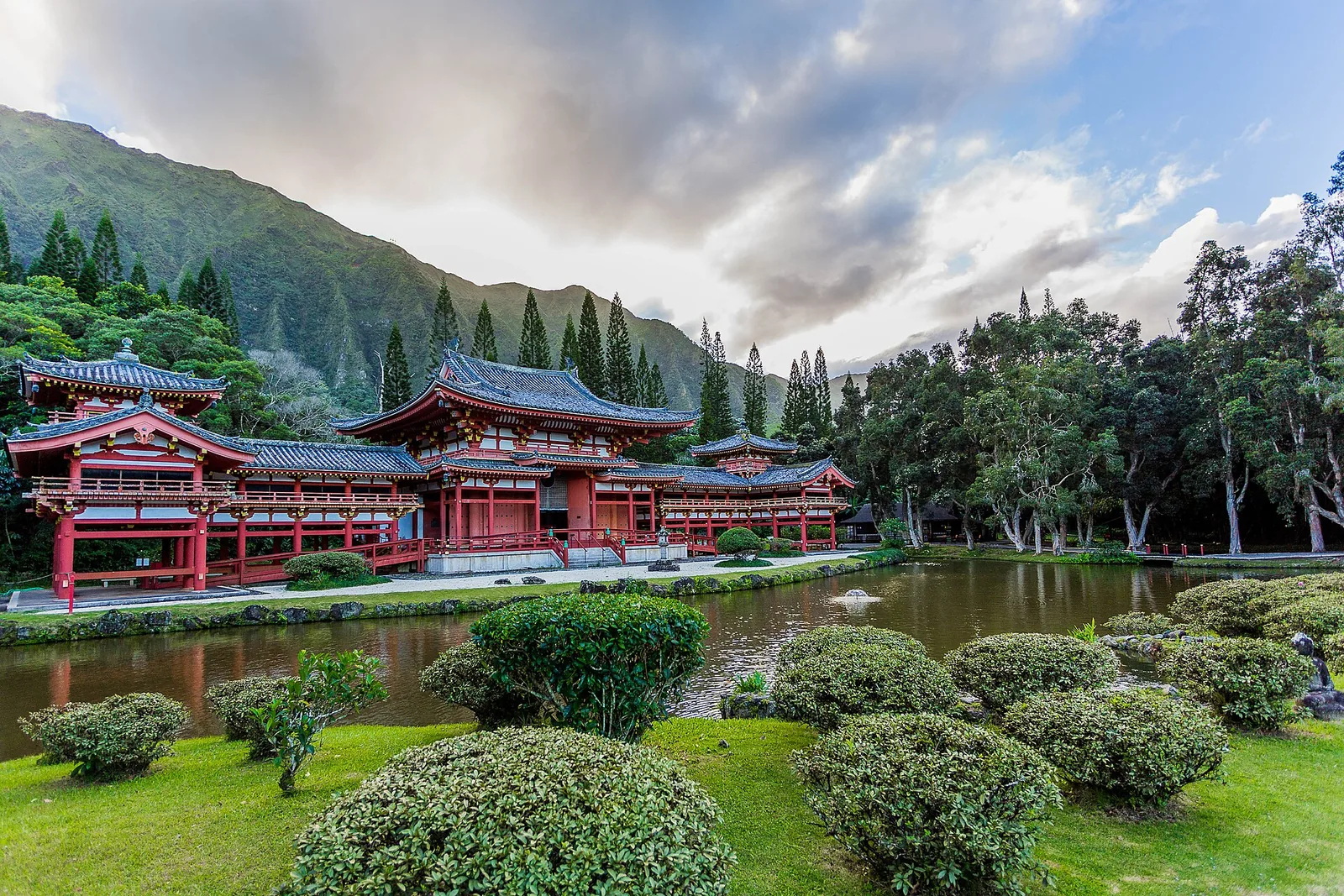
This smaller-scale replica of the 11th-century Byōdō-in in Uji, Japan, was built in 1968 for the centenary of Japanese immigration to Hawaiʻi. It sits at the back of the Valley of the Temples cemetery with the Koʻolau cliffs rising behind. Ring the big bronze bell, feed the koi and walk the pond. It’s best on a misty morning.
Cost: $10, plus parking · Hours: 8:30am–4:30pm, last entry 4:15pm · Book: no · Bus: drive; 30 minutes from Waikīkī · Allow: 45 minutes
34. Hoʻomaluhia Botanical Garden
This free city garden in Kāneʻohe began as a flood-control project and was planted with trees from the tropics worldwide. The lake, lawns and cliffs make it the most peaceful hour on this coast. The famous entrance-road photo spot causes real traffic problems, so don’t stop in the lane. Use the car parks.
Cost: free · Hours: 9am–4pm; closed Thursdays · Book: no · Bus: drive · Allow: 1–1.5 hours
35. Kualoa Ranch and the Kamehameha Highway drive
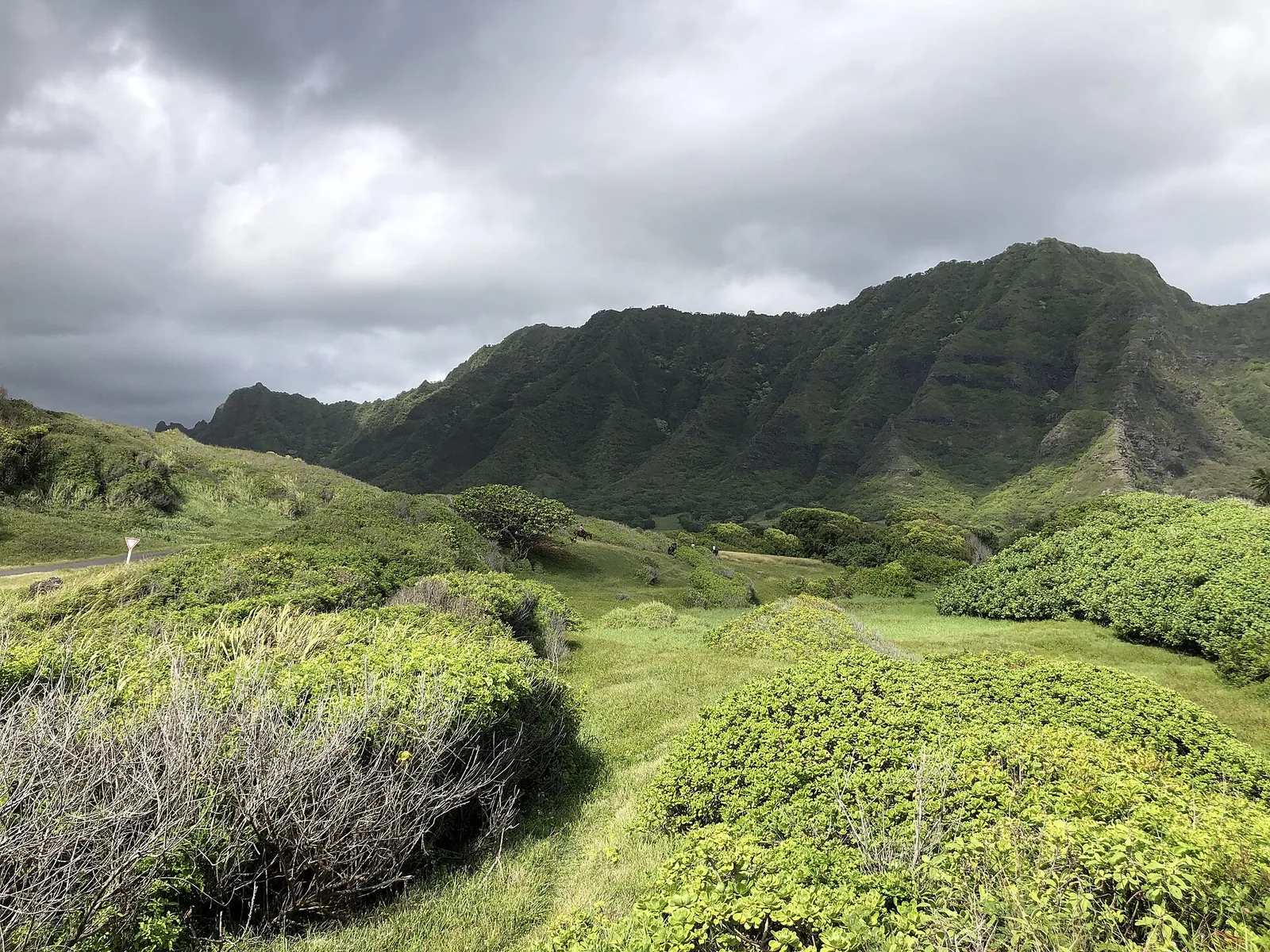
Kaʻaʻawa Valley, inside this working ranch, has been the backdrop for Jurassic Park and dozens of other films. The Movie Sites tour is $59.95 for 90 minutes. The UTV Raptor tour ($149.95, two hours) sells out weeks ahead. Afterwards, stop at Kualoa Regional Park facing Mokoliʻi islet, then follow the Kamehameha Highway north along the coast.
Cost: $59.95–$149.95 · Hours: daily except Christmas and New Year’s Day · Book: as early as you can for UTVs · Bus: 60 from Ala Moana passes the ranch · Allow: 2–4 hours
36. Kāneʻohe Bay sandbar
At low tide, Ahu o Laka rises in the middle of Kāneʻohe Bay: knee-deep water ringed by reef and mountains. Captain Bruce runs a relaxed 2 hour 45 minute trip for $180, Monday to Saturday. From 28 September, departures are at 9am and 12:15pm. It’s pricey, but the setting is unlike anything else on Oʻahu. Weekends bring a local party crowd.
Cost: $180, children $170 · Hours: Monday–Saturday · Book: several days ahead · Bus: drive to Heʻeia Kea Harbor · Allow: 3 hours
37. Polynesian Cultural Center
Owned by the Church of Jesus Christ of Latter-day Saints and staffed largely by students from neighbouring BYU–Hawaiʻi, the center in Lāʻie recreates six Polynesian island villages. Canoe demonstrations, Samoan fire-making and Tongan drumming fill the afternoon. Villages-only entry is $94.95; the Aliʻi Lūʻau package adds dinner and the evening show. It’s a long day, so don’t squeeze in the North Shore as well.
Cost: $94.95–$197.95 · Hours: noon–9pm; closed Sundays and most Wednesdays; evening show 7:30pm · Book: yes, especially Saturdays · Bus: 60 from Ala Moana, or the $28 coach from Waikīkī · Allow: 6–9 hours
The North Shore
38. Haleʻiwa town
The North Shore’s surf town is a strip of galleries, board shops and food trucks along the Kamehameha Highway. Queue for shave ice at Matsumoto’s, browse the Thursday farmers’ market at the old Haleʻiwa gym and watch surfers from Haleʻiwa Beach Park. On weekend afternoons, traffic through town crawls.
Cost: free to wander · Hours: Matsumoto’s 10am–6pm; market Thursdays 3–7pm · Book: no · Bus: 60 from Ala Moana, the long way round, about two hours · Allow: 2 hours
39. Waimea Valley
Waimea Valley is a garden, a sacred Native Hawaiian place and a paved three-quarter-mile walk to Waimea Falls. Lifeguards decide at 9am each day whether swimming is allowed, and life jackets are compulsory when it is. It’s run by a nonprofit owned by the Office of Hawaiian Affairs, and the cultural interpretation beats most paid attractions.
Cost: $26, children 4–12 $18 · Hours: Tuesday–Sunday 9am–4pm · Book: no · Bus: 60 · Allow: 2–3 hours
40. Waimea Bay
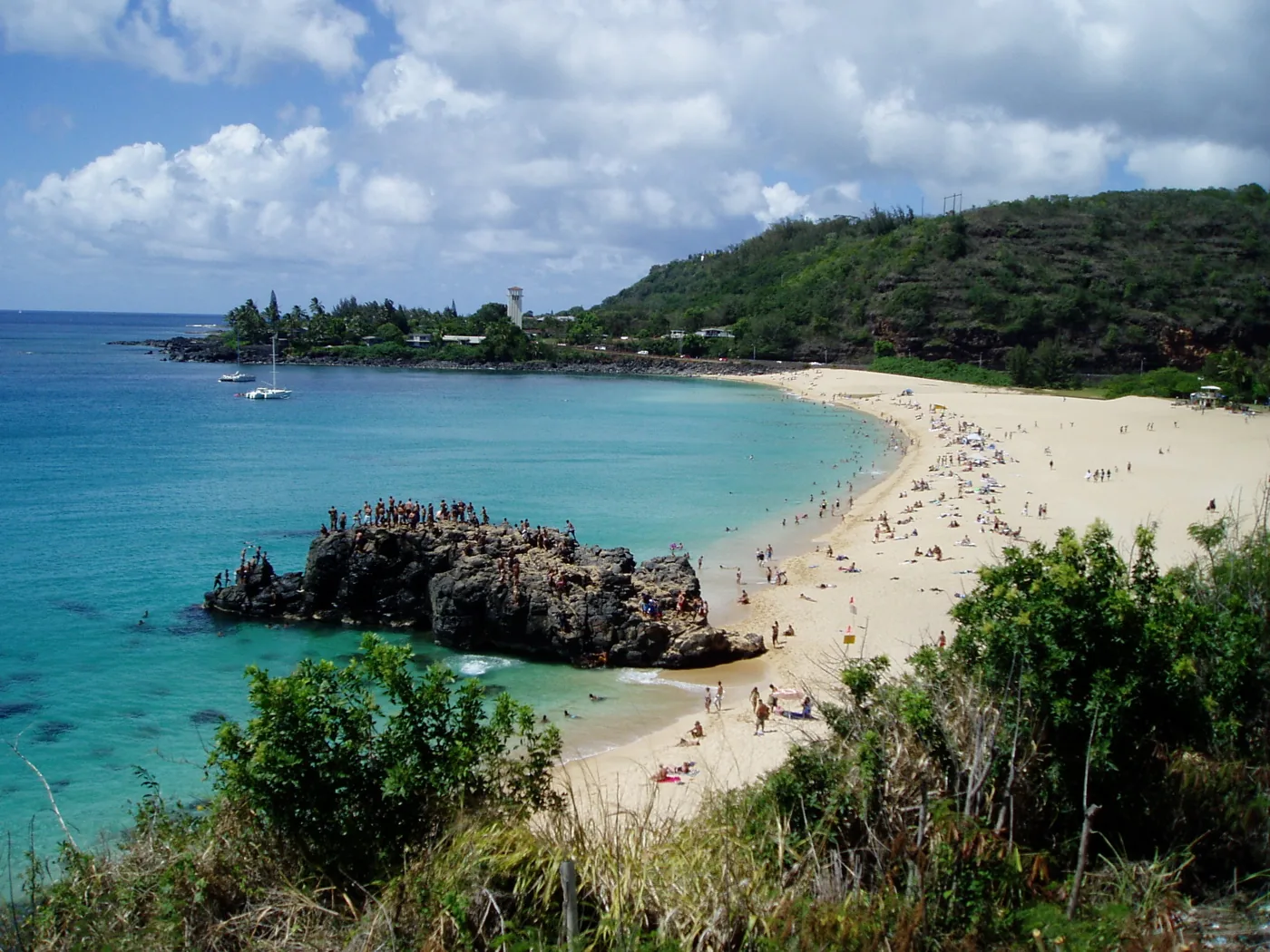
In summer Waimea Bay is a glassy, deep-blue swimming hole. From roughly November to March it becomes a big-wave arena; the Eddie Aikau contest runs only when faces reach about 40 feet, and no 2026–27 window has been announced. Skip the rock jump in any season. It’s higher than it looks, and people are hurt there every year. The small car park fills by mid-morning.
Cost: free · Hours: lifeguards 8am–6:30pm · Book: no · Bus: 60 · Allow: half a day in summer
41. Snorkel Sharks Cove in summer
Sharks Cove lies inside the Pūpūkea Marine Life Conservation District: lava-rock pools, reef fish and turtles. The name isn’t a warning. From about May to October it can be excellent, but in winter the whole area turns dangerous, with surf that pulls people off the rocks. Wear reef shoes, take nothing and swim near lifeguard tower 28.
Cost: free · Hours: daylight · Book: no · Bus: 60 · Allow: 2 hours
42. Watch big-wave surfing at Pipeline and Sunset Beach
From November to March, Pipeline at ʻEhukai Beach Park throws the most photographed waves on Earth onto shallow reef a short paddle from the sand. The Lexus Pipe Masters has a waiting period of 8–20 December 2026. Watching is free, parking isn’t easy, and you should stay out of the water. In summer the same beaches go flat.
Cost: free · Hours: mornings bring the cleanest surf · Book: no · Bus: 60 · Allow: 1–2 hours
43. Lāniākea, and seeing turtles the right way
Green sea turtles haul out to rest on the sand at Lāniākea, which made it famous and then chaotic. The state has rebuilt parking on this stretch of highway, so use the lot, not the shoulder. Stay 10 feet from turtles and 50 feet from any Hawaiian monk seal; volunteers often rope off a sleeping animal. Mornings are calmer than early afternoon, when the tour vans arrive.
Cost: free · Hours: daylight · Book: no · Bus: 60 · Allow: 30 minutes
44. Kahuku shrimp trucks
Kahuku’s shrimp farms feed a cluster of trucks on the Kamehameha Highway, and garlic shrimp over two scoops of rice is the classic North Shore lunch. Giovanni’s is the famous one, graffiti-covered and cash-friendly. Romy’s, beside its own ponds, is the local favourite. Arrive before noon or after 2pm to dodge the longest queues.
Cost: check the board; bring cash · Hours: late morning to early evening · Book: no · Bus: 60 · Allow: 45 minutes
45. ʻEhukai Pillbox hike
A short, steep climb up the ridge behind Sunset Beach Elementary leads to old pillboxes looking straight down on Pipeline and Sunset. It’s about a mile and a half round trip on slippery roots. Park at ʻEhukai Beach Park, never at the school.
Cost: free · Hours: daylight · Book: no · Bus: 60 · Allow: 1–1.5 hours
Central Oʻahu and the west side
46. Dole Plantation (a stop, not a destination)
Treat Dole Plantation as a 45-minute pit stop on the way to the North Shore. Entry is free, the pineapple soft-serve is the draw, and the train and maze are fine for children. Just north of Wahiawā are the Kūkaniloko birthstones, where the chiefs of Oʻahu were born. The site is closed to the public; visits are escorted and by reservation only through kukaniloko.org.
Cost: free; train $15, maze $10 · Hours: 9:30am–5:30pm · Book: no, tickets are sold on arrival · Bus: drive; it’s on the H-2 route north · Allow: 45 minutes
47. Kaʻena Point
Oʻahu’s westernmost tip is reached on foot along an old dirt road, two and a half miles each way, with no shade and no water. At the end is a fenced natural area reserve where Laysan albatross nest and Hawaiian monk seals rest on the sand. After Hurricane Lowell, the Keawaʻula (west) end is closed. Check with State Parks before driving to the Mokulēʻia (north) end.
Cost: free · Hours: daylight · Book: no · Bus: drive; about 75 minutes from Waikīkī · Allow: 4 hours, with two litres of water each
48. Ko Olina lagoons
Four man-made lagoons at the Ko Olina resort area have calm water and soft sand, ideal for young children. They are open to everyone, with free public parking from sunrise to sunset, but the lots are small and fill early, especially at weekends.
Cost: free · Hours: sunrise–sunset · Book: no · Bus: drive; 40 minutes from Waikīkī · Allow: 2–3 hours
49. Mākaha and the Waiʻanae coast, respectfully
The west side is Oʻahu at its least touristy: dry, sunny and deeply local. Mākaha Beach is a gentle summer swim and a heavy winter surf spot, with waves up to 25 feet and strong rip currents. Treat it as someone’s neighbourhood: no drones over homes, no parking where signs say not to, and nothing valuable in the car. For now, Farrington Highway is closed through Nānākuli and Mākaha after the storm.
Cost: free · Hours: daylight · Book: no · Bus: drive; about an hour from Waikīkī · Allow: half a day
50. See Oʻahu from the air
If you splurge once, fly. A helicopter shows you the Koʻolau cliffs, Kāneʻohe Bay and the North Shore in under an hour. Rainbow Helicopters’ 45-minute doors-off flight costs $490; Blue Hawaiian starts at $399 for 50 minutes with the doors on. For adrenaline, Skydive Hawaii jumps from 14,000 feet at Kawaihapai Airfield, formerly Dillingham, for $198 online or $245 walk-in, plus a $20 fuel surcharge.
Cost: $198–$490 · Hours: Skydive Hawaii 7am–3pm · Book: a few days ahead, with a weather buffer · Bus: drive · Allow: 2–4 hours
Things to do in Oahu by season
Oʻahu’s temperature barely moves through the year, but the ocean does. North-facing shores are huge in winter and flat in summer, and the south shore does the reverse.
| Season | North Shore | South shore and Waikīkī | Wildlife | Best picks from this list |
|---|---|---|---|---|
| Winter (Nov–Mar) | Big surf; watch, don’t swim. Pipe Masters in December | Calm, good for learners | Humpback whales, peak January–March | 40, 42, 26, 27, 1 |
| Spring (Apr–May) | Settling; snorkelling returns in May | Small, clean surf | Whales until mid-May | 24, 30, 41, 35 |
| Summer (Jun–Aug) | Flat and swimmable | Biggest south swells of the year | Turtles year-round | 40, 41, 5, 48 |
| Autumn (Sep–Oct) | Calm until late October | Warmest water | Turtles; fewer crowds | Everything; the best-value weeks of the year |
Box jellyfish drift onto south-facing beaches about eight to ten days after each full moon. By our reckoning from the moon dates, the remaining 2026 windows fall around 4–6 October, 2–4 November and 2–4 December. Check the Waikīkī Aquarium’s calendar and swim at a lifeguarded beach on those days. Hurricane season runs June to November. Direct hits are rare, but as September 2026 showed, a near miss still closes parks.
Best for you: picking from 50
First-time visitors
Book Pearl Harbor (21–22), Diamond Head (1) and Hanauma Bay (24) before you fly. Add a sunset sail (4), one windward day (30, 33, 35) and one North Shore day (38–40), and you have a well-rounded week.
Families with children
Ko Olina (48), Magic Island (19), the aquarium and zoo (6–7), the Polynesian Cultural Center (37) and the Makapuʻu trail (27) all work well. Waimea Valley’s lifeguarded waterfall swim (39) is the day children remember.
Couples
Try the Pillbox at sunrise (31), a kayak to Nā Mokulua (30), a sunset sail (4), a lūʻau at Toa or the Cultural Center (9), and the Kāneʻohe sandbar (36) if the budget stretches.
On a budget
More than half this list is free. Diamond Head costs $5, a HOLO card caps bus fares at $7.50 a day, and the Saturday hula show and Friday fireworks cost nothing.
Rainy days
Choose the Bishop Museum (12), ʻIolani Palace (11), HoMA (13), Pearl Harbor (21–23) and Chinatown’s food (14). Stay off valley trails after heavy rain, when streams rise fast.
Ocean and trail safety
Drowning is the leading cause of injury death among visitors to Hawaiʻi. State health figures for 2015–2019 averaged about 45 visitor drownings a year, close to one a week. Swim at lifeguarded beaches, ask the guard about conditions before going in, and follow the local rule: when in doubt, don’t go out.
- Read the season. North Shore beaches that are lakes in July are lethal in January. The shorebreak at Sandy Beach and Makapuʻu causes serious neck injuries all year.
- Stay out after heavy rain. The health department advises 72 hours out of the water after heavy rain, because runoff carries sewage and bacteria. Brown-water advisories went up after Hurricane Lowell.
- Give wildlife space. Keep 10 feet from turtles and 50 feet from monk seals (150 feet from a mother and pup). Federal rules bar swimming with spinner dolphins or approaching within 50 yards.
- Kapu means do not enter. Signs marked kapu or no trespassing mean exactly that. The city began dismantling the Haʻikū Stairs in 2024; they are not a hike. The neighbourhood trailhead for Maunawili Falls has been closed since 2021.
- Protect the reef. Sunscreens with oxybenzone or octinoxate are banned in Hawaiʻi. Use mineral sunscreen and never stand on coral.
What to skip or rethink
- Paradise Cove. It closed at the end of 2025, though old listings still sell it.
- Lanikai by car. Park in Kailua and walk.
- Swimming at Sandy Beach, or anywhere on the North Shore in winter. Watch instead.
Food is one of the best reasons to leave the hotel. For poke counters, plate-lunch windows, bakeries and special-occasion dinners, see our full guide to Honolulu food and restaurants.
If the mountains are what you came for, our guide to the best hikes on Oahu compares more than 25 trails by distance, climb, difficulty and legal status, including the ones that are closed.
Frequently Asked Questions
What are the best things to do in Oahu without a car?
From Waikīkī, TheBus and your own feet reach Diamond Head, Ala Moana, downtown, Chinatown, Bishop Museum and Pearl Harbor (Route 42). Route 60 runs slowly to Kualoa, the Polynesian Cultural Center and the North Shore. For Hanauma Bay, book the Roberts Hawaiʻi bundle. A HOLO card caps fares at $7.50 a day.
What should I book before flying to Oʻahu?
USS Arizona tickets release on recreation.gov at 3pm HST, 56 days and one day ahead. Diamond Head opens 30 days ahead; Hanauma Bay two days ahead at 7am HST. Kualoa Ranch UTV tours, ʻIolani Palace, lūʻau and the Shangri La tour, released on the first Thursday of each month, also sell out. Book them once your dates are fixed.
How many days do you need on Oʻahu?
Five days covers the essentials: Pearl Harbor and downtown, Diamond Head and Waikīkī, Hanauma Bay and the southeast shore, the windward coast, and the North Shore. Seven lets you add Kaʻena Point, a lūʻau evening and a slow beach day without rushing.
When is the best time of year to visit Oʻahu?
September: warm water, calm North Shore swimming, fewer crowds and lower hotel rates than summer. Late April and May are almost as good. Come between December and March for big-wave surfing and humpback whales, but expect peak prices and book everything earlier.
Is it safe to swim at Waikīkī?
Usually, yes. Waikīkī is reef-protected, lifeguarded and gentle most of the year. Watch for box jellyfish eight to ten days after a full moon, and stay out for 72 hours after heavy rain or while a brown-water advisory is posted, as there was after Hurricane Lowell. Swim near a lifeguard tower.
What is there to do on Oʻahu when it rains?
Rain is often local, so try the other side of the island first: when the windward coast is wet, Waikīkī and the west side are often dry. On a truly wet day, head for the museums, ʻIolani Palace or Pearl Harbor, and skip valley hikes.
Photo Credits
- Waikīkī Beach and Diamond Head: Frank Schulenburg, CC BY-SA 4.0
- Map: honolulutourism.org; coastline data © OpenStreetMap contributors, ODbL
- USS Arizona Memorial from the air: US Navy photo by PH3(AW/SW) Jayme Pastoric, public domain
- Hanauma Bay: Diego Delso, CC BY-SA 3.0
- Makapuʻu Point Lighthouse: Pete Markham, CC BY-SA 2.0
- Nā Mokulua: Cristo Vlahos, CC BY-SA 3.0
- Nuʻuanu Pali: Holly Cheng, CC BY-SA 3.0
- Byodo-In Temple: Puneet Abbott, CC BY 2.0
- Kaʻaʻawa Valley, Kualoa: Famartin, CC BY-SA 4.0
- Waimea Bay: Travisthurston, CC BY-SA 3.0