There are no walk-ins at Diamond Head any more. Every out-of-state visitor needs a reservation, released up to 30 days ahead on the state’s booking site and paid by card only, and drivers must arrive within the first 30 minutes of a two-hour window or risk being turned away. Get that part right and the Diamond Head hike is one of the easiest big views in Hawaiʻi: under two miles there and back, 560 feet of climbing, and the whole of Waikīkī laid out beneath you.
Everything you need is here: how the reservation system works, how to get there without a car, what the trail is like step by step, the best time of day and year, and what to do if every slot is gone. Prices and rules were checked in October 2026.
Diamond Head Hike at a Glance
| What | Details |
|---|---|
| Distance | 0.8 miles each way, just under 2 miles round trip |
| Climb | About 560 feet, from the crater floor to the 761-foot summit |
| Time | 1.5–2 hours round trip, including time at the top |
| Difficulty | Moderate: steady uphill, uneven ground, two staircases and a tunnel |
| Cost | $5 per out-of-state person, plus $10 per vehicle; Hawaiʻi residents free with ID |
| Hours | 06:00–18:00 daily; last entry slot 16:00 |
| Reservations | Required for all non-residents, up to 30 days ahead, card only |
| Shade | Almost none, apart from a 225-foot tunnel near the top |
| Facilities | Restrooms at the trailhead; nothing on the trail |
| Bus | TheBus 2, 2L or 23 to Diamond Head Road, then walk in |
Diamond Head is one of the classic first-morning activities on Oʻahu, and it appears near the top of every list of things to do in Oʻahu for good reason. It’s short enough for most people who walk regularly, dramatic enough to feel like an achievement, and close enough to Waikīkī that you can be back at the beach by 9am.
How Diamond Head Reservations Work
Diamond Head State Monument has run on 100% advance reservations for non-residents since the state introduced the system, and in 2026 it’s strict. Bookings are made on the Department of Land and Natural Resources’ Go Wild system at gostateparks.hawaii.gov, up to 30 days ahead. The fees are $5 per out-of-state person and $10 per vehicle, and they can only be paid by card. Hawaiʻi residents enter free with a state ID and don’t need to book.
There are two kinds of reservation:
- Parking. If you’re driving in, you book a two-hour parking window and pay the $10 vehicle fee plus $5 for each out-of-state person in the car. You must enter within the first 30 minutes of that window, and the gate staff do turn latecomers away when the lot is busy.
- Entry on foot. If you’re arriving by bus, by bike, on foot or by rideshare, you book a pedestrian entry slot and pay $5 per person. Walk-in slots are shorter than the parking windows, about an hour when we checked, so aim to arrive at the start of yours.
The 6am and 8am windows are the most popular and go first, especially on weekends and in the winter and summer peaks. Book the moment your date comes into the 30-day window if you want the early start; it’s one of several reservations to make before you fly, all listed in our guide to planning a trip to Hawaiʻi. Keep the confirmation on your phone, carry photo ID, and if your plans change, release the slot so someone else can use it. The official Diamond Head State Monument page posts any changes to hours, fees or closures.
Cost: $5 per out-of-state person; $10 per vehicle · Hours: 06:00–18:00, last slot 16:00 · Book: up to 30 days ahead on Go Wild, card only · Allow: 2 hours on site
Getting There: Bus, Foot, Rideshare or Car
By bus
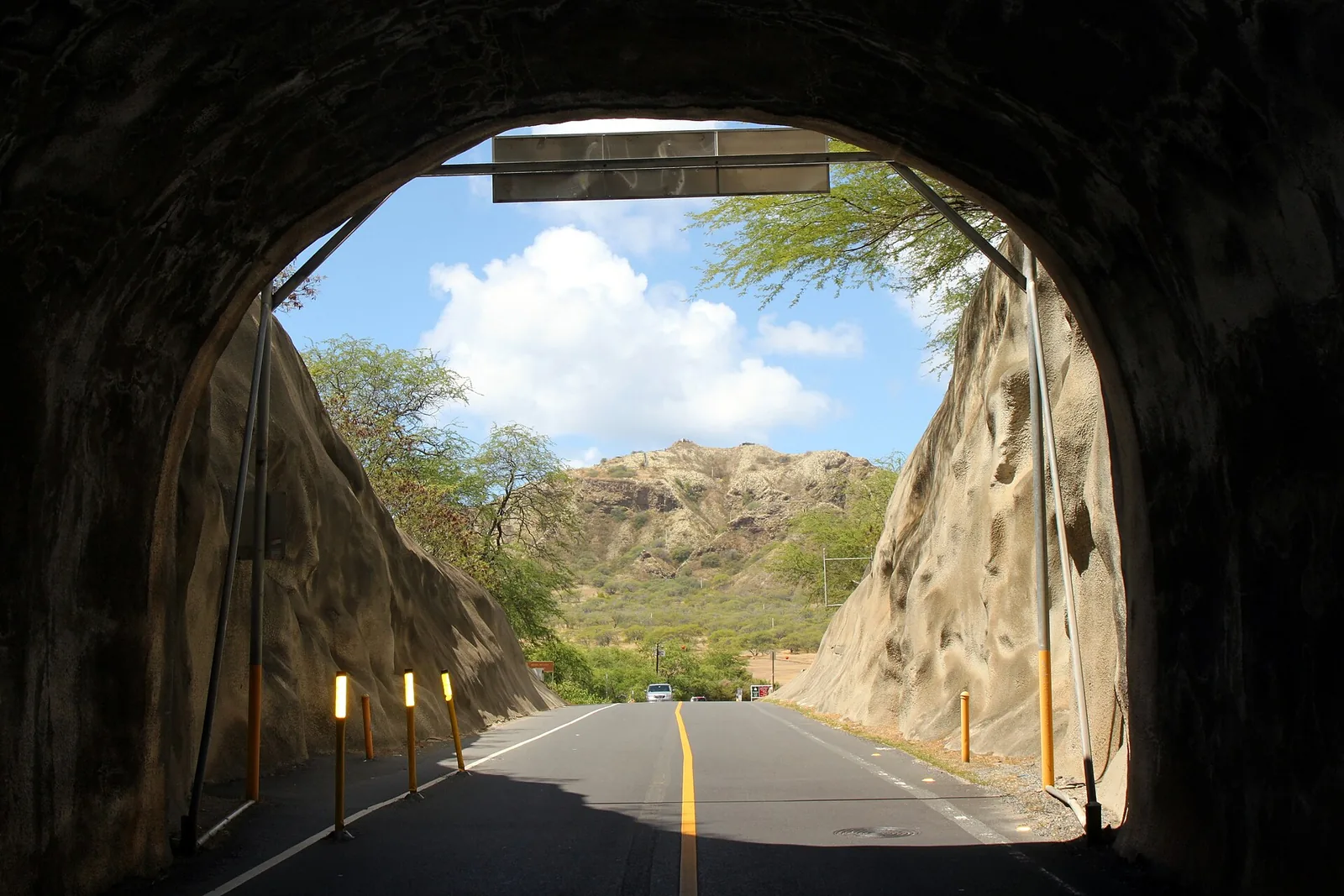
TheBus Routes 2, 2L and 23 stop on Diamond Head Road outside the crater, a short ride from Waikīkī for $3.25 (or within the $7.50 daily cap on a HOLO card). From the stop, walk up the road and through the tunnel that cuts through the crater wall; there’s a pedestrian path, and the trailhead and entry booth are a few minutes beyond. It’s the cheapest and least stressful way in, and you only need the $5 walk-in reservation. Timetables are on thebus.org, and our guide to getting around Oʻahu explains fares and passes.
On foot from Waikīkī
From the Diamond Head end of Kapiʻolani Park it’s roughly two miles to the trailhead, uphill most of the way along Monsarrat Avenue and Diamond Head Road, so allow about 45 minutes. It’s a fine warm-up on a cool morning and a slog on a hot afternoon. Carry extra water, because you’ll be thirsty before you start climbing.
By rideshare
A rideshare from Waikīkī is a quick, inexpensive option. Book a walk-in entry slot, ask to be dropped on Diamond Head Road by the tunnel, and walk in from there, which avoids any question about the car needing a parking reservation.
By car
Driving in means a parking reservation for a two-hour window, and with the hike itself taking 90 minutes to two hours, that’s enough if you don’t linger. The lot is on the crater floor beside the trailhead. If you’re visiting several places in a day, combine Diamond Head with Kapahulu, Kaimukī or the east side; parking elsewhere around Waikīkī is expensive, with hotels charging $44–72 a night.
What each way of getting there costs
| How you arrive | Reservation you need | Cost per out-of-state person |
|---|---|---|
| TheBus | Walk-in entry slot | $11.50: $3.25 each way plus $5 entry |
| On foot from Waikīkī | Walk-in entry slot | $5 |
| Rideshare | Walk-in entry slot | Your fare plus $5 |
| Hire car | Two-hour parking window | $5 each plus $10 for the car |
For a couple, the bus and a car work out almost the same at the gate, $23 against $20, so the choice comes down to what else you’re doing that day. If Diamond Head is the only stop, the bus is simplest. If you’re heading on to Hanauma Bay or the east side, drive.
The Diamond Head Hike, Step by Step
The trail was built in 1908 to serve the military observation post at the summit, and it climbs the inside of the crater wall from the floor to the rim. It’s well maintained and impossible to get lost on, but the ground is uneven and steep in places.
The crater floor and the paved start
From the trailhead, near the restrooms and the entry booth, the first stretch is a paved path across the dry, scrubby crater floor. It’s gentle, and it’s where everyone sets off too fast. Take it easy: the climb hasn’t started yet.
The switchbacks
The pavement gives way to a dirt and rock trail that zigzags up the inside of the crater wall, with handrails along the steeper edges. There are small lookouts on the way where you can stop, catch your breath and let faster walkers past. The trail narrows here, so keep to the right on the way up.
The first staircase and the tunnel
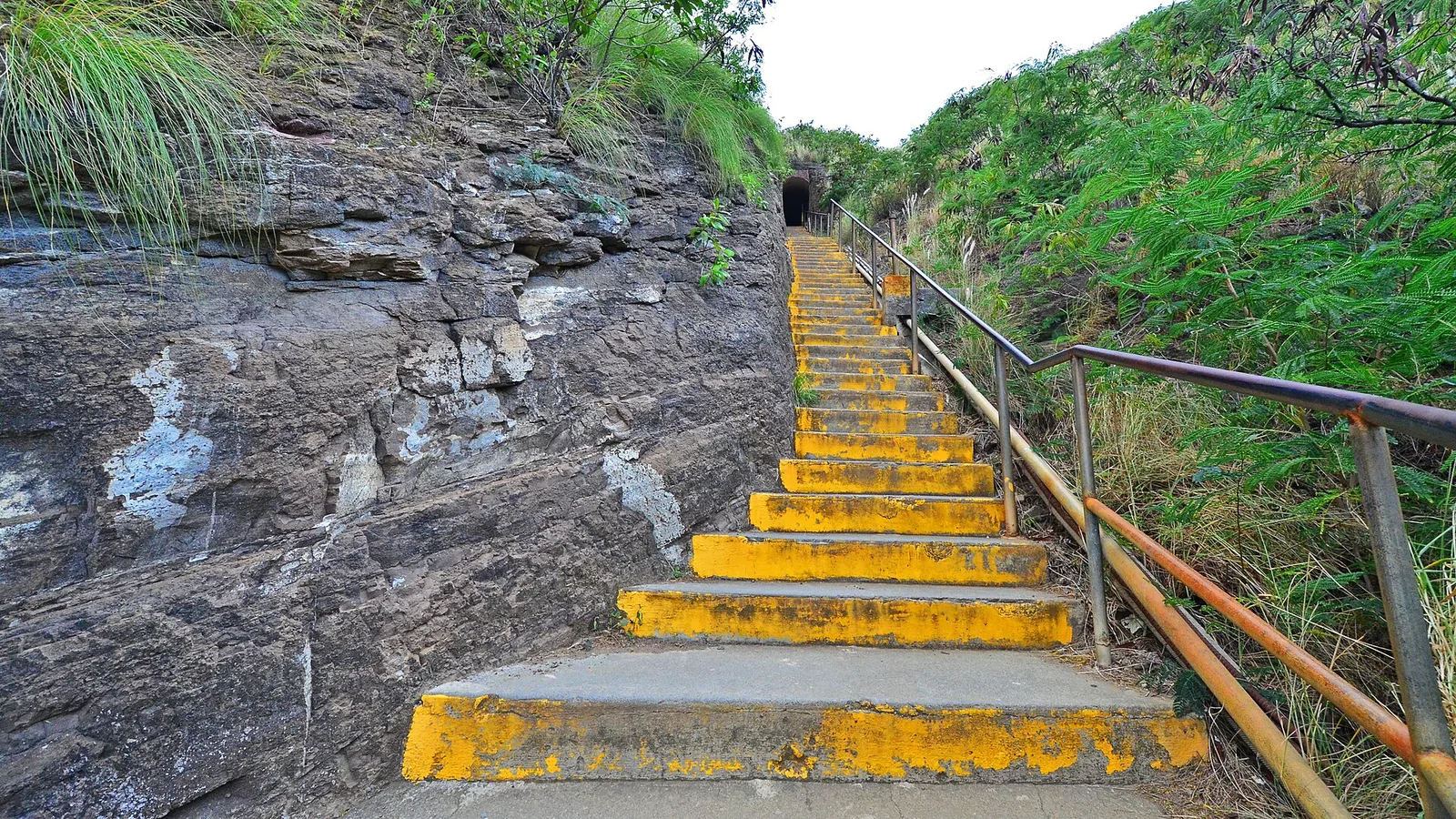
At the top of the switchbacks, a flight of 74 concrete steps leads to a 225-foot tunnel through the rock, dim but lit, and the only real shade on the hike. Pause inside it if it’s hot.
The second staircase and the summit
Beyond the tunnel, a steeper flight of 99 steps climbs to the old fire control station; if your knees object, there’s a slightly longer, less steep path to one side. A spiral staircase inside the bunker brings you out onto the rim, then a short final climb reaches the summit platform at 761 feet. Fenced-off bunkers and tunnels along the way are closed: treat them as kapu, which means do not enter.
The view
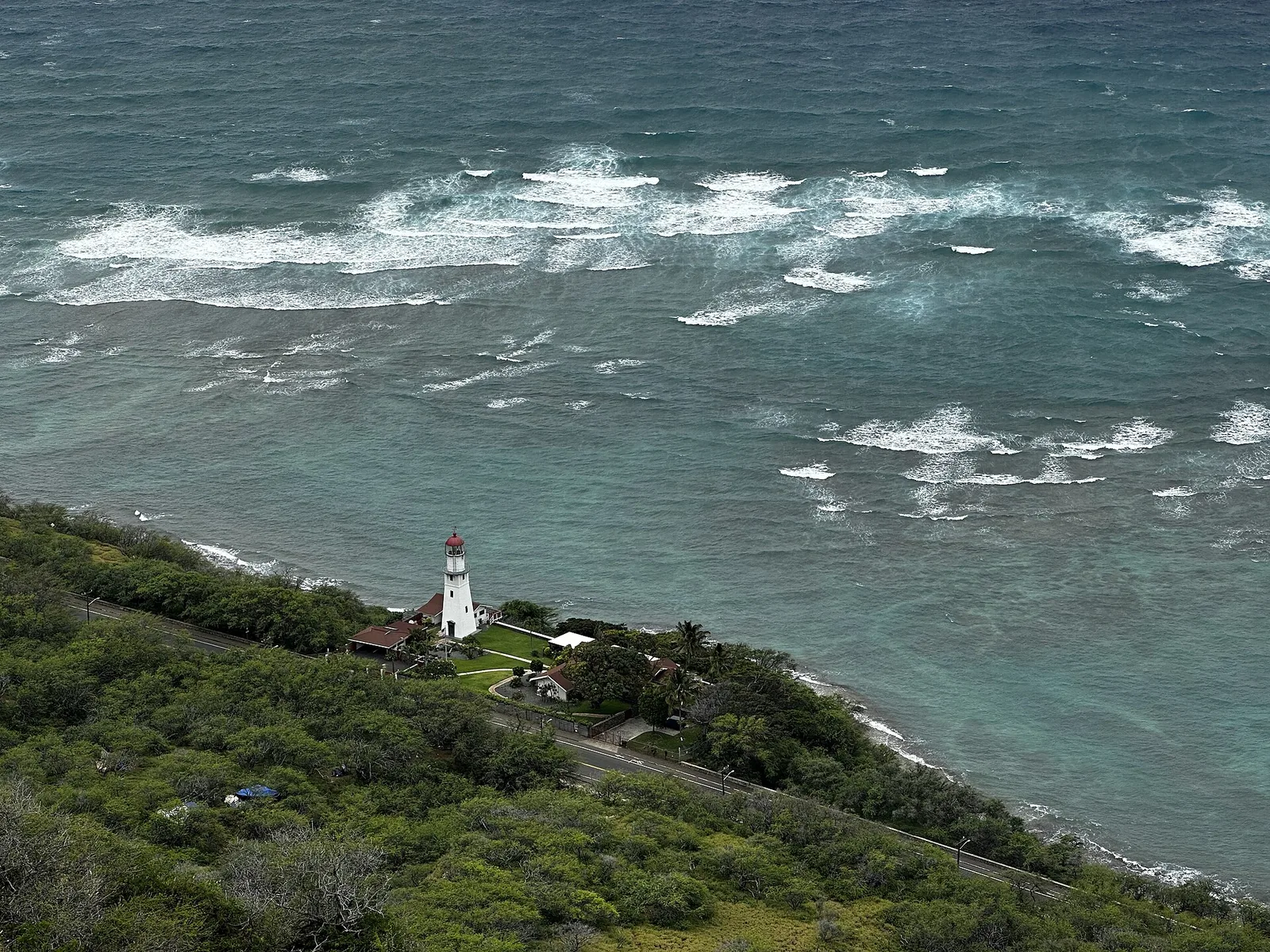
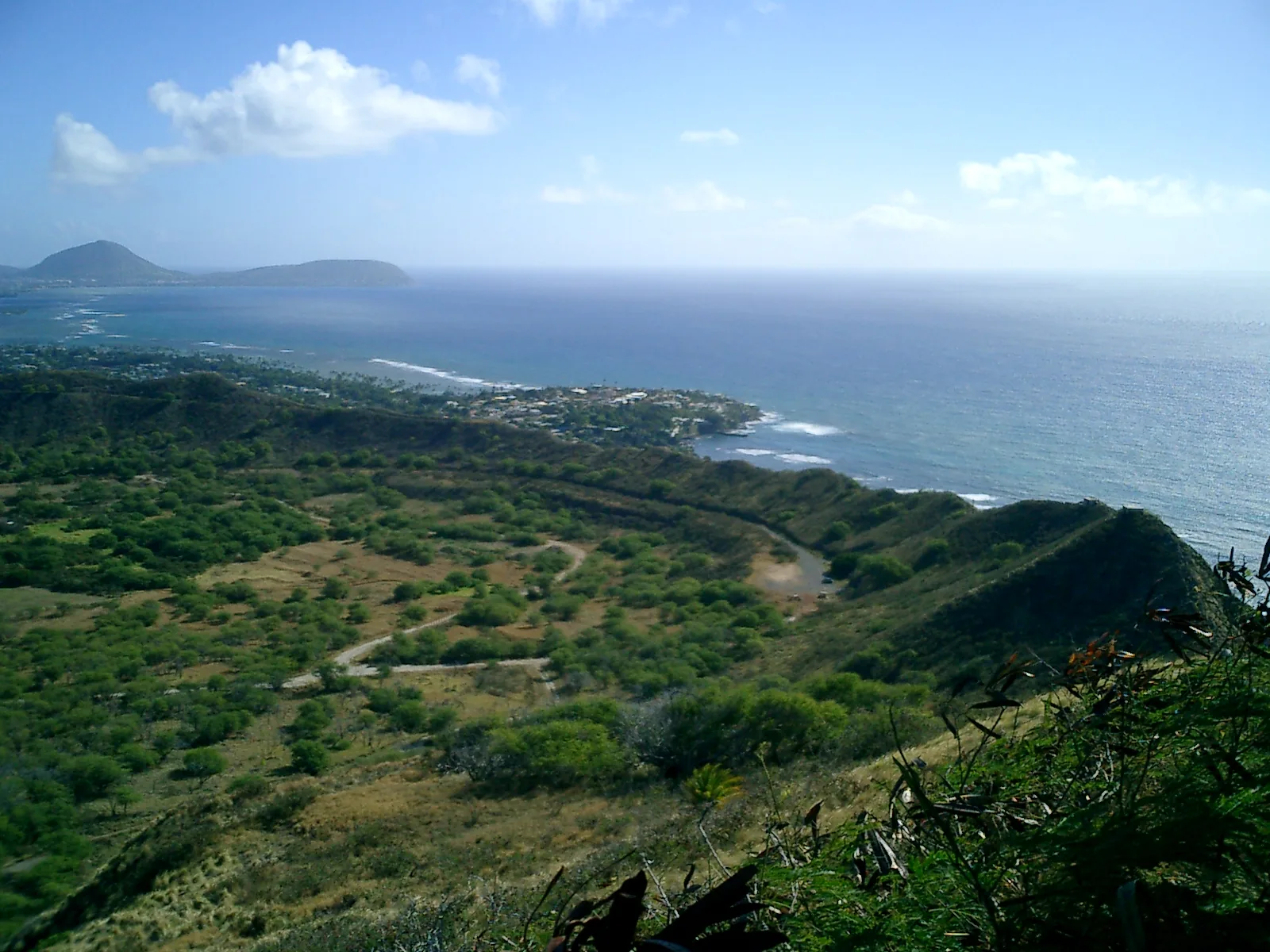
From the top you see the whole sweep of Waikīkī and Honolulu to the west, the Diamond Head Lighthouse almost directly below, Kāhala and Koko Head to the east, and, on a clear day, the Waiʻanae Mountains on the far side of the island. From mid-December to mid-May, watch the sea to the south and east for humpback whales blowing. Closer in, you can pick out Kapiʻolani Park, the Waikīkī Aquarium on the shore and the long white curve of Kūhiō Beach’s breakwater. Take your photos, then make room for the next group; the summit platforms are small.
The way down
You come down the same way. The steps are easier going down but harder on the knees, and the loose gravel on the switchbacks is where most slips happen, so take it slowly. Allow 30–45 minutes from the summit to the trailhead.
Distance: just under 2 miles round trip · Climb: about 560 feet · Allow: 1.5–2 hours
A Diamond Head Morning, Minute by Minute
Here’s how a first-slot morning works from a Waikīkī hotel, with no car:
- 05:30 Leave the hotel with water, a hat and your reservation on your phone. Catch an early Route 2 or 2L bus, or a rideshare, to Diamond Head Road.
- 05:50 Walk through the road tunnel into the crater and join the short queue at the entry booth.
- 06:00 Gates open. Show your confirmation and ID, use the restrooms, and set off.
- 06:40 Reach the summit after an unhurried climb, in time for sunrise from November to February.
- 07:00 Start down before the platforms get crowded.
- 07:40 Back at the trailhead and out through the tunnel.
- 08:00 Breakfast: the KCC Farmers’ Market on a Saturday, or Kapahulu Avenue for malasadas any day.
By 9am you’re at the beach, and the people arriving for later slots are just starting up a trail that’s already hot.
Is the Diamond Head Hike Worth It?
For a first visit to Oʻahu, yes. It’s the island’s signature short hike, the views of Waikīkī are the ones you’ve seen in a thousand photographs, and it takes less than half a day, including the journey. The reservation system has made it calmer than it used to be, too, because numbers are capped.
The honest caveats: it’s busy, even with reservations, and you share the summit with a lot of people. The trail itself is more interesting than beautiful, with concrete steps and old military bunkers rather than rainforest. If you’ve hiked Diamond Head before, or you want solitude and nature, the Makapuʻu Lighthouse Trail or Kuliʻouʻou Ridge will give you more. But if you only have time for one walk in Honolulu, this is the one, and it belongs on any shortlist of Oʻahu’s best experiences.
Trail Etiquette and Rules
- Keep right on the way up and let faster walkers pass at the lookouts.
- Stay on the trail and behind railings; the crater wall is steep and loose.
- Don’t climb on or into fenced-off bunkers, tunnels or gun emplacements.
- Smoking and vaping aren’t allowed in Hawaiʻi’s state parks.
- Use headphones rather than a speaker; the summit is small and shared.
- Pack out everything you bring in, and don’t take rocks.
Weather and Closures
Diamond Head sits on the dry, leeward side of Honolulu and is usually sunny when Mānoa Valley is wet, but showers do blow through, especially in winter, and the gravel on the switchbacks gets slippery after rain. The state closes the monument in dangerous weather: when Hurricane Lowell passed in September 2026, every Oʻahu state park shut for a day before reopening on 9 September. If storms, high winds or a heat advisory are forecast, check the monument’s page before you set out, and remember that a closed park cancels your slot, not your trip; rebook for another morning. On Honolulu Marathon morning, Sunday 13 December 2026, the roads around Diamond Head close to traffic; our guide to Hawaiʻi events lists other dates to plan around.
Photography Tips
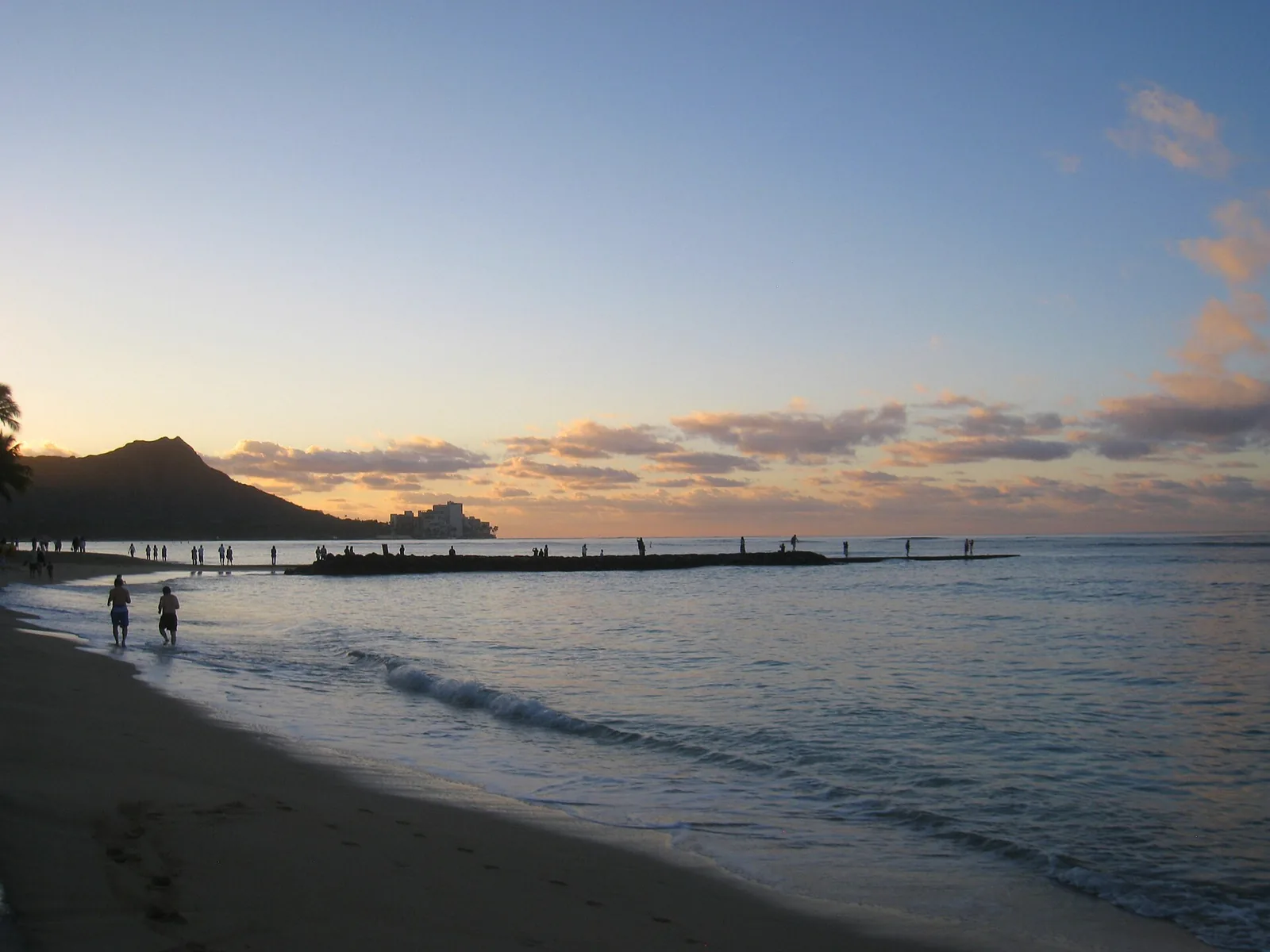
The classic shot is west from the summit over Waikīkī, with the curve of the beach, the hotels and the green bulk of the Koʻolau mountains behind. Morning light from the east falls straight onto that view, which is another reason to take the early slot. Look east for Kāhala and Koko Head, and straight down for the lighthouse and the surf breaks on the reef. A phone is all you need; a tripod is impractical on the crowded platforms. For the best photos of Diamond Head itself, shoot from Waikīkī Beach at sunset, or from the Kapahulu groin at the end of Kūhiō Beach.
When to Hike Diamond Head
Time of day
Go early. The 6am slot is cooler, the light over Waikīkī is softer, and the trail is quieter than it will be by 9am, when tour groups arrive and the sun is already fierce on the bare crater wall. Late afternoon is the second-best option, but the last entry slot is at 4pm and the gates close at 6pm, so there’s no sunset from the summit at any time of year.
Sunrise
Whether you can catch the sunrise depends on the month. From roughly November to February, Honolulu’s sunrise comes well after 6:30am, so a brisk walk from the 6am opening can put you on the summit as the sun comes up over Koko Head. In summer, the sun rises before the gates open. Either way, book the very first slot and be at the gate before 6am.
Time of year
Diamond Head is good year-round. Winter brings cooler mornings, occasional showers that make the trail slippery, and whales offshore from mid-December. Summer is hotter and drier, and the trail busier with families. September and late spring are the quietest months for visitors overall, which makes slots easier to get. Our guide to the best time to visit Hawaiʻi covers the seasons.
What to Bring and What to Know
- Water. At least a litre per person, more in summer. There’s nothing to buy on the trail, so fill up before you start.
- Sun protection. A hat, sunglasses and mineral sunscreen; Hawaiʻi bans the sale of sunscreens with oxybenzone or octinoxate.
- Shoes. Trainers or walking shoes with grip. Flip-flops are a common mistake on the loose gravel.
- A small bag. Keep your hands free for the handrails on the stairs.
- Phone and ID. Your reservation confirmation and photo ID.
- Patience. On busy mornings there are queues on the staircases and at the summit. Let faster walkers pass, and stay behind railings and fences.
The trail isn’t suitable for strollers or wheelchairs beyond the paved start, and there’s no shade to speak of, so take heat seriously: if you feel dizzy or sick, stop, drink, find shade and turn back. Leave no rubbish, take no rocks, and don’t carve or paint on the walls of the tunnel or bunkers.
Diamond Head With Kids, Seniors and Less-Mobile Hikers
Children from about five usually manage the whole hike on foot, and most love the tunnel and the bunker. Younger ones should go in a carrier, because the stairs rule out strollers. Start at 6am, take snacks, and treat the lookouts as rest stops. Our guide to Hawaiʻi with kids has more ideas for each age.
For older visitors or anyone with heart, breathing or knee problems, the hike is manageable at a slow pace but the stairs are steep, and there’s no shortcut down once you’ve started up. If you’d rather skip the climb, drive or take the bus along Diamond Head Road to the lookouts above the lighthouse, where you can watch surfers below and the coast stretching east for free, with no reservation needed.
Combining Diamond Head With Hanauma Bay
With a hire car, Diamond Head and Hanauma Bay make a natural pair, about 20 minutes apart along the coast. There are two ways to do it. Snorkel first: be at Hanauma Bay for its 6:45am opening (Wednesday to Sunday, booked 48 hours ahead at 7am), leave by late morning, and take a mid-afternoon Diamond Head slot when the heat is easing. Or hike first: take the 6am Diamond Head slot, then drive on to Hanauma Bay, where the last entry is at 1:30pm. The second order is cooler for the hike but busier in the water. Either way, add Hālona Blowhole and the Makapuʻu Lighthouse Trail and you have a classic east-side day; our snorkelling guide and Oʻahu itinerary have the details.
Where to Stay for an Early Start
If the 6am slot is the plan, stay at the Diamond Head end of Waikīkī, near Kapiʻolani Park and Kūhiō Beach. From there the bus stop for Routes 2 and 2L is a short walk, a rideshare to the crater takes a few minutes, and you can even walk the two miles if you’re keen. Hotels further west, towards the Hilton Hawaiian Village, add 10–15 minutes to every early start. Our guide to where to stay in Oʻahu compares the areas.
A Little History: From Lēʻahi to Fort Ruger
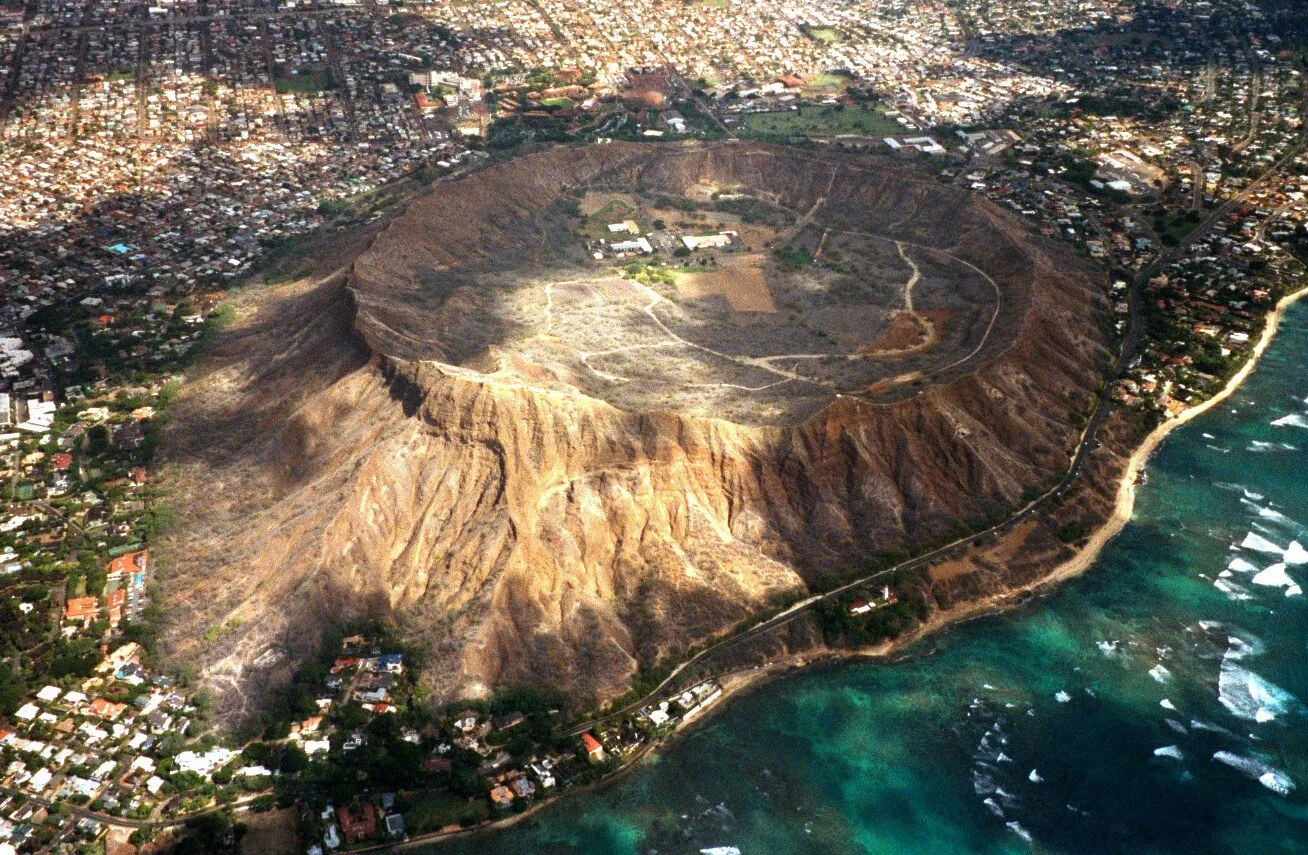
Diamond Head is a tuff cone, formed in a short, violent eruption roughly 300,000 years ago, when rising magma met seawater and blasted ash into the air. Hawaiians named it Lēʻahi, usually translated as the brow of the ʻahi (yellowfin tuna), for the shape of its ridge seen from the west. Nineteenth-century British sailors, finding calcite crystals glittering in its rocks, called it Diamond Head, and the name stuck.
In the early 1900s the US Army made the crater part of Fort Ruger, building the summit fire control station, the bunkers along the rim and the trail to reach them, so that gunners could direct coastal artillery against ships that never came. When the attack did come, in December 1941, it came from the air, on Pearl Harbor. The crater became a state monument in 1962 and a National Natural Landmark in 1968. Our guide to Hawaiian culture and history covers the bigger story of the islands.
If You Can’t Get a Diamond Head Slot
If every window is gone, don’t despair: Oʻahu has plenty of free hikes with views as good or better, and none of these needs a reservation. More are in our guide to the best hikes on Oʻahu.
- Koko Crater Railway Trail: about 1,048 old railway steps straight up, free, sunrise to sunset, with two free car parks in Koko Head District Park. Much harder than Diamond Head.
- Makapuʻu Lighthouse Trail: a paved two-mile round trip with about 500 feet of climb, free, and the best whale-watching walk on the island in winter.
- Lanikai Pillbox: about 1.8 miles round trip above Lanikai’s turquoise water. Parking is banned along Mokulua and Aʻalapapa Drives, so park at Kailua Beach Park.
- Kuliʻouʻou Ridge: 4.8 miles round trip and 1,633 feet of climbing through forest to a ridge-top view; allow 3–3.5 hours.
- Mānoa Falls: a 1.6-mile round trip through rainforest, free, with about $7 parking at the trailhead.
| Trail | Round trip | Climb | Cost | Book ahead? |
|---|---|---|---|---|
| Diamond Head | Under 2 miles | 560 ft | $5 per person + $10 per car | Yes, 30 days |
| Koko Crater Railway Trail | About 1,048 steps up, then back down | Very steep | Free | No |
| Makapuʻu Lighthouse Trail | 2 miles | About 500 ft | Free | No |
| Lanikai Pillbox | About 1.8 miles | Steep, short | Free | No |
| Kuliʻouʻou Ridge | 4.8 miles | 1,633 ft | Free | No |
| Mānoa Falls | 1.6 miles | Moderate, often muddy | About $7 parking | No |
One trail you won’t find on any responsible list is the Haʻikū Stairs. It’s not a hike: the city began removing the structure in 2024, and anyone trying to reach it is trespassing.
Make a Morning of It
Diamond Head sits at the quiet end of Waikīkī, close to some of Honolulu’s best small pleasures, so plan the rest of the morning around it:
- KCC Farmers’ Market: on Saturdays from 7:30am to 11am, just down the road at Kapiʻolani Community College, the best post-hike breakfast in town. Route 2 or 2L.
- Kapahulu Avenue: a hot malasada from Leonard’s ($2.25) or a poke bowl from Ono Seafood ($11.75, Tuesday to Saturday). Our guide to the best restaurants in Honolulu has more, and Kapahulu is one of the Honolulu neighbourhoods most worth a wander.
- Kaimana Beach and the Waikīkī Aquarium: a calm swim and a cool hour indoors at the Diamond Head end of Waikīkī; the aquarium is open 9am to 4:30pm, $12 for adults. Kaimana is one of the calmer town beaches in our guide to the best beaches in Oʻahu.
- Kapiʻolani Park: shade, lawns and the Honolulu Zoo, open for entry from 10am.
For a full list of what’s nearby, see our guide to the 40 best things to do in Honolulu, and our Waikīkī guide for the beach below.
Frequently Asked Questions
Do you need a reservation for the Diamond Head hike?
Yes, if you’re not a Hawaiʻi resident. Reservations are required for everyone entering, by car or on foot, and are released up to 30 days ahead on the state’s Go Wild booking site. There are no walk-ins. Entry costs $5 per out-of-state person and parking $10 per vehicle, paid by card only. Residents enter free with a state ID.
How long does the Diamond Head hike take?
Most people take 1.5 to 2 hours for the round trip, including 15–20 minutes at the summit. The trail is 0.8 miles each way with about 560 feet of climbing. Fit walkers can do it in an hour; families with young children or anyone taking it slowly should allow two hours, which fits within a two-hour parking window.
Can you hike Diamond Head without a car?
Yes. TheBus Routes 2, 2L and 23 stop on Diamond Head Road outside the crater, and from there you walk through the road tunnel to the trailhead. You’ll need a walk-in entry reservation, at $5 per out-of-state person. You can also walk from Waikīkī, about two miles uphill, or take a rideshare to the tunnel.
Is the Diamond Head hike hard?
It’s moderate. The trail is short, but it climbs steadily on uneven ground, with two steep staircases of 74 and 99 steps and almost no shade. Most reasonably active people, and most children over five, manage it comfortably at their own pace. Heat is the main challenge, so go early and carry plenty of water.
Can you see the sunrise from Diamond Head?
Only in winter. The gates open at 6am, and from roughly November to February the sun rises well after 6:30am, so a quick walk from the first slot can put you on the summit at sunrise. In summer the sun is up before the gates open. Sunset isn’t possible at any time of year, because the park closes at 6pm.
What is the best time to hike Diamond Head?
The 6am slot on a weekday. It’s the coolest and quietest time, the light over Waikīkī is at its best, and you’ll be back for breakfast before the heat and the tour groups arrive. Book it as soon as your date opens, 30 days ahead, because early slots sell out first.
Is there a bathroom at Diamond Head?
Yes, at the trailhead on the crater floor, beside the entry booth and car park. There are no toilets on the trail itself or at the summit, so use them before you start. There’s also nowhere to buy water on the trail; fill your bottles before you set off, and carry at least a litre per person.
Is the Diamond Head hike worth it?
For a first trip to Oʻahu, yes. It’s short, easy to reach from Waikīkī, and the summit view over Honolulu is one of the best in the islands. It is busy, even with capped numbers, and the trail is more concrete steps and bunkers than nature. Repeat visitors may prefer the free Makapuʻu Lighthouse Trail.
Photo Credits
- Diamond Head crater from the air: ProveIt, CC BY-SA 3.0
- Diamond Head stairs: Edmund Garman from Salem, Oregon, USA, CC BY 2.0
- Diamond Head tunnel: Prayitno, CC BY 2.0
- Diamond Head summit trail: Steven Pavlov, CC BY-SA 4.0
- View east from Diamond Head: kajikawa, CC BY 3.0
- Waikīkī at dusk: Daderot, public domain