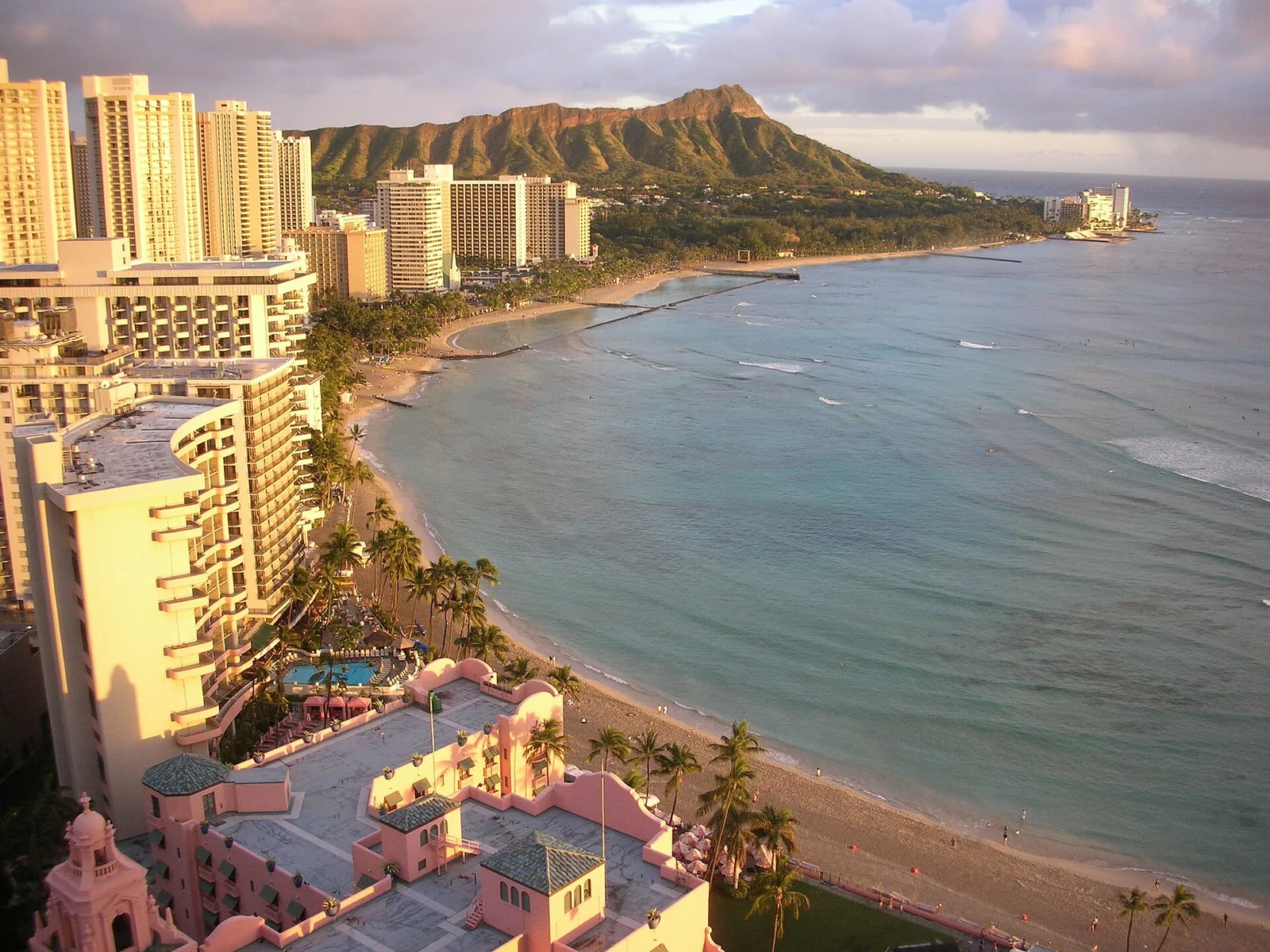
People talk about Waikiki Beach as if it were one strip of sand. It is really eight beaches strung along about two miles of Honolulu shoreline, from the Hilton lagoon at the ʻEwa end to the shuttered Natatorium below Diamond Head, and they could hardly be more different. One has almost no sand left at high tide. One is the calmest family swim on the south shore. One hosts the city’s free hula show every Saturday night, and one gets visits from Hawaiian monk seals often enough that the regulars know the drill. Below you’ll find each section in turn, with its swimming, surf, shade, facilities and crowds, followed by the free entertainment timetable, the box jellyfish dates for the rest of 2026, parking prices, and an honest account of what Waikīkī does badly.
Update, 10 September 2026: After Hurricane Lowell, the Department of Health put a brown-water advisory on the waters around all of Oʻahu, Waikīkī’s Kūhiō and Royal–Moana beaches included. Waikīkī’s beach parks belong to the city and were not on the state’s list of storm closures, so the sand is open; it’s the water you should wait on. Check the health department’s Clean Water Branch advisories on the morning you go, and after any heavy rain give the sea 72 hours.
Waikiki Beach, section by section
Honolulu gives directions by landmark rather than compass point. ʻEwa means towards the west, after the plain beyond Pearl Harbor. Diamond Head means east. Mauka is towards the mountains and makai towards the sea. Waikīkī’s beaches run from ʻEwa to Diamond Head in the order below, and you can walk the whole length in about 45 minutes on the sand and the beach paths, though at high tide you’ll need to cut inland around Gray’s Beach.
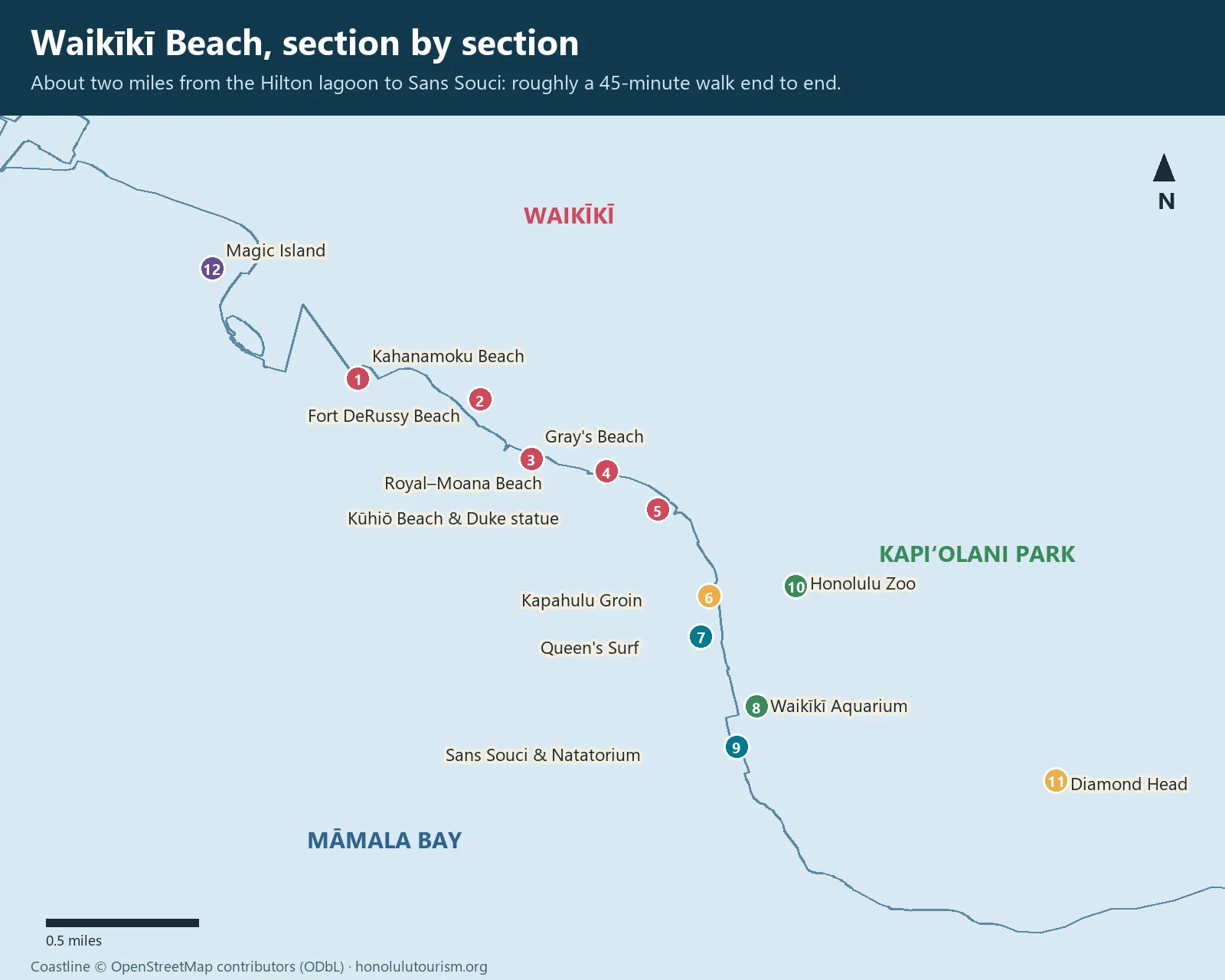
It helps to know that Waikīkī was a wetland long before it was a resort. Streams from Mānoa and Pālolo valleys fed taro patches and fishponds here, and the name means “spouting fresh water”. Hawaiian aliʻi kept homes along this shore for centuries. The Ala Wai Canal, finished in 1928, drained the marsh and made the modern district possible, and a great deal of the sand you’ll lie on has been trucked, barged or pumped in over the past hundred years. That history explains why each section looks the way it does today, and why some of them are losing the fight with the sea.
1. Kahanamoku Beach and the Hilton lagoon
The ʻEwa end of Waikīkī fronts the Hilton Hawaiian Village and takes its name from the family of Duke Kahanamoku. A curving rock breakwater and a broad offshore reef keep the water unusually flat, and the sand shelves so gently that small children can wade a long way out before it gets deep. If someone in your group is nervous in the sea, this is their beach.
Crowds are moderate and mostly made up of Hilton guests. Shade is scarce, so bring an umbrella or plan on a couple of hours rather than a whole day. Friday is the night to be here: the Hilton’s fireworks go up at 7:45pm and this sand is the front row. Arrive by 7pm to claim a spot, and expect a slow shuffle along Kālia Road when the show ends.
Cost: free · Book: no · Bus: any Waikīkī route, then about 25 minutes’ walk from the Duke statue · Allow: 2–3 hours, or an hour for the fireworks
2. Fort DeRussy Beach
This is the widest sand in Waikīkī and, for most of the day, the least crowded. It sits in front of a military recreation area, with the Hale Koa Hotel behind it, a long lawn and rows of trees that throw real shade by early afternoon. Families spread out here in a way they simply can’t at Kūhiō, and you can set up a towel at 11am without stepping over anyone.
The water is calm but shallow over reef and rubble in places, so swim at mid to high tide and wear reef shoes if your feet are soft. It’s also one of the best places on the beach for sunset, with an open horizon to the west and no hotel tower in the way.
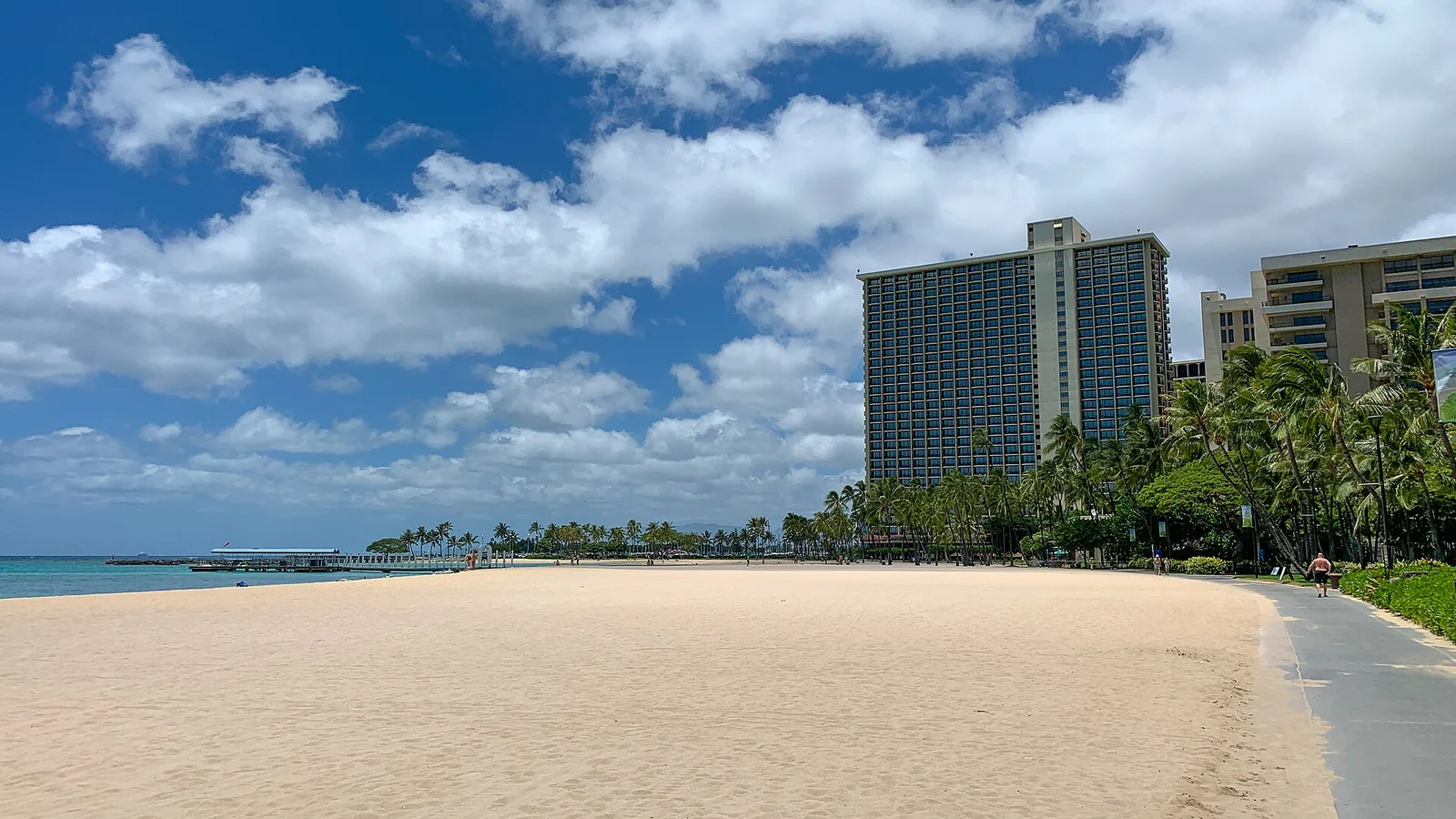
Cost: free · Book: no · Bus: any Waikīkī route, then walk makai down Saratoga Road · Allow: half a day
3. Gray’s Beach (Kawehewehe)
Between the Halekulani and the Sheraton Waikiki, the beach has all but gone. Chronic erosion has left seawalls and wave-washed concrete where there used to be sand, and at high tide the waves run straight up against the walls. There’s nowhere to lay a towel, so treat this stretch as somewhere you pass through rather than stop.
It’s still worth knowing about. The old name is Kawehewehe, and people once came to bathe here as a cure, wearing a lei of limu kala seaweed that they left in the water as a sign their illness had been carried away. At high tide the beach path floods; cut inland to Kālia Road instead of wading with your bags.
At sunset, the Halekulani’s open-air House Without a Key, under an old kiawe tree, has Hawaiian music and a solo hula dancer most evenings. It’s one of the most graceful shows in Waikīkī and far less staged than anything with a ticket, though you’ll be expected to order something if you take a table.
Cost: free to walk; the price of a drink at the Halekulani · Book: no · Allow: an hour for sunset
4. Royal–Moana Beach
This is the postcard. The pink Royal Hawaiian, opened in 1927, and the white colonial front of the Moana Surfrider, which opened in 1901 as Waikīkī’s first hotel, look out over some of the busiest sand in Hawaiʻi. Offshore is Canoes, the long, rolling break where most visitors take their first surf lesson. The beach stands between the two hotels rent boards, launch outrigger canoes and load catamarans straight off the sand.
By 10:30am on a sunny day you’ll be laying your towel within arm’s reach of strangers. Come early, or come for the water rather than the sand: the swimming is easy, the bottom is mostly sand with patches of reef, and there are lifeguard towers along the stretch. This is the section the state keeps rebuilding. The Waikīkī Beach Maintenance Project, whose second phase finished in 2021, covers about 1,730 feet of shoreline from the Kūhiō basin to the Sheraton, and a larger restoration could begin in 2026 if the legislature funds it.
Cost: free · Book: no · Bus: any Waikīkī route; this is the middle of the strip · Allow: 2 hours is plenty in peak crowds
5. Kūhiō Beach, the Duke statue and the basins
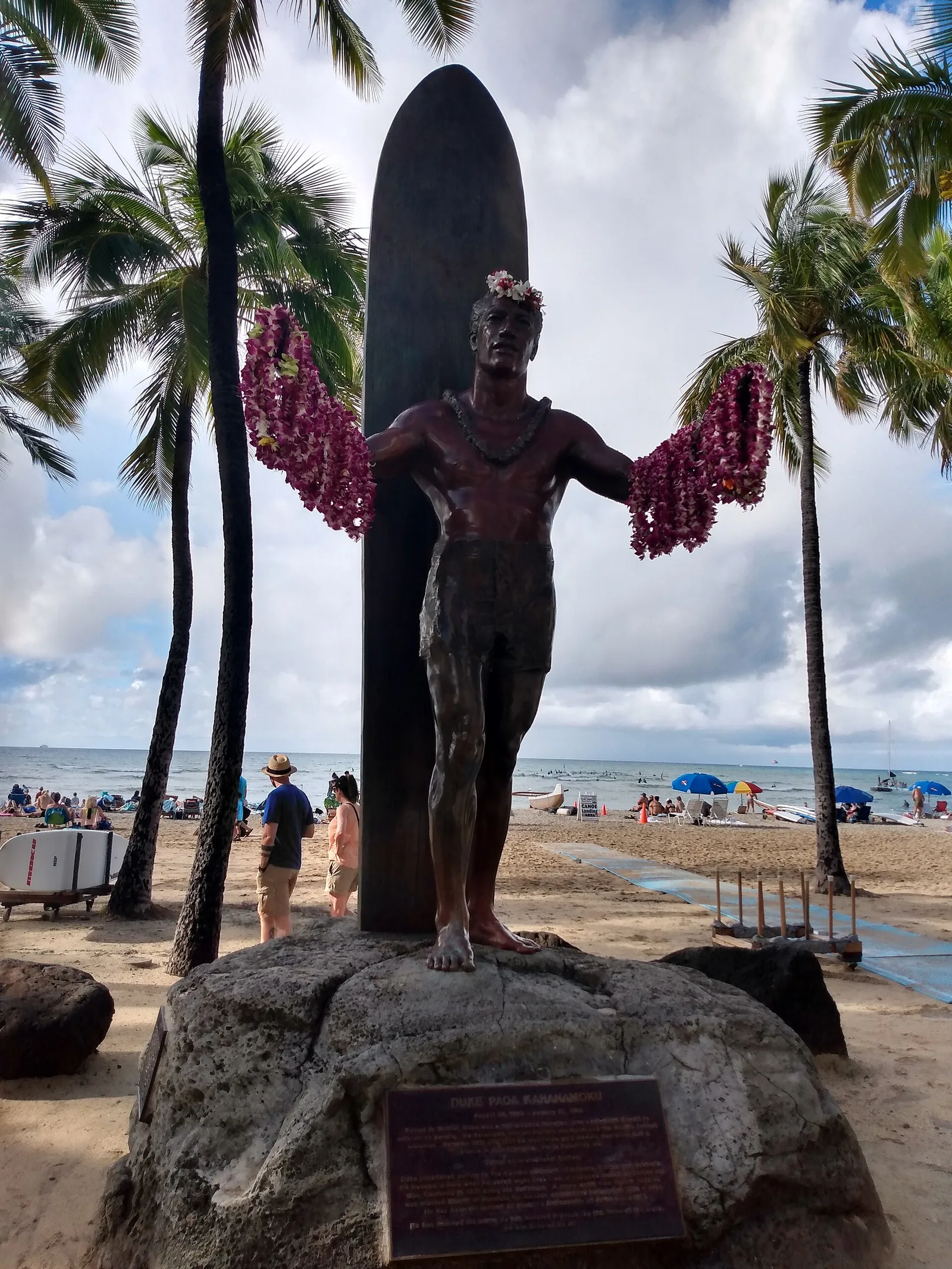
Named for Prince Jonah Kūhiō Kalanianaʻole, whose home stood nearby, Kūhiō Beach is Waikīkī’s town square. The bronze statue of Duke Kahanamoku, the Olympic gold medallist who carried surfing to the rest of the world, has stood here facing the sea since 1990 and is rarely without a fresh lei. Around it are the Kapaemahu stones, the hula mound where the Saturday show happens, and the Waikīkī Beach Center with public restrooms, showers and a police substation.
Two long concrete breakwaters, known locally as the walls, enclose a pair of swimming basins. Inside, the water is calm and warm, which is why the basins fill with children. They are not as benign as they look. The bottom is uneven with sudden holes, and when the surf is up, water drains out through the gaps at the ends of the walls with real force. Keep children within arm’s reach, stay away from the openings, and never walk along the top of the walls, which are slick with algae.
The four boulders behind the railing near the police substation are the Kapaemahu stones. According to the moʻolelo, four healers of dual male and female spirit, Kapaemahu, Kahaloa, Kapuni and Kinohi, came from Tahiti, cured people here, and left their healing power in these stones before they sailed home. Read the plaques, take a moment, and leave them alone. Don’t climb the railing or pose on the stones.
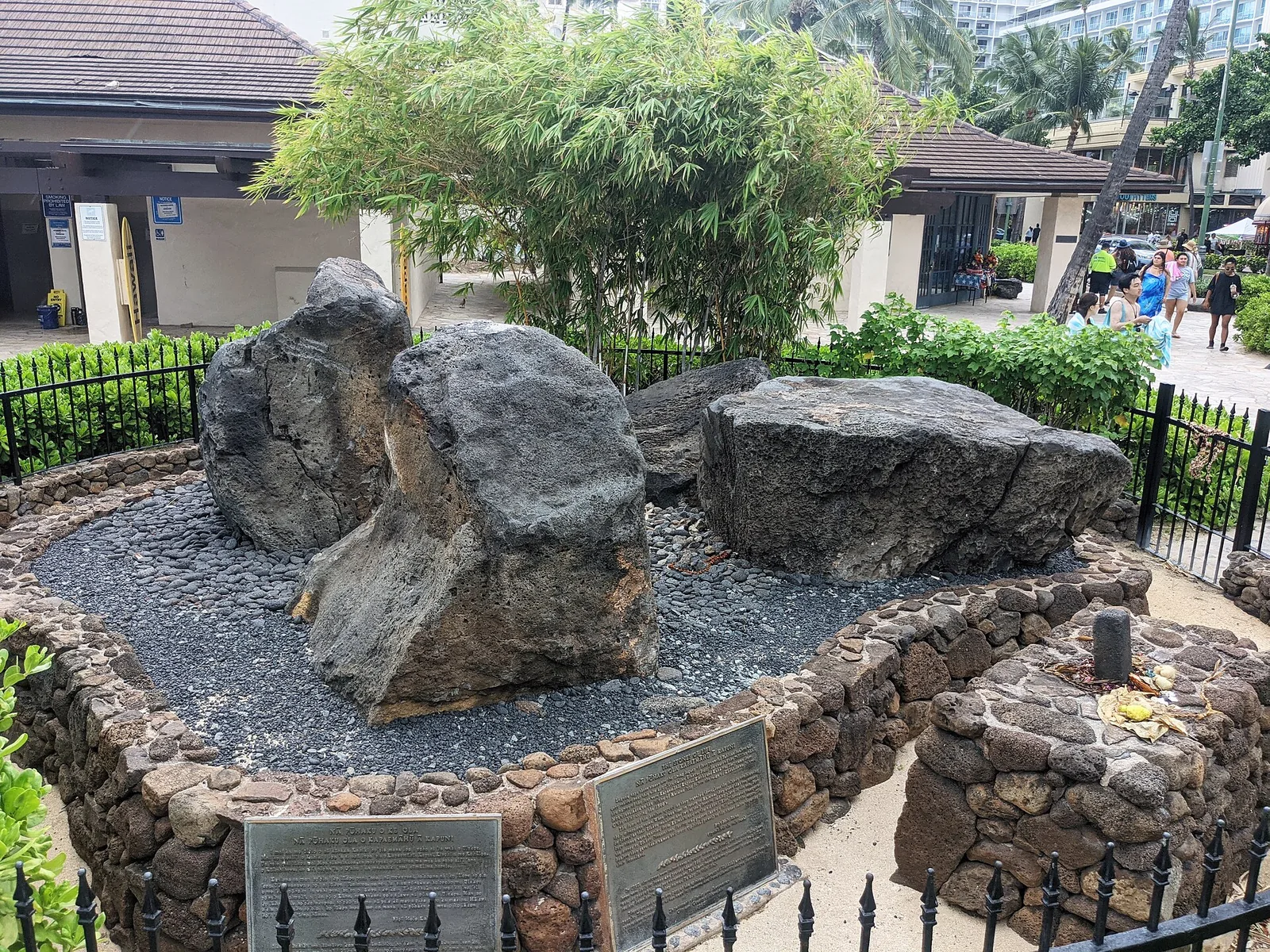
Cost: free · Book: no · Bus: Routes 2 and 13 both serve this end of Waikīkī · Allow: an hour to look around, a morning to swim
6. The Kapahulu Groin and “the Wall”
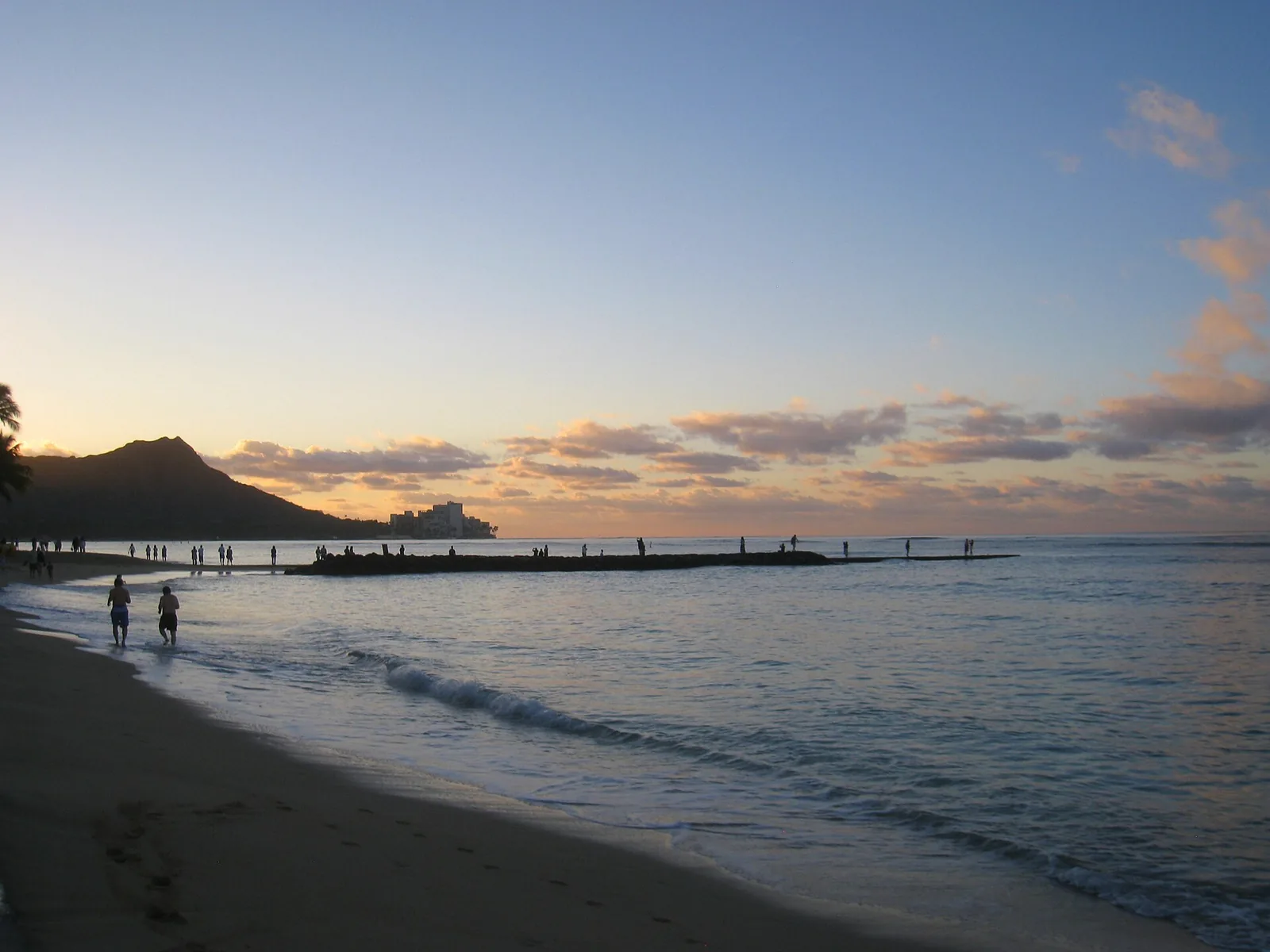
At the foot of Kapahulu Avenue a concrete groin runs straight out to sea with a flat walkway along its top. It’s a fine place to stand at sunset and watch surfers on the Queens and Canoes breaks. It also marks the start of the Waikīkī Marine Life Conservation District, which runs Diamond Head-ward to the Natatorium. Taking fish or anything else from the reef is banned inside it, and you’ll notice the fish are bolder than elsewhere.
Right beside the groin, a short walled section known as the Wall produces a fast, heavy little wave that local bodyboarders treat as their own. Watch from the walkway. If you’re new to bodyboarding, this is the wrong place to learn: the wave dumps onto shallow sand, neck and shoulder injuries happen, and the regulars have little patience for visitors in their way.
A 20-minute walk up Kapahulu Avenue brings you to Leonard’s Bakery, where a hot malasada costs $2.25 and the queue moves faster than it looks.
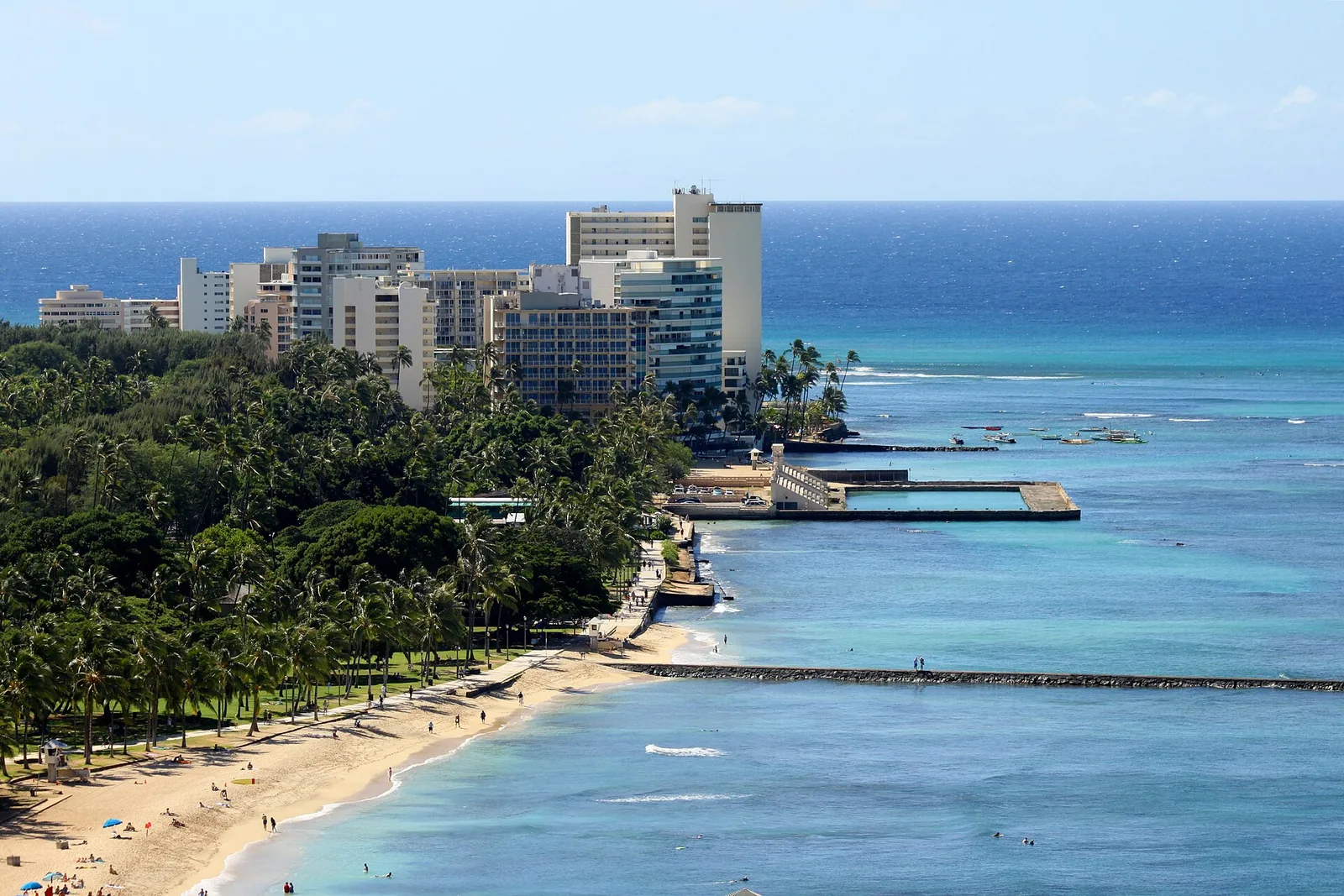
Cost: free · Book: no · Bus: Route 13 runs up Kapahulu Avenue · Allow: 30 minutes at sunset
7. Queen’s Surf and Kapiʻolani Beach Park
Past the groin the hotels stop and Kapiʻolani Park takes over. Queen’s Surf is a stretch of sand backed by lawn and big shade trees, with restrooms, showers and a steady local crowd. It has long been the most LGBTQ+-friendly patch of beach in Honolulu, and at weekends it’s where Honolulu families set up for the whole day, with coolers, pop-up tents and a speaker playing Hawaiian music.
The swimming is decent at higher tides. On a calm morning the reef just offshore, inside the conservation district, is Waikīkī’s best easy snorkelling: manini (convict tang), uhu (parrotfish), kihikihi (Moorish idols) and the occasional green sea turtle. Give turtles at least 10 feet. Kapiʻolani Beach Park, the grassy stretch further on, is picnic territory, with barbecues under the trees and far fewer visitors than the hotel beaches.
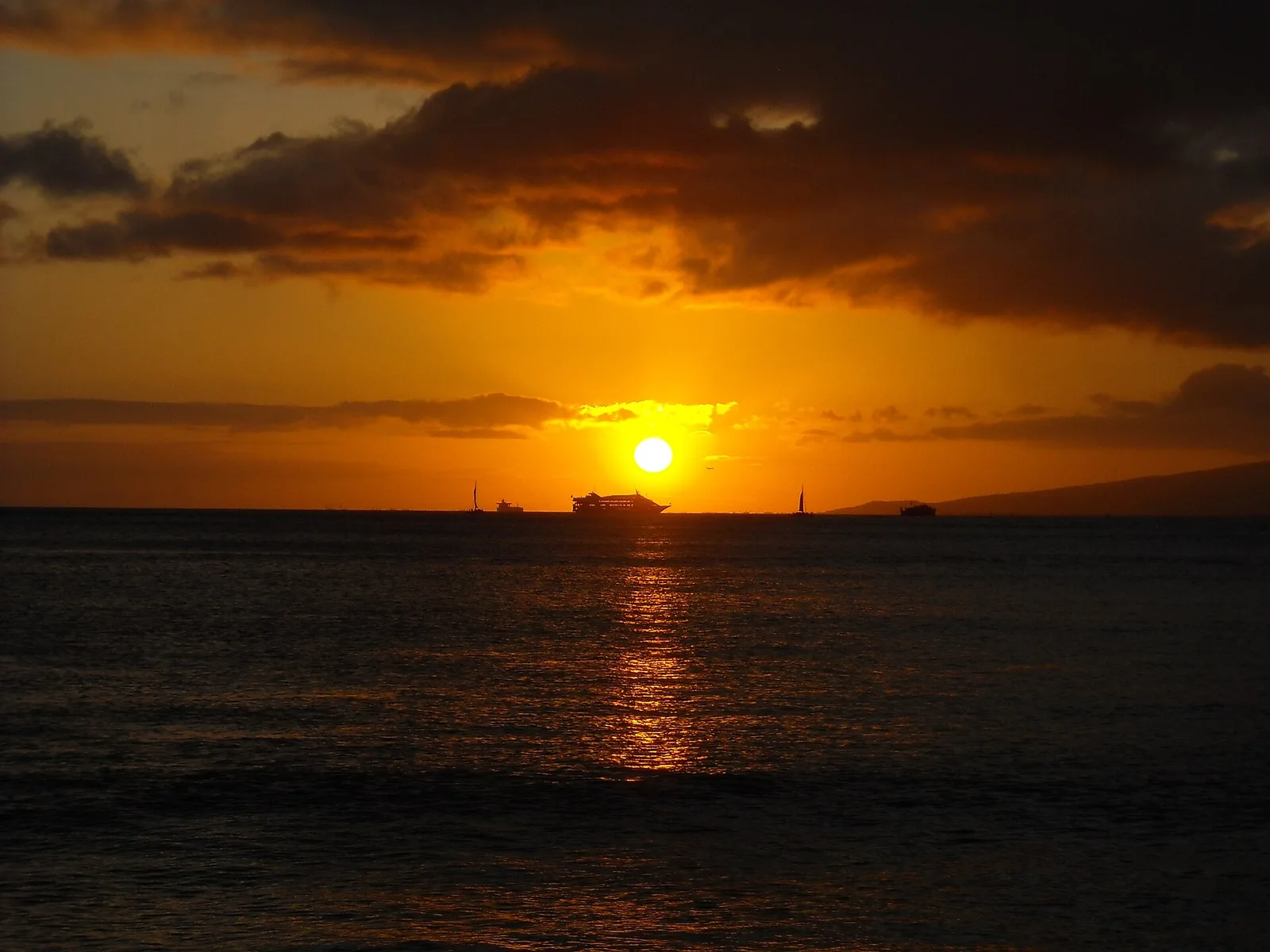
Cost: free · Book: no · Bus: Routes 2 and 13, or a 5-minute walk from the Duke statue · Allow: half a day
8. Sans Souci (Kaimana Beach) and the Natatorium
The Diamond Head end is where Honolulu residents actually swim. Kaimana Beach, still widely called Sans Souci after the guesthouse where Robert Louis Stevenson stayed in 1893, has a sheltered shelf of reef and sand that stays calm on most mornings. At 6:30am you’ll find the same people swimming laps before work, and the water is often glassy until the trade winds pick up.
Next door stands the War Memorial Natatorium, a saltwater pool built in 1927 to honour Hawaiʻi’s First World War dead. Its grand arch still faces Kalākaua Avenue, but the pool has been closed since 1979 and is fenced off. Admire the façade and stay out.
Hawaiian monk seals, among the most endangered marine mammals in the world, haul out on this beach from time to time, and mothers have given birth here more than once. Stay at least 50 feet away, or 150 feet from a mother and pup. Volunteers usually rope off the sand when a seal is resting. Disturbing one is illegal, and they bite.
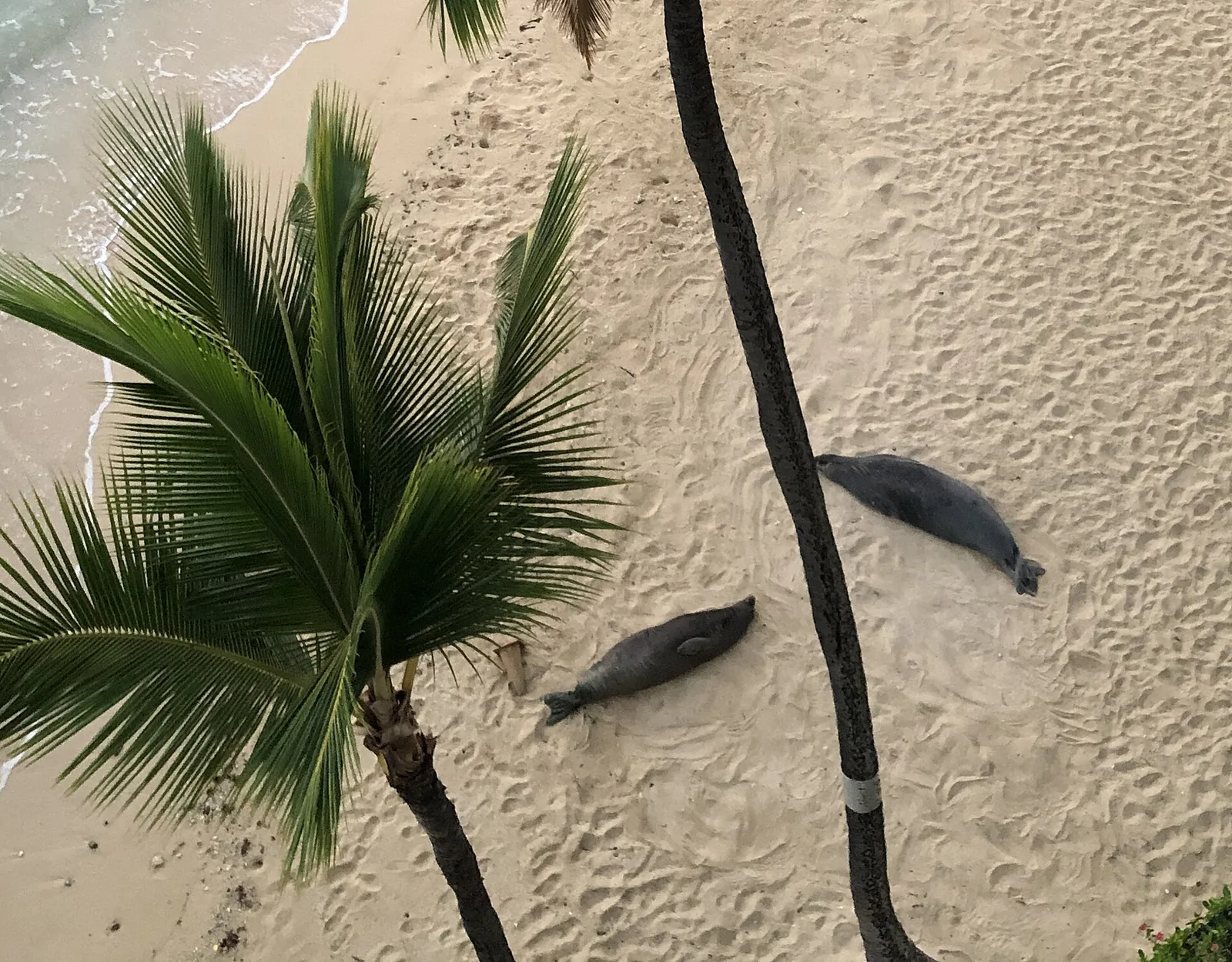
Cost: free · Book: no · Bus: Route 2 towards Diamond Head, or 15 minutes’ walk from Kūhiō Beach · Allow: 1–2 hours for a morning swim
How the sections compare
If you only have one beach day, the choice comes down to whether you want space, calm water, or the scene. This table sums up what you’ll find, ʻEwa to Diamond Head.
| Section | Swimming | Surf offshore | Shade | Facilities | Crowds | Best for |
|---|---|---|---|---|---|---|
| Kahanamoku | Very calm, gentle slope | Little | Scarce | Hotel beach bars, lagoon | Moderate | Nervous swimmers, Friday fireworks |
| Fort DeRussy | Calm; shallow reef at low tide | Small | Good, under lawn trees | Restrooms, showers | Low to moderate | Space, families, sunset |
| Gray’s | Poor; little sand | — | None | None | Low | Passing through; Halekulani sunset music |
| Royal–Moana | Easy, mostly sandy bottom | Canoes (beginners) | None on the sand | Beach stands, lessons, hotel bars | Very high | Surf lessons, canoe rides, catamarans |
| Kūhiō | Calm basins, uneven bottom | Queens, Canoes | Some palms | Restrooms, showers, police | High | Families, Duke statue, Saturday hula |
| Kapahulu Groin | Not for swimming | The Wall (experts) | None | — | Moderate | Sunset, watching bodyboarders |
| Queen’s / Kapiʻolani | Good at higher tide; easy snorkelling | Queens | Good, big trees | Restrooms, showers, barbecues | Moderate, mostly local | Snorkelling, picnics, LGBTQ+ friendly |
| Sans Souci / Kaimana | Calmest morning swim | Small | Some | Park restrooms nearby | Low early, moderate later | Laps, snorkelling, monk seal sightings |
Our pick for a first visit: swim at Sans Souci early, walk the length of the beach to Fort DeRussy by lunchtime, and come back to Kūhiō for sunset. You’ll have seen all of it, and you’ll have used each section for what it does best.
Surfing, canoes and boats off Waikiki Beach
Waikīkī is where surfing was revived in the early twentieth century, after missionaries had spent decades discouraging it, and it’s still the best place in Hawaiʻi to learn. The breaks sit a few hundred yards out over reef, the waves are long and forgiving, and in winter, when the North Shore turns lethal, the south shore is usually small and friendly. Summer is the reverse: south swells can make Canoes and Queens crowded and punchy, and that’s when experienced surfers come out and beginners should stay near an instructor.
Surf lessons
Group lessons run from the surf schools and beach stands along Royal–Moana and Kūhiō. Faith Surf School charges $95 for an 80-minute group lesson with four or five students per instructor, and Waikiki Beach Services starts at $95 for 75 minutes. Most people stand up at least once. The ones who don’t are usually the ones who were already tired when they paddled out, so skip the morning hike on lesson day and take the land drills seriously.
Cost: from $95 per person, group · Book: online, a few days ahead in peak weeks · Allow: 75–80 minutes plus 20 minutes to check in
Outrigger canoe rides
If you do one paid thing on this beach, make it this. A handful of you paddle an outrigger canoe out to the break with a beach boy steering from the back, then turn and ride three waves back towards the sand. It needs no skill at all, only a willingness to get soaked, and it’s the most fun you can have in Waikīkī for under $50. Waikiki Beach Services charges $48 per person.
Cost: $48 per person, three waves · Book: at the beach stand, or online ahead · Allow: under an hour
Sunset sails
Catamarans load straight off the sand and head out as the light turns gold over the Waiʻanae Mountains. Holokai charges $80, sailing at 5:30pm from March to September and at 5pm from October to February. Maitaʻi runs a similar trip for $79. Either beats a dinner cruise, where the food rarely justifies the price. Wear something you don’t mind getting wet, because the ride off the beach can be splashy.
Cost: $79–80 · Hours: 5–5:30pm departures, by season · Book: online; Fridays fill first · Allow: 2 hours including boarding
Snorkelling Turtle Canyon
Holokai’s 2.5-hour Turtle Canyon trip ($80) takes you to a reef off Waikīkī where green sea turtles gather to have small fish clean their shells. It’s genuinely good, and a better turtle encounter than anything you’ll manage from the shore. Keep at least 10 feet away, never touch or chase, and ignore any crew member who encourages you to get closer for a photo.
Cost: $80 · Book: online, a few days ahead · Allow: 2.5 hours
Free things to do on Waikiki Beach
Some of the best of Waikīkī costs nothing at all, and most of it runs to a timetable. Here’s the week at a glance.
| When | What | Where | Notes |
|---|---|---|---|
| Monday–Friday, times vary | Free cultural class: lei making, lauhala weaving, ʻukulele or hula | Royal Hawaiian Center | One class a day, no booking; line-up changes monthly |
| Friday, 7:45pm | Fireworks | Off the Hilton Hawaiian Village | Best seen from Kahanamoku Beach or Fort DeRussy |
| Saturday, 6:30–7:30pm | Kūhiō Beach Hula Show | Hula mound by the Duke statue | No show on 19 September, 17 October or 31 October 2026 |
| Saturday, 7:30–11am | KCC Farmers Market | Kapiʻolani Community College, Diamond Head | Free entry; Route 2 |
| Most evenings, sunset | Hawaiian music and hula | House Without a Key, Halekulani | Order a drink if you take a table |
| Every evening | Sunset | Kapahulu Groin, Queen’s Surf, Fort DeRussy | Arrive 20 minutes early |
| Any time | Duke statue, Kapaemahu stones, Natatorium arch | Kūhiō Beach to Sans Souci | A 20-minute walk links all three |
The Kūhiō Beach Hula Show
Every Saturday at 6:30pm, as the light goes, a hālau (hula school) and musicians perform for an hour on the grassy mound beside the Duke statue. It’s free, unticketed and properly good, closer to a community performance than a hotel revue. The Tuesday show was dropped after June 2026, so Saturday is now the only night, and there’s no show on 19 September, 17 October or 31 October 2026. Confirm on the show’s own page. Bring a mat, arrive by 6pm for a place on the grass, and don’t stand in front of people sitting down.
Cost: free · Hours: Saturdays 6:30–7:30pm · Book: no · Bus: Routes 2 and 13 · Allow: 90 minutes including finding a spot
Friday fireworks
The Hilton Hawaiian Village sets off a brief fireworks show at 7:45pm every Friday. You can see it from most of the ʻEwa half of Waikīkī, but the best view is from Kahanamoku Beach or the Fort DeRussy lawn, where the bursts reflect in the water. It’s short, so don’t be late, and don’t expect to get a taxi on Kālia Road straight afterwards.
Cost: free · Hours: Fridays 7:45pm · Allow: 30 minutes including getting there early
Free classes at the Royal Hawaiian Center
Behind the Royal Hawaiian hotel, on the site of Helumoa, the royal coconut grove, the Royal Hawaiian Center runs one free class every weekday taught by Native Hawaiian practitioners. The rotation covers lei making, lauhala weaving, ʻukulele and hula. There’s no booking, but turn up 15 minutes early in busy weeks. The line-up changes month to month, so check the events calendar before you walk over. It’s the best hour of genuine culture you’ll find for free anywhere on the strip, and it takes the edge off a hot afternoon.
Cost: free · Hours: one class each weekday; times vary · Book: no · Allow: an hour
Box jellyfish calendar for Waikīkī
Box jellyfish drift onto Waikīkī and the rest of the south shore roughly eight to ten days after each full moon. The sting is intensely painful and, for a few people, dangerous. Lifeguards post warning signs when they arrive, and the simplest answer is to plan your snorkelling and swimming around those days.
| Full moon (Hawaiʻi time) | Likely box jellyfish window |
|---|---|
| 26 September 2026 | 4–6 October |
| 25 October 2026 | 2–4 November |
| 24 November 2026 | 2–4 December |
| 23 December 2026 | 31 December – 2 January 2027 |
These are our own estimates from the lunar calendar. The Waikiki Aquarium publishes the official box jellyfish forecast, so check it before you plan a day in the water. If you’re stung, get out, tell the lifeguard, and don’t rub the area. Get medical help straight away if you have any trouble breathing.
Kapiʻolani Park and the Diamond Head end
King Kalākaua dedicated Kapiʻolani Park in 1877 and named it for his queen. It is Hawaiʻi’s oldest public park, and it’s what makes the Diamond Head end of Waikīkī feel like a neighbourhood rather than a resort: joggers, banyan shade, pick-up football and, at weekends, family parties that run from breakfast to dark. The zoo, the aquarium and the Waikīkī Shell concert venue are all here.
Honolulu Zoo
A modest city zoo that suits families with small children, especially on a hot day when the shaded paths beat the beach. If you have a week on the island and no children with you, it’s the thing to drop. Entry is $21 for adults and $13 for children aged 3 to 12. The gates admit visitors from 10am to 3pm, and the grounds close at 4pm.
Cost: $21 adult, $13 child · Hours: entry 10am–3pm, closes 4pm · Book: no · Bus: Routes 2 and 13 · Allow: 2 hours
Waikiki Aquarium
Opened in 1904, it’s one of the oldest public aquariums in the United States, and it’s small, cheap and focused on Hawaiian and Pacific reef life. Go before your first snorkel and you’ll recognise half of what you see in the water. Entry is $12 for adults and $5 for children. It opens 9am to 4:30pm and closes on 13 December 2026 for the Honolulu Marathon and on Christmas Day.
Cost: $12 adult, $5 child · Hours: 9am–4:30pm · Book: no · Bus: Route 2 · Allow: 1–1.5 hours
Diamond Head
Lēʻahi, the crater that closes off every Waikīkī view, is a steep summit hike with stairs, switchbacks and a tunnel, and the view back over the whole beach is the reason to go. Reservations are compulsory and open 30 days ahead on the state parks site. There are no walk-ins. It costs $5 per out-of-state visitor plus $10 per vehicle, runs from 6am to 6pm, and the last entry slot is 4pm. Routes 2, 2L and 23 stop on Diamond Head Road outside the crater, and you walk in from there. Go at 6am in summer, before the heat. Diamond Head leads our list of things to do on Oʻahu for good reason.
Cost: $5 per person plus $10 per vehicle · Hours: 6am–6pm, last slot 4pm · Book: up to 30 days ahead · Bus: 2, 2L or 23 · Allow: 2–2.5 hours
KCC Farmers Market
On Saturday mornings the car park at Kapiʻolani Community College, on the slope of Diamond Head, turns into the island’s best-known farmers market. Come for tropical fruit, Big Island coffee and breakfast plates, and come early: by 9am it’s shoulder to shoulder. Route 2 runs there from Waikīkī, which makes it a good first stop on a Diamond Head morning.
Cost: free entry · Hours: Saturdays 7:30–11am · Bus: Route 2 · Allow: an hour
A short history you can still see
Before any hotel, this shore belonged to the aliʻi. Chiefs surfed here, and the coconut grove of Helumoa, where the Royal Hawaiian and the shopping centre stand now, was a royal residence. Taro and fishponds covered the land behind the beach. You can still see the fishpond pattern in old maps, and the names survive in street signs and hotel wings.
The resort era began with the Moana in 1901, when visitors arrived by steamship after nearly a week at sea. The Royal Hawaiian followed in 1927, built by the Matson shipping line for its passengers, and its pink walls became the symbol of the place. On the sand, Waikīkī’s beach boys, Duke Kahanamoku first among them, taught those visitors to surf and paddle canoes, and in doing so exported surfing to California, Australia and the world.
Prince Kūhiō, whose name is on the beach and the avenue, went on to represent Hawaiʻi in the US Congress and championed the 1921 Hawaiian Homes Commission Act, which set aside land for Native Hawaiians. It’s worth knowing when you walk past his beach. So is the fact that the Ala Wai Canal, which made all this development possible, still carries runoff from the valleys into the ʻEwa end of Waikīkī after heavy rain. That’s why the 72-hour rule matters here more than almost anywhere on the island.
What Waikiki does badly
Waikīkī is the easiest place on Oʻahu to have a good holiday, and also the easiest place to have an expensive, crowded one. Be clear-eyed about the downsides.
- The crush. Between about 10am and 4pm on a sunny day, Royal–Moana and Kūhiō are shoulder to shoulder. Early mornings and the two ends of the beach are the fix.
- Disappearing sand. The ʻEwa half of the beach is losing its sand, Gray’s Beach has almost none left, and the rest depends on groins and replenishment.
- The real nightly rate. Resort fees and parking typically add $45–90 a night to a Waikīkī room. Hawaiʻi’s lodging tax rose to 11 per cent in January 2026 with the new Green Fee, and county surcharge and general excise tax stack on top. Compare all-in prices, not headline rates.
- Water quality after rain. Runoff from the Ala Wai Canal and storm drains makes the water unsafe for a few days after heavy rain. The brown-water advisory after Hurricane Lowell is a live example.
- Timeshare booths. Kiosks offering “free” or cheap tours usually want 90 minutes of your holiday at a sales presentation. Walk past.
- Chain-store Kalākaua. The main avenue is mostly luxury brands you can buy at home. For local shops, food and coffee, head up Kapahulu Avenue or along Monsarrat Avenue towards Diamond Head.
- It’s not the island’s best beach. Hanauma Bay has far better snorkelling, and the windward and North Shore beaches are prettier and emptier. Use Waikīkī as a base and see the rest of Oʻahu; our guide to the rest of the island has 50 ideas, coast by coast.
None of that is a reason to skip it. The water is warm and gentle for most of the year, the surf is the best beginner surf in Hawaiʻi, the sunsets are free, and nowhere else on the island lets you walk from your hotel to a surf lesson, a hula show and a bakery with a queue round the block.
Getting to Waikiki Beach and where to park
From the airport
For the first time, Honolulu’s airport has rail. Skyline trains stop at Lelepaua station, linked by footbridges to Terminals 1, 2 and 3, and the W Line bus runs from Lelepaua straight into Waikīkī. It replaced the old Route 20 in October 2025. A single fare is $3.25 in cash with no transfers, or pay with a HOLO card, which caps your spending at $7.50 a day. Skyline runs from 4am to 10:30pm, every 10 to 15 minutes. It’s an easy trip with a carry-on and one suitcase each. A family with four large cases will be happier in a taxi or shuttle.
Cost: $3.25 single, $7.50 daily cap on HOLO · Hours: Skyline 4am–10:30pm · Bus: W Line · Allow: about an hour door to door
Getting around without a car
Waikīkī is flat, compact and best explored on foot. For anything further, TheBus is cheap and frequent: Route 2 runs between Kapiʻolani Community College, Diamond Head, Waikīkī and downtown; Route 13 links the University of Hawaiʻi at Mānoa, Kapahulu, Waikīkī and downtown; and Route 42 goes to Pearl Harbor. A seven-day HOLO pass costs $45. The one big gap is Hanauma Bay, which has no direct bus. Roberts Hawaiʻi sells entry plus an electric bus from Waikīkī for about $65.
Parking near the beach
Waikīkī parking is scarce and hotel parking is expensive. The cheapest options are all at the Diamond Head end, and they fill early at weekends.
| Where | Cost | Limits | Tip |
|---|---|---|---|
| Honolulu Zoo lot (Kapahulu Avenue entrance) | $1.50 an hour | 4 hours maximum | Pay by card, notes or coins; best for Kūhiō and Queen’s |
| Kapiʻolani Park street meters | 25 cents per half-hour | Posted time limits | Circle the park before 9am at weekends |
| Waikīkī Shell lot, Monsarrat Avenue | Free when no event is on | Closed to beachgoers on show nights | Also free spaces along Monsarrat Avenue |
| Hotel self-parking | Part of the $45–90 a night in resort fees and parking | Guests | Worth dropping on non-driving days |
Whichever you use, leave nothing visible in the car. Break-ins at beach parking are common across Oʻahu, and rental cars are easy to spot.
Staying safe in the water
Drowning is the leading cause of injury death among visitors to Hawaiʻi. State health figures for 2015–2019 averaged about 80 ocean drownings a year, 57 per cent of them visitors. Waikīkī’s gentle water is exactly why people take chances here: they swim alone, swim tired, or swim out further than they can swim back.
- Swim near a lifeguard tower. Ask the guard about conditions before you go in, and follow the local rule: when in doubt, don’t go out.
- Know the season. Summer south swells can bring strong currents and heavy shorebreak to Waikīkī, especially around the Wall. Winter is usually calmer on this coast.
- Watch the basin gaps. At Kūhiō, the openings in the breakwaters pull water out to sea. Stay well inside.
- Stay out after heavy rain. The health department advises 72 hours out of the water after heavy rain, because runoff carries sewage and bacteria, and longer when a brown-water advisory is posted.
- Respect the reef. Coral cuts get infected easily. Never stand on coral, and use mineral sunscreen: oxybenzone and octinoxate are banned in Hawaiʻi.
- Give wildlife space. Keep 10 feet from turtles and 50 feet from monk seals, or 150 feet from a mother and pup. Federal rules bar swimming with spinner dolphins or approaching within 50 yards.
- Mind your things. Bags left on the sand while everyone swims do go missing. Take turns, or bring only what you’d be fine losing.
A Waikīkī beach day, hour by hour
This is how we’d spend a single day on the beach, starting early to beat the heat and the crowds.
- 6:30am: Swim at Sans Souci while the water is glassy, then walk to Kūhiō as the beach stands open.
- 8am: Diamond Head if you’ve booked a slot, or the KCC Farmers Market on a Saturday.
- 10:30am: Surf lesson at Canoes, or an outrigger canoe ride if you’d rather someone else did the steering.
- Noon: Retreat to the shade at Fort DeRussy or Queen’s Surf for lunch and a long rest.
- 2pm: The free class at the Royal Hawaiian Center, or the aquarium if you have children with you.
- 5–5:30pm: Sunset sail off the beach, or a free sunset from the Kapahulu Groin.
- Evening: The Kūhiō Beach Hula Show on Saturday at 6:30pm, or the Hilton fireworks on Friday at 7:45pm.
Eating on and near the beach
Waikīkī’s food is better than its chain-store reputation, as long as you walk a few blocks away from Kalākaua Avenue. Leonard’s Bakery on Kapahulu Avenue has been frying Portuguese malasadas since the 1950s; at $2.25 each, eat them hot and don’t bother saving any for later. ABC Stores, on nearly every block, sell cold water, sunscreen and spam musubi for a cheap beach lunch.
Be clear about what you’re eating. Plate lunch, spam musubi and loco moco are local-style food, the delicious product of plantation-era Japanese, Chinese, Filipino, Portuguese, Korean and American cooking, not traditional Hawaiian food. Traditional Native Hawaiian dishes are things like kālua pig, laulau and poi. You’ll meet them at a lūʻau, and at Hawaiian restaurants beyond Waikīkī. The closest lūʻau to the beach is the Waikiki Starlight Luau at the Hilton Hawaiian Village, from $119, on Sundays, Tuesdays, Thursdays and Fridays.
Cost: malasada $2.25; Starlight Luau from $119 · Book: lūʻau online, a week or more ahead · Bus: Route 13 for Kapahulu Avenue · Allow: 30 minutes for Leonard’s, 3 hours for a lūʻau
Waikīkī’s own restaurants are only part of the story. The best poke, plate lunch and Hawaiian food are a short bus ride away, and our guide to the best restaurants in Honolulu maps them neighbourhood by neighbourhood.
For surf lessons, outrigger canoe rides, Turtle Canyon boat trips and the reef off Queen’s Surf, see our full guide to snorkelling and water activities on Oʻahu.
Waikīkī is only one of Honolulu’s neighbourhoods. Our guide to Honolulu neighborhoods and Oʻahu towns shows what is ten minutes away by bus, from Kapahulu’s food to Chinatown’s markets.
Frequently Asked Questions
Is Waikiki Beach good for swimming?
Yes, for most of the year. The reef breaks up the swell, so the water is usually calm, warm and shallow, with lifeguard towers along the main stretch. Kahanamoku Beach and Sans Souci are the gentlest. Stay out for 72 hours after heavy rain or while a brown-water advisory is posted, avoid the water eight to ten days after a full moon when box jellyfish arrive, and take care during summer south swells.
Which part of Waikīkī Beach is best?
It depends on what you want. Sans Souci is best for a calm morning swim, Fort DeRussy for space and shade, Royal–Moana for surf lessons and canoe rides, and Kūhiō for families and the Saturday hula show. Queen’s Surf has the easiest snorkelling. Avoid Gray’s Beach for sunbathing: erosion has left almost no sand there.
Is Waikīkī Beach free, and where can I park?
The beach is public and free along its whole length. Parking is the hard part. The Honolulu Zoo lot on Kapahulu Avenue costs $1.50 an hour with a four-hour maximum, and Kapiʻolani Park’s meters charge 25 cents per half-hour. The Waikīkī Shell lot on Monsarrat Avenue is free when no event is on. Hotels charge much more.
When is the free hula show at Kūhiō Beach?
The Kūhiō Beach Hula Show runs every Saturday from 6:30pm to 7:30pm on the hula mound beside the Duke Kahanamoku statue. It’s free and needs no ticket. The Tuesday show ended after June 2026, and there’s no show on 19 September, 17 October or 31 October 2026. Arrive by 6pm with a mat for a good spot on the grass.
When are box jellyfish at Waikīkī?
Box jellyfish reach Waikīkī and the rest of the south shore roughly eight to ten days after each full moon. For the rest of 2026, expect them around 4–6 October, 2–4 November, 2–4 December and 31 December to 2 January. These are estimates, so check the Waikiki Aquarium’s official forecast and look for lifeguard warning signs.
Can you see sea turtles or monk seals at Waikīkī?
Often, yes. Green sea turtles feed on the reef off Queen’s Surf and Sans Souci, and boat trips to Turtle Canyon almost always find them. Hawaiian monk seals sometimes haul out at Kaimana Beach. By law, keep at least 10 feet from turtles and 50 feet from monk seals, or 150 feet from a mother and pup. Never touch, feed or chase them.
Is Waikīkī worth it, or should I stay elsewhere on Oʻahu?
For most first-time visitors, Waikīkī is the right base. It has the most hotels, the best bus connections, gentle water and plenty to do without a car. It’s also crowded and expensive. Stay here, then spend a few days seeing the rest of the island: our guide to the best things to do in Oʻahu covers every coast.
Photo Credits
- Waikīkī and Diamond Head from above (featured): Alan Light, CC BY 2.0
- Map: honolulutourism.org; coastline data © OpenStreetMap contributors, ODbL
- Fort DeRussy Beach: Daniel Ramirez, CC BY 2.0
- Duke Kahanamoku statue: DestinationFearFan, CC BY-SA 4.0
- Kapaemahu stones: eli fessler, CC BY-SA 4.0
- Waikīkī groins and breakwaters: Prayitno, CC BY 2.0
- Sunset from Queen’s Surf Beach: Daniel Ramirez, CC BY 2.0
- Monk seals at Kaimana Beach: Eqpk, CC BY-SA 4.0
- Waikīkī at dusk: Daderot, public domain