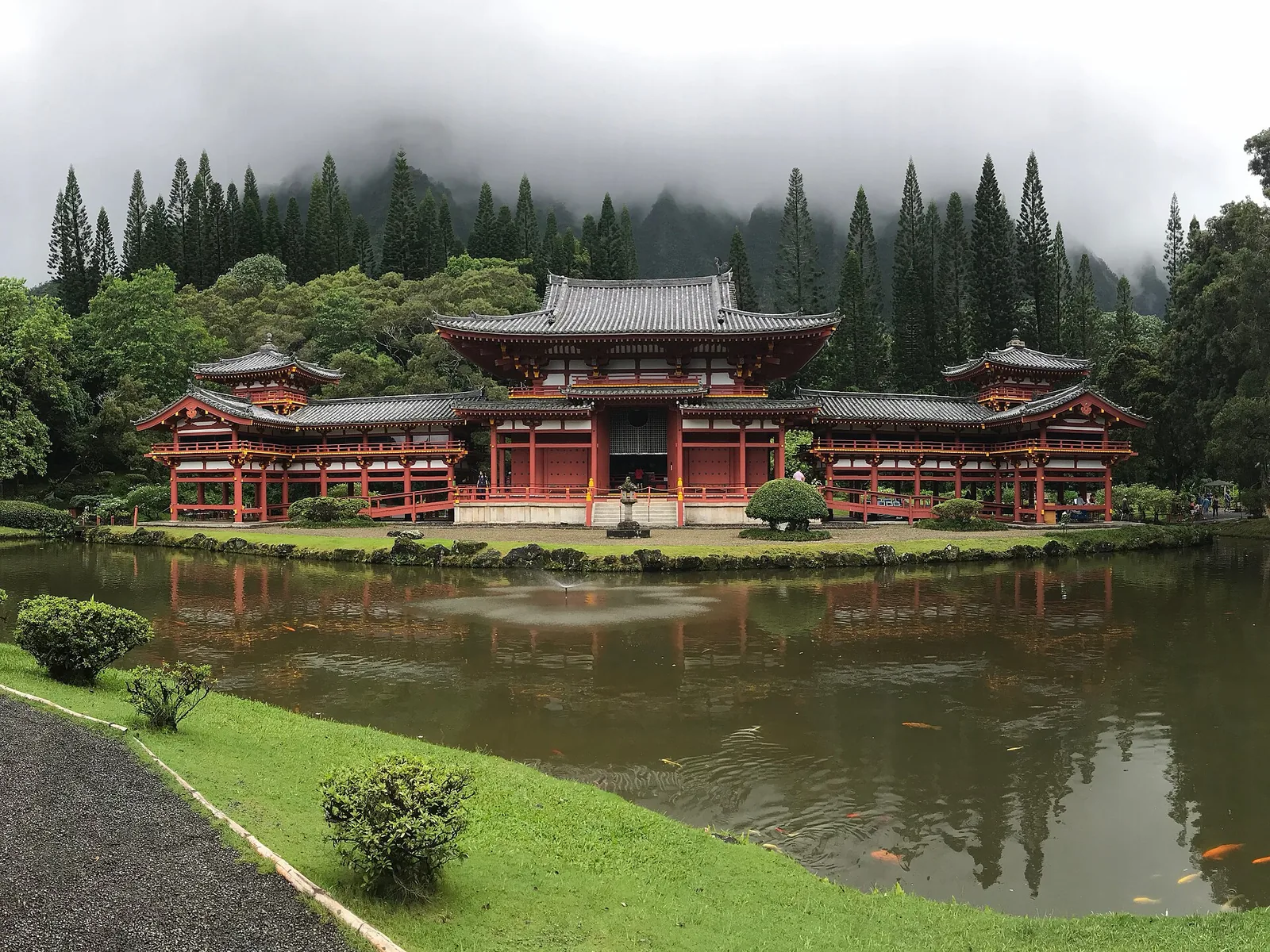
The first thing most visitors do at the Byodo In Temple is swing a wooden log into a three-ton bronze bell, and the sound rolls across a koi pond and up the fluted green walls of the Koʻolau. It’s one of the most striking sights on Oʻahu’s windward side: a scarlet replica of a nearly 1,000-year-old Japanese temple, set in a working cemetery called the Valley of the Temples. Admission is $10, parking is $6 an hour, and the temple suggests allowing 30 minutes to an hour, which makes it an easy stop on a day up the windward coast.
Here’s what the temple is, what to look for, the 2026 prices and rules, how to get there by car or bus, and what else to pair it with.
What the Byodo In Temple Is
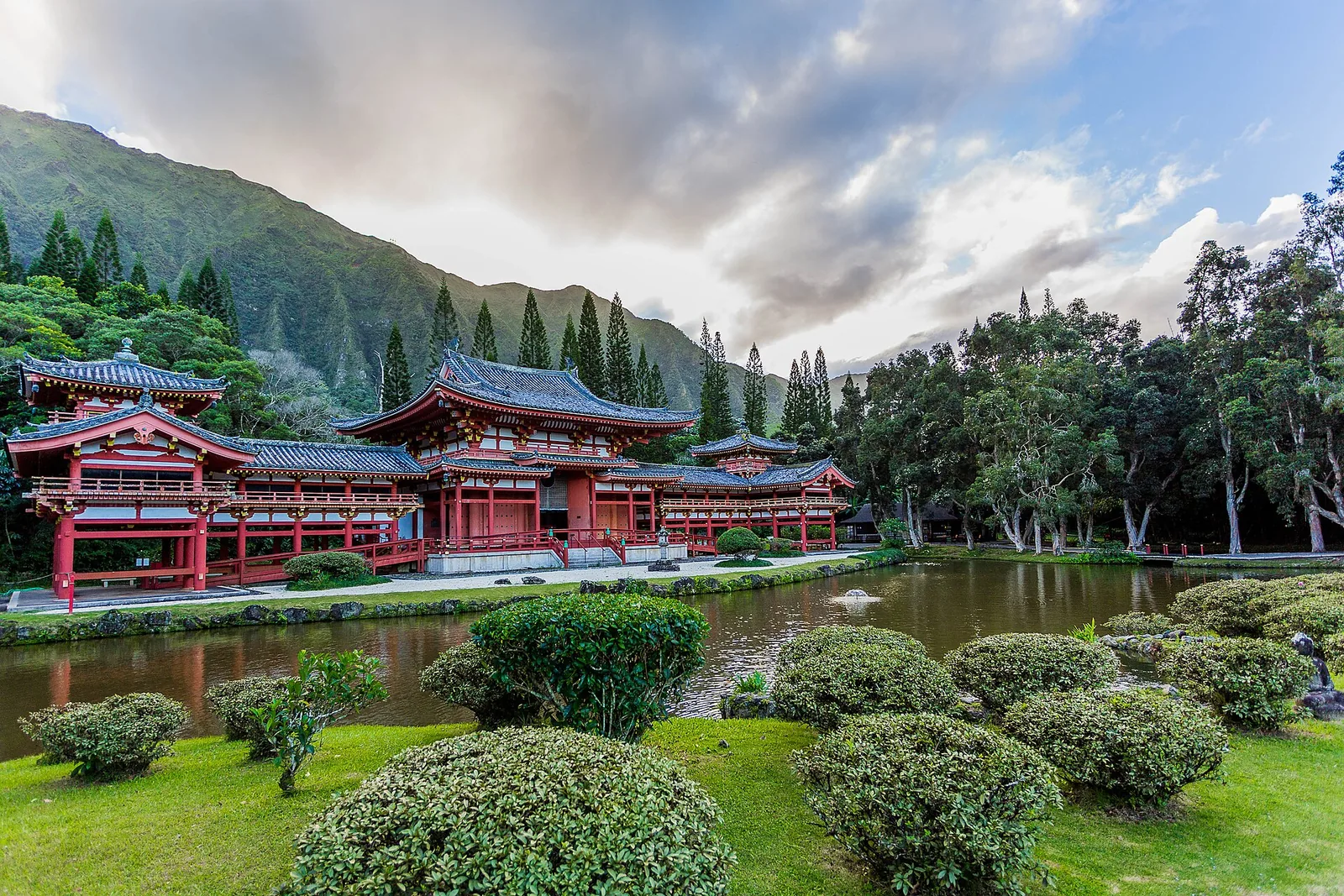
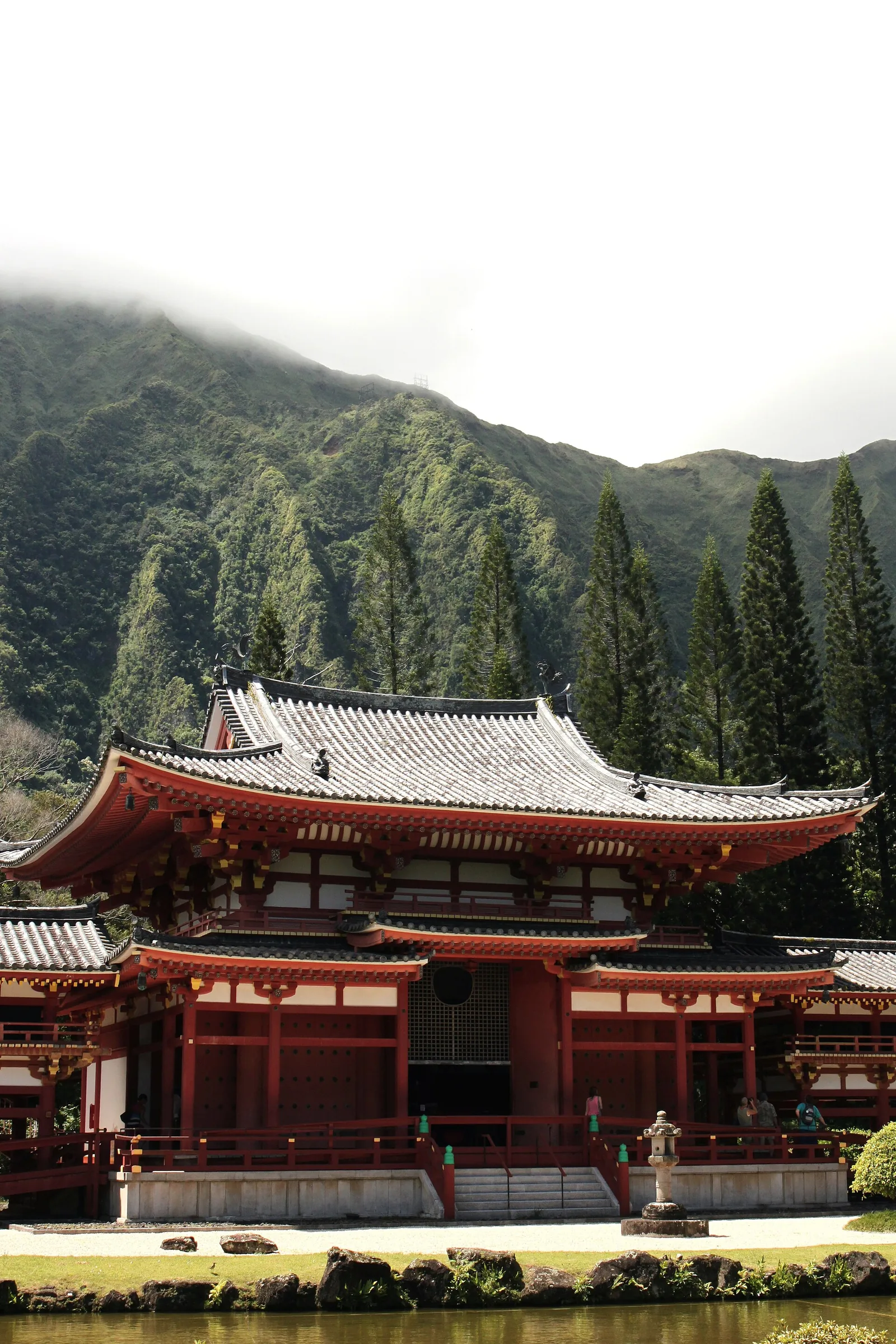
Byodo-In is a smaller-scale replica of the Byōdō-in in Uji, near Kyoto, whose Phoenix Hall dates from the 11th century and is now part of a UNESCO World Heritage Site. The Oʻahu version was built as a memorial to the first Japanese immigrants to Hawaiʻi, who arrived in 1868; it was dedicated in August 1968, a hundred years later. The temple’s own site gives 1963, the year the surrounding memorial park was founded, as the year it was built, so you’ll see both dates quoted. The surrounding memorial park was founded in 1963, so you’ll sometimes see that year quoted for the temple too.
It is a Buddhist temple, but not a practising monastery. There are no resident monks and no congregation in the usual sense, and the temple welcomes visitors of every faith. It is privately owned with the Valley of the Temples Memorial Park, and it sits inside that cemetery: there is a columbarium behind the great Buddha, and memorial services are often held here. That context is worth remembering as you walk around.
The Original in Uji
The temple it copies stands in Uji, a riverside town just south of Kyoto. Byōdō-in there was founded in 1052 by the court official Fujiwara no Yorimichi, who turned his family’s country villa into a temple. Its Phoenix Hall, with the bronze phoenixes on its roof and its wings spreading either side of a central hall over a pond, is a National Treasure of Japan, part of the UNESCO-listed historic monuments of ancient Kyoto, and familiar to everyone in Japan from the back of the 10-yen coin.
The Oʻahu building is a smaller-scale version of that hall, and the layout is the same idea: a temple set over water so that it seems to float, facing a garden meant to evoke the Pure Land paradise of the Amida Buddha. In Uji the backdrop is gentle wooded hills. Here it is the near-vertical Koʻolau, which is one reason the copy has become so famous in its own right.
For the wider story of how Japanese immigrants shaped modern Hawaiʻi, from the sugar plantations to today’s food and festivals, see our guide to Hawaiian culture and history.
What You’ll See at the Byodo In Temple
The Approach and the Bridge
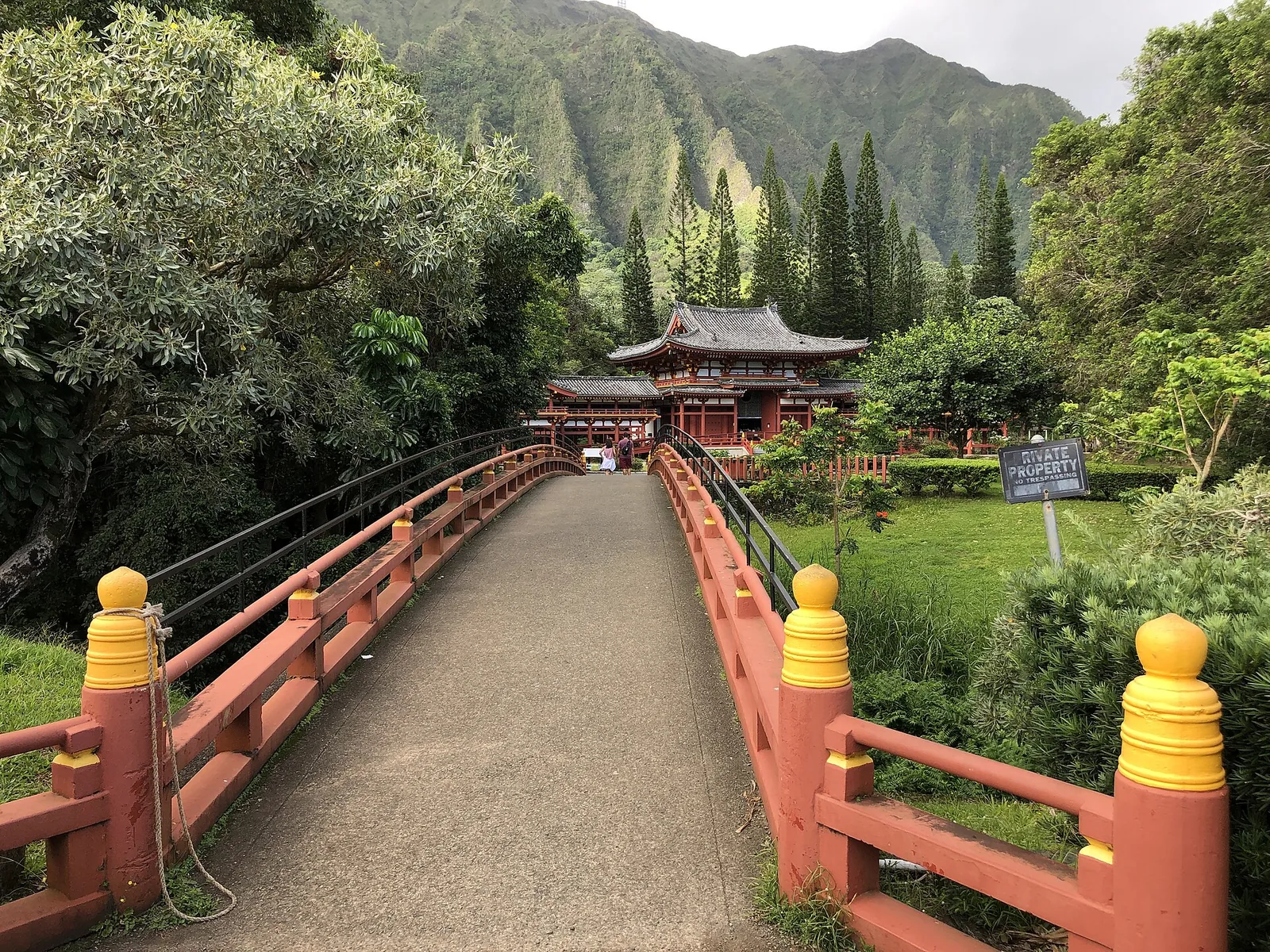
You reach the temple across a red-railed footbridge over a stream, with the hall coming into view through the trees. Take your time here: the framing of red bridge, dark forest and green cliffs is one of the best photographs on the grounds, and it’s often quieter than the pond-side view everyone else is taking.
The Bell (Bon-sho)
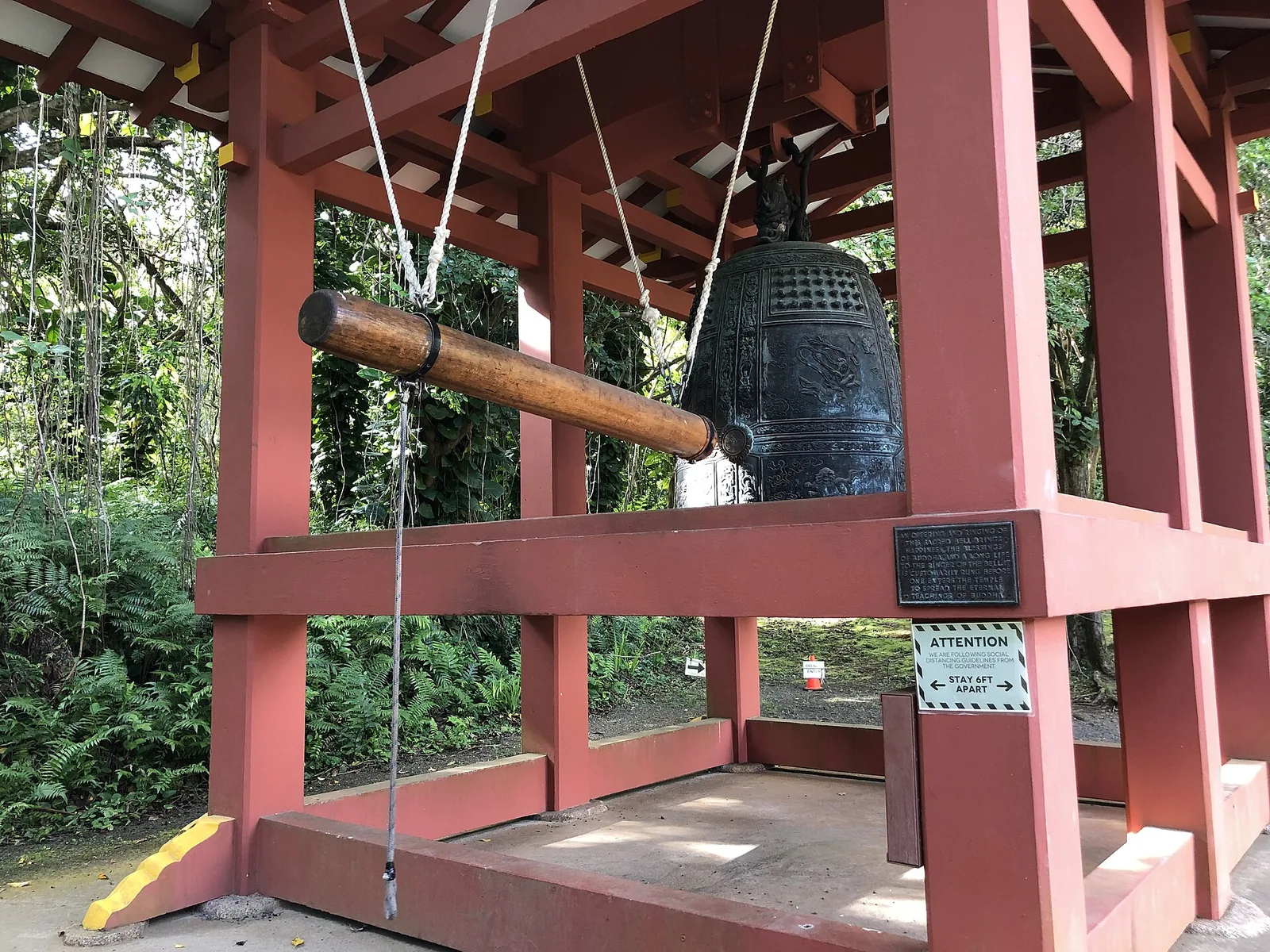
Before you enter, ring the bell. The bon-sho hangs in its own red bell house near the entrance. It is five feet tall, weighs three tons, and was cast in Osaka from bronze and tin. You strike it with a suspended wooden log called a shu-moku, and the custom is to ring it before entering the temple. It is said that ringing the bell brings happiness, blessings and a long life.
One gentle swing is plenty. The sound carries a long way across a cemetery where families may be visiting graves.
Phoenix Hall and the Amida Buddha
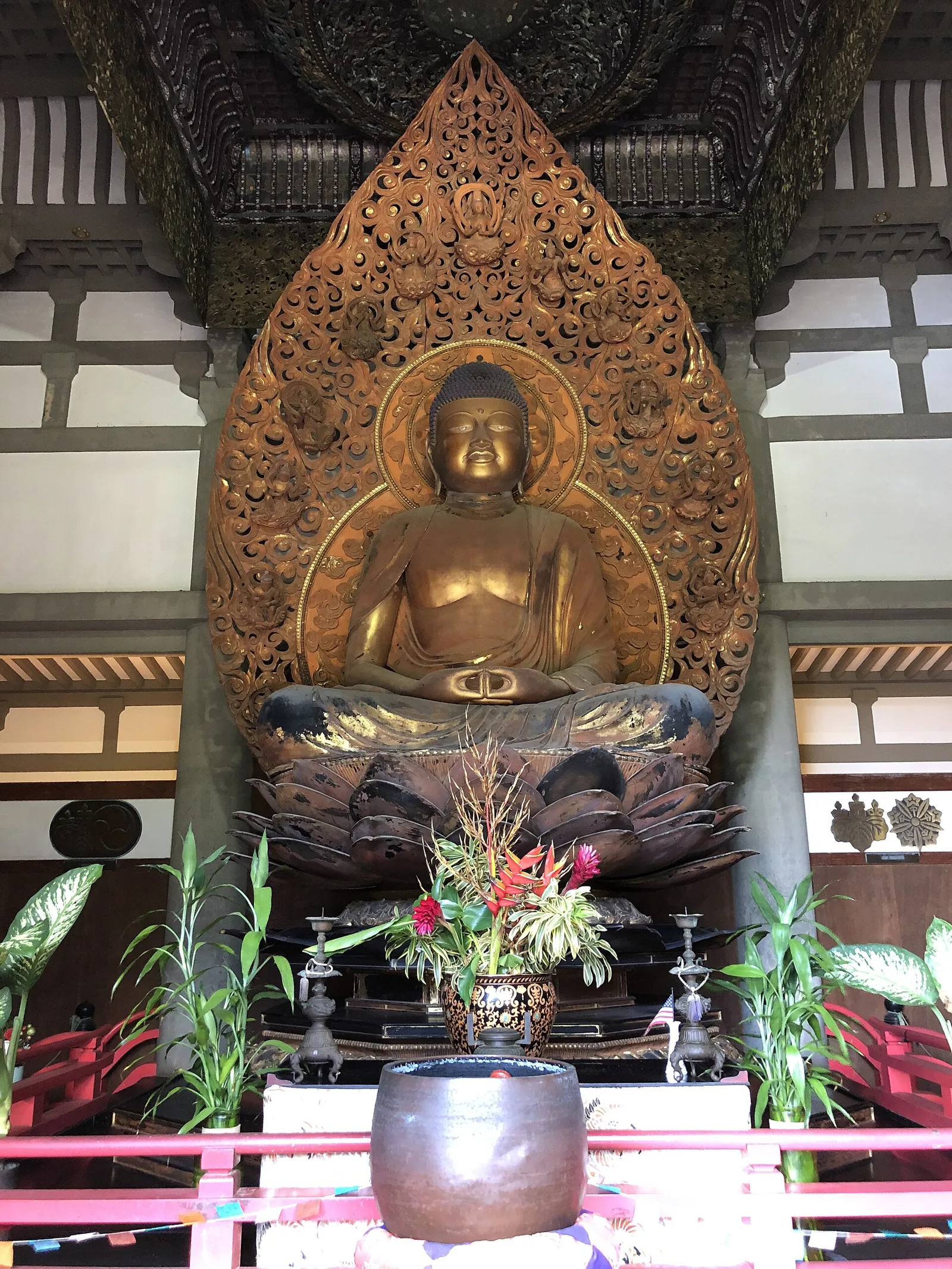
Inside the main hall sits the reason the building exists: a nine-foot Amida Buddha, seated on a lotus and set against a carved, flame-shaped halo. According to the temple, the statue weighs two tons, was designed by Masuzo Inui and carved by Jokei Sagawa, and is finished in urushi lacquer and gold leaf. The hall was built to house the Buddha and the columbarium behind it.
The temple’s visitor information says you may light incense, pray or meditate in the temple. Keep your voice down, and if a service is under way, wait or come back later.
The Koi Pond and Gardens
The temple sits beside a large pond full of koi, and feeding them is part of the ritual for most families. Buy fish food at the gift shop; outside fish food isn’t allowed. Peafowl and swans wander the gardens, and the grounds are wonderfully green, as you’d expect at the foot of the wettest side of the island.
The Meditation Pavilion
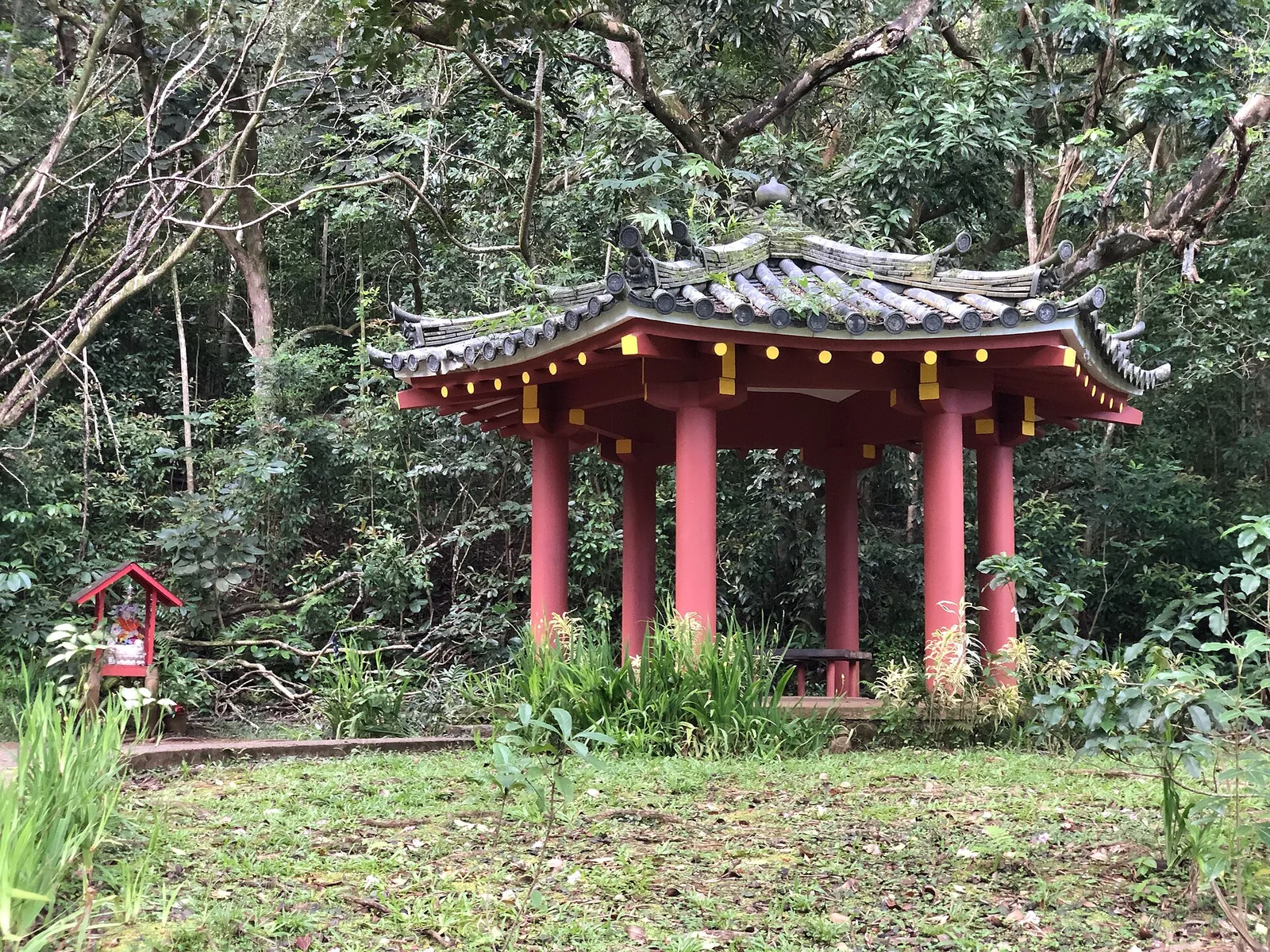
On the hill behind the temple stands a small red meditation pavilion. The temple describes it as a good place to enjoy the peace away from the crowds, and it is worth the short climb.
The Gift Shop
The gift shop, in the former tea house, sells fish and bird food, omikuji (paper fortunes), omamori (protective charms) and a goshuin stamp for collectors’ temple books. Restrooms are behind it.
On Screen
The temple has been a filming location for television, including Lost and Magnum, P.I. Fans tend to recognise it from the moment they cross the bridge.
A Visit, Step by Step
Most visits follow the same easy loop, and it helps to know it before you arrive:
- Park and pay. Park in the temple lot at the top of the cemetery road and buy your ticket at the admissions booth, by card, or show your online ticket.
- Cross the bridge. Stop on the footbridge for the first view of the hall.
- Ring the bell. One swing of the shu-moku, before you go in.
- Visit the hall. Keep voices low. Spend a few minutes with the Amida Buddha; light incense if you wish.
- Walk the pond. Feed the koi with food from the gift shop, and look for the peafowl and swans.
- Climb to the pavilion. A short walk uphill to the quietest view on the grounds.
- Finish at the gift shop. Draw an omikuji fortune, pick up a charm, or have your goshuin book stamped.
The temple suggests 30 minutes to an hour; add time on a clear morning if you want photographs from every side of the pond.
Temple Etiquette
Byodo-In is relaxed about visitors, but a few habits make a visit go smoothly and show respect for a place that is both a temple and part of a cemetery.
Incense. If you light incense, hold the stick to the flame, wave it gently to put out any flame rather than blowing on it, and place it upright in the burner. Then step back.
Omikuji. These paper fortunes are drawn at random. Japanese custom is to keep a good fortune and tie a bad one to the rack provided, leaving the bad luck behind; follow any signs the temple posts.
Goshuin. A goshuin is a temple seal, stamped in red and often accompanied by calligraphy, that pilgrims collect in a special book called a goshuinchō. If you travel on to Japan, starting your book here is a lovely souvenir.
Photographs. Personal photography is welcome, but avoid photographing people who are praying or attending a service, and remember the rule on planned shoots below.
Visiting: Tickets, Hours and Rules
The grounds are open daily from 08:30 to 16:30, with last entry at 16:15; the temple recommends arriving by 15:30 to see everything. The gift shop keeps the same hours, except on holidays: it closes early on Thanksgiving Eve, Christmas Eve and New Year’s Eve, is closed on Thanksgiving Day and Christmas Day, and opens 10:00–16:00 on New Year’s Day. No reservation is needed.
| Ticket (2026) | Age | Price |
|---|---|---|
| Adult | 13–64 | $10 |
| Senior | 65+ | $8 |
| Child | 2–12 | $6 |
| Kamaʻāina | With Hawaiʻi ID or licence | Discounted; ask at the booth |
| Parking | Per vehicle | $6 per hour |
Payment is by card or contactless only; the temple takes no cash. Buy tickets at the admissions booth, or in advance at tickets.byodo-in.com. Online tickets don’t expire and are valid on any operating day, which is handy if the weather changes your plans.
Cost: $10 adult, $8 senior, $6 child 2–12; parking $6/hour; card only · Hours: 08:30–16:30 daily, last entry 16:15 · Book: not required; tickets.byodo-in.com or at the booth · Bus: Route 65 from Ala Moana Center · Allow: 30 minutes to 1 hour
The Rules
- Dress: no beachwear. Cover up over swimsuits.
- Behaviour: no running, shouting, climbing trees, throwing stones or bothering the wildlife.
- Pets: not allowed, except ADA service animals.
- Photography: personal photos with a phone or handheld camera need no permit. Any planned shoot, personal or professional, does, and so do weddings and filming; contact the gift shop on (808) 239-9844 to arrange one.
- Drones: check with the gift shop on (808) 239-9844 before flying anything. Remember you’re over a cemetery.
There are no guided tours; signs around the grounds explain what you’re looking at.
The Valley of the Temples Memorial Park
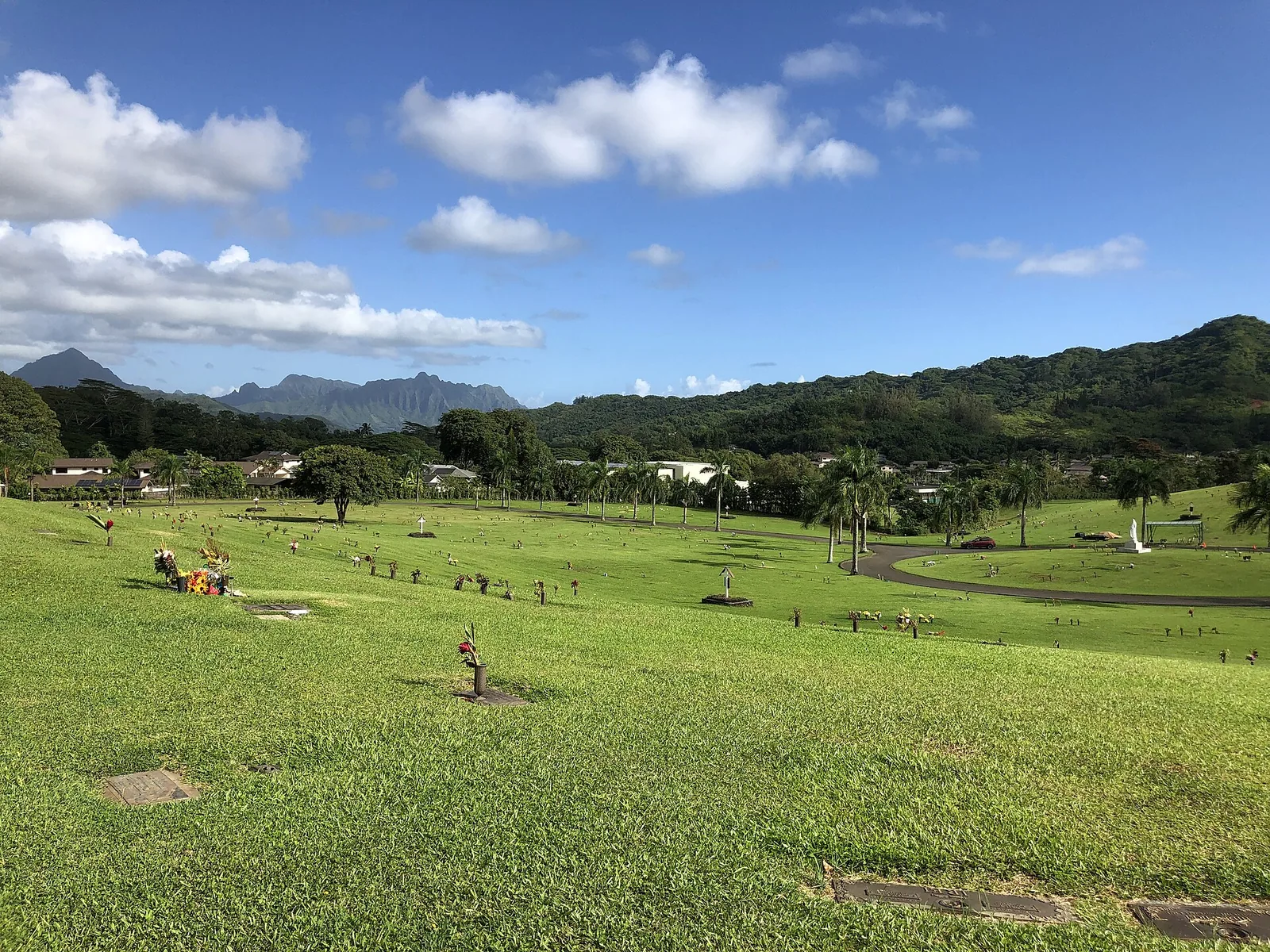
The road up to the temple winds through the Valley of the Temples Memorial Park, a large cemetery founded in 1963 and spread over the lower slopes of the Koʻolau in Kāneʻohe. As well as Byodo-In, the park has a Catholic chapel, crypts and mausoleums, and the lawns and headstones run right up to the mountains.
It’s a beautiful drive, but it’s a working cemetery first. Drive slowly, give way to funeral processions, don’t park on the grass or beside graves, and keep your distance from any service in progress. If you’re photographing the valley, leave mourners out of your frame.
The memorial park also holds community events; its Memorial 5K Run is on Sunday 8 November 2026 at 07:00, so expect runners on the roads that morning.
Getting There
By car. The temple is at 47-200 Kahekili Highway in Kāneʻohe, on the windward side. From Waikīkī and Honolulu you cross the Koʻolau by the Pali Highway, the Likelike Highway or the H-3 freeway, then follow Kahekili Highway north to the Valley of the Temples entrance and up through the cemetery. Parking at the temple costs $6 an hour, which for a typical visit means $6. Our guide to getting around Oʻahu covers car hire and the main routes over the mountains.
By bus. TheBus Route 65 runs from Ala Moana Center over the Pali Highway, through Kāneʻohe and along Haʻikū Road and Kahekili Highway, and its outbound end is at Hui Iwa Street, opposite the Valley of the Temples entrance. From there it’s a walk up the cemetery road to the temple, uphill, so take water. A ride costs $3.25 in cash, or $3.00 for a HOLO card two-hour pass. Check the current timetable on thebus.org or the DaBus2 app before you set out, because windward routes don’t run as often as those in town.
On a tour. Some circle-island tours stop at Byodo-In; the Go City Oʻahu pass, for example, includes a circle-island tour with a stop here. Our Go Oʻahu Card maths and our pick of Oʻahu tours and attractions cover the options. A tour stop is usually short, so if the temple matters to you, a self-drive visit gives you time for the pavilion and the bell without watching the clock.
Combining It With Honolulu
Because Byodo-In takes under an hour, it pairs well with a morning on the town side. Hike Diamond Head at opening (see our Diamond Head hike guide for the booking rules), then drive over the Pali Highway for lunch in Kāneʻohe and an afternoon at the temple and Hoʻomaluhia. Our guide to Honolulu neighbourhoods and Oʻahu towns introduces Kāneʻohe and Kailua, and our list of the best things to do in Honolulu covers the rest of the city.
With Children
Children usually love Byodo-In for the simple pleasures: ringing a huge bell, feeding a pond full of koi and spotting peafowl. Children aged 2 to 12 pay $6. Keep small ones close by the pond’s edge, and remind them it’s a quiet place before you walk in. Our guide to Hawaiʻi with kids has more family stops around the island.
When to Go
Go early. The gates open at 08:30, and the first hour is usually the calmest. The Koʻolau cliffs are often clearer of cloud early in the day.
The windward side is the wetter side of Oʻahu, and showers come through here often. Don’t let a grey forecast put you off: mist hanging in the cliffs behind the red hall is as atmospheric as any sunny photo, and the visit is short. If it’s pouring, the drive over the mountains often brings you back into sunshine in town. For seasonal patterns, see our guide to the best time to visit Hawaiʻi.
Nearby on the Windward Side
Byodo-In is a short stop, so build it into a windward day. These are the best pairings:
- Hoʻomaluhia Botanical Garden, Kāneʻohe: a free garden of lawns, a lake and forest beneath the cliffs. Open 09:00–16:00, closed every Thursday, 25 December and 1 January. Don’t stop on its entrance road for photos; the garden asks drivers not to.
- Kualoa Regional Park: a broad beach park further up the coast, facing the islet of Mokoliʻi. Next door, Kualoa Ranch runs 90-minute tours from $59.95.
- Kāneʻohe Bay: a sandbar trip or a kayak is the classic way to see it; check operators’ current prices when you book.
- Kailua and Lanikai: beaches, lunch and the Lanikai Pillbox hike, back down the coast to the south. Our guide to Oʻahu’s beaches covers both.
One place not to add: the Haʻikū Stairs, in the next valley. They are closed and illegal to enter. Choose a legal trail from our Oʻahu hikes guide instead. The Nuʻuanu Pali Lookout, on the way over the Pali Highway, was closed after Hurricane Lowell in September 2026; check DLNR’s notices or our Pali Lookout guide before planning a stop.
For a full day that strings these together, see our Oʻahu itinerary, and for more of the island’s best views our guide to the most instagrammable places on Oʻahu.
Is the Byodo In Temple Worth It?
Yes, as part of a windward day, and with realistic expectations. You’ll pay $10 to get in and around $6 to park, and you’ll see it properly in 30 minutes to an hour. In return you get one of the most photogenic buildings in Hawaiʻi, a genuinely peaceful garden, and a direct link to the Japanese community that has shaped the islands since 1868.
It’s less worthwhile as a special trip from Waikīkī on its own, especially by bus, unless you have a particular interest in Japanese Buddhist architecture. And if you’ve already visited the original in Uji, this is a lovely tribute rather than the real thing.
Where it really earns its place is on a mixed-weather day. When the beaches on the windward side are grey, a temple, a botanical garden and a long lunch in Kāneʻohe make a better plan than waiting for the sun, and our list of rainy day activities on Oʻahu has more ideas in the same spirit. If you’d rather find quieter corners than the coach-tour favourites, our guide to hidden gems on Oʻahu includes several more windward stops, along with the places that should be left alone.
Budget it simply: $10 a head, $6 for the car, and an hour of your day. Few sights on the island give back as much for so little.
| Windward stop | Cost (2026) | Hours | Time to allow |
|---|---|---|---|
| Byodo-In Temple | $10 adult; parking $6/hour | 08:30–16:30, last entry 16:15 | 30–60 minutes |
| Hoʻomaluhia Botanical Garden | Free | 09:00–16:00, closed Thursdays | 1–2 hours |
| Kualoa Ranch tour | From $59.95 | Tour times vary | 1.5 hours per tour |
| Kualoa Regional Park | Free | Check the City’s posted park hours | 45 minutes |
For the island’s other must-dos, start with our guide to the best things to do in Oahu; if you’re short of money, our list of free things to do in Oʻahu has plenty more on this side of the island.
After a windward afternoon, remember that the sun sets behind the Koʻolau on this side of the island. For the evening, head back over the mountains to one of the best sunset spots on Oʻahu, such as Magic Island or the Waiʻanae coast.
Frequently Asked Questions
How much does the Byodo In Temple cost?
In 2026 admission is $10 for adults aged 13 to 64, $8 for seniors 65 and over, and $6 for children aged 2 to 12, with a discount for Hawaiʻi residents showing ID. Parking is $6 an hour. The temple takes card or contactless payment only, not cash, and sells tickets at its booth or online at tickets.byodo-in.com.
Do you need a reservation for Byodo-In?
No. You can buy tickets at the admissions booth when you arrive. Tickets bought in advance online don’t expire and can be used on any operating day, which helps if rain changes your plans. The grounds are open daily from 08:30 to 16:30, with last entry at 16:15.
How long should you spend at the Byodo-In Temple?
The temple suggests 30 minutes to an hour. That’s enough to ring the bell, see the Amida Buddha, feed the koi and walk up to the meditation pavilion. Add time for photographs on a clear morning, and plan it alongside Hoʻomaluhia Botanical Garden or the Kualoa coast to make the drive over the mountains worthwhile.
Can you ring the bell at Byodo-In?
Yes. Visitors are welcome to ring the five-foot, three-ton bon-sho, which was cast in Osaka. The custom is to ring it once before entering the temple, swinging the suspended wooden log, the shu-moku, against the bell. Please ring it gently and only once, as families may be visiting graves in the surrounding cemetery.
Are there monks at the Byodo-In Temple?
No. Byodo-In is a non-denominational Buddhist temple and a memorial, not a practising monastery, and nobody lives there. It welcomes visitors of all faiths, who may light incense, pray or meditate. It sits within the Valley of the Temples Memorial Park, a working cemetery, and memorial services are often held at the temple.
Is Byodo-In worth visiting in the rain?
Usually, yes. The windward side gets more showers than Waikīkī, but they often pass quickly, and mist on the Koʻolau cliffs behind the red temple is beautiful. The visit is short and much of it is under cover, in the hall, bell house and pavilion. In heavy rain, buy your ticket online, since online tickets don’t expire, and come back another day.
Can you get to Byodo-In by bus?
Yes. TheBus Route 65 runs from Ala Moana Center over the Pali Highway to Kāneʻohe, and its outbound end is opposite the Valley of the Temples entrance on Kahekili Highway. From there it’s an uphill walk on the cemetery road to the temple. Check the timetable on thebus.org or the DaBus2 app first, as services are less frequent here.
Photo Credits
- Byodo-In Temple: Puneet Abbott, CC BY 2.0
- Footbridge to Byodo-In: Famartin, CC BY-SA 4.0
- The peace bell: Famartin, CC BY-SA 4.0
- Amida Buddha: Famartin, CC BY-SA 4.0
- Meditation pavilion: Famartin, CC BY-SA 4.0
- Valley of the Temples Memorial Park: Famartin, CC BY-SA 4.0
- Cloud above Byodo-In: Prayitno, CC BY 2.0
- Byodo-In Temple across the pond (featured): BrandonBerger025, CC BY-SA 4.0