On 1 August 2026, cars rolled down Lahaina’s Front Street for the first time since the fire of August 2023, past a new seawall railing, young trees and a great deal of empty land. That quiet milestone frames any honest list of things to do in maui this year. The island’s big experiences are all open and as extraordinary as ever: sunrise above the clouds on Haleakalā, the waterfalls of the Road to Hāna, whales breaching off Kāʻanapali in winter, snorkelling inside Molokini’s crater. But West Maui is a community still rebuilding, and the best visitors are the ones who know that before they land.
This guide covers Maui region by region, with current 2026 prices where we have checked them, the reservation systems you must use, drive times, and safety notes that matter. It includes a mile-marker plan for the Road to Hāna, a step-by-step guide to booking Haleakalā sunrise, and a clear section on visiting Lahaina respectfully. If you are still deciding between islands, start with our guide to which Hawaiian island to visit.
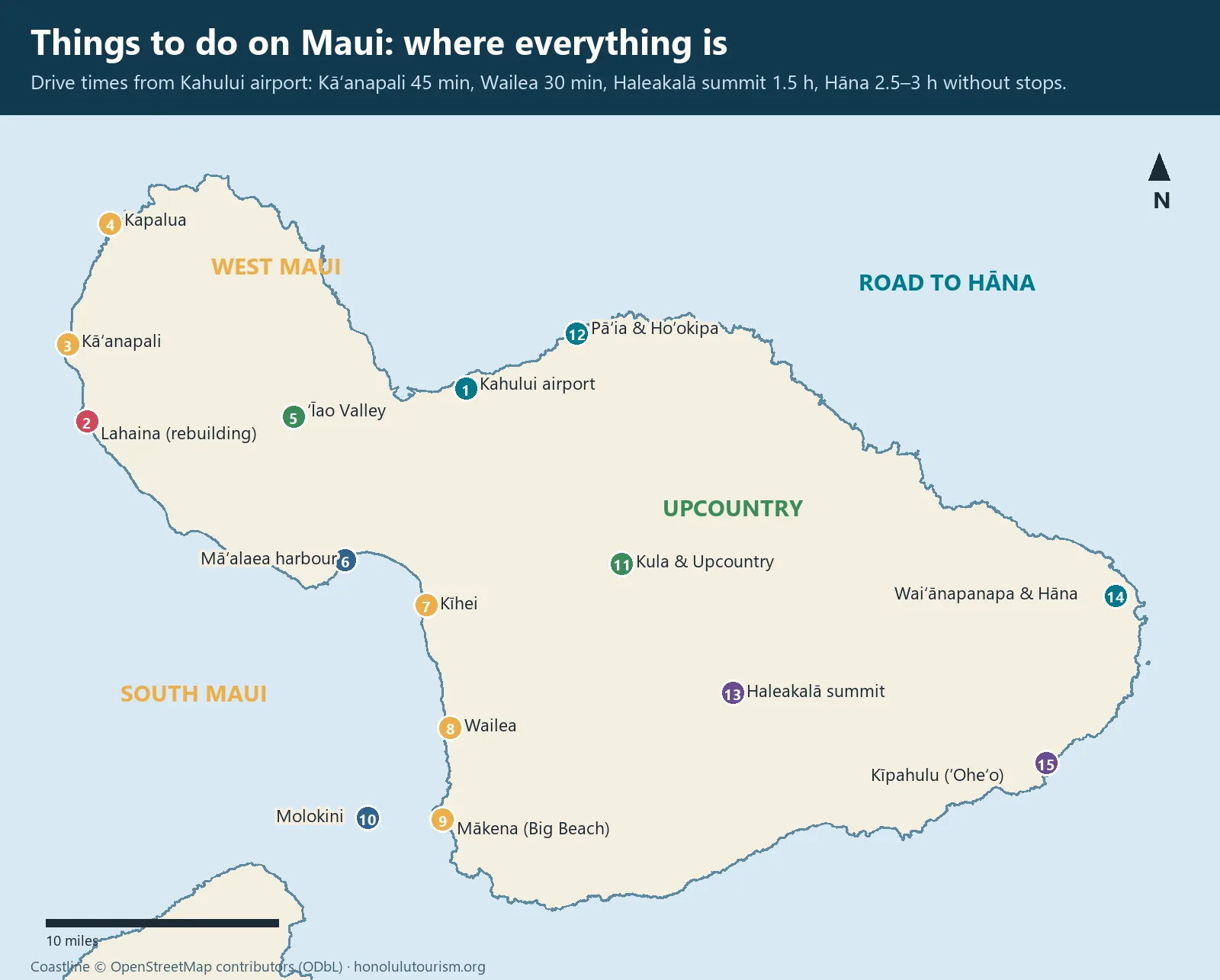
Things to do in Maui at a glance
| Experience | Area | 2026 cost | Book | Allow |
|---|---|---|---|---|
| Haleakalā sunrise | Summit | $1 reservation plus park entry | recreation.gov, 8 weeks ahead | Pre-dawn start, half a day |
| Road to Hāna | East Maui | Free drive; stops vary | Waiʻānapanapa entry, 30 days ahead | A full day, or overnight |
| Waiʻānapanapa State Park | Hāna | $5 per person + $10 per vehicle | gostateparks.hawaii.gov, up to 30 days | 1.5–2 hours |
| ʻĪao Valley State Monument | Central | $5 per person + $10 per vehicle | gostateparks.hawaii.gov, up to 30 days | 1 hour |
| Molokini snorkel cruise | South | From about $175 (PacWhale) | Online, a week ahead | Half a day |
| Whale watching | West and South | Varies by operator | A few days ahead, Dec–May | 2–3 hours |
| Kāʻanapali Beach and Black Rock | West | Free; parking fees at resorts | No | Half a day |
| Honolua Bay | West | Free | No | 2 hours; summer snorkelling |
| Mākena (Big Beach) | South | Free; parking fees may apply | No | Half a day |
| Hoʻokipa turtles and windsurfers | North | Free | No | 1 hour |
| Upcountry, Kula and Makawao | Upcountry | Free to wander | No | Half a day |
| Pīpīwai Trail, Kīpahulu | Haleakalā NP | Park entry | No | 3 hours plus the drive |
Visiting Lahaina in 2026
The fire that swept through Lahaina on 8 August 2023 killed more than 100 people and destroyed most of the historic town. Three years on, the recovery is real but far from finished, and it is worth understanding exactly where things stand before you go.
What has reopened. Front Street between Pāpalaua and Shaw streets reopened to vehicles on 1 August 2026, after debris removal, seawall and sidewalk repairs, new railings, trees and paving. The first storefronts have returned. Kimo’s, one of Front Street’s best-known restaurants, is among more than a dozen businesses moving back, and ʻUlu o Lele, an interim marketplace for local businesses and community programmes, was expected to open this month. Outside the burn zone, many restaurants and shops have reopened, and Lahaina Harbor operates on a limited basis.
What has not. The historic commercial core is still largely empty lots and construction fencing. Rebuilding of homes, businesses and infrastructure will continue for years. Many residents are still living in temporary housing.
How to visit respectfully. Drive through or stop to eat and shop at businesses that have reopened. Do not enter fenced or residential areas, do not photograph damaged or rebuilding homes, and do not treat the burn zone as a sight. Spending money with Lahaina’s reopened businesses is one of the most direct ways a visitor can help. And if you are staying in Kāʻanapali or Kapalua, remember that many of the people serving you lost homes, family members or both.
Haleakalā National Park
Haleakalā, “house of the sun”, is the massive volcano that forms East Maui. Its summit, at about 10,000 feet, looks down into a vast eroded crater of red, orange and black cinder cones. Watching the sun rise above the cloud layer here is Maui’s most famous experience. Sunset is just as beautiful and needs no reservation, and the stargazing afterwards is superb.
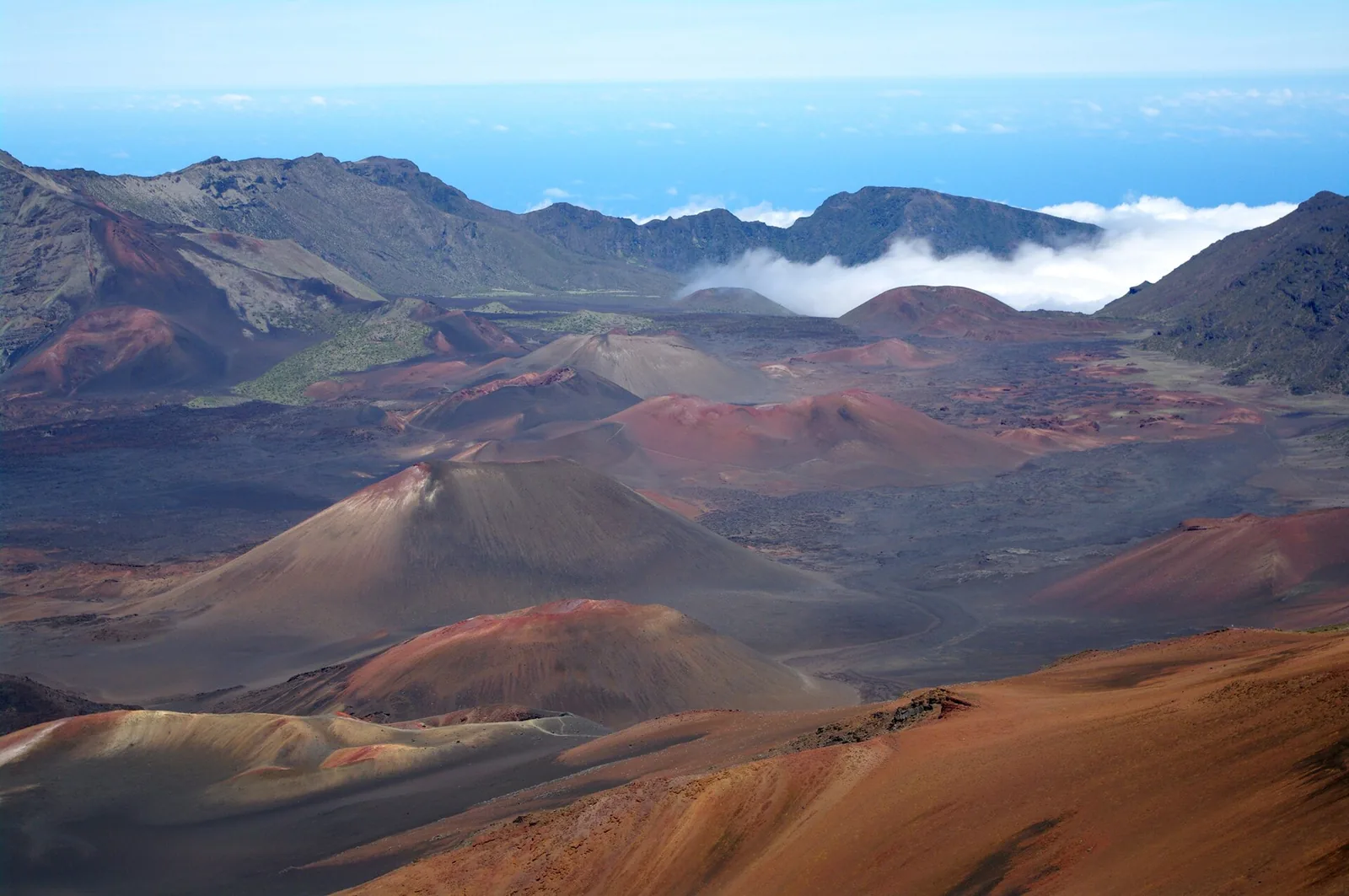
How to book Haleakalā sunrise
1. Understand the rule. Every private vehicle entering the summit area between 3am and 7am needs a sunrise reservation. Without one, you will be turned back at the entrance.
2. Book on recreation.gov, eight weeks ahead. Reservations are released in blocks eight weeks before the date, and they cost $1 per vehicle on top of the park entrance fee. Each customer can make one reservation every three days. The name on the booking must match the driver’s photo ID.
3. Be online when your date releases. Popular dates, especially in whale season and summer holidays, go within minutes. Create your account in advance and be signed in.
4. Missed out? Try the late release or go at sunset. A small number of reservations are also released shortly before the date. Or book a commercial sunrise tour, whose permit covers entry, or simply go for sunset.
5. Pay the entrance fee. The park charges an entrance fee, valid for three days and for both the summit and the Kīpahulu district near Hāna. Check the current fees on nps.gov/hale, as they have changed for 2026.
On the day
The drive from Kahului to the summit takes about an hour and a half, up switchbacks in the dark. To see sunrise, most visitors leave between 2:30am and 3:30am. It is often near freezing at the summit before dawn, whatever the temperature on the beach: bring a warm jacket, hat, gloves and a blanket. Fill up with fuel beforehand; there is no fuel in the park. The altitude affects some people, particularly anyone with heart or breathing conditions, and it is not recommended for pregnant women or babies. Go slowly on any walk at the top.
After sunrise, drive down slowly in daylight and stop at the lower lookouts. Watch for nēnē, the endangered Hawaiian goose, which wanders onto the road. Breakfast in Kula or Makawao on the way down makes a great morning.
Cost: $1 sunrise reservation plus park entrance · Hours: open 24 hours; reservation needed 3am–7am · Book: recreation.gov, 8 weeks ahead · Drive: 1.5 hours from Kahului, 2 hours from Kāʻanapali or Wailea · Allow: 5–6 hours for sunrise and the drive down
Hiking into the crater
The Sliding Sands (Keoneheʻeheʻe) Trail descends from the summit visitor centre into the crater across cinder and ash. It is spectacular and deceptive: every step down is a much harder step back up at high altitude. Walking down for about an hour and turning back gives most visitors a fine sense of the crater. Only experienced, well-prepared hikers should attempt the full crossing, and they should arrange a car at the Halemauʻu trailhead. Carry plenty of water and layers, and allow twice as long to climb out as to walk in.
Kīpahulu district and the Pīpīwai Trail
The coastal Kīpahulu district of Haleakalā National Park, about 12 miles beyond Hāna, is where the ʻOheʻo stream drops through a series of pools to the sea. Swimming in the pools is often prohibited because of flash-flood and rockfall risks; follow the signs and the rangers. The Pīpīwai Trail climbs about two miles each way through a bamboo forest to the 400-foot Waimoku Falls. It is one of the best hikes on Maui. Your park entry receipt from the summit is valid here within three days.
Cost: park entrance · Hours: daytime · Book: no · Drive: about 3 hours from Kahului via Hāna · Allow: 3 hours for the trail
The Road to Hāna: a mile-marker plan
The Hāna Highway winds along Maui’s rainforest coast, with hundreds of bends, dozens of one-lane bridges, waterfalls and ocean views. It is a slow, beautiful, demanding drive that works best as a full day with an early start, or with a night in Hāna. The distance is only around 50 miles from Kahului, but without stops it takes two and a half to three hours each way.
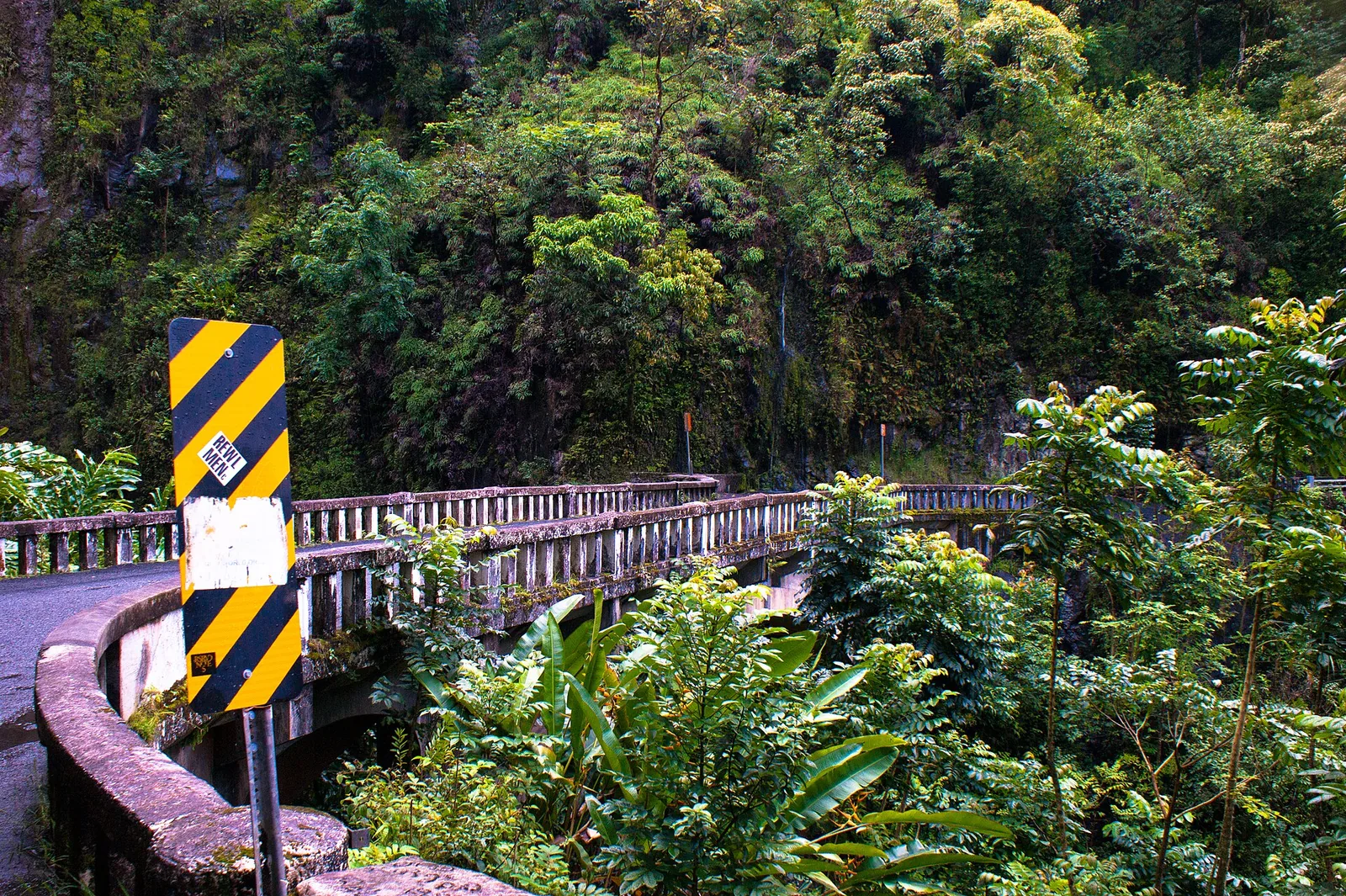
Before you go
- Leave early. Aim to pass Pāʻia by 7am. It is the last town with plentiful fuel, food and supermarkets before Hāna.
- Mile markers restart. The markers along Route 36 from Kahului end near Haʻikū, and the count starts again from zero on Route 360, the Hāna Highway proper. Stops below use the Route 360 markers and are approximate.
- Book Waiʻānapanapa. Non-residents need an entry reservation, available up to 30 days ahead.
- Respect private land. Many waterfalls along the road are on private property. Do not climb over gates or walk past “kapu” or no trespassing signs.
- Drive courteously. Pull over to let local drivers pass; they are going to work. Park only in designated spots, never on the road or on a bridge.
- Watch the weather. After heavy rain, streams and waterfall pools can flash-flood within minutes, even when it is dry where you are. Do not swim in them after rain.
Stops in order
Around mile 2: Twin Falls. A popular first stop with a short walk to a waterfall, on private farmland with a farm stand. Follow the posted rules and parking arrangements.
Around mile 9–10: Waikamoi Ridge Trail and nature walk. A short loop through bamboo and eucalyptus forest.
Around mile 10.5: Garden of Eden Arboretum. A paid, privately owned botanical garden with lookouts over the coast. It is well kept and a good stop for plant lovers.
Around mile 12: Kaumahina State Wayside. Restrooms and a view down to the Keʻanae peninsula.
Around mile 16–17: Keʻanae Peninsula. A short detour to a flat peninsula of taro patches and black lava rock pounded by surf. This is a Hawaiian farming community; drive slowly and do not wander into the taro fields. Stop for banana bread at the stands here.
Around mile 18–19: Wailua Valley State Wayside. A lookout over the valley and the village of Wailua with its church.
Around mile 19–20: Upper Waikani Falls (Three Bears Falls). Visible from the road bridge. Do not stop on the bridge; there is very limited parking nearby.
Around mile 22: Puaʻa Kaʻa State Wayside. Restrooms and small waterfalls with pools a short walk from the car park.
Around mile 28–29: Nāhiku. Roadside food trucks and stands, a good lunch stop if you are running late.
Around mile 31: Kahanu Garden and Piʻilanihale Heiau. A paid National Tropical Botanical Garden site protecting one of the largest heiau in Polynesia, a massive stone temple platform. It is a sacred site; stay on the paths.
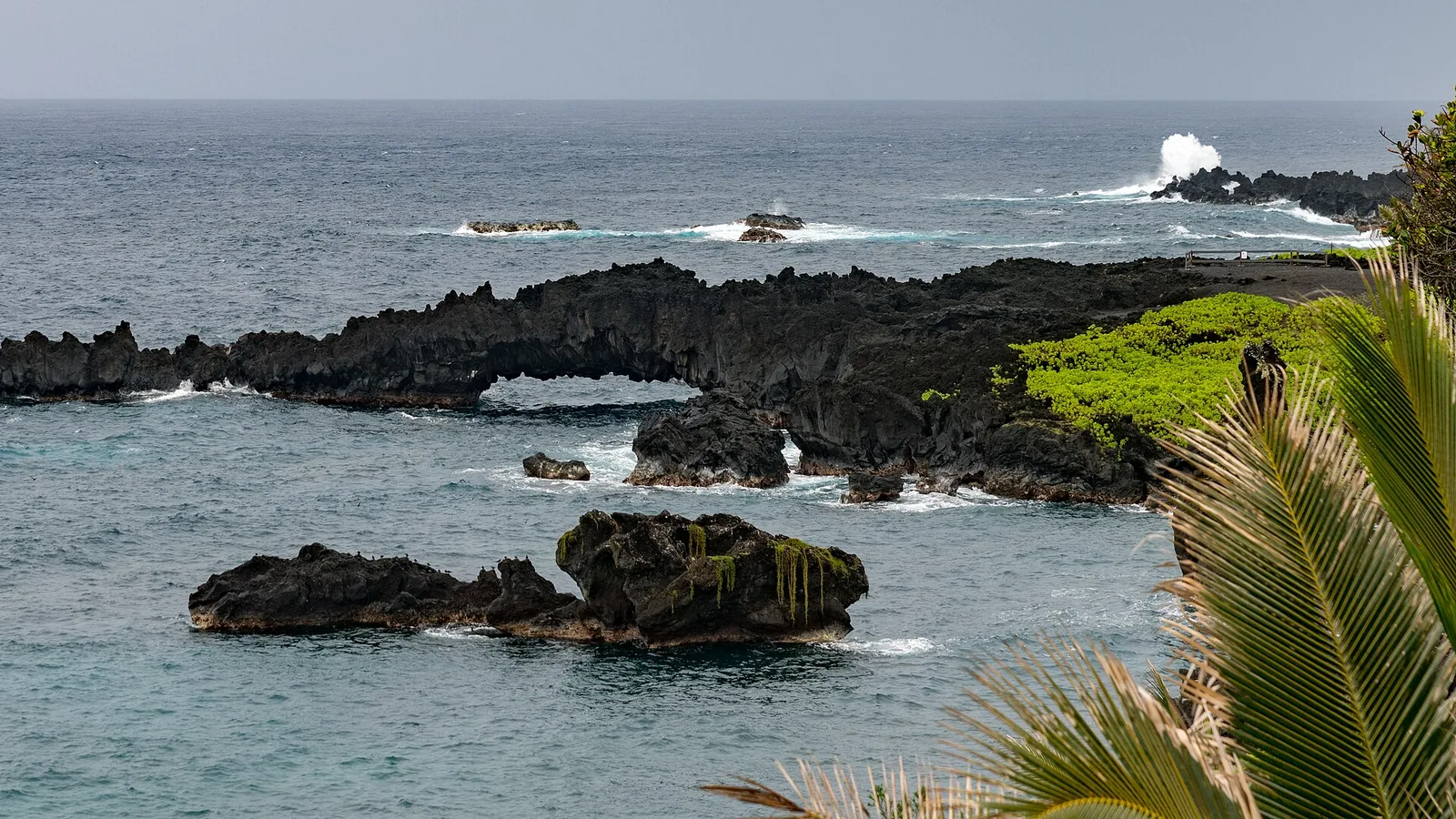
Around mile 32: Waiʻānapanapa State Park. A black-sand beach, lava sea arches, blowholes and freshwater caves along a coastal trail. The ocean here is often rough; swimming at the black-sand beach is dangerous in most conditions.
Mile 34: Hāna town. A small, quiet, largely Native Hawaiian community with a store, a few restaurants and a beautiful bay. It is not a tourist town, and it does not want to be.
Beyond Hāna: Hāmoa Beach, Wailua Falls and Kīpahulu. Hāmoa, a few miles past town, is one of Maui’s loveliest beaches. Wailua Falls tumbles right beside the road, and the Kīpahulu district of Haleakalā National Park, with the Pīpīwai Trail, is about 12 miles past Hāna.
Cost: free drive; Waiʻānapanapa $5 per person + $10 per vehicle; gardens charge entry · Hours: start by 7am; be back past the narrow sections before dark · Book: Waiʻānapanapa up to 30 days ahead · Drive: 2.5–3 hours each way from Kahului without stops · Allow: 10–12 hours, or stay overnight in Hāna
Should you drive back the other way?
Beyond Kīpahulu, the Piʻilani Highway continues round the dry south side of Haleakalā, including rough, narrow and unpaved sections exposed to rockfall and washouts. Many rental car agreements prohibit driving it, and breakdowns there are expensive and slow to recover. Unless your rental company allows it and conditions are good, return the way you came.
Is the Road to Hāna worth it?
For most visitors, yes, if they leave early, choose a handful of stops and go slowly. It is not worth it if you dislike winding roads, get carsick, or would spend the day rushing from car park to car park. A good alternative is to drive only as far as Keʻanae or Wailua and turn round, or to book a small-group tour and let someone else drive.
Beaches and snorkelling
Maui’s best swimming beaches are on its sheltered west and south coasts. They are generally calmest in the morning, before the afternoon trade winds pick up. Winter swells bring big surf to north-facing shores, including Honolua Bay and Hoʻokipa, while summer swells affect south-facing beaches.
Maui has one of the strictest sunscreen laws in the world: since October 2022, only mineral sunscreens (zinc oxide or titanium dioxide) may be sold or used in Maui County. Bring a mineral sunscreen and a rash guard.
A duty-of-care reminder that applies to every beach below: drowning is the leading cause of injury death for visitors to Hawaiʻi, and snorkelling is involved in close to a third of those deaths. Swim at lifeguarded beaches where possible, never snorkel alone, and stop and float if you feel breathless. Our snorkelling safety guide explains the risks in detail; the same rules apply on Maui.
Kāʻanapali Beach and Black Rock
Kāʻanapali is a three-mile stretch of golden sand backed by resorts and a beachfront walkway. At its northern end, the lava headland of Puʻu Kekaʻa, known as Black Rock, has good snorkelling around its point on calm mornings, with turtles and reef fish. Each evening, a cliff diver re-enacts the leap of Maui’s chief Kahekili from the rock at sunset, a ceremony performed by the resort beside it.
Cost: free; public beach parking is limited, resort parking is paid · Hours: daylight; snorkel in the morning · Book: no · Drive: 45 minutes from Kahului · Allow: half a day
Kapalua Bay and Nāpili
Kapalua Bay is a small crescent of sand protected by lava points on both sides, one of the calmest and most family-friendly swimming beaches on the island. Neighbouring Nāpili Bay is similar. Both have gentle snorkelling along their rocky edges. Parking is very limited; arrive early.
Honolua Bay
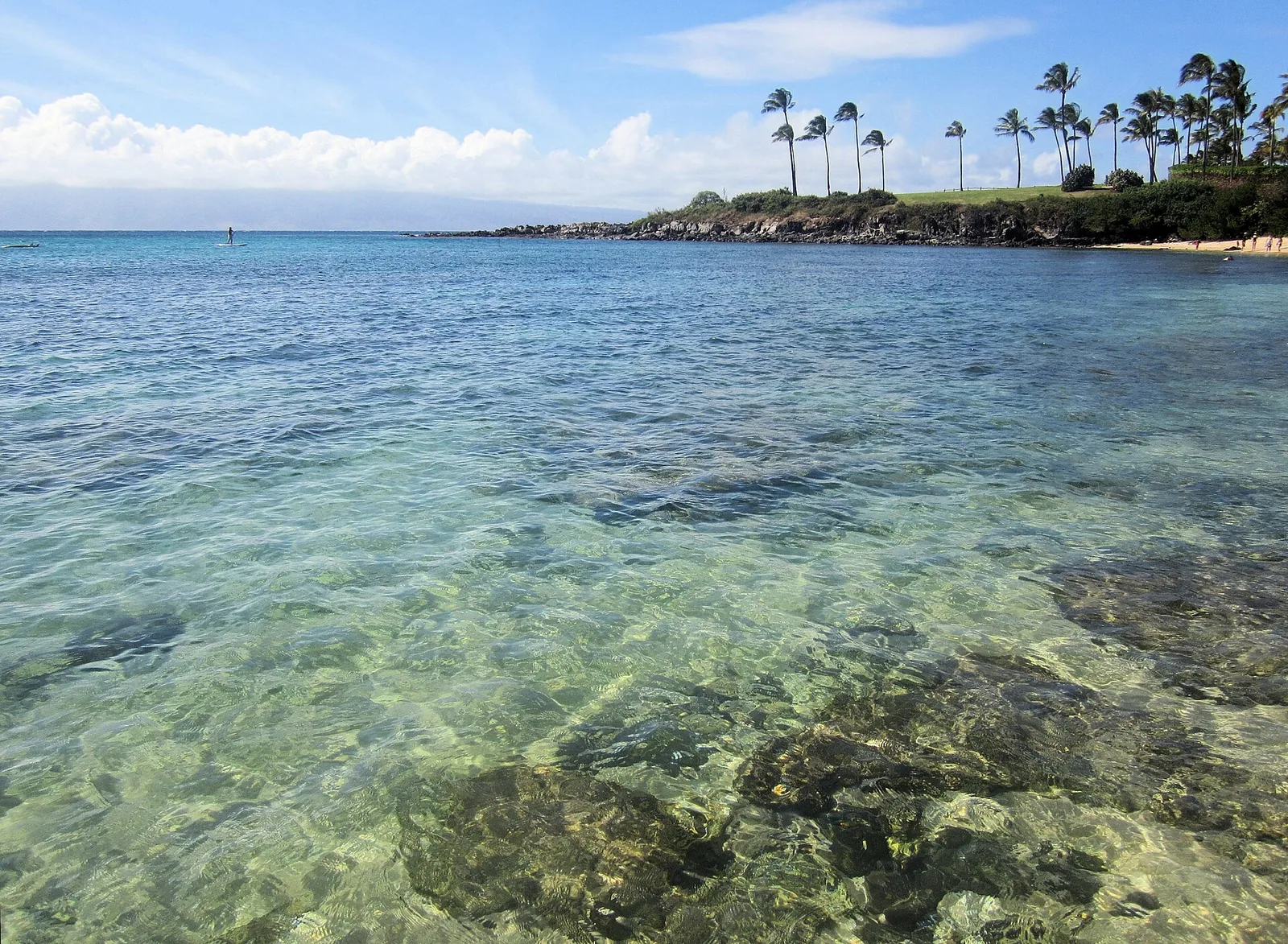
A Marine Life Conservation District at the north-west tip of Maui, with a rocky entry and some of the island’s best snorkelling on calm summer days. In winter, it becomes a famous surf break and is not safe for snorkelling. Park along the road and walk down through the trees. Leave nothing valuable in the car.
Wailea’s beaches and the coastal walk
Wailea’s five crescent beaches (Mōkapu, Ulua, Wailea, Polo and Palauea) are separated by lava points, with public access paths and small car parks between the resorts. Ulua and Mōkapu have good snorkelling around the rocky point between them. A paved coastal walk links the beaches and is one of the best places on Maui to spot whales from shore in season.
Mākena (Big Beach)
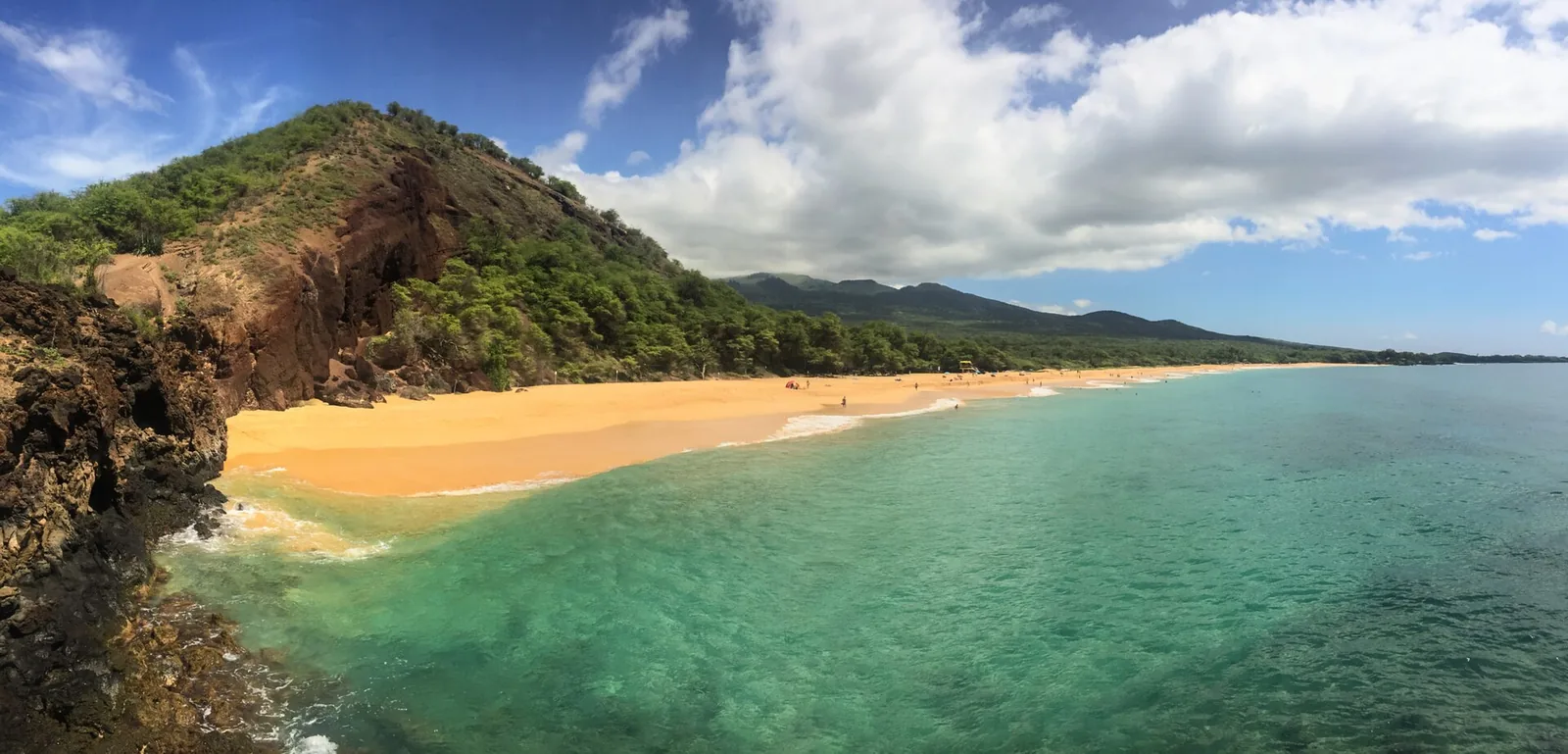
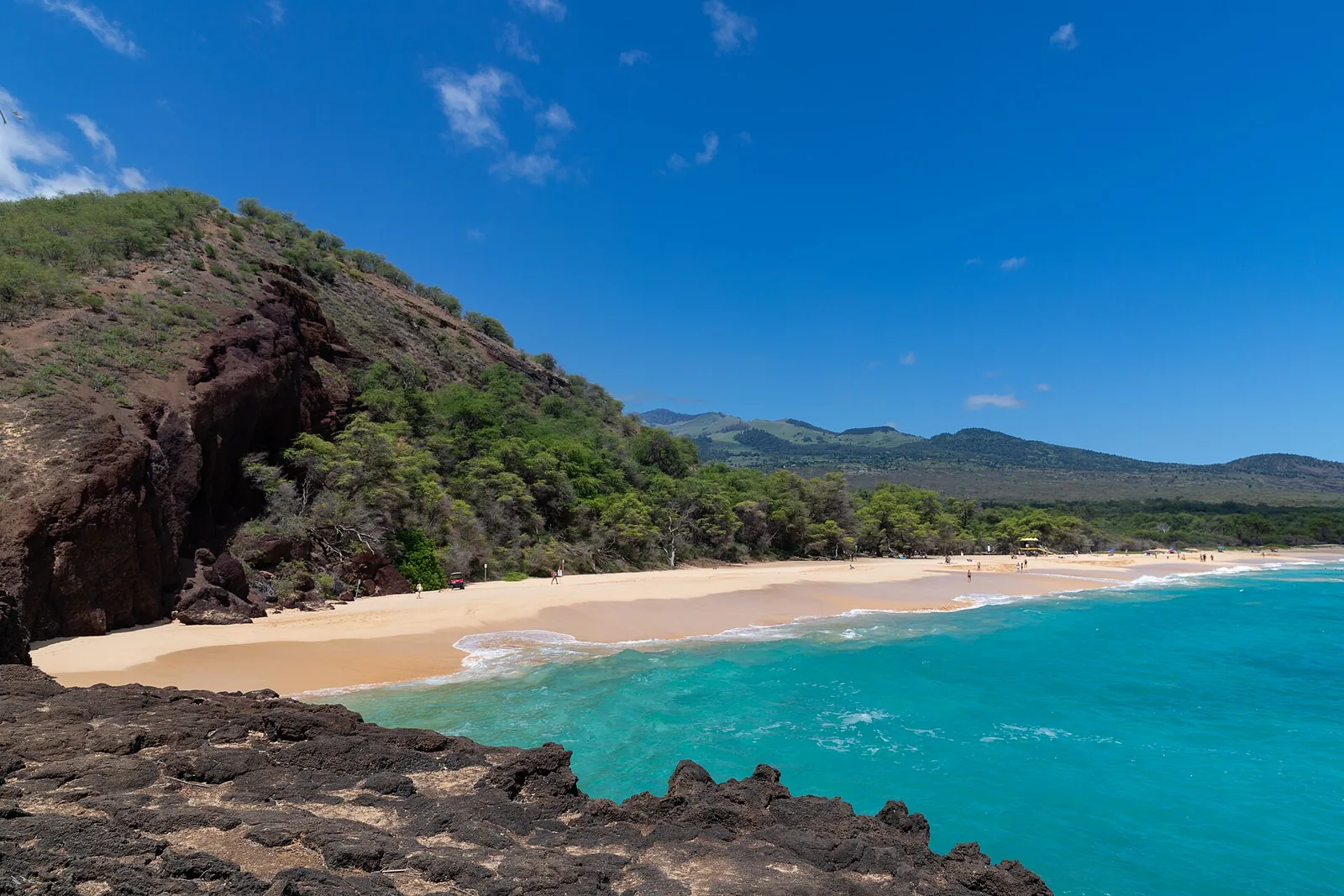
Mākena State Park’s Big Beach, Oneloa, is a long, wide, undeveloped sweep of golden sand backed by a cinder cone. It is magnificent, and it has one of the most dangerous shorebreaks in Hawaiʻi. Waves break directly on the steep sand, and they cause serious neck and back injuries every year, including to strong swimmers. Swim only if the lifeguards say conditions are calm, and never dive or bodysurf into the shorebreak.
Molokini and Turtle Town
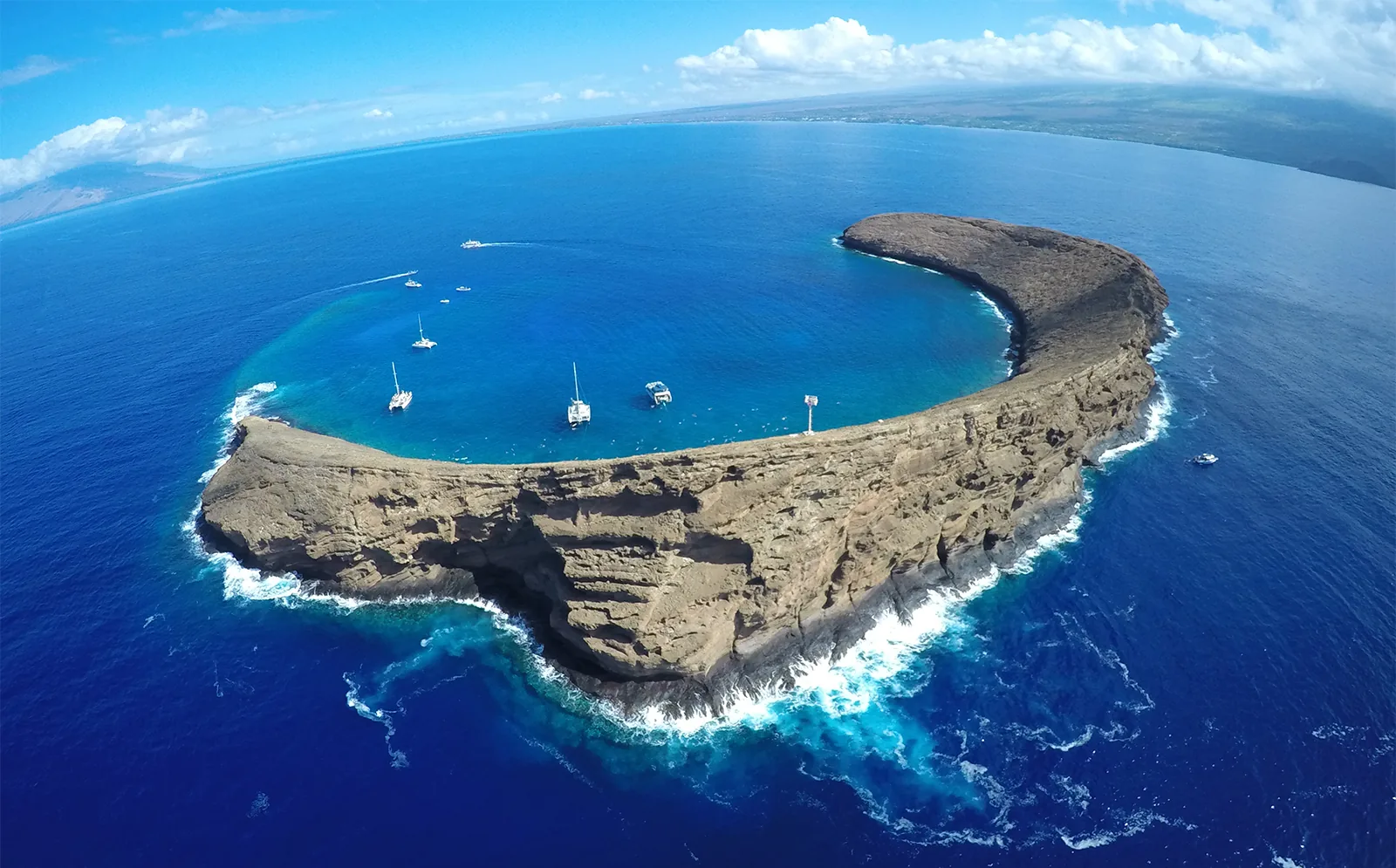
Molokini is a partly submerged volcanic crater about three miles off the south coast, a Marine Life Conservation District with clear water and abundant reef fish. It is reachable only by boat. Morning trips have the calmest seas and clearest water. PacWhale Eco-Adventures’ Molokini and Turtle Arches snorkel tour, with breakfast and a barbecue lunch, starts at about $175. Many trips combine Molokini with “Turtle Town”, reefs off Mākena where green sea turtles gather. Keep 10 feet from the turtles.
Cost: from about $175 per adult · Hours: early morning departures · Book: online, a week ahead · Drive: Māʻalaea harbour, 25 minutes from Kahului · Allow: 5 hours
Hoʻokipa and the north shore
Hoʻokipa Beach Park, just past Pāʻia, is one of the world’s great windsurfing and kitesurfing spots, and in the late afternoon green sea turtles haul out to rest on the sand. Volunteers often keep a viewing line; stay at least 10 feet away. The ocean here is for experts only. Watch from the lookout above the beach.
Whale watching
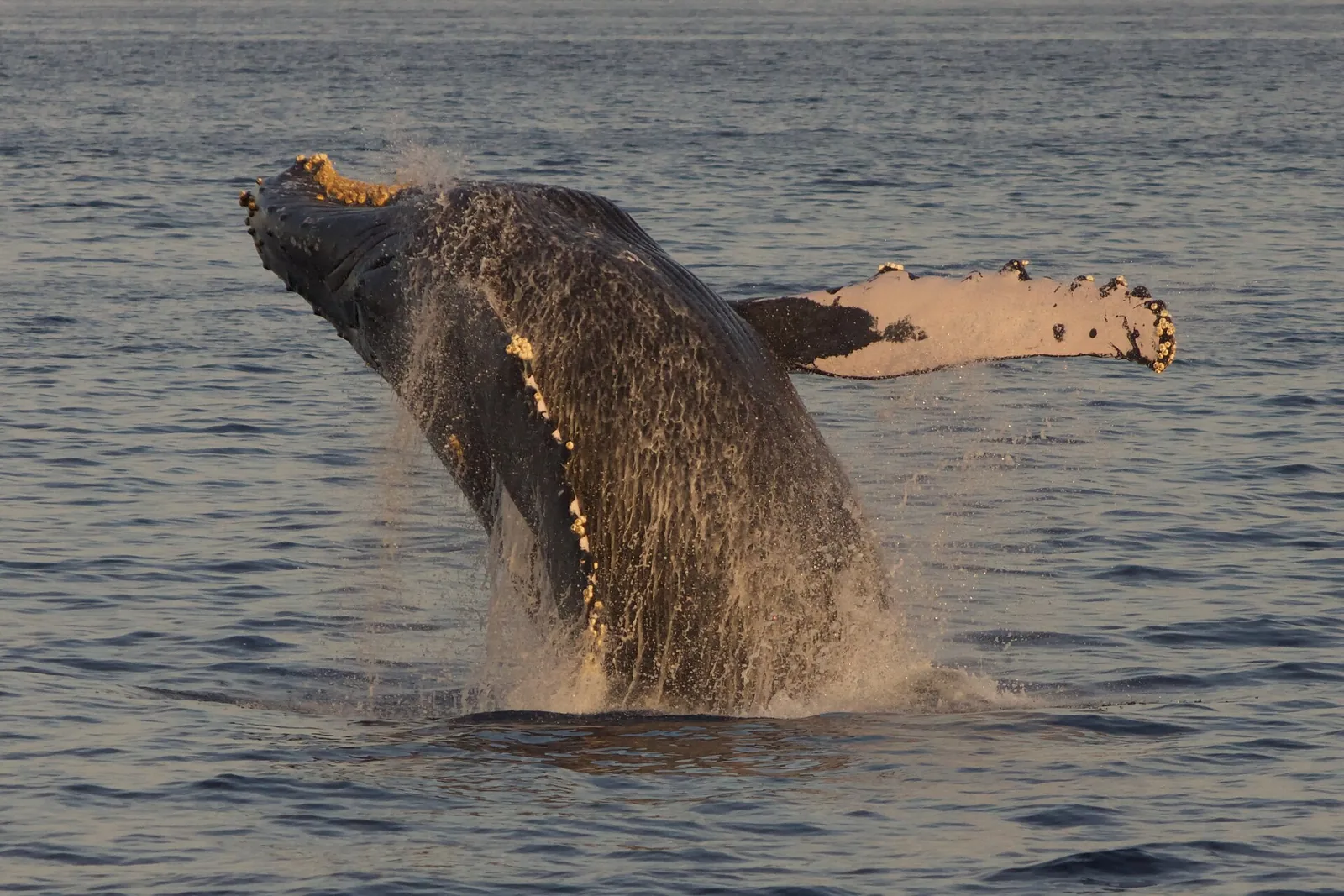
Every winter, thousands of North Pacific humpback whales migrate to Hawaiʻi to breed, give birth and nurse their calves, and the shallow, sheltered channels between Maui, Molokaʻi, Lānaʻi and Kahoʻolawe are their favourite waters. The official season runs from 15 December to 15 May, with the peak from January to March. Maui is the most reliable place in Hawaiʻi to see them.
From shore, try the McGregor Point lookout on the road between Māʻalaea and Lahaina, the Wailea coastal walk, and any west-facing beach in the early morning. Binoculars help. By boat, many operators run whale watches from Māʻalaea and Lahaina harbours during the season. Federal rules require vessels and people to stay at least 100 yards from humpback whales, so good operators rely on the whales approaching them.
West and Central Maui
ʻĪao Valley State Monument
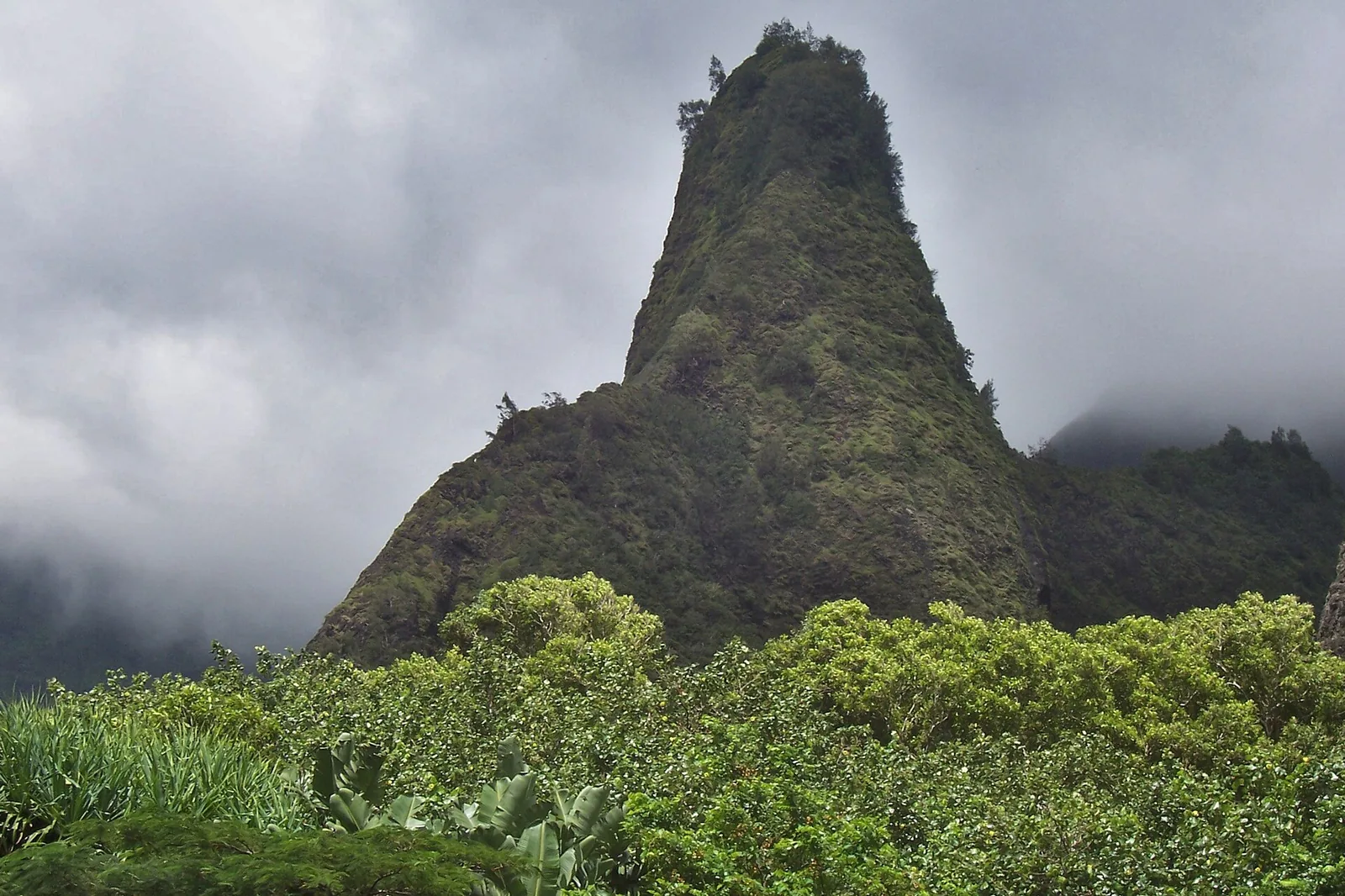
A lush valley above Wailuku, dominated by ʻĪao Needle, a green rock pinnacle about 1,200 feet above the valley floor. In 1790, the valley was the site of a decisive battle in which Kamehameha I’s forces defeated the army of Maui; the stream is said to have been dammed by the bodies of the fallen. Short paved paths lead to viewpoints. Reservations are required for non-residents.
Cost: $5 per person + $10 per vehicle · Hours: daytime slots · Book: gostateparks.hawaii.gov, up to 30 days ahead · Drive: 20 minutes from Kahului · Allow: 1 hour
Nakalele Blowhole and the north-west coast
The drive around Maui’s north-west tip from Kapalua is dramatic, narrow and sometimes single-lane. The Nakalele Blowhole shoots seawater high into the air on big-swell days. People have been swept into it and killed. Stay well back on the high rocks, never walk down onto the wet shelf, and never turn your back on the ocean.
Wailuku and Kahului
Maui’s working towns are not glamorous, but Wailuku’s small historic main street has good local restaurants, and Kahului has the big supermarkets and warehouse stores where it makes sense to stock up on arrival. Maui Ocean Center at Māʻalaea is a well-regarded aquarium focused on Hawaiian marine life, good for children and rainy days.
Upcountry and the north shore towns
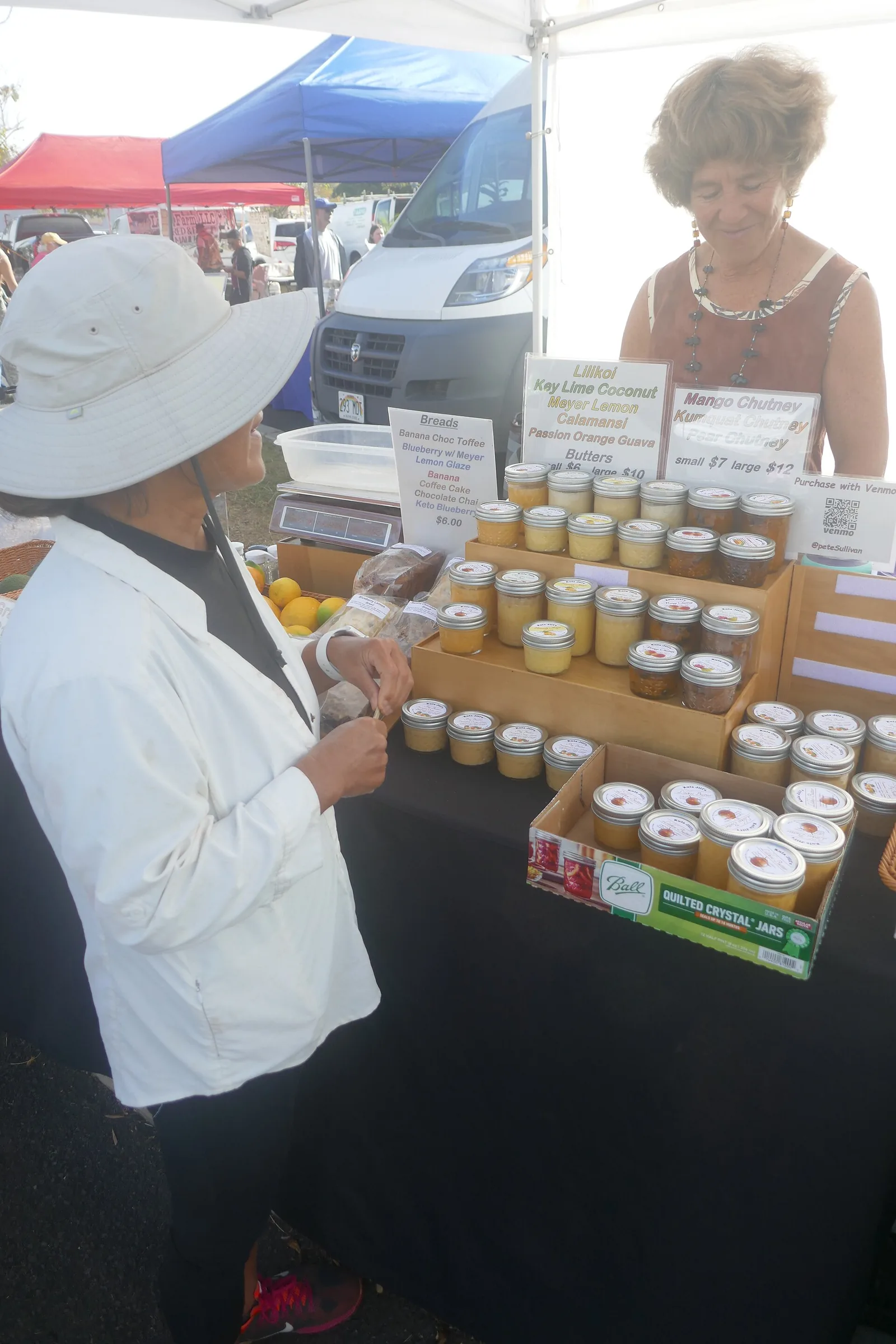
The green, cooler slopes of Haleakalā between about 1,500 and 4,000 feet are known as Upcountry. This is ranch and farm country, with jacaranda trees, protea farms, lavender and goat dairies, and views across the whole isthmus to West Maui. Kula has farm stands and gardens; ʻUlupalakua Ranch has MauiWine’s tasting room. Makawao is an old paniolo (Hawaiian cowboy) town with galleries and a strong ranching heritage. The Upcountry Farmers Market runs on Saturday mornings.
Pāʻia, on the north shore, is a small former plantation town turned surf and hippie village, with cafés, shops and fish restaurants. It is the natural breakfast stop on the way to Hāna, and a good base for a quieter stay.
Hiking on Maui beyond Haleakalā
Haleakalā’s crater and the Pīpīwai Trail are the headline hikes, but Maui has plenty of shorter walks that fit around beach days.
Kapalua Coastal Trail. An easy walk of under two miles each way along the lava coast between Kapalua Bay, Oneloa Bay and the D.T. Fleming Beach area, partly on boardwalk. Good at sunset and for whale spotting in season.
Waiheʻe Ridge Trail. A steep, often muddy ridge climb above Wailuku with views into deep valleys and waterfalls, and sometimes all the way to the coast when clouds clear. Go early, before the ridge clouds over, and check DLNR’s Nā Ala Hele site for current access and parking arrangements before driving out.
Hoapili Trail (King’s Highway). Beyond Mākena, the road ends at La Perouse Bay and the rough Hoapili Trail follows an old stone-paved route across Maui’s youngest lava flows. It is hot, shadeless and hard on ankles, but it passes through a landscape unlike anywhere else on the island. Carry lots of water and turn back early.
Lahaina Pali Trail. An old footpath climbing over the West Maui mountains’ southern slopes between Māʻalaea and Ukumehame. It is steep and exposed, with superb whale-watching views over the channel in winter. Start at dawn; there is no shade at all.
As on every island, stay on marked trails, never cross flooded streams, carry a headlamp and plenty of water, and treat heiau and other sacred sites with respect.
Things to do in Maui with children
Maui is a very good family island if you plan around short drives and calm mornings. Base yourself in Kāʻanapali, Kapalua or Wailea for gentle beaches. Kapalua Bay and Nāpili Bay are the calmest for small children, while the sheltered stretches of Kāʻanapali and the Wailea beaches work well for older ones in the morning.
Maui Ocean Center at Māʻalaea is an excellent introduction to Hawaiian sea life before a first snorkel. A Molokini trip suits confident swimmers from about eight upwards; choose a larger, more stable boat if anyone is prone to seasickness. Haleakalā at sunset, rather than sunrise, spares young children a 2:30am alarm, and the summit visitor centre and short walks at the top are manageable. The Road to Hāna is a long day in a car for children; consider driving only as far as the Keʻanae peninsula and back, with a stop at Twin Falls or a roadside banana-bread stand.
In whale season, a morning whale watch is a highlight for almost every age. Look for operators with covered seating and snacks, and remember the whales are wild animals: sightings are likely but not guaranteed.
Things to do in Maui on a rainy day
Maui’s weather varies dramatically from one side of the island to the other. If it is raining in Hāna, Pāʻia or Kapalua, it is often dry and sunny in Kīhei, Wailea or Mākena, and vice versa. Check the radar and simply drive to the dry side.
If rain sets in island-wide, visit Maui Ocean Center, explore Wailuku’s small shops and cafés, or drive Upcountry for a slow lunch, a farm stand and a wine tasting at ʻUlupalakua. Heavy rain is the one day to avoid the Road to Hāna, ʻĪao Valley’s streams and any waterfall hike, because of flash-flood risk. It is also the day to stay out of the ocean near stream mouths: runoff after heavy rain carries bacteria, and Hawaiʻi’s Department of Health advises staying out of affected waters for 72 hours.
How many days on Maui? Sample plans
Three days
Day one: settle into West or South Maui and spend the afternoon on the beach, with sunset at Kāʻanapali’s Black Rock or on the Wailea coastal walk. Day two: Haleakalā sunrise, breakfast in Kula, an afternoon rest, and ʻĪao Valley late in the day if you have booked it. Day three: a morning Molokini snorkel trip and a final beach afternoon. The Road to Hāna does not fit well into a three-day stay; save it for a longer visit.
Five days
Add a full Road to Hāna day with a 6:30am start, booking Waiʻānapanapa for late morning, and a slow Upcountry and Pāʻia day with lunch, Hoʻokipa’s turtles in the late afternoon and dinner on the north shore.
Seven days
Split your stay: four nights in West or South Maui, one night in Hāna, and two nights Upcountry or in Pāʻia. That lets you drive the Road to Hāna in one direction at leisure, walk the Pīpīwai Trail in the morning before the day-trippers arrive, and do Haleakalā sunrise from Upcountry, which is a much shorter drive. Add a whale watch in season and a lūʻau on one evening.
Eating on Maui
Maui’s restaurant scene ranges from world-class resort dining to excellent food trucks. Book the celebrated places, particularly Mama’s Fish House near Pāʻia, well ahead; they fill weeks in advance. Farm-to-table cooking using Upcountry produce is Maui’s particular strength.
For local-style food, look for plate lunches, loco moco, saimin and shave ice. They are delicious, and they come from the plantation era’s mix of Japanese, Chinese, Portuguese, Filipino and other immigrant cooking. They are not traditional Native Hawaiian food, which centres on kalo (taro) and poi, kālua pig, laulau, fish and limu. Our Honolulu food guide explains the difference in more depth. On Maui, look out for Hawaiian food at lūʻau and at community events in places like Hāna and Keʻanae, and for banana bread at the roadside stands on the way.
Maui’s best-known lūʻau, the Old Lahaina Lūʻau, operates from a site outside the burn zone and is consistently one of the most respected traditional Hawaiian lūʻau in the state. It sells out weeks ahead.
Where to stay on Maui
West Maui (Kāʻanapali, Kapalua, Nāpili). Classic resort beaches and sunsets, with the best whale watching from shore. Furthest from Haleakalā and Hāna. Choose it for a beach-focused stay.
South Maui (Kīhei, Wailea, Mākena). Sunny and dry. Kīhei has the island’s best-value condos and a relaxed feel; Wailea has the most luxurious resorts. It is closer to the airport and to Haleakalā than West Maui.
Upcountry and Pāʻia. Cooler, greener and quieter, with vacation rentals and small inns. Convenient for Haleakalā and the Road to Hāna, but further from calm swimming beaches.
Hāna. One or two nights in Hāna turns the Road to Hāna from a rushed day trip into a relaxed adventure. Accommodation is limited; book early.
Across Hawaiʻi, lodging taxes (including the 2026 Green Fee) and resort fees add significantly to nightly rates. Always compare the all-in price.
Getting to and around Maui
Kahului Airport (OGG) has nonstop flights from many mainland cities, and interisland flights from Honolulu take about 40 minutes. Southwest has advertised Kahului–Honolulu fares from $63 one way in 2026, though peak prices are much higher. A rental car is essential for exploring Maui. The public Maui Bus runs between the main towns but does not reach Haleakalā, Hāna or most beaches, so it is not a practical way to see the island.
Book rental cars as early as possible for holiday periods. Fill the tank before Haleakalā or Hāna. And allow for traffic on the Honoapiʻilani Highway between Māʻalaea and Lahaina, the only road to West Maui, which can be slow at rush hour and closes occasionally for accidents or fires.
When to visit Maui
April to May and September to October bring pleasant weather, fewer crowds and lower prices. December to April is whale season, and the most expensive and crowded time of year, especially over Christmas and New Year. Summer brings calm north-shore waters, busy family holidays and occasional hurricane threats. Winter surf closes Honolua Bay to snorkelling but brings big-wave action at Peʻahi (Jaws), visible only with difficulty from the cliffs. Haleakalā’s summit can be cold year-round.
Our guide to the best time to visit Hawaiʻi breaks down weather and prices month by month, and our Hawaiʻi planning guide covers flights and budgets.
Responsible travel on Maui
Maui residents have lived through a devastating fire, a housing crisis and years of debate about tourism’s impact. A few habits matter.
- Spend with local, Maui-owned businesses, particularly in Lahaina.
- Stay out of burn-zone residential areas and fenced construction sites.
- Use mineral sunscreen only. It is the law in Maui County.
- Keep 10 feet from turtles, 50 feet from monk seals and 100 yards from humpback whales.
- Obey kapu and no-trespassing signs, especially on the Road to Hāna.
- Pull over to let local traffic pass on narrow roads.
- Leave lava rock, sand and coral where they are.
What to skip on Maui
Treating Lahaina’s burn zone as a sight. Visit the reopened businesses; do not tour the ruins.
Driving the Road to Hāna as a same-day round trip after a late start. Either leave by 7am, stay overnight, or turn round at Keʻanae.
Swimming at Big Beach or Waiʻānapanapa in rough conditions. Both regularly injure and endanger visitors.
Trespassing to reach “secret” waterfalls. They are on private or sacred land, and they flash-flood.
Walking out to the Nakalele Blowhole. Watch from a safe distance above.
Paying for a sunrise tour without checking the reservation calendar first. If recreation.gov still has space, driving yourself costs $1 plus the park fee.
If you are combining islands, Maui pairs naturally with Oʻahu; our things to do on Oʻahu guide covers the other half of that trip. And if you are still torn, our Hawaiian island comparison scores Maui against the others.
If you are pairing Maui with a second island, our guide to things to do on the Big Island covers the Kīlauea eruption, Kona and Hilo, manta rays and Maunakea.
Kauaʻi is the other classic scenery island. Our guide to things to do in Kauai covers the Nāpali Coast, Waimea Canyon and the island’s current status after Hurricane Lowell.
Frequently Asked Questions
What are the best things to do in Maui for first-time visitors?
Watch sunrise or sunset at Haleakalā’s summit, drive the Road to Hāna with an early start, snorkel at Molokini or Kapalua Bay, relax on Kāʻanapali or Wailea’s beaches, see ʻĪao Valley, and spend a morning Upcountry in Kula and Makawao. Between December and May, add whale watching. Book the Haleakalā sunrise reservation eight weeks ahead and Waiʻānapanapa up to 30 days ahead.
Do you need a reservation for Haleakala sunrise?
Yes. Any private vehicle entering the summit area between 3am and 7am needs a sunrise reservation from recreation.gov, released eight weeks ahead, costing $1 per vehicle plus the park entrance fee. Popular dates sell out within minutes. Sunset visits need no reservation, and commercial sunrise tours include entry under their own permits.
Is it OK to visit Lahaina now?
Yes, respectfully. Front Street between Pāpalaua and Shaw streets reopened to vehicles on 1 August 2026, and many businesses outside the burn zone have reopened, with more returning. The historic core is still largely empty lots and construction. Eat and shop at reopened businesses, stay out of residential and fenced areas, and do not photograph damaged homes.
How long does the Road to Hana take?
Without stops, driving from Kahului to Hāna takes about two and a half to three hours each way, for roughly 50 miles. With stops at waterfalls, lookouts and Waiʻānapanapa State Park, most visitors need 10 to 12 hours for the round trip. Leave Pāʻia by 7am, or stay overnight in Hāna to enjoy the drive without rushing.
Do I need a reservation for Waianapanapa State Park?
Yes, non-residents need a reservation for Waiʻānapanapa State Park, bookable up to 30 days ahead on the Hawaiʻi state parks reservation website. It costs $5 per person plus $10 per vehicle. The same system and fees apply at ʻĪao Valley State Monument. Hawaiʻi residents enter free without a reservation.
What sunscreen can I use on Maui?
Only mineral sunscreen. Since 1 October 2022, Maui County has banned the sale, use and distribution of non-mineral sunscreens without a prescription. Mineral sunscreens use zinc oxide or titanium dioxide as active ingredients. The statewide law also bans the sale of sunscreens containing oxybenzone or octinoxate. A rash guard reduces how much sunscreen you need.
Photo Credits
- Map of things to do on Maui: honolulutourism.org, coastline data © OpenStreetMap contributors (ODbL)
- Haleakalā crater: lamoix, CC BY 2.0
- Hāna Highway bridge: Jonathanking, CC BY-SA 3.0
- Waiʻānapanapa State Park coast: Christoph Strässler, CC BY-SA 2.0
- Kapalua Bay: Hakilon, CC BY-SA 3.0
- Mākena Big Beach: dronepicr, CC BY 2.0
- Molokini crater: Bossfrog, CC BY-SA 4.0
- Humpback whale breaching off Maui: Jkrauska, CC BY-SA 3.0
- ʻĪao Needle: Shonebrooks, CC BY-SA 4.0
- Upcountry Farmers Market: Phil Venditti, CC BY 2.0
- Mākena Big Beach from above (featured image): Dronepicr, CC BY 3.0