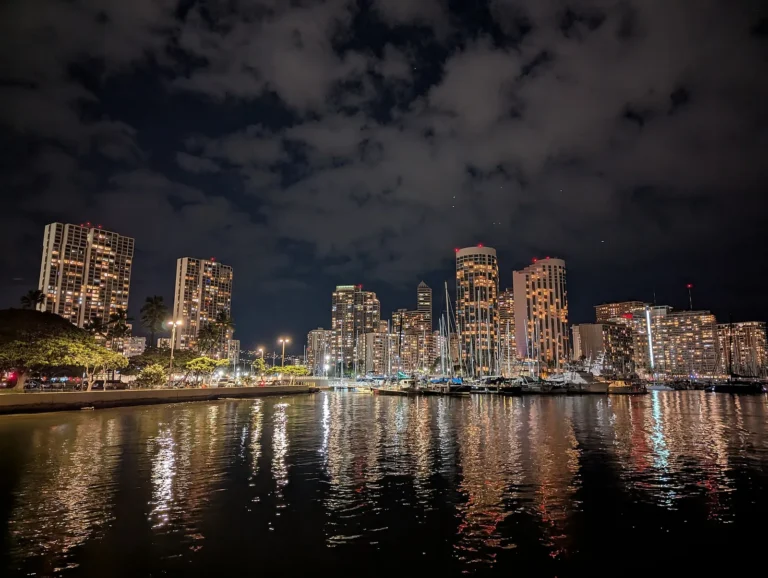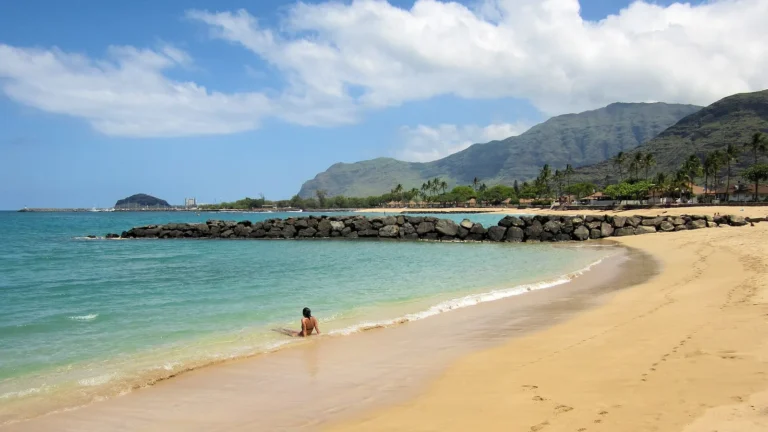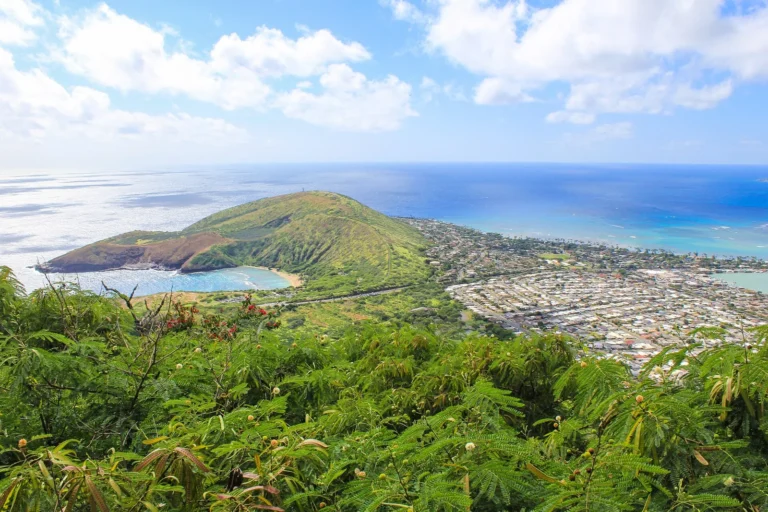
The answer to is honolulu on oahu is yes, and it is a fair question, because the names overlap in ways that confuse almost everyone on their first trip. You fly into Honolulu, stay in Waikīkī, drive to the North Shore and never leave Oʻahu; your bus is run by the City and County of Honolulu the whole way, even at a beach an hour from the city. This guide untangles the three names, and the handful of others that trip people up, with what each one means on a flight booking, a hotel search and a bus map.
For what to do once the names make sense, our guide to things to do on Oʻahu covers the whole island.
Is Honolulu on Oahu? The Short Answer
Oʻahu is the island. Honolulu is the city on its south shore, the capital of the state, and also the name of the local government that runs the entire island. Waikīkī is a neighbourhood of Honolulu, where most visitors stay. So you can be in Honolulu and Oʻahu at once, in Oʻahu without being in Honolulu city, and in Waikīkī, Honolulu and Oʻahu all at the same time.
| Name | What it is | 2020 population | What visitors usually mean |
|---|---|---|---|
| Oʻahu | The island, about 597 square miles | 1,016,508 (City and County) | The island where they are staying |
| City and County of Honolulu | The single local government for Oʻahu and some small outlying islands | 1,016,508 | Rarely meant, but it runs the buses, beach parks and lifeguards everywhere on the island |
| Urban Honolulu | The city itself, as the US Census defines it: about 61 square miles of the south shore | 350,964 | “Honolulu” on a map or a flight |
| Waikīkī | A neighbourhood of Honolulu between the Ala Wai Canal and the ocean | Part of urban Honolulu | The beach and the hotels |
| Hawaiʻi | The state, and also the name of its biggest island | 1,455,271 (state) | Usually the state; the island is often called the Big Island |
Oʻahu: The Island
Oʻahu covers about 597 square miles. It is smaller than both Hawaiʻi Island and Maui, but it is home to far more people than any other island: the 2020 Census counted 1,016,508 residents in the City and County of Honolulu, about seven in ten of the state’s 1,455,271. That is why Oʻahu is the island with the traffic, the high-rises and the busiest airport, and also why it has TheBus and the Skyline rail line. It is sometimes called “The Gathering Place”.
Two old volcanoes built the island. The Waiʻanae Range in the west is the older, and holds Mount Kaʻala, at 4,025 feet the highest point on Oʻahu. The Koʻolau Range runs down the eastern side, and its fluted cliffs make the backdrop to the windward coast. Between them lies the central plain, with Wahiawā, Mililani and the old pineapple country. The mountains also split the weather: the trade winds drop most of their rain on the windward side, so Honolulu and the west side are usually drier and sunnier than Kailua or Kāneʻohe.
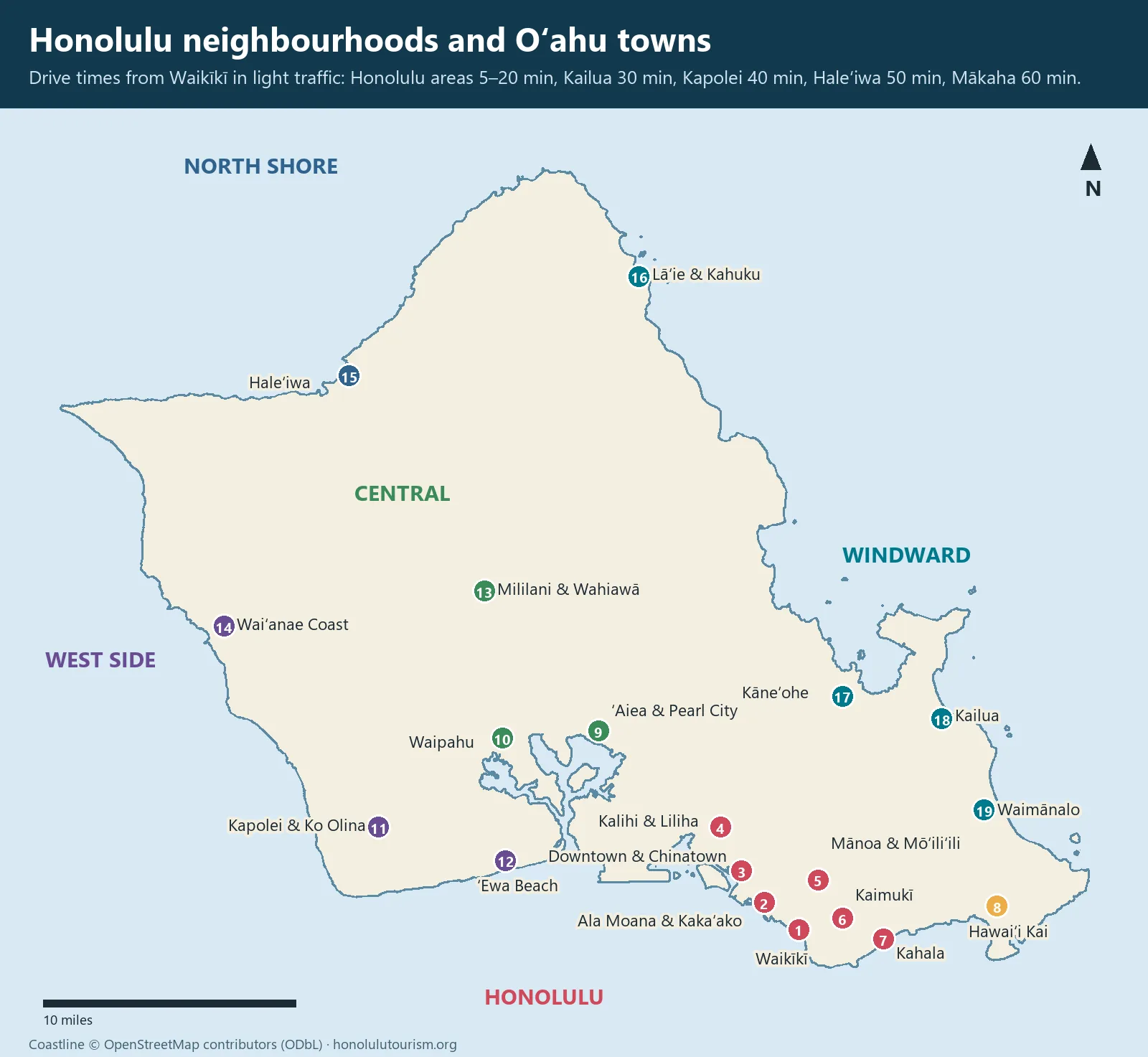
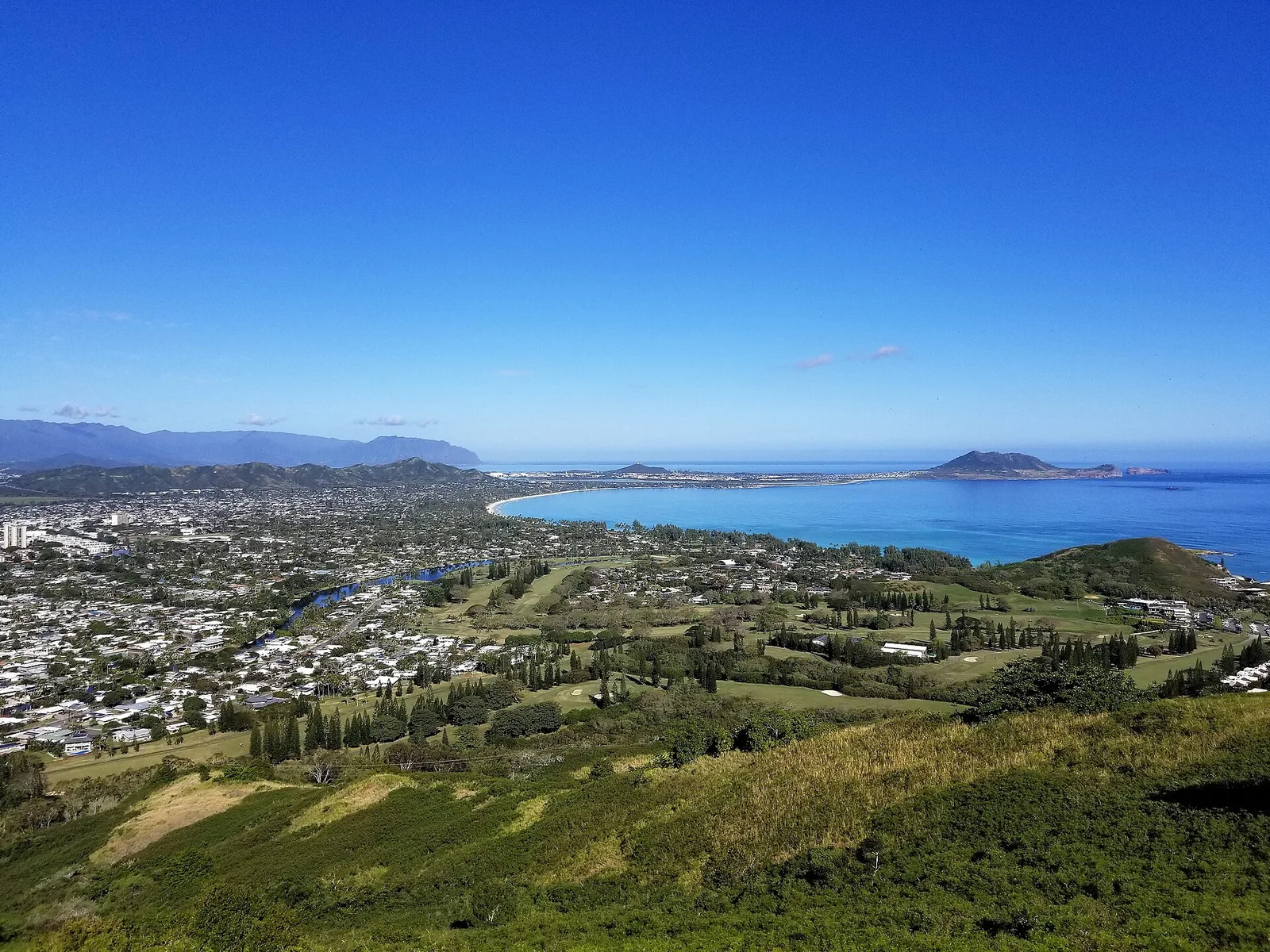
Visitors usually think of the island in four parts. The south shore holds Honolulu, Waikīkī, Pearl Harbor, Diamond Head and Hanauma Bay. The windward coast runs from Waimānalo through Kailua and Kāneʻohe up to Lāʻie. The North Shore, centred on Haleʻiwa, is surf country, and the west side runs from Ko Olina up the Waiʻanae Coast. All four are Oʻahu, and all four are governed from Honolulu, but only the first is Honolulu in the everyday sense.
Honolulu: City, County and Capital
The word Honolulu does three jobs at once, which is the root of the confusion.
The City and County of Honolulu
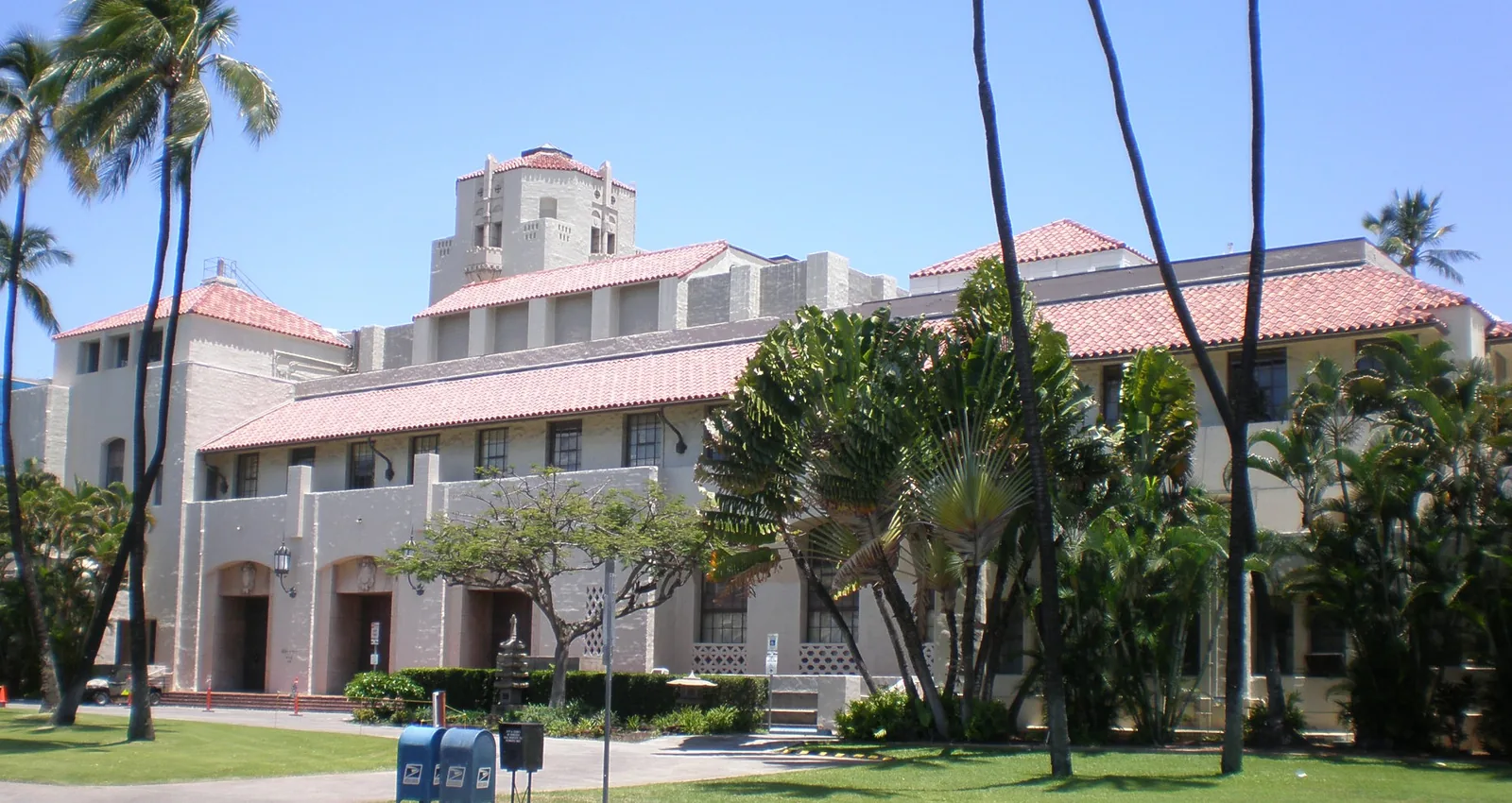
Honolulu is a consolidated city-county: one government, with one mayor and one city council, for the whole of Oʻahu, plus small outlying islands that include all of the Northwestern Hawaiian Islands except Midway Atoll. There are no separate town councils for Kailua, Haleʻiwa or Kapolei. That is why a beach park on the North Shore is a City and County of Honolulu park, why the lifeguards at Mākaha work for the city’s Ocean Safety department, and why TheBus serves the whole island under one fare. The seat of that government is Honolulu Hale, the city hall at 530 South King Street, built in 1928.
Urban Honolulu, the City
When people say Honolulu, they nearly always mean the city on the south shore. The US Census calls it Urban Honolulu: a census-designated place of about 61 square miles with 350,964 residents in 2020, so roughly a third of the island’s people live in the city proper. It takes in downtown, Chinatown, Kakaʻako, Ala Moana, Mānoa, Kaimukī and Waikīkī among others. Our guide to Honolulu’s neighbourhoods goes through them one by one, and our things to do in Honolulu covers the sights.
The State Capital
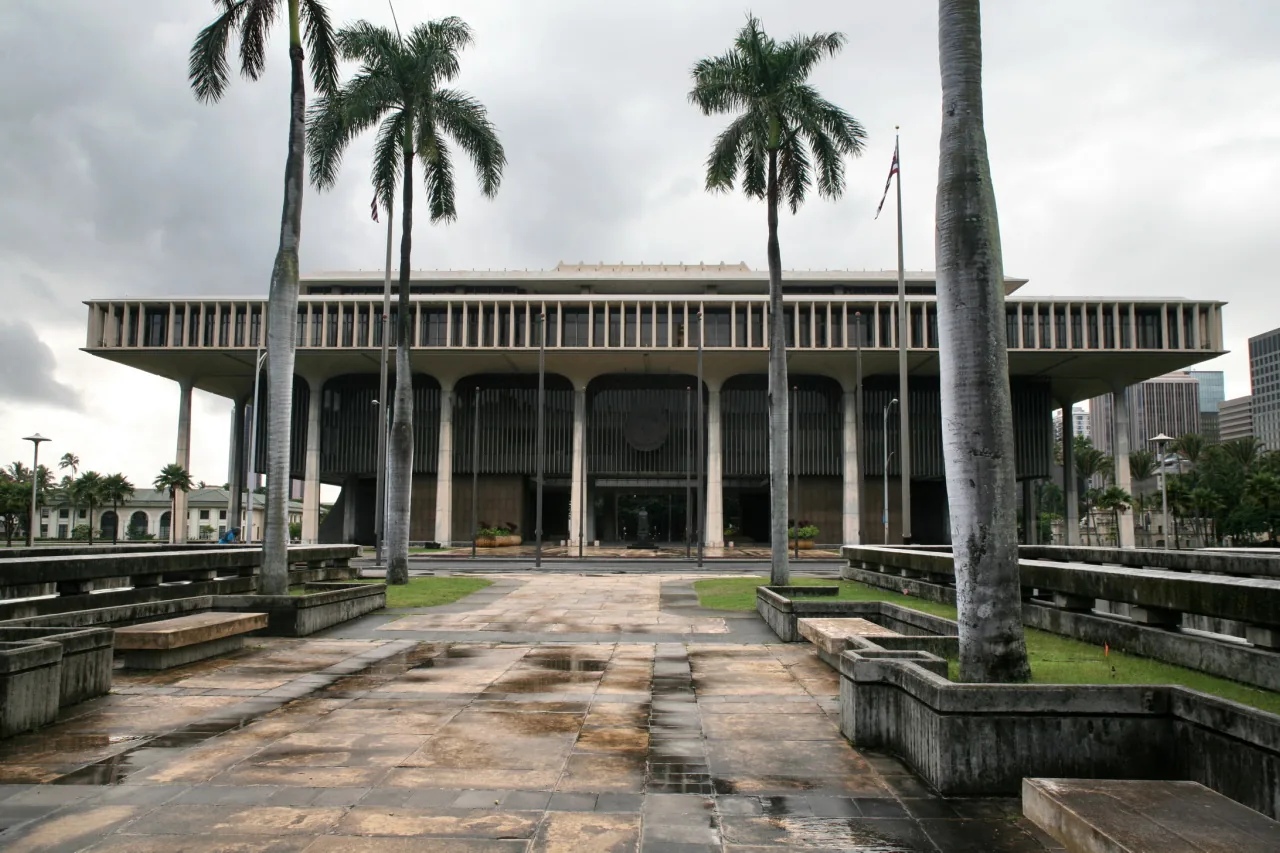
Honolulu is also the capital of Hawaiʻi. Kamehameha III moved the capital of the Hawaiian Kingdom from Lahaina on Maui to Honolulu in 1845, and the city has been the seat of government ever since, through the kingdom, the overthrow, the territory and statehood. Downtown, the modernist State Capitol stands beside ʻIolani Palace, which describes itself as the only official royal residence in the United States. Our Hawaiian culture and history guide tells that story.
The Neighbourhoods Visitors Use
Inside the city, a handful of neighbourhoods do most of the work for visitors:
- Waikīkī: the beach, the hotels and most of the evening entertainment.
- Downtown and Chinatown: ʻIolani Palace, the State Capitol, Honolulu Hale, the Hawaiʻi Theatre, and Chinatown’s markets, galleries and restaurants.
- Ala Moana and Kakaʻako: Ala Moana Center, Ala Moana Beach Park and Magic Island, and the newer towers and murals of Kakaʻako.
- Kapahulu and Kaimukī: the local food streets just inland from Waikīkī, with Leonard’s Bakery at 933 Kapahulu Avenue and plenty of plate-lunch counters.
- Mānoa: the University of Hawaiʻi’s main campus, and the rainforest trail to Mānoa Falls, reached on TheBus Route 5.
Waikīkī: A Neighbourhood of Honolulu
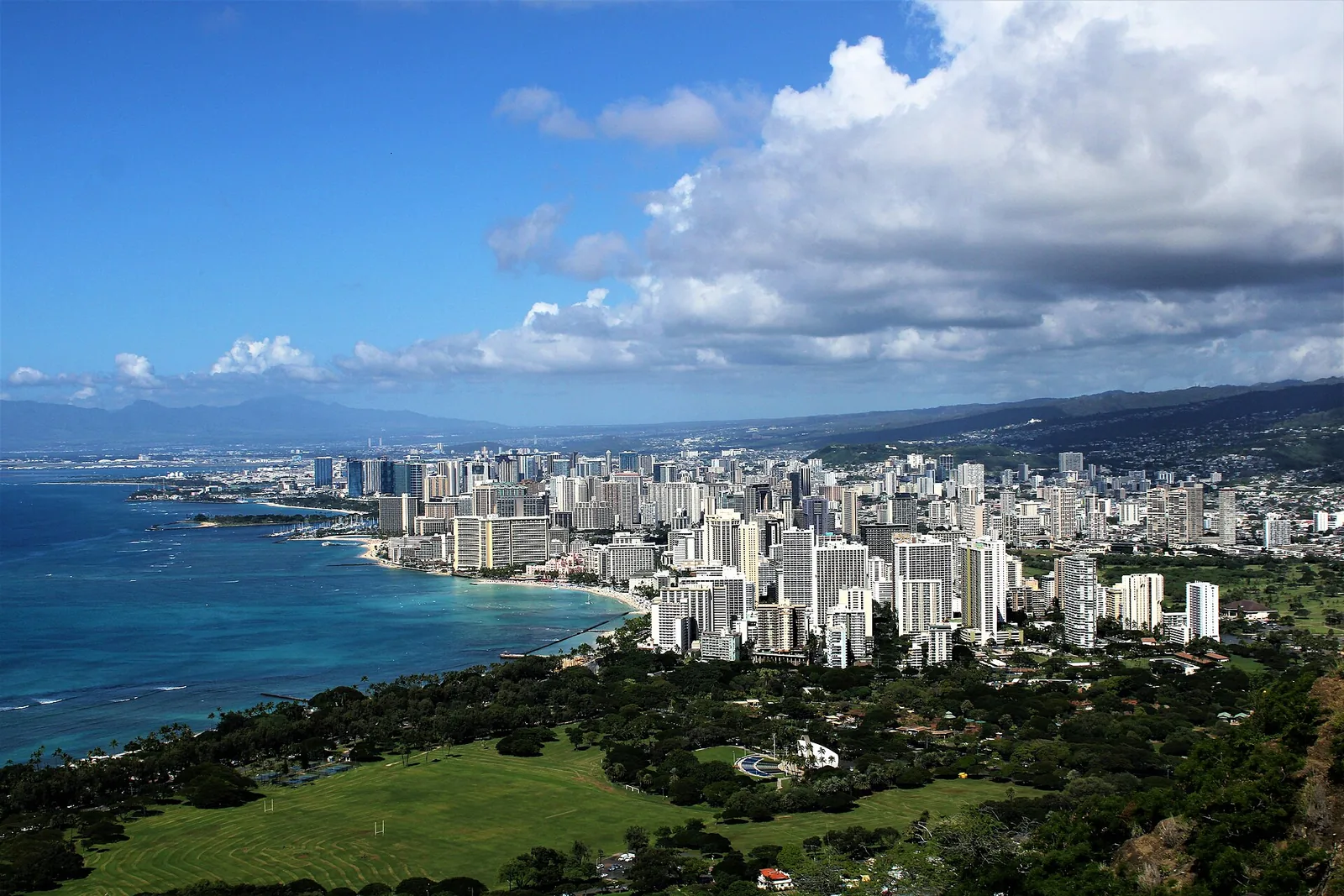
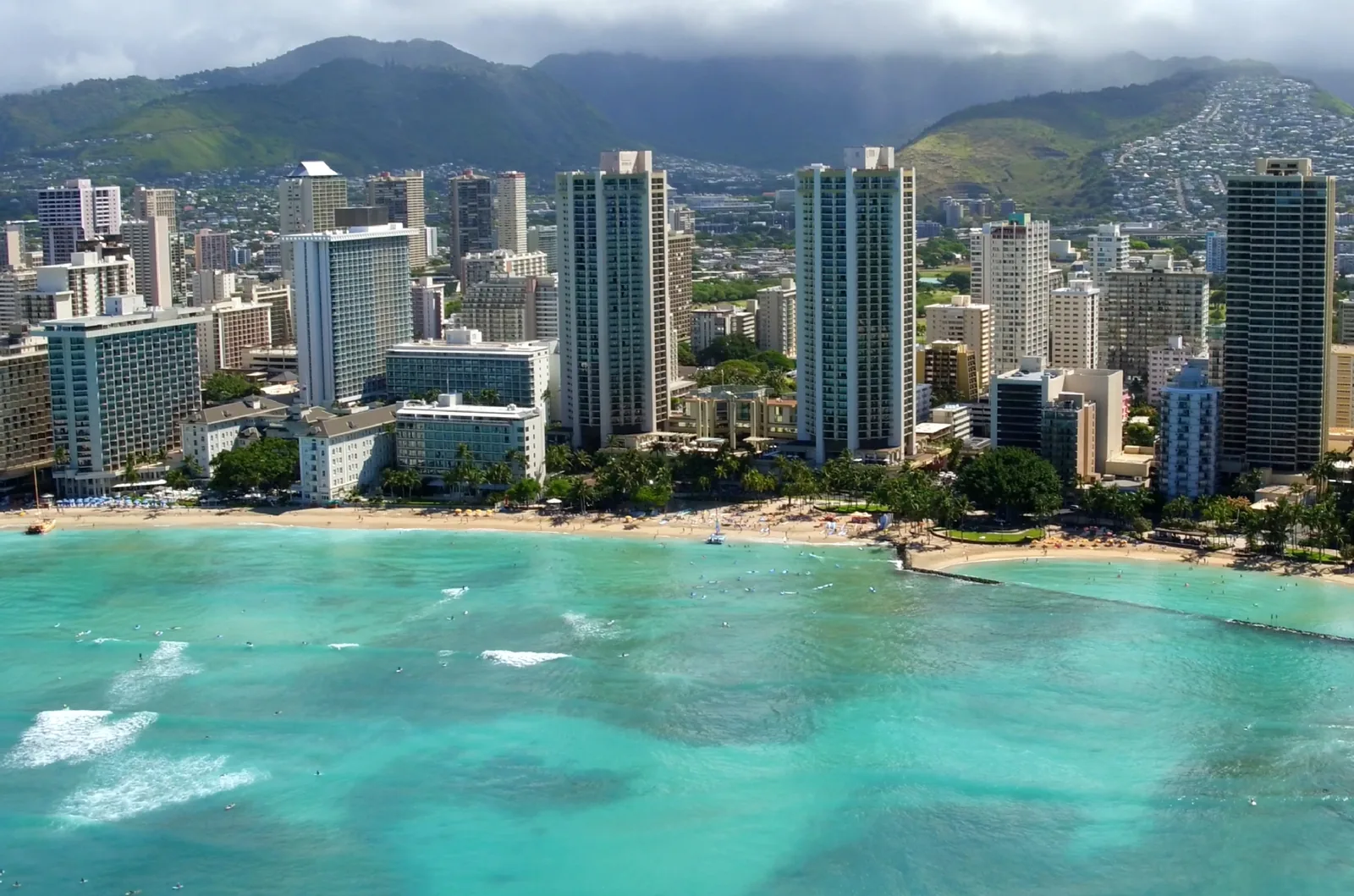
Waikīkī is not a separate town and has no government of its own. It is a neighbourhood of Honolulu, running roughly from the Ala Wai Canal to Diamond Head and Kapiʻolani Park, with the ocean along its southern side. For most visitors it is the whole holiday: the beach, the hotels, the restaurants and the shows. The state’s 2025 visitor plant inventory counted 41,092 visitor units on Oʻahu, and the great majority are in the Waikīkī and Honolulu area.
Waikīkī Beach itself is a string of named stretches of sand: Kahanamoku Beach by the Hilton Hawaiian Village in the west, then Fort DeRussy, the stretch in front of the Royal Hawaiian and the Moana, Kūhiō Beach with its statue of Duke Kahanamoku, Queen’s Surf beside Kapiʻolani Park, and Sans Souci by the Natatorium at the Diamond Head end.
That concentration is useful to know when you book. A hotel advertised as “in Honolulu” may be in Waikīkī, downtown, by the airport or near Ala Moana, and the difference matters for beach access and traffic. If you want to step out of the lobby onto the sand, search for Waikīkī by name. Our Waikīkī guide walks the beach section by section, and our where to stay on Oʻahu guide compares it with Ko Olina, the North Shore and Kailua.
Other Names That Confuse Visitors
Honolulu is not the only place name in Hawaiʻi that does more than one job.
Hawaiʻi: the State and the Island
Hawaiʻi is the name of the state and of its largest island, Hawaiʻi Island, which is bigger than all the other islands put together and which most people call the Big Island to avoid exactly this muddle. Honolulu is not on the Big Island. If someone says they are going to “Hawaiʻi” for their honeymoon, they could mean any of the islands; if they say they are going to Hilo or Kona, they mean the Big Island. Our Big Island guide covers it.
Counties That Cover Several Islands
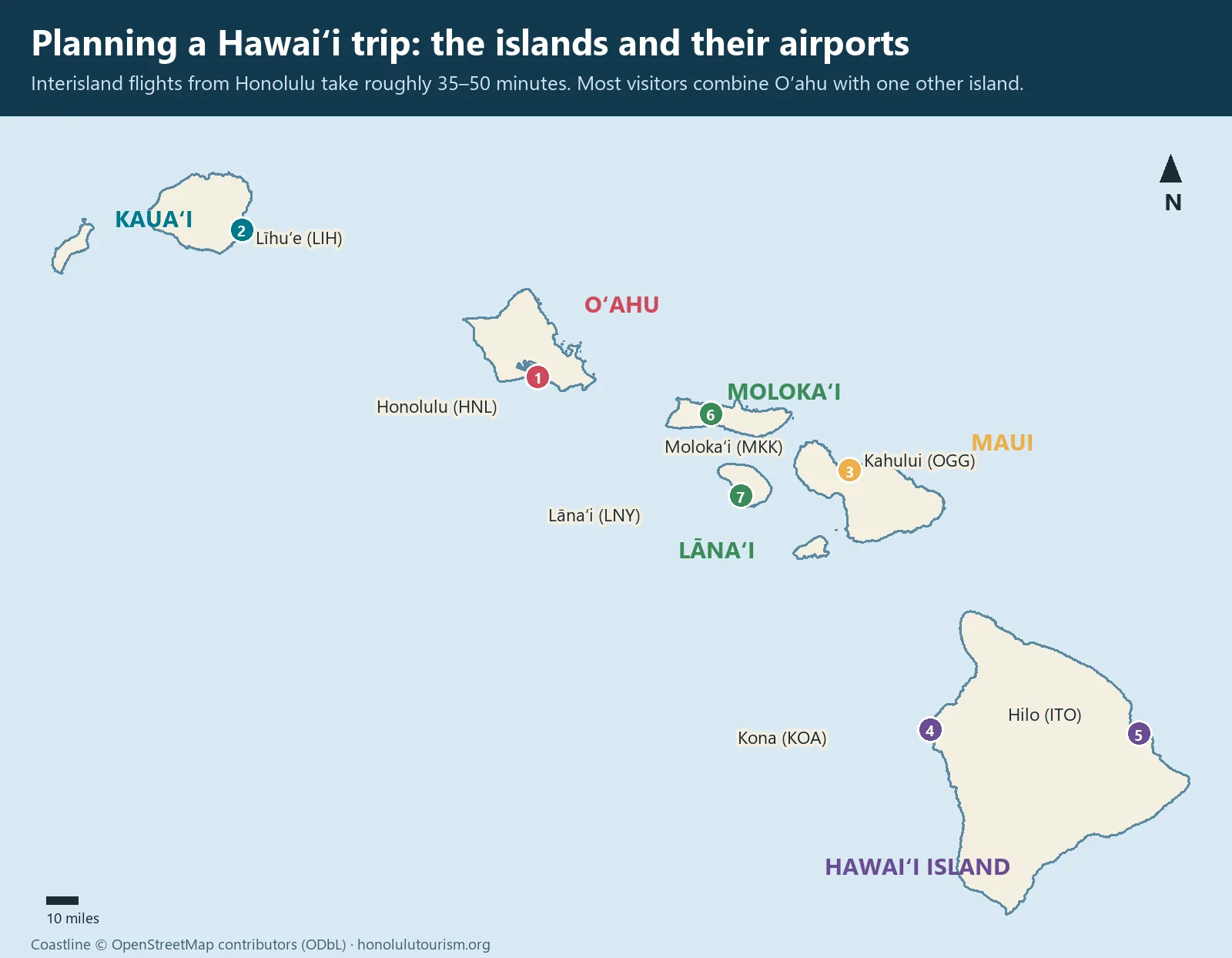
Hawaiʻi has no city governments below its counties, and most counties take in more than one island. Maui County covers Maui, Lānaʻi, Kahoʻolawe and most of Molokaʻi; the Kalaupapa peninsula on Molokaʻi is a tiny county of its own, Kalawao. Kauaʻi County covers Kauaʻi, Niʻihau and the small islets of Lehua and Kaʻula, with 73,298 residents in 2020. Hawaiʻi County is the Big Island. The City and County of Honolulu is Oʻahu and its outlying islets. Our guides to Maui and Kauaʻi cover the neighbour islands.
| Island | County | Main airport |
|---|---|---|
| Oʻahu | City and County of Honolulu | Honolulu (HNL) |
| Hawaiʻi Island (the Big Island) | Hawaiʻi County | Kona (KOA) and Hilo (ITO) |
| Maui | Maui County | Kahului (OGG) |
| Molokaʻi | Maui County, except Kalaupapa (Kalawao County) | Molokaʻi (MKK) |
| Lānaʻi | Maui County | Lānaʻi (LNY) |
| Kauaʻi | Kauaʻi County | Līhuʻe (LIH) |
HNL: an Airport With a Newer Name
Honolulu’s airport was renamed Daniel K. Inouye International Airport in 2017, after the long-serving senator, but its code is still HNL and nearly every airline and booking site still says Honolulu. It sits on Oʻahu, west of downtown, handles the flights from the US mainland, Asia and the Pacific, and is the hub for flights to the other islands.
Oʻahu or Oahu?
Both spellings refer to the same island. The mark in Oʻahu is the ʻokina, a letter of the Hawaiian alphabet that marks a glottal stop, a short break in the voice, so the name is said in three syllables: oh-AH-hoo. You will see Oahu without it on flight bookings, road signs and many websites. The same marks appear across Hawaiian place names, from Hawaiʻi and Kāneʻohe to Haleʻiwa and Mānoa. Waikīkī carries kahakō, the macrons that lengthen its vowels, for the same reason.
How Locals Talk About Places
Learn a few local words and Oʻahu’s geography gets much easier to follow.
- Town: downtown Honolulu. “Going to town” means heading into the city centre, not just anywhere built-up.
- Country: the rural parts of the island, such as the North Shore and the Waiʻanae Coast. TheBus even calls its express to Mākaha the CountryExpress!.
- Mauka and makai: towards the mountains and towards the sea. On an island these replace north and south, so a hotel is on the makai side of Kalākaua Avenue, not the south side.
- ʻEwa and Diamond Head: along the south shore, directions run towards ʻEwa, to the west, or towards Diamond Head, to the east. A Waikīkī address might be at the Diamond Head end of the beach.
- The neighbour islands: every main island except Oʻahu, as in “flying to the neighbour islands”.
Where the Names Come From
Honolulu is usually translated as “sheltered bay” or “calm harbour”, from the Hawaiian hono, bay, and lulu, sheltered. The harbour is the reason the city is where it is: its protected anchorage drew trading ships in the early nineteenth century, and chiefs, merchants and missionaries followed. By the time Kamehameha III moved his capital there in 1845, Honolulu was already the kingdom’s main port.
Waikīkī means “spouting fresh water”, after the springs and streams that once fed the wetlands, taro patches and fishponds behind the beach. Those wetlands were drained when the Ala Wai Canal was dug in the 1920s, which is why the canal still marks Waikīkī’s inland edge today. The first hotel on the beach, the Moana, opened in 1901, and it still faces the sand on Kalākaua Avenue as part of the Moana Surfrider.
Getting Between the Airport, Honolulu and Waikīkī
The airport, downtown Honolulu and Waikīkī are all on the south shore, a short distance apart. Since 16 October 2025, when its second segment opened with four new stations, the Skyline rail line has stopped at the airport’s Lelepaua station, and the W Line bus links that station with Waikīkī for the standard fare: $3.25 cash or $3.00 on a HOLO card, capped at $7.50 a day. Skyline itself does not yet reach downtown or Waikīkī; the extension to the Civic Center downtown is targeted for 2031, so check honolulutransit.org for progress. Taxis, rideshares and shuttles wait outside each terminal.
Pearl Harbor, also within the City and County of Honolulu, is west of downtown near the airport; TheBus Route 42 runs there from Waikīkī. For the rest of the island, the bus network covers the North Shore and windward coast too, but many visitors hire a car for a day or two. Our getting around Oʻahu guide explains the options, and our Pearl Harbor guide covers the visit itself.
Flights to the other islands also leave from HNL. Hawaiian Airlines, Southwest and Mokulele all fly interisland, and Mokulele opened a renovated Terminal 3 at the airport in August 2026. Schedules and check-in rules change, so check your airline’s own site before you fly. Our guide to which Hawaiian island to visit helps you choose a second island.
Which Name to Use When You Book
Flights. Book to Honolulu (HNL). There is no separate airport for Waikīkī or anywhere else on Oʻahu for scheduled flights.
Hotels. Search Waikīkī if you want the beach on your doorstep, Ko Olina for a resort on the west side, and the North Shore or Kailua for something quieter. A hotel in “Honolulu” may be in any of several neighbourhoods, so check the map.
Tours. Most Oʻahu tours offer Waikīkī hotel pick-ups. If you are staying outside Waikīkī, check where the meeting point is before you book.
Addresses and maps. Towns outside the city, such as Kailua, Kāneʻohe, Haleʻiwa and Kapolei, use their own names in addresses even though they are in the City and County of Honolulu. Type the town, not just “Honolulu”, into a map app.
Car hire. Pick up at Honolulu airport if you plan to drive from the day you land, or hire a car in Waikīkī for just the days you leave the city, since hotel parking there is expensive and much of Honolulu works on foot and by bus.
Cruises. Cruise ships call at Honolulu Harbor downtown, beside Aloha Tower, so a cruise stop in Honolulu puts you on Oʻahu with Waikīkī a short taxi ride away.
Passes and tickets. Diamond Head, Hanauma Bay and Pearl Harbor reservations all ask for a date on Oʻahu, not a city. Our Diamond Head hike guide and Go Oʻahu card review cover the bookings that sell out.
A Day That Shows You All Three
The quickest way to understand the difference is to spend a day moving between them.
Morning in Waikīkī. Start on the beach before the crowds, when the water is calm and Diamond Head is lit from the east. This is the neighbourhood most visitors never leave.
Midday in downtown Honolulu. Take TheBus Route 2 or 13 into the city for ʻIolani Palace, where the self-led audio tour costs $28 for adults, Tuesday to Saturday, booked online only, then walk to Chinatown for lunch. This is Honolulu the capital, and Honolulu the working city.
Afternoon on the rest of Oʻahu. Head over the mountains to Kailua (Route 67 runs from Ala Moana) or up to the North Shore, and you are still on Oʻahu and still in the City and County of Honolulu, but nobody there would say they live in Honolulu.
Sunset back in the city. Finish at Magic Island, at the end of Ala Moana Beach Park, as Honolulu does at the end of its working day. The park closes at 22:00.
Is Honolulu on Oahu? Planning Your Stay
Once the names are straight, planning is simple. Most first-time visitors base themselves in Waikīkī, spend a day or two in the rest of Honolulu for Pearl Harbor, ʻIolani Palace and Chinatown, and give the rest of their time to the other coasts of Oʻahu. Five to seven days covers the city and the island comfortably. Our Oʻahu itinerary turns that into a day-by-day plan, our Hawaiʻi trip-planning guide covers the paperwork and budget, and the full guide to Oʻahu’s best things to do lists the island’s highlights. Our guide to Oʻahu at night picks up after dark.
Frequently Asked Questions
Is Honolulu on Oahu or the Big Island?
Honolulu is on Oʻahu, on the island’s south shore. The Big Island, officially Hawaiʻi Island, is a different island to the south-east, with its own towns of Hilo and Kona. Flights between Honolulu and the Big Island take you from one island to another, so they need booking in advance like any other interisland trip.
Is Honolulu a city or an island?
A city. Honolulu is the state capital, on the south shore of the island of Oʻahu, and its name is also used for the City and County of Honolulu, the government for the whole island. There is no island called Honolulu, though flights to Oʻahu are always booked to Honolulu (HNL).
What does Honolulu mean?
Honolulu is usually translated as sheltered bay or calm harbour, from the Hawaiian words hono and lulu. The sheltered harbour is why the city grew where it did: trading ships anchored there from the early 1800s, and it became the kingdom’s main port and, from 1845, its capital.
Is Waikīkī part of Honolulu?
Yes. Waikīkī is a neighbourhood of Honolulu, running roughly from the Ala Wai Canal to Diamond Head and Kapiʻolani Park. It has no government of its own, and much of Oʻahu’s visitor accommodation is there. A hotel listed in Honolulu may or may not be in Waikīkī, so check the map before you book.
Is all of Oʻahu called Honolulu?
In one sense, yes: the City and County of Honolulu governs the entire island and some small outlying islets, so the buses, beach parks and lifeguards are run by Honolulu everywhere. In everyday speech, though, Honolulu means the city on the south shore, and towns such as Kailua, Haleʻiwa and Kapolei keep their own names.
Is Pearl Harbor in Honolulu?
Pearl Harbor is on Oʻahu, within the City and County of Honolulu, west of downtown near the airport. TheBus Route 42 runs from Waikīkī to the USS Arizona Memorial, and tickets for the memorial’s programme are booked on recreation.gov. Our Pearl Harbor guide has the details.
Which island is Honolulu’s airport on?
Oʻahu. Its official name since 2017 has been Daniel K. Inouye International Airport, but its code is still HNL and airlines still call it Honolulu. It serves flights from the mainland and abroad and is the hub for interisland flights. The Skyline rail line stops there, and the W Line bus runs from its Lelepaua station to Waikīkī.
Do I fly into Honolulu to stay in Waikīkī?
Yes. Honolulu’s airport is the only one on Oʻahu with scheduled passenger flights, and Waikīkī is a short ride away on the south shore. Take the W Line bus from the airport’s Lelepaua station, a taxi or rideshare, or a pre-booked shuttle.
Photo Credits
- Waikīkī and Honolulu from Diamond Head (featured): Farragutful, CC BY-SA 4.0
- Map of Honolulu neighbourhoods and Oʻahu towns: honolulutourism.org, coastline data © OpenStreetMap contributors (ODbL)
- Honolulu Hale: Joel Bradshaw, public domain
- Hawaiʻi State Capitol: Xpixupload, public domain
- Waikīkī from the air: Mcmrose, CC BY-SA 4.0
- Map of the Hawaiian Islands and their airports: honolulutourism.org; coastline data © OpenStreetMap contributors, ODbL
- Kailua and Kailua Bay: KlausVonVilver, CC BY-SA 4.0