The queue outside Ono Seafood on Kapahulu Avenue forms before the shutters go up at 9am, and nobody in it is waiting for a view. That tells you most of what you need to know about the best restaurants in honolulu: a surprising number of them are counters, bakeries and plate-lunch windows where you eat off a paper tray, and the places with white tablecloths are worth it mainly when they cook food that could only come from these islands.
This is a working guide to eating in Honolulu in 2026, organised by what you want to eat and then by neighbourhood. It separates Native Hawaiian food from local-style food, because almost every list online muddles the two. It gives price bands, parking and bus notes, and it says plainly where a famous name is coasting on its reputation.
A note on figures. Restaurant prices on Oʻahu have climbed sharply since 2022 and move again every year, so exact menu prices appear only where we have checked them this September. Everything else carries a price band, explained below. Hours change too, especially at family-run places that close when the food runs out, so confirm on the day before you drive across town.
How the best restaurants in honolulu are chosen here
Three tests. First, the food has to be something you would struggle to eat as well anywhere else: poke made with fish landed that week, laulau steamed for hours, a malasada that is still warm. Second, it has to be consistent. A place that is brilliant one Tuesday and tired the next does not make the cut. Third, it has to be reachable by a visitor without a car or a local friend, or we say clearly when it is not.
We have left out restaurants that closed during or after the pandemic years and still appear on older lists, and a few that the internet says are open but whose status we could not confirm this month. If a place you have read about is missing, that is usually why.
| Band | Per person, main plus a drink | What that usually buys |
|---|---|---|
| $ | Under $20 | Poke bowl, plate lunch, bakery run, shave ice, saimin |
| $$ | $20–45 | Sit-down local restaurant, casual Japanese, café brunch |
| $$$ | $45–90 | Chef-driven dinner in Chinatown, Kakaʻako or Kaimukī |
| $$$$ | $90 and up | Hotel fine dining, omakase, tasting menus |
Bands are before tax and tip. Hawaiʻi’s general excise tax is passed on to diners (on Oʻahu roughly 4.7 per cent), and a tip of 18 to 22 per cent is normal for table service. Counter-service places often show a tip prompt on the card reader; a dollar or two, or nothing, is fine there.
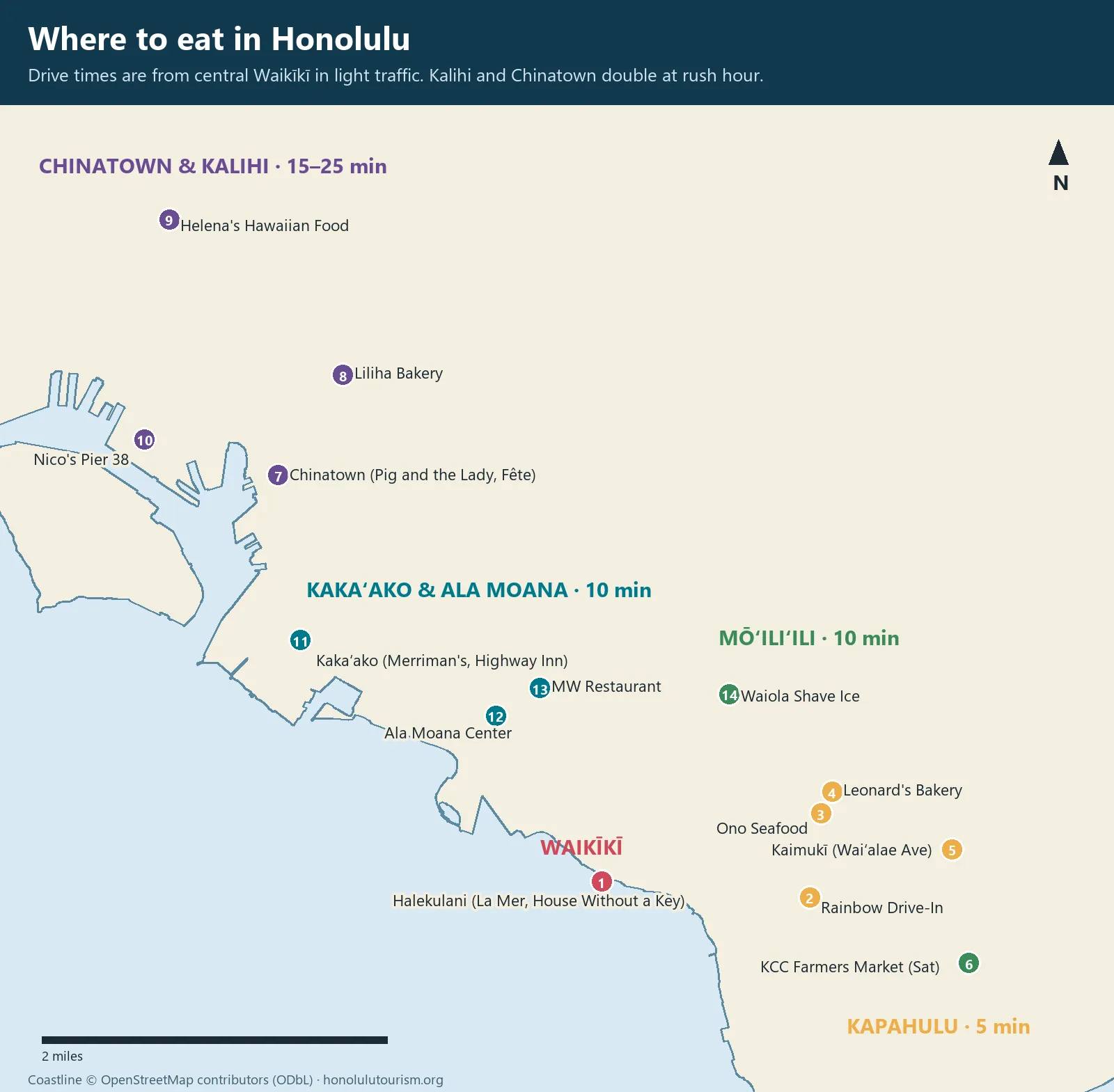
Native Hawaiian food and local-style food are not the same thing
Walk into a Honolulu plate-lunch shop and you will see menus labelled “Hawaiian food” offering teriyaki beef, chicken katsu and macaroni salad. That is local food, and it is delicious, but it is not Hawaiian in the sense that kālua pig and poi are Hawaiian. Getting this right is not pedantry. It is the difference between understanding a culture and flattening it into a menu board.
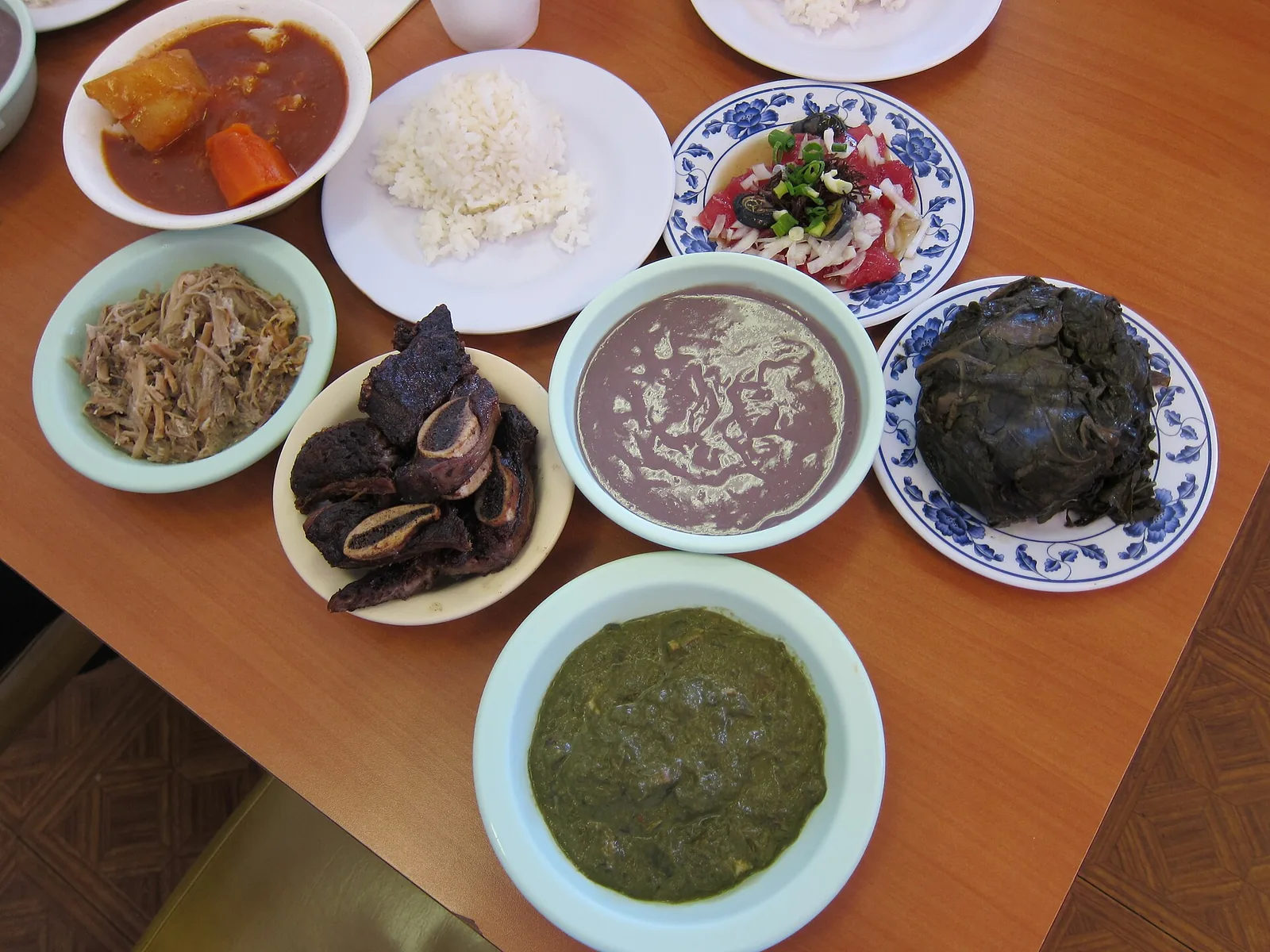
Native Hawaiian dishes worth ordering
Traditional Hawaiian food grew out of what Polynesian voyagers carried here and what the islands and ocean provided. The foundation is kalo (taro), pounded with water into poi. Fresh poi tastes mild and slightly sweet; a day or two later it sours pleasantly, and many Hawaiian families prefer it that way. It is not meant to be eaten alone like pudding. You take a fingertip of it alongside salty, rich food, which is exactly what it balances.
Kālua pig is pork cooked for hours in an imu, an underground oven lined with hot stones and banana or ti leaves, then shredded and salted. Laulau is pork (often with butterfish) wrapped in young taro leaves, then ti leaves, and steamed until the taro leaf turns soft and almost spinach-like. Squid lūʻau is taro leaf stewed with coconut milk and octopus, which locals call squid. Haupia is a firm coconut pudding. ʻUala (sweet potato), ʻulu (breadfruit), limu (seaweed) and ʻopihi (limpets picked from wave-battered rocks) round out the picture.
Poke belongs here too, with a caveat. The original is raw reef fish cut and seasoned with sea salt, limu and ʻinamona, a relish of roasted kukui nut. The shoyu, sesame oil and green onion versions you will eat most often are later adaptations that owe a lot to Japanese immigrants. Both are worth eating. Only one is the old dish.
A standard “Hawaiian plate” also includes a couple of foods that arrived after Western contact. Lomi salmon uses salted salmon brought in by nineteenth-century ships. Pipikaula is beef jerky from the paniolo, the Hawaiian cowboy, era. They are firmly part of Hawaiian food culture now, but they are not pre-contact dishes, and good Hawaiian restaurants do not pretend otherwise.
Local-style food: the plantation plate
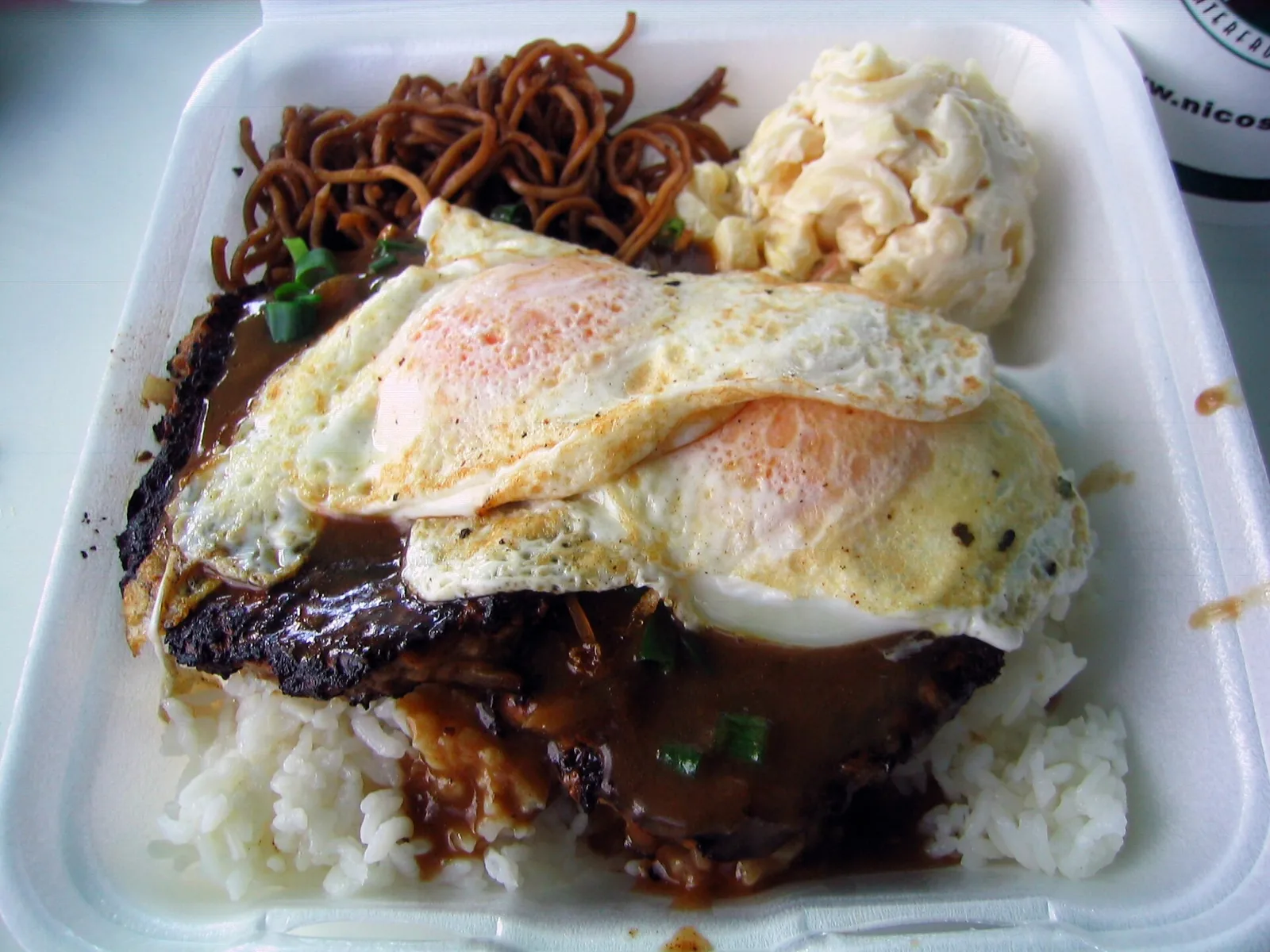
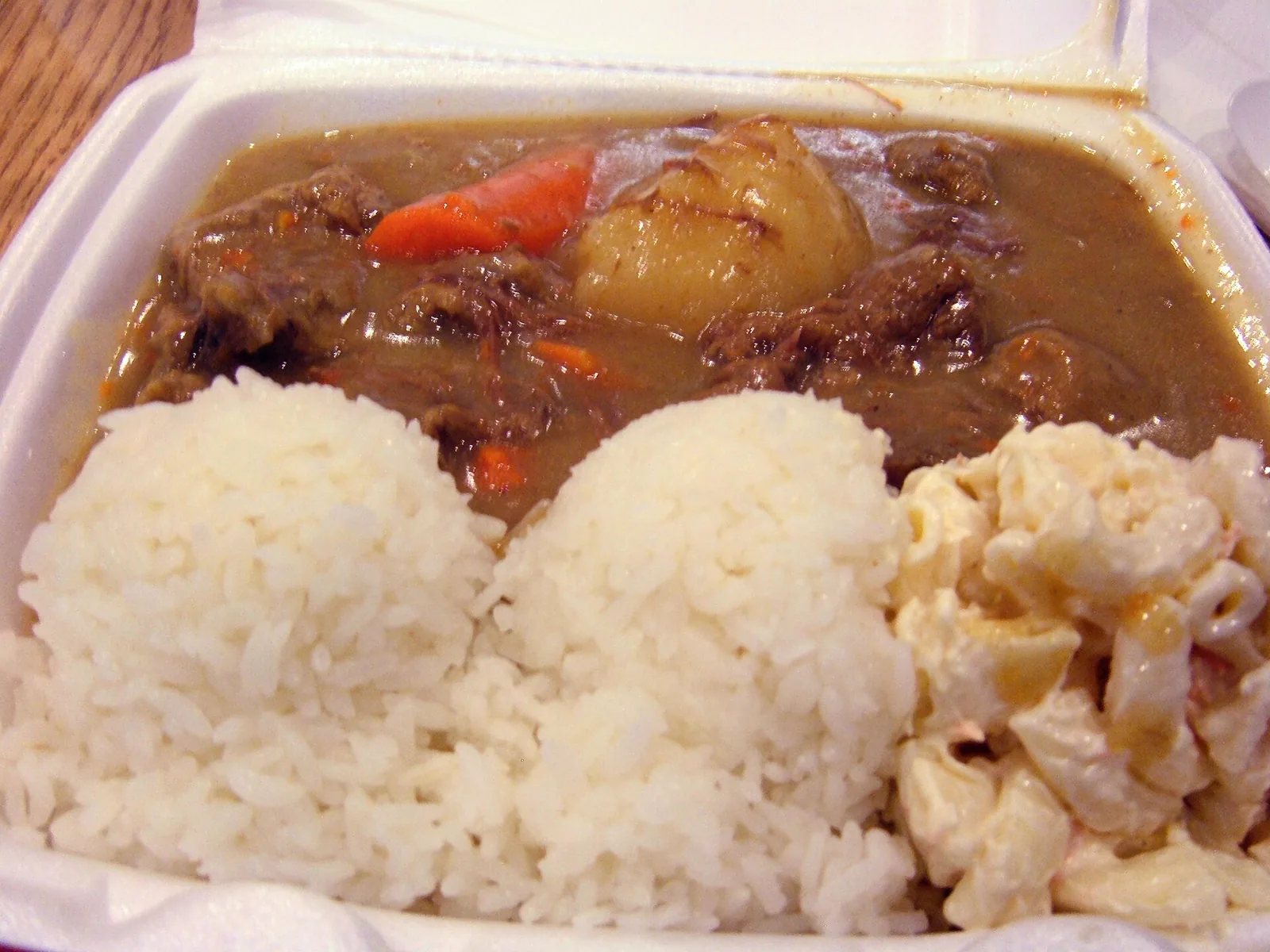
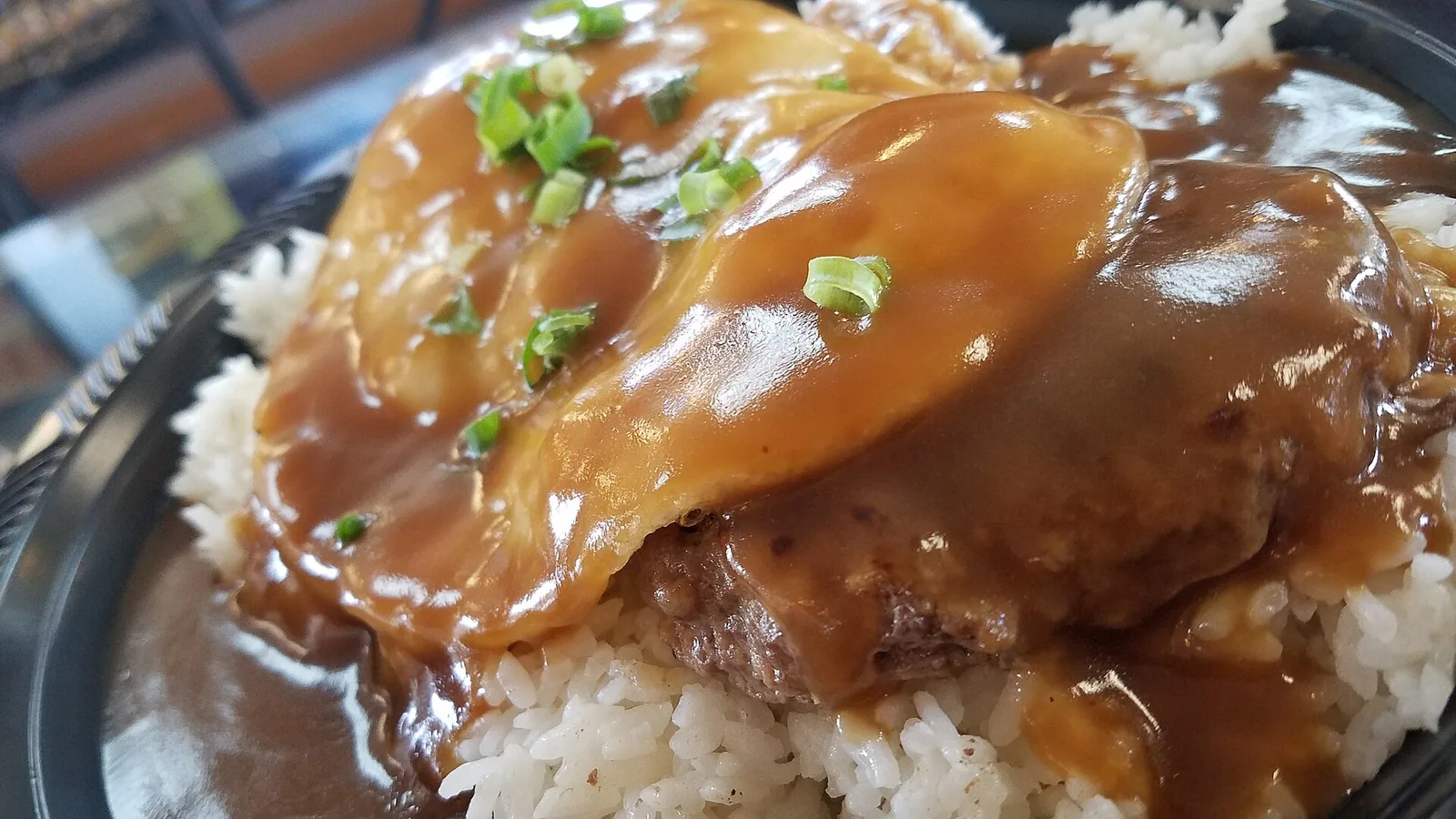
Local food is the cooking of the sugar and pineapple plantations, where Chinese, Japanese, Portuguese, Korean, Puerto Rican and Filipino workers shared lunches and swapped recipes from the 1850s onwards. The plate lunch, with two scoops of white rice, a scoop of macaroni salad and a hot main, descends from those shared tins. Spam arrived in quantity with the military during the Second World War and never left; Spam musubi, a slab of fried Spam on rice wrapped in nori, is local food through and through. The loco moco (rice, hamburger patty, fried egg, brown gravy) is generally traced to Hilo on the Big Island in 1949. Saimin is a noodle soup with Chinese, Japanese and Filipino parentage. The malasada came with Portuguese workers from Madeira and the Azores.
None of this is “traditional Hawaiian food”, and you will notice that good local restaurants never say it is. Eat both. Just know which one you are eating.
Where to eat Native Hawaiian food in Honolulu
Helena’s Hawaiian Food, Kalihi
Helena Chock opened this small dining room in 1946, and her family still runs it. In 2000 it received a James Beard Foundation America’s Classics award, the kind given to restaurants that define a place rather than chase trends. Order the pipikaula short ribs, which are dried and then fried so the edges go crisp, plus kālua pig, laulau, squid lūʻau, a bowl of poi and haupia to finish. The menu lists ahi poke at $10.15, which says something about how gently this place prices a meal. The room is plain and a little cramped. Nobody is here for the décor.
Helena’s keeps short weekday hours and is not open every day, so check its website before you set off. Kalihi is an industrial and residential district, not a tourist area, and that is part of the point: most of the tables are local families.
Cost: $ to $$ · Hours: limited weekday service, confirm on helenashawaiianfood.com · Book: no reservations, expect a short wait at lunch · Bus: Route 2 runs along School Street from Waikīkī via downtown · Allow: 25 minutes’ drive each way from Waikīkī, 1 hour to eat
Highway Inn, Kakaʻako
Highway Inn started in Waipahu in 1947, when Seiichi Toguchi opened a roadside restaurant after returning from wartime internment. The Kakaʻako branch is the easy one for visitors, ten minutes from Waikīkī, and it serves the full Hawaiian plate alongside local favourites like beef stew. Laulau and kālua pig are the benchmarks. It is more polished than Helena’s and less atmospheric, which makes it a good first taste of Hawaiian food for a family that wants air conditioning and a menu with pictures.
Cost: $$ · Hours: lunch and early dinner, check the Kakaʻako page · Book: walk in · Bus: routes along Ala Moana Boulevard; rideshare is about 10 minutes · Allow: 1 hour
Waiāhole Poi Factory, windward coast
Worth combining with a drive up the windward side. The weathered building near the mouth of Waiāhole Valley dates to the early 1900s, and the kitchen still pounds kalo into poi. Get a laulau plate and the “sweet lady of Waiāhole”, warm kūlolo (a dense taro and coconut pudding) topped with haupia ice cream. It is a takeaway operation with a few outdoor seats, and it closes when the day’s batch sells out.
Cost: $ to $$ · Hours: daytime only and not every day, confirm before driving · Book: no · Bus: not practical; drive Kahekili Highway from Kāneʻohe · Allow: 40 minutes’ drive from Waikīkī, 45 minutes there
Mud Hen Water, Kaimukī
Chef Ed Kenney’s dinner restaurant on Waiʻalae Avenue is not a Hawaiian plate lunch place, and it does not claim to be. It cooks a modern menu from Hawaiian and local ingredients (ʻulu, limu, reef fish, island beef) in a way that respects where they came from. If you want to see how contemporary Honolulu chefs think about Hawaiian food, this is the table. Share several plates rather than ordering one main each.
Cost: $$$ · Hours: dinner, closed some nights · Book: reserve online, a week or more ahead for weekends · Bus: Route 2 to Kapiʻolani Community College, then a 10-minute walk · Allow: 2 hours
Poke: where to buy it and how to order
Honolulu poke is sold by the pound from a chilled counter, usually with rice to make a bowl. The fish should look glossy and smell of nothing but the sea. Ahi (yellowfin or bigeye tuna) is the default; tako (octopus) is chewy and good; salmon is popular but imported. Classic seasonings are shoyu, “Hawaiian style” with salt, limu and ʻinamona, and spicy with a mayonnaise and sriracha dressing. Ask for a taste. Every good counter will give you one.
Buy it close to eating it. Poke is raw fish in a warm climate; carry it in a cool bag if you are heading to the beach, and do not leave it in a hot car.
Ono Seafood, Kapahulu
The best poke within walking distance of Waikīkī, and the one to try first. It is a small room with a counter and a handful of tables, run with brisk efficiency. A regular bowl is $11.75 and a large $13.75 this year. Get shoyu ahi and a half-scoop of the spicy ahi, and if tako is in the case, add it. The lunchtime queue moves quickly; mid-morning is calmer.
Cost: $11.75–13.75 per bowl · Hours: Tue–Sat 9am–4pm, closed Sun and Mon · Book: no · Bus: Route 13 along Kapahulu Avenue · Allow: 20 minutes’ walk from the Honolulu Zoo end of Waikīkī, 30 minutes to eat
Tamura’s Fine Wine & Liquors, Kaimukī
Yes, a liquor shop. The poke counter at the back of Tamura’s is one of the best-regarded on the island, with a wider range than Ono (smoked tako, limu varieties, garlic ahi) and the advantage that you can pick up a bottle at the same time. Buy it, drive ten minutes to one of the south-shore beaches at Kaimana or Kahala, and eat it on the sand.
Cost: $ · Hours: daytime to evening, counter closes before the shop · Book: no · Bus: Route 2 to Kapiʻolani Community College, 10-minute walk · Allow: 20 minutes
Foodland supermarkets
Foodland is a local supermarket chain, and its poke counters are genuinely excellent: consistent, cheap and open long hours. The Foodland Farms at Ala Moana Center is the easiest for visitors. This is where locals buy poke for a party, and it is the sensible choice on a Sunday or Monday when Ono is shut.
Cost: $ · Hours: early until late, daily · Book: no · Bus: most TheBus routes stop at Ala Moana Center · Allow: 15 minutes
Maguro Brothers, Chinatown
A fishmonger’s stall inside Kekaulike Market run by brothers who trained in Tokyo’s fish trade. The poke is excellent, but the reason to come is the sashimi-grade fish cut to order and the donburi bowls. It opens early and closes by mid-afternoon, and it can sell out. Combine it with a morning walk through Chinatown’s markets.
Cost: $ to $$ · Hours: morning to early afternoon, closed some days · Book: no · Bus: Routes 2 and 13 along Hotel Street · Allow: 20 minutes’ drive from Waikīkī, 30 minutes to eat
Nico’s Pier 38
Nico’s sits beside Honolulu’s commercial fishing piers, where the fish auction runs before dawn. The restaurant is a big, casual open-air room with water views and a fish market attached. The furikake-crusted pan-seared ahi is the dish everyone orders, and it deserves the reputation. The market counter sells poke to take away, and the loco moco in a takeout box is a very fine hangover cure.
Cost: $$ · Hours: breakfast through dinner · Book: walk in, counter ordering · Bus: not convenient; drive or rideshare, free parking on site · Allow: 20 minutes’ drive from Waikīkī, 1 hour
| Dish | What it is | Heritage | Best place to try it | Band |
|---|---|---|---|---|
| Kālua pig and poi | Imu-roasted pork, pounded taro | Native Hawaiian | Helena’s Hawaiian Food | $ |
| Laulau | Pork steamed in taro and ti leaves | Native Hawaiian | Highway Inn, Waiāhole Poi Factory | $–$$ |
| Poke | Cubed raw fish, seasoned | Native Hawaiian, modernised | Ono Seafood, Tamura’s | $ |
| Plate lunch | Hot main, two rice, mac salad | Local (plantation era) | Rainbow Drive-In | $ |
| Loco moco | Rice, patty, egg, gravy | Local (Hilo, 1949) | Rainbow Drive-In, Nico’s Pier 38 | $ |
| Spam musubi | Fried Spam on rice, nori wrap | Local (post-war) | Musubi Café Iyasume | $ |
| Saimin | Noodle soup in dashi broth | Local (Chinese-Japanese) | Palace Saimin | $ |
| Malasada | Sugared fried dough | Portuguese, local | Leonard’s Bakery | $ |
| Shave ice | Finely shaved ice, syrup | Japanese, local | Waiola, Matsumoto | $ |
| Manapua | Char siu bun, steamed or baked | Chinese, local | Royal Kitchen, Chinatown | $ |
Plate lunch, loco moco and the local classics
Rainbow Drive-In, Kapahulu
Open since 1961, Rainbow Drive-In is the plate-lunch stand most visitors find first, and it holds up. Order at the window, collect a Styrofoam box, eat at the picnic tables under the rainbow sign. The mixed plate (barbecue beef, boneless chicken and mahi mahi) is the way to try several things at once; the loco moco is the textbook version, with a generous ladle of gravy. The chili is a local institution in its own right. It is not refined food, and it is not meant to be.
Cost: $ · Hours: breakfast to evening daily · Book: no · Bus: Route 13, or walk 15 minutes from the Diamond Head end of Waikīkī · Allow: 30 minutes
Diamond Head Market & Grill, Monsarrat Avenue
A two-part business on the road towards Diamond Head: a takeaway grill window at the back and a bakery-deli at the front. The grill turns out a better-than-usual plate lunch (the char siu pork and the ahi steak plates are the pick), and the bakery is famous for its lemon crunch cake and blueberry cream-cheese scones. Eat on the benches, or carry it to Kapiʻolani Park. It is the natural refuel after the Diamond Head summit trail.
Cost: $ · Hours: breakfast to evening · Book: no · Bus: Routes 2 and 23 along Monsarrat Avenue · Allow: 30 minutes
Musubi Café Iyasume, Waikīkī
Spam musubi is on sale in every convenience store on the island, and the ABC Store version is perfectly fine for a beach snack. Iyasume makes it properly: rice formed fresh through the day, with variations such as egg, avocado or unagi. It is a good cheap breakfast within Waikīkī, and a better one than most hotel buffets at a quarter of the price.
Cost: $ · Hours: early morning to evening · Book: no · Bus: in Waikīkī, walk · Allow: 15 minutes
Palace Saimin, Kalihi
A tiny, old-fashioned saimin counter on North King Street, dating to the 1940s. The broth is light dashi, the noodles springy, the toppings minimal: green onion, a slice of kamaboko fish cake, char siu. Order a bowl and a couple of barbecue beef sticks. It is not glamorous, and you will not find a better sense of old working Honolulu for under $20. Pair it with a visit to the Bishop Museum, which is nearby.
Cost: $ · Hours: lunch into evening, closed some days · Book: no · Bus: not direct from Waikīkī; drive or rideshare · Allow: 20 minutes’ drive, 30 minutes to eat
Bakeries, malasadas and shave ice
Leonard’s Bakery, Kapahulu
Leonard Rego opened his bakery on Kapahulu Avenue in 1952 and popularised the malasada in Honolulu. A plain one costs $2.25 this year. Buy them hot, eat them in the car park, go back for more. The sugar version is best; the filled ones (custard, chocolate, haupia) are good, and there is usually a flavour of the month. On Shrove Tuesday, which Portuguese families here call Malasada Day, the queue goes round the block.
Leonard’s is the famous name, but it is not the only good malasada. Kamehameha Bakery in Kalihi makes a purple poi-glazed version that locals argue is better, and it opens very early.
Cost: $2.25 per malasada · Hours: early morning to evening daily · Book: no · Bus: Route 13 along Kapahulu Avenue · Allow: 20 minutes, longer at weekends
Liliha Bakery
Liliha Bakery has been making its coco puffs, cream puffs filled with chocolate pudding and topped with a buttery chantilly frosting, since 1950. The original shop on North Kuakini Street keeps a classic diner counter where you can sit for an oxtail soup, a loco moco or grill-fried pancakes. It is open daily from 6am to 10pm, which makes it one of the most useful places in town for jet-lagged early risers. There are newer branches too, including one at the International Market Place in Waikīkī, but the Kuakini Street counter is the one with the character.
Cost: $ to $$ · Hours: Kuakini Street daily 6am–10pm · Book: no, expect a wait for counter seats at weekend breakfast · Bus: Route 13 towards Liliha · Allow: 20 minutes’ drive from Waikīkī, 45 minutes to eat
Waiola Shave Ice, Mōʻiliʻili and Kapahulu
Shave ice is not a snow cone. The ice is shaved into soft, fluffy snow that absorbs syrup rather than letting it pool at the bottom. Waiola has done it since the 1940s, and the Mōʻiliʻili shop on Waiola Street is the classic. Add a scoop of vanilla ice cream or azuki beans underneath and a “snow cap” of condensed milk on top. Lilikoʻi (passion fruit), li hing mui and lychee are the flavours that taste most of here.
Cost: $ · Hours: late morning to early evening · Book: no · Bus: Route 13 for the Kapahulu shop · Allow: 15 minutes
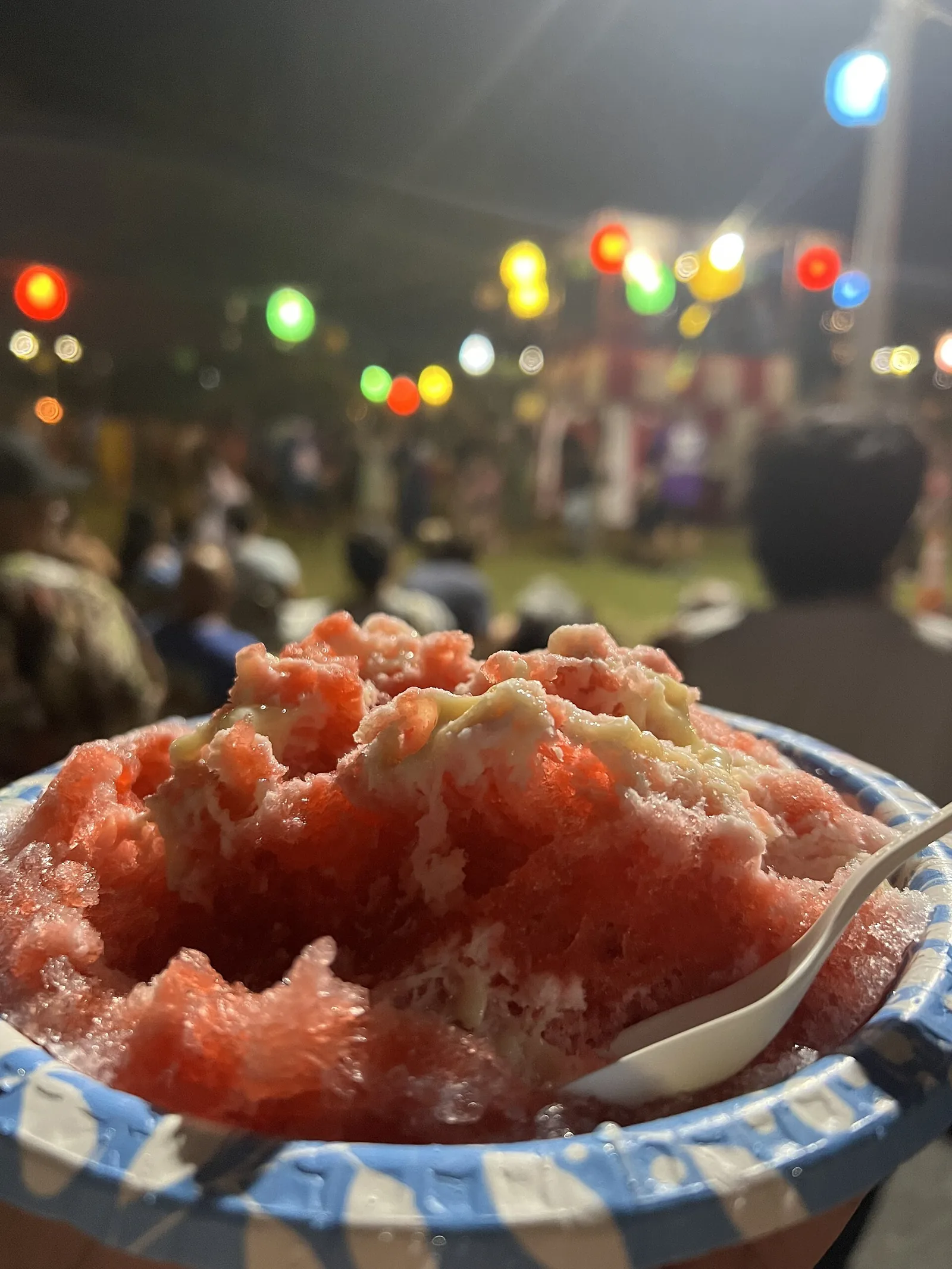
Matsumoto Shave Ice, Haleʻiwa
The name everyone knows, on the North Shore since 1951, and open 10am to 6pm. The shave ice is good and the queue is long. If you are already in Haleʻiwa, go. If you are choosing where to have shave ice from Waikīkī, Waiola is better and fifty minutes closer. Our North Shore guide covers the rest of Haleʻiwa’s food stops, including the garlic shrimp trucks.
Cost: $ · Hours: daily 10am–6pm · Book: no · Bus: Route 60 from Ala Moana Center, about 1 hour 15 minutes · Allow: 30 minutes including the queue
Special-occasion dining
Honolulu’s high end has two strands. One is the grand hotel restaurant with ocean views; the other is the chef-owned room in Chinatown, Kakaʻako or Kaimukī. The second is usually better food for the money. Book both as early as your dates allow.
La Mer, Halekulani
La Mer is the only restaurant in Hawaiʻi to hold both the AAA Five Diamond and the Forbes Five-Star rating. It cooks neoclassical French food, using island fish and produce, in a second-floor room open to the ocean and Diamond Head. It is formal by Honolulu standards, with a dress code that rules out beachwear, and it is the most expensive dinner on this list. For an anniversary, it delivers.
Cost: $$$$ · Hours: dinner only, not every night · Book: reserve through the Halekulani, weeks ahead for weekends · Bus: in Waikīkī, walk · Allow: 2.5–3 hours
House Without a Key, Halekulani
Downstairs from La Mer, this open-air terrace under an old kiawe tree is where Honolulu goes for a sunset drink. A Hawaiian trio plays and a hula dancer performs most evenings. The food is reasonable; the setting is the reason to come. Arrive an hour before sunset for a table with a view, and order the mai tai slowly. One practical word here: drowning is the leading cause of injury death for visitors to Hawaiʻi, and alcohol is a common factor. Do not follow sunset drinks with a swim.
Cost: $$ to $$$ · Hours: breakfast to late evening, music at sunset · Book: limited reservations; otherwise arrive early · Bus: in Waikīkī, walk · Allow: 1.5 hours
MW Restaurant, Kapiʻolani Boulevard
Wade Ueoka and Michelle Karr-Ueoka (the M and W) both trained in the kitchen of Alan Wong, one of the founders of Hawaiʻi Regional Cuisine. Their restaurant took gold at Honolulu Magazine’s Hale ʻAina Awards in 2025. The savoury menu plays with local comfort food, such as oxtail or mochiko chicken, done carefully and at a higher pitch; the desserts, Michelle’s department, are the best in the city. It is the single restaurant we would send a food-focused visitor to first.
Cost: $$$ · Hours: lunch and dinner, closed some days · Book: reserve online a week or two ahead · Bus: routes along Kapiʻolani Boulevard; about 10 minutes’ drive from Waikīkī · Allow: 2 hours
Merriman’s Honolulu, Kakaʻako
Peter Merriman was one of the chefs who launched Hawaiʻi Regional Cuisine in 1991, pushing island restaurants to cook with local farmers and fishers rather than frozen imports. His Honolulu restaurant in Ward Village is polished and dependable, with a menu built on Big Island beef, local fish and Oʻahu vegetables. It lacks the edge of the Chinatown rooms, and suits a group with mixed tastes, grandparents included.
Cost: $$$ · Hours: lunch and dinner · Book: reserve online · Bus: routes along Ala Moana Boulevard; validated garage parking in Ward Village · Allow: 2 hours
Sushi Sho, Ritz-Carlton Residences Waikīkī
Keiji Nakazawa’s Edomae omakase counter moved here from Tokyo, and it is the most serious sushi in the state: a long, precise procession of aged and cured fish, much of it from Hawaiian waters. There are only a handful of seats per sitting. Reservations open well ahead and go fast, so plan this before you book flights, not after you land.
Cost: $$$$ · Hours: fixed dinner seatings · Book: essential, as far ahead as the reservation system allows · Bus: in Waikīkī, walk · Allow: 2.5 hours
Fête and The Pig and the Lady, Chinatown
Chinatown’s two best-known dinner restaurants sit a few blocks apart. Fête, run by Robynne Maiʻi, serves generous New American cooking with local ingredients; Maiʻi won the James Beard award for Best Chef: Northwest and Pacific in 2022.The Pig and the Lady, run by Andrew Le and his family, cooks Vietnamese food through a Honolulu lens. The pho French dip sandwich at lunch and the Laotian fried chicken at dinner have loyal followings. Both are loud, busy and fun.
Cost: $$ to $$$ · Hours: lunch and dinner, closed some days · Book: reserve online, especially for Friday and Saturday · Bus: Routes 2 and 13 to Hotel Street · Allow: 20 minutes’ drive from Waikīkī, 2 hours
The best restaurants in Honolulu by neighbourhood
Most visitors stay in Waikīkī, and most eat all their meals there. That is the single biggest mistake in Honolulu food. The best cooking is ten to twenty minutes away, in neighbourhoods that are easy to reach and far better value.
Waikīkī
Waikīkī has plenty of competent restaurants and a lot of expensive mediocrity aimed at people who will never come back. The good options are specific. Duke’s Waikiki, on the sand at the Outrigger Waikiki Beach Resort, is a lively beachfront bar and restaurant where the Barefoot Bar’s sunset crowd and the hula pie dessert are the draws. Deck., on the upper level of the Queen Kapiʻolani Hotel, has a wide view of Diamond Head. Marugame Udon on Kūhiō Avenue is a cheap and very good noodle cafeteria with a queue at every mealtime. Morning is Waikīkī’s strongest meal: skip the hotel buffet and walk to Iyasume, or to the Liliha Bakery counter at the International Market Place. For the full beach-by-beach picture, see our Waikīkī Beach guide.
Cost: $ to $$$$ · Book: reserve for sunset tables at beachfront bars · Bus: everything within walking distance · Allow: hotel valet parking runs $50–90 a night, so do not drive in for dinner
Kapahulu and Kaimukī
Kapahulu Avenue starts at the Diamond Head end of Waikīkī and runs inland, and it is the best food street you can walk to from a Waikīkī hotel. In a mile you pass Ono Seafood, Rainbow Drive-In, Leonard’s, Waiola’s second shop and Tonkatsu Tamafuji, a Japanese pork-cutlet specialist with a permanent queue and fair prices. Carry on up the hill and you reach Kaimukī, a low-rise neighbourhood along Waiʻalae Avenue and 12th Avenue with some of the city’s best independent restaurants, including Mud Hen Water, Tamura’s poke, and Koko Head Cafe, Lee Anne Wong’s brunch spot known for dumplings and cornflake French toast.
Cost: $ to $$$ · Book: dinner at weekends · Bus: Route 13 along Kapahulu; Route 2 to Kaimukī via KCC · Allow: an easy half-day food walk, or an evening
Chinatown
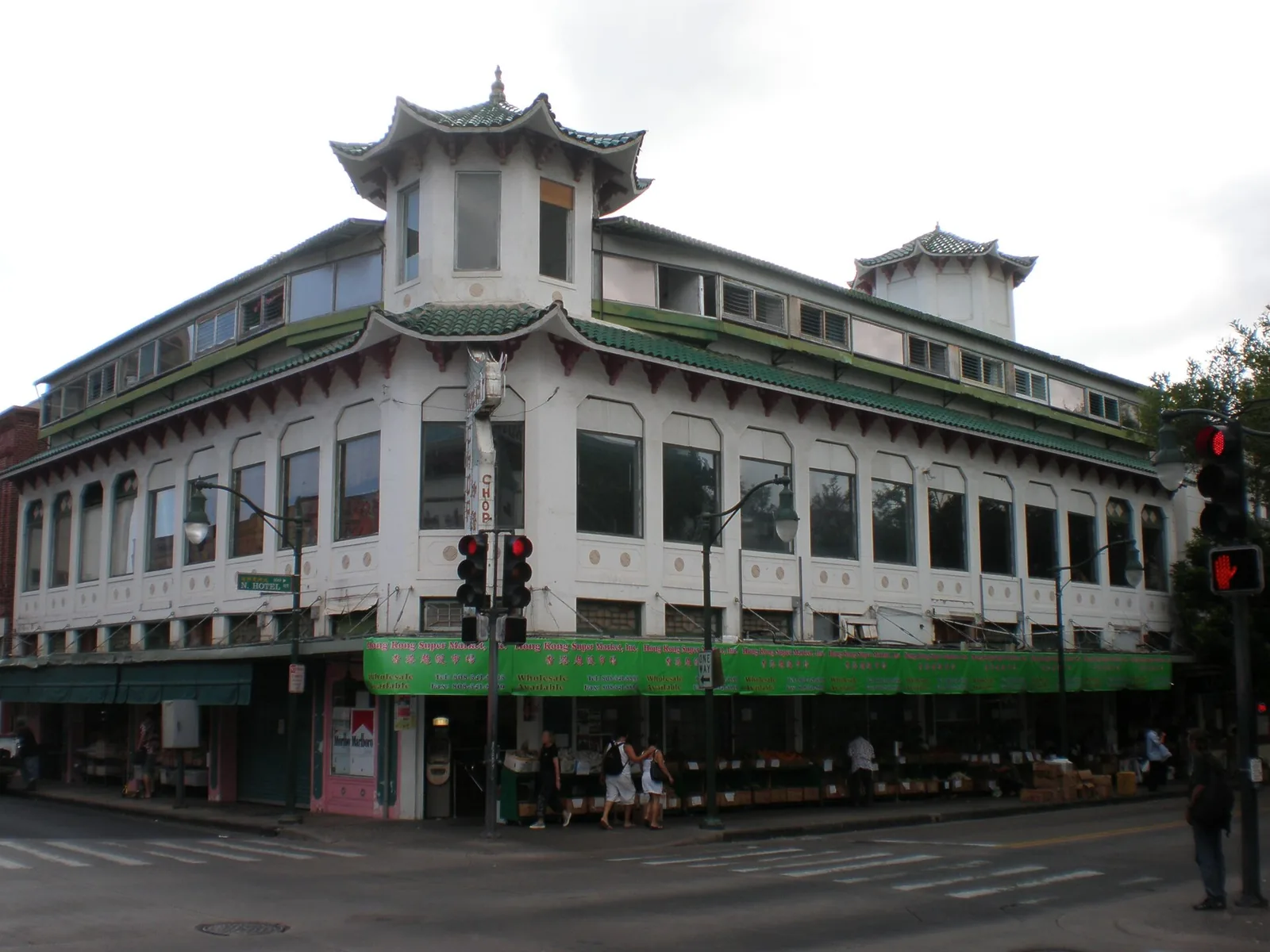
Honolulu’s Chinatown is one of the oldest in the United States, a grid of low brick and wooden buildings between downtown and the harbour. In the morning it is a working market district: Kekaulike and Maunakea markets, fish counters, lei stands on Maunakea Street and manapua bakeries such as Royal Kitchen, whose baked char siu buns are worth the detour. In the evening the restaurants and bars along Hotel Street and Nuʻuanu Avenue take over. The First Friday art walk (5pm–9pm, next on 2 October 2026) is the liveliest night. Chinatown has a visible homelessness problem and some quiet blocks late at night. It is not dangerous for visitors in the normal sense, but stay on the lit, busy streets and use a rideshare back after dark.
Cost: $ to $$$ · Book: weekend dinners · Bus: Routes 2 and 13 to Hotel Street · Allow: 2 hours in the morning, or an evening; municipal lots at Chinatown Gateway Plaza and Smith-Beretania are the simplest parking
Kakaʻako and Ala Moana
Kakaʻako was a warehouse district twenty years ago and is now a grid of new towers, murals and shopping blocks around Ward Village. It is where Merriman’s and Highway Inn are, along with plenty of breweries and coffee shops. Next door, Ala Moana Center is the island’s biggest shopping mall and a better eating destination than it sounds. Its food hall and the Foodland Farms supermarket are the cheapest good meals near Waikīkī. Skyline rail will not reach Kakaʻako or Chinatown until its final segment opens, projected for 2031, so for now it is TheBus, a rideshare, or a 30-minute walk from Waikīkī.
Cost: $ to $$$ · Book: dinner at Merriman’s · Bus: most TheBus routes pass Ala Moana Center; fare $3.25, with a HOLO card capping at $7.50 a day · Allow: an afternoon
Kalihi and Liliha
These are working-class residential neighbourhoods, and they hold some of the most important food in the city: Helena’s, Palace Saimin, Kamehameha Bakery, Liliha Bakery. There is nothing else here aimed at visitors, which is precisely why the food is so good. Drive or rideshare, eat, and combine it with the Bishop Museum. Our getting around Oʻahu guide explains how to cover these areas by bus if you are not renting a car.
Beyond Honolulu
Two out-of-town food trips are worth building a day around. On the North Shore, the garlic shrimp trucks at Kahuku and Haleʻiwa are an essential stop; Giovanni’s garlic shrimp plate is $14 this year. On the windward side, Kailua has good brunch (Moke’s Bread & Breakfast is known for lilikoʻi pancakes) and Waiāhole Poi Factory is a short drive north. Our Oʻahu itinerary slots both into a round-the-island day.
| Neighbourhood | Best for | Price | From Waikīkī | Parking |
|---|---|---|---|---|
| Waikīkī | Sunset drinks, udon, walkable breakfast | $–$$$$ | On foot | Hotel valet $50–90/night; avoid driving in |
| Kapahulu | Poke, plate lunch, malasadas, shave ice | $–$$ | 5 min drive, 20 min walk; Route 13 | Small lots, busy at lunch |
| Kaimukī | Chef-owned dinner, brunch, poke | $$–$$$ | 10 min drive; Route 2 plus walk | Street parking, easier after 6pm |
| Chinatown | Markets, manapua, dinner and bars | $–$$$ | 15–20 min drive; Routes 2, 13 | Municipal lots |
| Kakaʻako and Ala Moana | Hawaiian plate, food hall, family dining | $–$$$ | 10 min drive; many routes | Garages, some validated |
| Kalihi and Liliha | Hawaiian food, saimin, bakeries | $ | 20–25 min drive; Routes 2, 13 | Small lots and street |
| North Shore | Shrimp trucks, shave ice | $ | 50–60 min drive; Route 60 | Roadside, busy at weekends |
Farmers markets and food tours
The KCC Farmers Market, in the car park of Kapiʻolani Community College on the slope of Diamond Head, runs on Saturdays from 7:30am to 11am. It is the best farmers market on the island for visitors: tropical fruit (apple bananas, lilikoʻi, rambutan, lychee in season), grilled abalone from a Big Island farm, fresh-pressed sugarcane juice and plenty of hot breakfast. Go at opening. By 9am the aisles are shoulder to shoulder, and the best stalls start selling out. Bring cash as a backup and a bag for fruit.
Cost: free entry, $ to eat · Hours: Sat 7:30am–11am · Book: no · Bus: Routes 2 and 23 · Allow: 1 hour, and pair it with the Diamond Head hike if you have a reservation
On the North Shore, the Haleʻiwa Farmers Market runs on Thursdays from 3pm to 7pm, which fits neatly into an afternoon visit. Smaller neighbourhood markets pop up across the week in Kailua, Kakaʻako and elsewhere; schedules change, so check the organisers’ pages the week you travel.
Guided food tours in Chinatown and Kaimukī typically last around three hours and cover six to eight tastings with background on the plantation history behind local food. They make sense if you have one free afternoon and dislike choosing. Before you book, check how many stops are full tastings and how many are a single bite, and whether drinks are included. If you are confident with a map, this guide’s Kapahulu and Chinatown sections make a better self-guided crawl at a third of the price.
And the lūʻau? A commercial lūʻau on Oʻahu costs roughly $140–220 per adult in 2026. You are paying for a show and an evening, and the buffet is usually the weakest part. For a proper taste of Hawaiian food, a $20 plate at Helena’s teaches you more.
Money, tipping, reservations and parking
For the bigger budget picture, including flights and hotels, see our guide to planning a trip to Hawaiʻi.
Tax and tips. Menu prices exclude general excise tax. Table service is tipped at 18 to 22 per cent of the pre-tax total. Some restaurants now add a service charge or a “kitchen appreciation” fee; read the bill before adding a tip on top.
Reservations. Most sit-down restaurants use online booking platforms. Weekend dinners at the popular Chinatown and Kaimukī rooms fill a week or two ahead; La Mer and Sushi Sho need far longer. Counter-service places do not take bookings. When a restaurant is fully booked, try the bar or arrive at opening: several hold seats for walk-ins.
Hours. Family-run places often close one or two days a week (Sunday and Monday are common) and many shut mid-afternoon. Plenty of kitchens close by 9pm. Honolulu eats early; a 6pm reservation is normal, not unfashionable.
Parking. Waikīkī hotel parking is punishingly expensive, so do not rent a car just for dinners. Outside Waikīkī, parking is usually a small lot or street meters and is manageable outside the lunch and weekend-brunch peaks. Our where to stay on Oʻahu guide covers which hotels include parking.
Getting there without a car. TheBus reaches almost everything in this guide. The fare is $3.25 in cash, with no transfers, while a HOLO card caps you at $7.50 a day. Rideshare from Waikīkī to Kapahulu, Kakaʻako or Kaimukī is a short hop; Kalihi and Chinatown cost more at rush hour.
What to skip
Themed chain restaurants on Kalākaua Avenue. You can eat at these in any mall in America, and you will pay a Waikīkī premium to do it.
Shave ice from a Waikīkī kiosk with neon syrups and crunchy ice. If the ice crunches, it is a snow cone. Walk to Waiola.
“Hawaiian” restaurants in Waikīkī whose menus are mostly teriyaki and fried rice. Nothing wrong with the food, but if you want Hawaiian food, go to a Hawaiian restaurant.
Driving to Haleʻiwa just for Matsumoto. It is a 50-minute drive each way for shave ice that is equally good ten minutes from Waikīkī. Go if you are on the North Shore anyway.
If food is the centre of your trip, read our main things to do on Oʻahu guide to plan the days around it, and see our guide to the best time to visit Hawaiʻi for mango and lychee season, which runs roughly from late spring into summer.
To understand why kalo and poi matter so much, see our guide to Hawaiian culture, from the story of Hāloa to the values that shape life in the islands.
If a neighbourhood’s food scene has won you over, our guide to Honolulu’s neighbourhoods covers what else to see and do in Kapahulu, Kaimukī, Chinatown, Kalihi and beyond.
Frequently Asked Questions
What food is Honolulu known for?
Honolulu is known for two food traditions. Native Hawaiian food includes poi, kālua pig, laulau, squid lūʻau, haupia and poke. Local-style food, which grew out of the plantation era, includes the plate lunch, loco moco, Spam musubi, saimin, malasadas and shave ice. Both are worth eating, but they are different things, and only the first is traditional Hawaiian food. Try Helena’s for Hawaiian and Rainbow Drive-In for local.
Which are the best restaurants in Honolulu for a first-time visitor?
Start with one meal of each kind. Eat Hawaiian food at Helena’s Hawaiian Food or Highway Inn, poke at Ono Seafood, a plate lunch at Rainbow Drive-In, malasadas at Leonard’s and shave ice at Waiola. For one special dinner, book MW Restaurant or Fête. Everything except Helena’s is within a 15-minute drive of Waikīkī, and most can be reached on TheBus.
Do I need reservations for Honolulu restaurants?
For counter-service places such as poke shops, bakeries and plate-lunch stands, no. For popular sit-down restaurants, book a week or two ahead for Friday and Saturday dinner, and longer in the busy December to March season. La Mer and Sushi Sho need booking well before you travel. Arriving right at opening time often gets you a walk-in seat.
How much should I budget for food in Honolulu?
Eating mainly at local counters, a person can eat well for $40–60 a day in 2026. A mix of casual lunches and a sit-down dinner is closer to $90–130. Add tax of around 4.7 per cent and 18–22 per cent tips for table service. Waikīkī hotel restaurants and breakfast buffets are where budgets break; the same money goes much further in Kapahulu or Chinatown.
Is poke safe to eat?
Poke from a busy, reputable counter is safe, because turnover is high and fish is handled cold. Buy it shortly before you plan to eat it, keep it chilled in a cool bag, and do not leave it in a hot car or in the sun on the beach. Pregnant travellers and anyone with a weakened immune system should follow their usual advice on raw fish.
Is the lūʻau food traditional Hawaiian food?
Partly. Most commercial lūʻau buffets include kālua pig, poi, lomi salmon and haupia alongside mainland-style dishes such as teriyaki chicken and salads. The food is made for hundreds of guests at once, so it is rarely the best version. Treat a lūʻau as an evening of music and hula, and eat Hawaiian food at a Hawaiian restaurant.
Photo Credits
- Map of Honolulu restaurants: honolulutourism.org, coastline data © OpenStreetMap contributors (ODbL)
- Hawaiian dishes: takaokun, CC BY 2.0
- Plate lunch: BrokenSphere, CC BY-SA 3.0
- Loco moco: California Cow from Seattle, USA, CC BY 2.0
- Shave ice at a bon dance: Pacamah, CC BY-SA 4.0
- Wo Fat building, Chinatown: Joel Bradshaw, public domain
- Loco moco at Nico’s Pier 38 (featured image): christian razukas from Honolulu, Hawaii, CC BY-SA 2.0