The first lesson of the day at Waikiki Beach Services starts at 08:30 on the sand in front of the Sheraton Waikiki: a 15-minute briefing on the beach, then about an hour in the water, where an instructor lines you up and gives you a push onto waves that have rolled a long way over the reef before they reach you. Most schools on this beach work the same way, and it works. This guide to waikiki surf lessons compares eight schools and beach stands by price, group size, age rules and meeting point, using their own 2026 price lists, then explains what a lesson is like, when to go, and how to keep surfing once it’s over.
Most schools here launch from the main hotel stretch of Waikīkī Beach or from the quieter Diamond Head end by the zoo. If you don’t yet know one stretch from another, our guide to the Waikīkī beach sections explains the layout, and our Waikīkī guide covers the rest of the neighbourhood. A lesson is one of the best things to do on Oʻahu for a first-time visitor, and Waikīkī is where to take it.
Waikiki Surf Lessons at a Glance
Prices are per person and come from each school’s own website in November 2026. Most schools charge more per head as the group gets smaller, and prices change, so confirm yours when you book. All of them are in Waikīkī, close to the hotels; from elsewhere on the island, our guide to getting around Oʻahu covers the buses.
| School | Where you meet | Group | Semi-private | Private | Length | Age rules |
|---|---|---|---|---|---|---|
| Waikiki Beach Services | In front of the Sheraton Waikiki | $95 (group of four) | $115 (three), $130 (two) | $150 | 75 min | Under 12s one-to-one only |
| Faith Surf School | In front of the Outrigger Waikiki’s pool | $95 (four or five per instructor) | $125 (three), $140 (two) | $190 | 80 min | From 11; groups 13 and up |
| Hans Hedemann Surf School | Queen Kapiʻolani Hotel, 150 Kapahulu Ave | $100 | $150 | $180 | Ask when booking | Groups 14 and up |
| Big Wave Dave Surf Co. | Shop at 226 Lewers St | $129 (three to five per instructor) | $149 | $179 | 1.5 hours (group) | Groups from 9; ages 4–8 private only |
| Ty Gurney Surf School | Its shop, a 30-second walk from the beach | No groups | $110 (1 hour), $155 (2 hours) | $135 (1 hour), $190 (2 hours) | 1 or 2 hours | 14 and under private only |
| Star Beachboys | 2450 Koa Ave | $75 | $100 | $125 | 75 min | All ages, per the school |
| Gone Surfing Hawaii | Between the Outrigger Reef and the Halekulani | Check the school’s website or call | Ask when booking | Private from 5; group from 8 | ||
| Aloha Beach Services | At the Moana Surfrider, beside Duke’s | Ask at the stand | Ask at the stand | Ask at the stand | ||
Why Waikīkī Is Where People Learn
Waikīkī’s waves break over a broad reef offshore, so by the time they reach the lesson zone they’ve lost their punch and roll in long and slow, the kind of wave a big foam board can catch with a gentle push. Instructors work a handful of named breaks. Canoes, just off the beach in front of the Moana Surfrider, is the classic beginner wave, breaking over a reef with a sandy bottom; the others include Queens and Pops (short for Populars). Which one you’re taken to depends on the school and the day: Ty Gurney teaches nearly all its lessons at Pops, while Gone Surfing names Canoes and Queens.
This is also where surfing’s modern story starts. Duke Kahanamoku, the Waikīkī waterman who helped make surfing known around the world, won Olympic gold in the 100 metres freestyle at Stockholm in 1912 and again at Antwerp in 1920, along with relay gold in 1920 and silvers in 1912 and 1924. According to the Hui Nalu club, he co-founded it with Knute Cottrell and Kenneth Winter in 1908. His bronze statue on Kūhiō Beach has stood since 1990, and our Hawaiian culture and history guide tells the wider story.
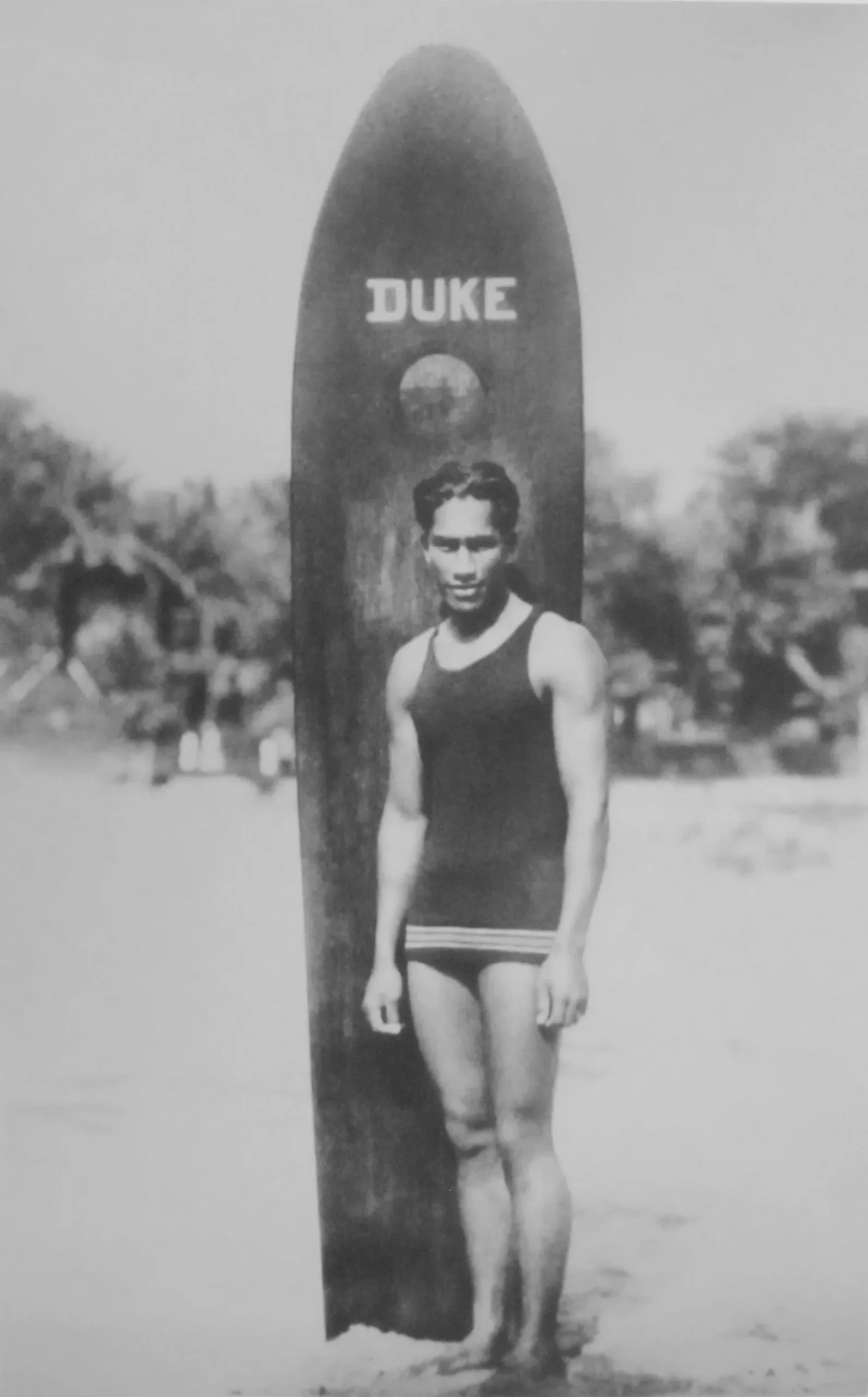
The beach boys who taught visitors in front of the hotels became a Waikīkī institution, and today’s stands still trade on that history. Waikiki Beach Services says it has worked this beachfront since 1955, Aloha Beach Services since 1959, and Star Beachboys gives 1972 as its start.
The Surf Schools, One by One
All eight have a stand on the sand or a shop in Waikīkī. Prices are per person, and a board is included unless stated.
Waikiki Beach Services
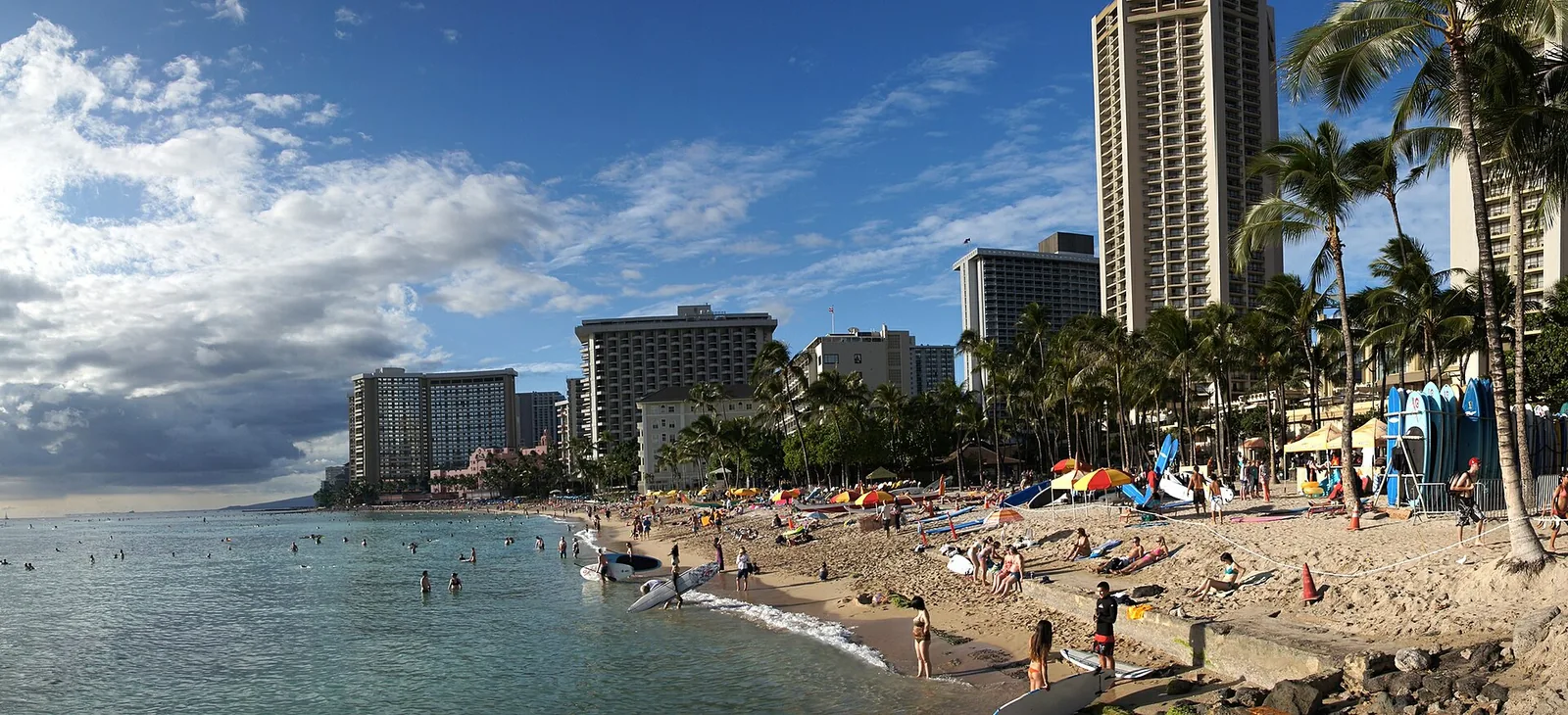
The Sheraton Waikiki stand publishes five set lesson times a day, at 08:30, 10:00, 11:30, 13:00 and 14:30, and its price falls as the group grows: $150 one-to-one, $130 each for two, $115 each for three and $95 each in a group of four. Lessons last 75 minutes, a 15-minute briefing on the sand and about an hour in the water, and meet on the stretch in front of the Sheraton known as Gray’s Beach, or Kawehewehe. A board and rash guard are included, and each booking adds a $1 state Ocean Stewardship Fee per person.
The rules are strict, which is no bad thing. Everyone must be able to swim, children under 12 can only book one-to-one, under-18s need an adult on the beach, and the school asks anyone pregnant or with a neck or back injury not to take part. Photos are sold afterwards but aren’t guaranteed. The company’s Royal Hawaiian stand also runs 30-minute outrigger canoe rides at $48 a rider for ages five and up.
Cost: $95–$150 per person, plus a $1 fee · Hours: lessons at 08:30, 10:00, 11:30, 13:00 and 14:30 · Book: a day or two ahead · Allow: 2 hours with check-in
Faith Surf School
Founded in 2000 by Tony Moniz, according to the school, Faith teaches from the beach in front of the Outrigger Waikiki’s pool. Lessons run 80 minutes. A group lesson costs $95 with four or five students per instructor and is for ages 13 and up; semi-private costs $125 each for three people or $140 each for two, and private is $190. The website gives 11 as the youngest age it takes, so call about semi-private lessons for children under 13.
Two practical points. The board and leash are included, but its website says rash guards aren’t, so bring your own long-sleeved top. And check in 15 minutes early. Faith also rents boards from $20 an hour, sells a photo CD after lessons, and runs 20-minute outrigger canoe surfing trips at $35 a paddler, ages eight and up, with two waves each.
Cost: $95–$190 per person · Book: online; check in 15 minutes early · Allow: 2 hours
Hans Hedemann Surf School
At the Diamond Head end, Hans Hedemann’s school works from a shop in the Queen Kapiʻolani Hotel at 150 Kapahulu Avenue, next to the Honolulu Zoo. Group lessons cost $100 for ages 14 and up, semi-private $150 each for two or more, and private $180. Reef shoes come with the board and rash guard, and so do a land lesson and a safety briefing.
For a nervous swimmer this is the obvious choice: swimming is preferred rather than required, and the school will provide a life vest and keep you in shallow water if you ask. It says it has been teaching for more than 30 years. Ask about lesson length and group size when you book, on 808-924-7778.
Cost: $100–$180 per person · Book: online or by phone · Bus: check thebus.org for routes to Kapahulu Avenue · Allow: 2–3 hours
Big Wave Dave Surf Co.
Big Wave Dave’s lessons are taught by its sister company, Pacific Island Beach Boys, which says it holds a state permit and a City concession contract, and runs three beach concessions in Waikīkī. The group lesson lasts 1.5 hours with three to five students per instructor and costs $129. Semi-private is $149 and private $179. Children aged 4 to 8 must book a private lesson; groups start at age 9.
The details are good. Lockers at the shop, at 226 Lewers Street, are free, rash guards rent for $5, and lessons go ahead rain or shine. Cancel or reschedule at least 48 hours ahead for a refund, and if you want photos of a group lesson, ask 48 hours ahead too. The shop rents soft-tops and hard boards by the hour, with a two-hour minimum, or by the day until 16:30.
Cost: $129–$179 per person · Book: online; 48 hours’ notice to cancel or add photos · Allow: 2.5 hours
Ty Gurney Surf School
Ty Gurney doesn’t do big groups. Its semi-private lessons never put more than two students with an instructor, and they cost $110 each for an hour or $155 for two hours; private lessons cost $135 for an hour or $190 for two. Children aged 14 and under are taught privately. The board and rash guard are included, and nearly all lessons take place at Pops.
Check in at the shop 15 minutes before your lesson; the beach is a 30-second walk away. If you want to come away able to catch a wave on your own, the two-hour option is the one to pick. For questions, call (808) 271-9557.
Cost: $110–$190 per person · Book: online; check in 15 minutes early · Allow: 1.5–2.5 hours
Star Beachboys
The cheapest group lesson on any price list in this guide belongs to Star Beachboys: $75 for 75 minutes, with semi-private at $100 and private at $125, each with a board and rash guard. It gives its address as 2450 Koa Avenue and says it was established in Waikīkī in 1972, and it opens daily from 06:30 to 18:30. Its website says lessons suit all ages; confirm the details, above all the group size, by phone on (808) 699-3750 before you book.
Star also rents surfboards at $15 for two hours or $25 for a half day of five hours, and stand-up paddleboards at $25 for two hours, the lowest rental prices on this list.
Cost: lessons $75–$125 per person; rentals from $15 · Hours: 06:30–18:30 daily · Book: phone ahead · Allow: 2 hours
Gone Surfing Hawaii
Gone Surfing’s shop is between the Outrigger Reef and the Halekulani, at the ʻEwa end of the hotel strip, and it teaches at Canoes and Queens. Check its website or call for lesson prices. Its FAQ gives age 5 as the minimum for private lessons and 8 for semi-private and group lessons.
It’s also a busy rental stand. Off-peak, a board costs $25 for an hour, $35 for two, $45 for three or $60 for the day until 17:00; at peak times those become $30, $40, $50 and $70, and the school’s 2026 peak periods include 25 to 29 November and 18 December to 5 January.
Cost: rentals from $25 an hour off-peak; check the website for lessons · Book: online or by phone · Allow: 2 hours
Aloha Beach Services
Aloha Beach Services works the sand at the Moana Surfrider, on the Diamond Head side of Duke’s. It says it has been on the beach since 1959 and calls itself the longest-running beach service business in Waikīkī. Ask for current prices at the stand or call ahead; it’s the easiest walk-up option if you decide on the day.
Cost: ask at the stand · Book: walk up, or call ahead · Allow: 2 hours
Group, Semi-Private or Private?
At the schools in this guide, group lessons run from $75 to $129 a person, semi-private from $100 to $155 and private from $125 to $190. The extra money buys attention. In a group of four or five, the instructor splits the time between students; in a private lesson every wave is coached.
- Group suits confident swimmers in their teens or older who want to try it once. Pick a school with a small cap: Big Wave Dave’s is three to five, Faith’s four or five, and Waikiki Beach Services’ four.
- Semi-private suits couples and friends, and it’s the best value for actually learning. Ty Gurney never puts more than two students with an instructor.
- Private is compulsory for younger children at several schools (under 12 at Waikiki Beach Services, 14 and under at Ty Gurney, 4 to 8 at Big Wave Dave) and worth paying for if you’re nervous in the water.
Couples on a Hawaiʻi honeymoon tend to book semi-private: you learn together, and you get photos of each other standing up.
What Happens in a Lesson
Arrive 15 minutes early, as Faith and Ty Gurney ask, with sunscreen already on. The lesson starts on the sand: how to lie on the board, where to put your hands, and the pop-up, the jump from lying to standing in one movement, practised until it stops feeling silly. Waikiki Beach Services spends about 15 minutes on this before anyone gets wet.
Then you paddle out with the instructor beside you. On a beginner wave the routine is much the same everywhere: you lie on the board facing the beach, the instructor watches the sets, turns your board, pushes as a wave arrives and shouts when to stand. Plenty of first-timers get to their feet within the hour; staying up for a whole ride usually takes a few more sessions.
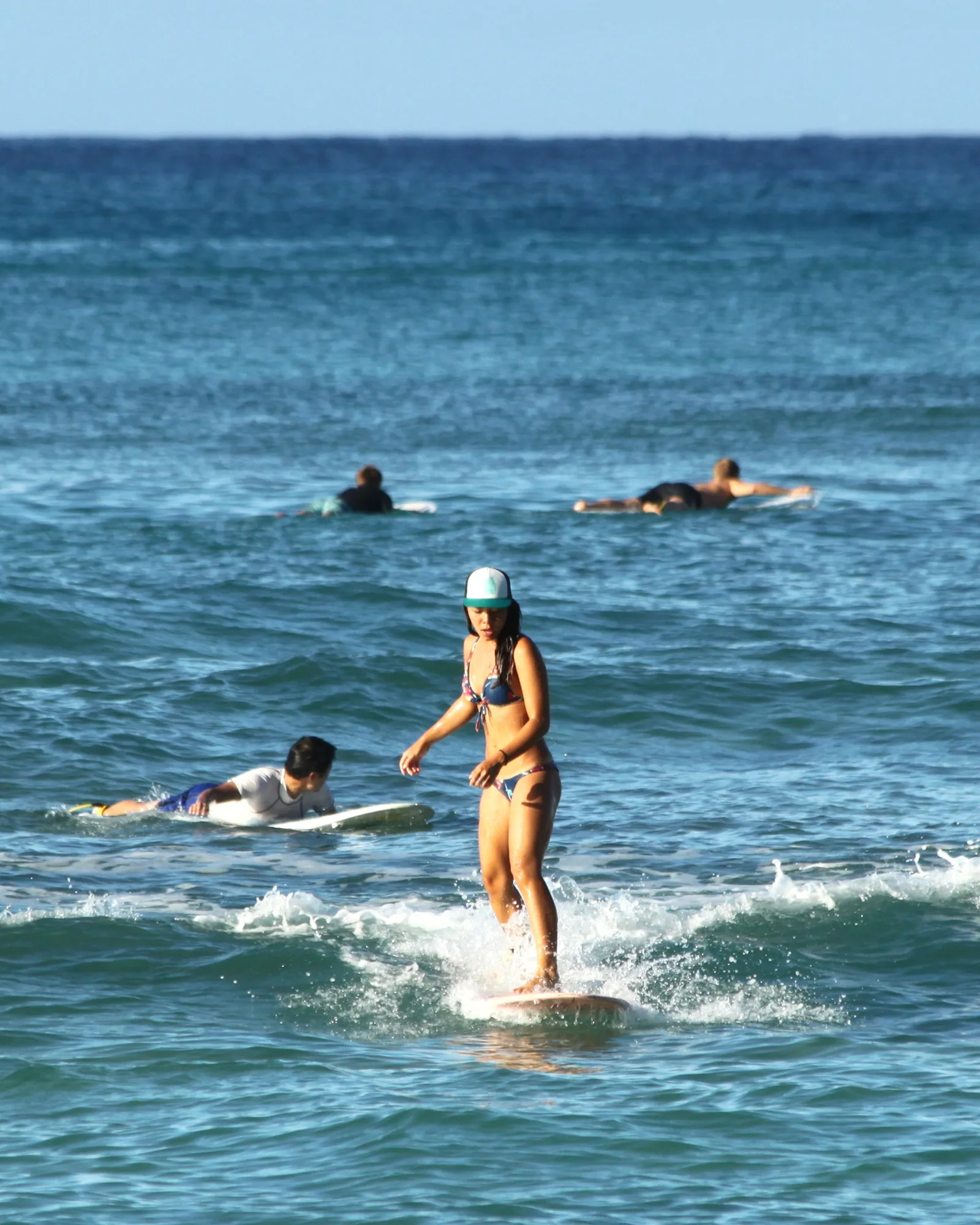
Paddling back out after each wave is the hard part. It’s a real shoulder workout, which is why two hours can be more than a beginner wants. Expect to fall a lot; fall flat, away from your board, and never dive head first, because the reef is shallow. Afterwards, rinse any reef scrape thoroughly with fresh water.
What to bring: swimwear that stays put, a rash guard if your school doesn’t supply one (Faith’s website says it doesn’t), reef-safe sunscreen, water, and a card for photos. Leave valuables at the hotel unless your school has lockers, as Big Wave Dave’s shop does.
When to Book Waikiki Surf Lessons
Mornings are usually best: the water is often glassier before the trade winds pick up, and the sand hasn’t heated up. Book a day or two ahead in holiday weeks. Gone Surfing’s price list treats 25 to 29 November and 18 December to 5 January as peak periods, a fair guide to when the beach is fullest.
Season matters more than most visitors expect. Hawaiʻi’s state ocean safety service describes summer, May to October, as the season when larger swells can reach south shores such as Waikīkī, and winter, November to April, as the season of big surf on north-facing shores. In practice, a winter lesson in Waikīkī usually means smaller, gentler waves. Our guide to the best time to visit Hawaiʻi covers the rest of the year’s weather.
Two more things to watch. Box jellyfish reach south-facing beaches about 8 to 10 days after a full moon; the Waikīkī Aquarium’s calendar marks 2 to 4 December 2026 as high-probability days; check it before you book a lesson in the weeks after. And after heavy rain, the Department of Health posts brown-water advisories even when the rain fell only in the mountains: stay out of the water during and straight after heavy rain, and keep away from stream mouths, drains and canals.
Renting a Board After Your Lesson
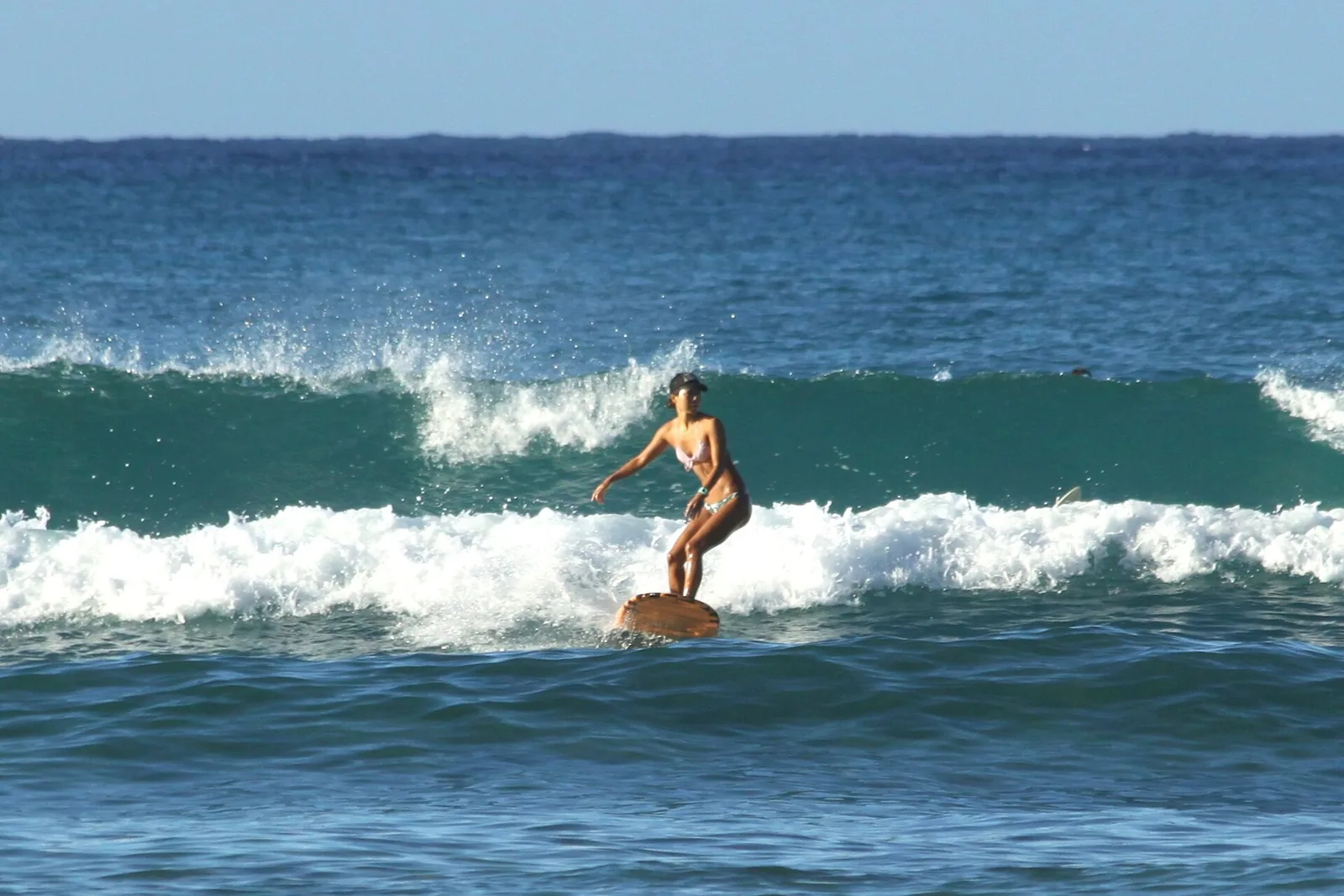
Once you can stand, renting is the cheap way to keep going. On the price lists in this guide, Star Beachboys charges $15 for two hours or $25 for five; Faith charges $20 for an hour, $30 for two, $35 for three and $45 for four; and Gone Surfing charges $25 an hour off-peak or $30 at peak times, with day rates of $60 and $70. Big Wave Dave rents by the hour with a two-hour minimum. A surfboard rental is also one of the options on the Go City Oʻahu pass, which our Go Oʻahu card review weighs up.
Ask for a soft-top longboard, the big foam board you learned on; Faith rents both soft-tops and fibreglass, and the soft-top is far more forgiving. Stay on the breaks your instructor used, surf near a lifeguard tower, never surf alone, and paddle wide of anyone riding a wave. If the sets look bigger than they did in your lesson, sit it out.
Children, Older Beginners and Weak Swimmers
Age rules vary more than prices. Waikiki Beach Services teaches under-12s one-to-one only; Faith starts at 11 and keeps groups to 13 and up; Hans Hedemann’s groups are 14 and up; Big Wave Dave takes children from 4 in private lessons and from 9 in groups; Ty Gurney teaches 14 and under privately; Gone Surfing gives 5 for private and 8 for group lessons; and Star Beachboys says all ages. Waikiki Beach Services requires an adult on the beach for under-18s, a sensible rule anywhere. Our guide to Hawaiʻi with kids has more for families.
Older beginners do well on Waikīkī’s soft waves, and a private or semi-private lesson lets the instructor go at your pace; an hour is plenty for shoulders that aren’t used to paddling. If you can’t swim well, say so. Waikiki Beach Services requires swimming; Hans Hedemann prefers it but will put you in a life vest in shallow water on request. Anyone pregnant or with a neck or back injury should talk to the school first, and Waikiki Beach Services asks them not to take part.
Etiquette in the Line-Up
Waikīkī’s regulars are patient with beginners in the lesson zone and much less so with a rental surfer who drifts onto their wave further out. A few rules keep everyone friendly:
- The surfer closest to where the wave is breaking has the right of way. Don’t take off in front of someone already riding it; that’s “dropping in”.
- Hold on to your board. A loose longboard in a crowd hurts people, which is what the leash is for.
- Paddle back out wide of the breaking waves, never across the path of someone riding.
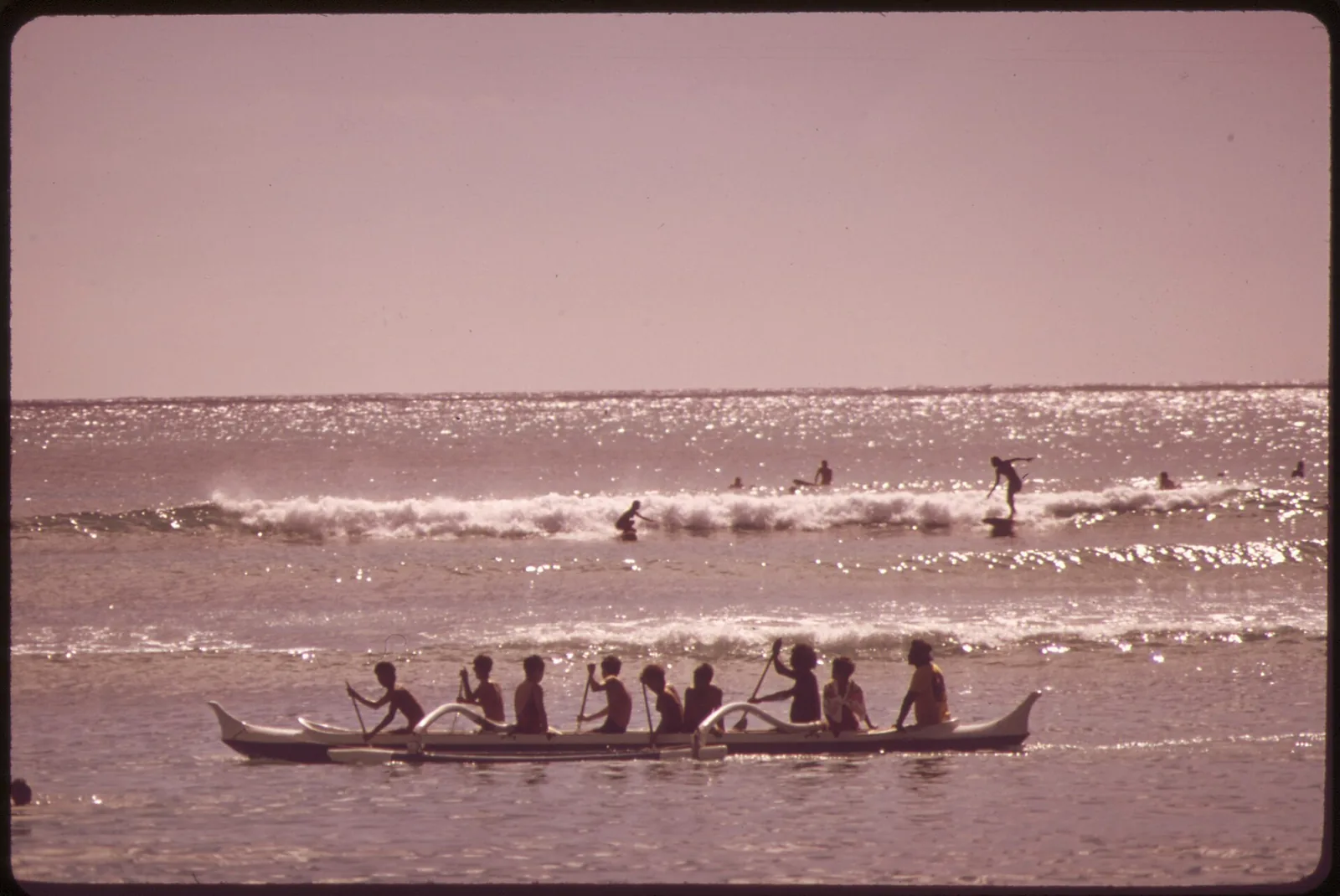
- Give outrigger canoes plenty of room. They come in fast and can’t turn quickly.
- Don’t paddle into the middle of a lesson; instructors keep their groups on the inside.
- A smile and a shaka go further than skill. Say sorry if you get in someone’s way.
Staying Safe in the Water
According to the state Department of Health, ocean drowning is the leading cause of fatal injuries for visitors to Hawaiʻi: on average one visitor drowns every week, and visitors make up a slight majority of ocean drownings. A lesson with a qualified instructor is a sensible way into the water, but the usual rules still apply.
- Lifeguards: the state lists Waikīkī towers as staffed from 08:00 to 18:30, and tower 2A stands between the Moana Surfrider and Duke’s. The city’s tower list starts there, with no tower listed on the beaches to its west, so after your lesson, surf where you can see a staffed one.
- Reef and sun: fall flat, wear a rash guard, and reapply sunscreen; the reflection off the water doubles the dose.
- Turtles: green sea turtles often surface among surfers. Keep at least 10 feet away, even when one pops up beside you.
- Timing: the state’s shark-safety advice is to stay out of the water at dawn, at dusk and at night.
- Limits: if you’re tired, ride the next wave in on your belly. There’s no prize for staying out.
Where to Surf Next on Oʻahu
Most people need several sessions before they can paddle into waves on their own, and Waikīkī is the place to put them in: the same soft breaks, rentals on the sand and lifeguard towers along much of the beach. Don’t take your new skills to the North Shore in winter. The big-surf season there runs from November to April, and those waves are for experts; watch from the sand, as our North Shore guide explains. For gentle swimming beaches around the island, see our pick of the best beaches on Oʻahu.
If a lesson leaves you wanting more time in the water, our guide to snorkeling on Oʻahu and other water activities covers everything from Hanauma Bay to catamaran sails, our Oʻahu bucket list has the big-ticket experiences, our guide to Oʻahu tours and attractions has the rest of the paid options, and our list of things to do in Waikīkī fills the rest of the day. For the beach itself, start with our guide to Waikīkī Beach.
Surfing builds an appetite. Our guide to the best restaurants in Waikīkī sorts breakfast and lunch spots by budget, from musubi counters to beachfront tables, and our guide to Waikīkī nightlife covers the evening.
Stay on the beach after a Friday lesson and you can catch the Waikīkī fireworks at the Hilton Hawaiian Village, listed for 19:45.
Frequently Asked Questions
How much do Waikiki surf lessons cost?
On the schools’ own 2026 price lists, group lessons cost $75 to $129 a person, semi-private lessons $100 to $155 and private lessons $125 to $190, for between an hour and two hours in the water. Waikiki Beach Services adds a $1 state Ocean Stewardship Fee, and photos cost extra where offered. Prices change, so check the school’s site when you book.
Do you need to be able to swim to take a surf lesson?
At most schools, yes. Waikiki Beach Services requires every student to swim. Hans Hedemann Surf School prefers it but doesn’t require it, and will provide a life vest and keep you in shallow water on request. Whatever the rules, tell your instructor honestly how confident you are in the water before you paddle out.
How old do children have to be for a surf lesson in Waikīkī?
It depends on the school. Big Wave Dave takes children from 4 in private lessons and Gone Surfing from 5, while Star Beachboys says all ages. Group lessons usually start older: 8 at Gone Surfing, 9 at Big Wave Dave, 13 at Faith and 14 at Hans Hedemann. Waikiki Beach Services teaches under-12s one-to-one only.
Which Waikīkī surf school is best for beginners?
Beginners are welcome at most of these. Star Beachboys has the cheapest group lesson at $75, Waikiki Beach Services set lesson times and clear rules, Hans Hedemann a life vest and shallow water for nervous swimmers on request, and Ty Gurney the smallest groups, never more than two per instructor. Choose by budget, your swimming and where you’re staying on the beach.
Is one lesson enough to learn to surf?
One lesson is enough to stand up on a gentle wave with help, and plenty of people do. Catching waves on your own, turning and reading the sets takes more time. A sensible plan is a lesson early in the trip, a couple of rental sessions on the same break, then a second lesson to fix what isn’t working.
What should I bring to a surf lesson?
Swimwear that stays put, reef-safe sunscreen, water and a towel. Bring a long-sleeved rash guard if your school doesn’t supply one; Faith’s website says it doesn’t, and Big Wave Dave rents them for $5. Leave valuables at the hotel unless the school has lockers, and arrive 15 minutes early.
Is summer or winter better for surf lessons in Waikīkī?
Winter, November to April, usually brings smaller, gentler waves to Waikīkī, which suits a first lesson. Summer, May to October, is when larger south swells can arrive, making the breaks busier and more powerful. Lessons run all year either way, and mornings are usually calmest in any season.
Photo Credits
- Longboarder at Waikīkī (featured): Salty Lens (Jonny), CC BY 4.0
- Duke Kahanamoku with his surfboard: Unknown author, public domain
- Waikīkī beach stand: Bernard Spragg. NZ from Christchurch, New Zealand, CC0
- Beginner standing up: Prayitno, CC BY 2.0
- Riding a small wave: Prayitno, CC BY 2.0
- Outrigger canoes at Waikīkī: Charles O’Rear, public domain