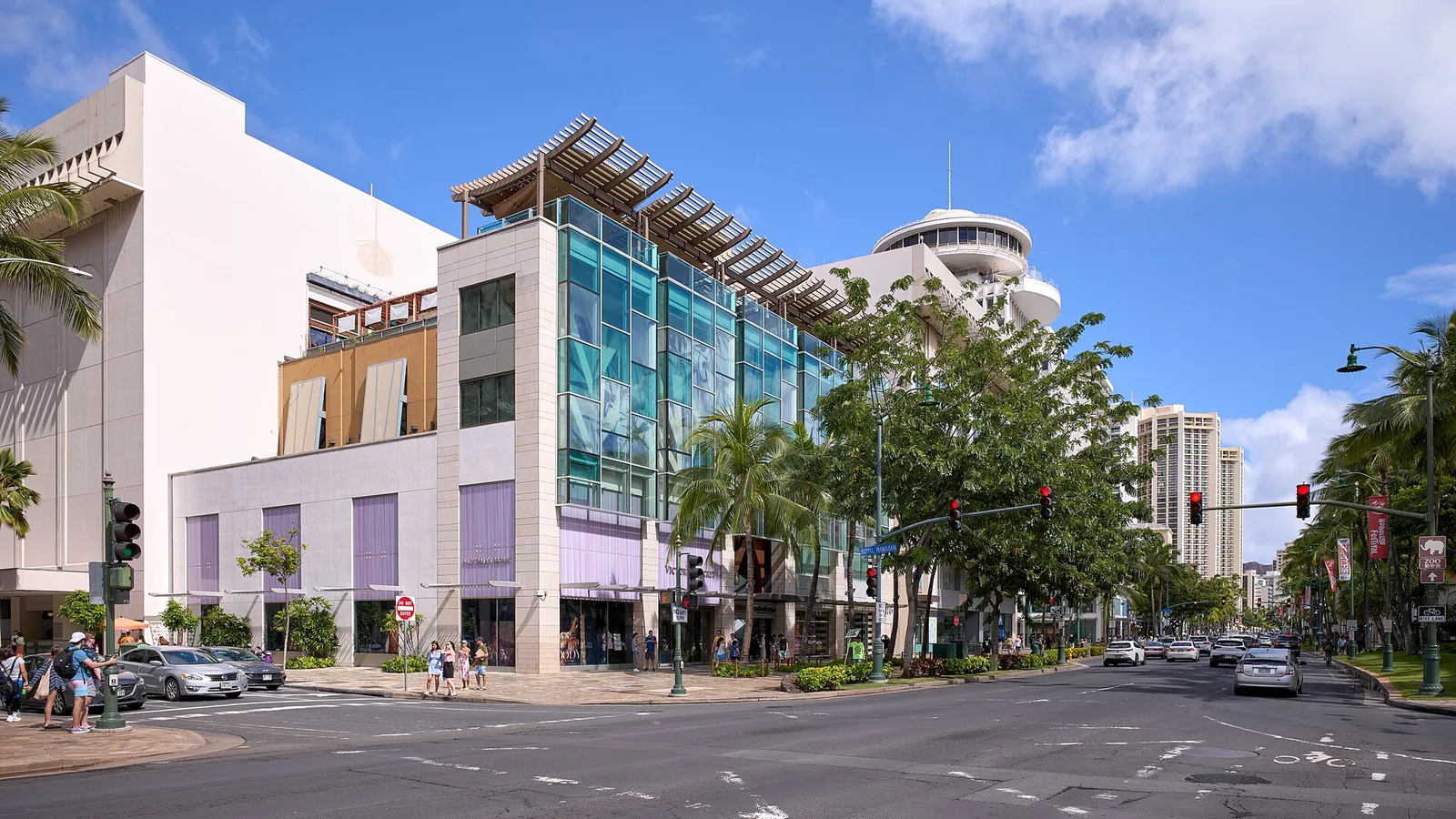
Stand on the corner of Kalākaua and Kapahulu at sunset and the whole of Waikīkī is behind you in one line: hotel towers, a mall built around a banyan tree, a white 1901 hotel, a bronze surfer draped in lei, and at the far end a bronze king in a ring of flowers. Kalakaua Avenue is Waikīkī’s main street and the spine of every visit, and most people walk it without noticing half of what’s on it. This guide walks it from the ʻEwa end to Diamond Head, stop by stop, with what each place is, when it opens, what it costs, and how to get around when your feet give out.
The avenue runs parallel to the beach for its length through Waikīkī, so the sand is never more than a few minutes away. For the beach itself, see our guide to the Waikīkī beach sections; for everything else in the neighbourhood, our Waikīkī guide.
Kalakaua Avenue at a Glance
The main stops in walking order, ʻEwa to Diamond Head. Hours come from each place’s own website in November 2026; check before you go.
| Stop | What it is | Hours | Cost |
|---|---|---|---|
| King Kalākaua statue | Bronze statue of the king, a gift from Hawaiʻi’s Japanese-American community | Open-air | Free |
| U.S. Army Museum of Hawaiʻi | Military history museum at Fort DeRussy | Tuesday–Saturday 10:00–17:00 | Free |
| Royal Hawaiian Center | Open-air shopping centre with free cultural classes | Daily 10:00–21:00 | Free to browse |
| International Market Place | Shopping centre built around a banyan tree | Check the centre’s site | Free to browse |
| Moana Surfrider | Waikīkī’s first major hotel, opened 1901 | Beach Bar 11:00–22:30 | Free to look |
| Duke Kahanamoku statue | Bronze of the surfing legend, installed 1990 | Open-air; Kūhiō Beach Park closes midnight–05:00 | Free |
| Kūhiō Beach Hula Show | Hula on the sand beside the avenue | Saturdays 18:30–19:30 | Free |
| Honolulu Zoo | City zoo at the Kapahulu Avenue corner | Daily 10:00–16:00 | $21 adults, $13 ages 3–12 |
| Kapiʻolani Park | Park dedicated in 1877 | Closed midnight–05:00 | Free |
| Waikīkī Aquarium | Aquarium at 2777 Kalākaua Avenue | Check the aquarium’s site | Check the aquarium’s site |
The King Behind Kalakaua Avenue
David Kalākaua reigned as king of Hawaiʻi from 12 February 1874 to his death on 20 January 1891. He’s remembered as the Merrie Monarch, a name that came from his convivial personality, his love of music and his singing and ʻukulele playing, and his reign saw a revival of hula and other Hawaiian arts. Hilo’s great hula competition, the Merrie Monarch Festival, is named after him.
The road that carries his name was once called Waikiki Road, and it was renamed in the king’s honour in the early 1900s. His connection to this end of Honolulu goes deeper. Kapiʻolani Park, at the Diamond Head end of the avenue, was dedicated on 11 June 1877 and named after his queen, on land the king had made available the year before. Our Hawaiian culture and history guide tells the story of the kingdom he ruled and how it ended two years after his death.
Walking Kalakaua Avenue, ʻEwa to Diamond Head
Walk it in the morning or late afternoon; at midday the pavement throws back the heat and the shade is patchy. Allow half a day to do it properly with stops, or an evening if you start at sunset and end at the hula show or a beachfront bar.
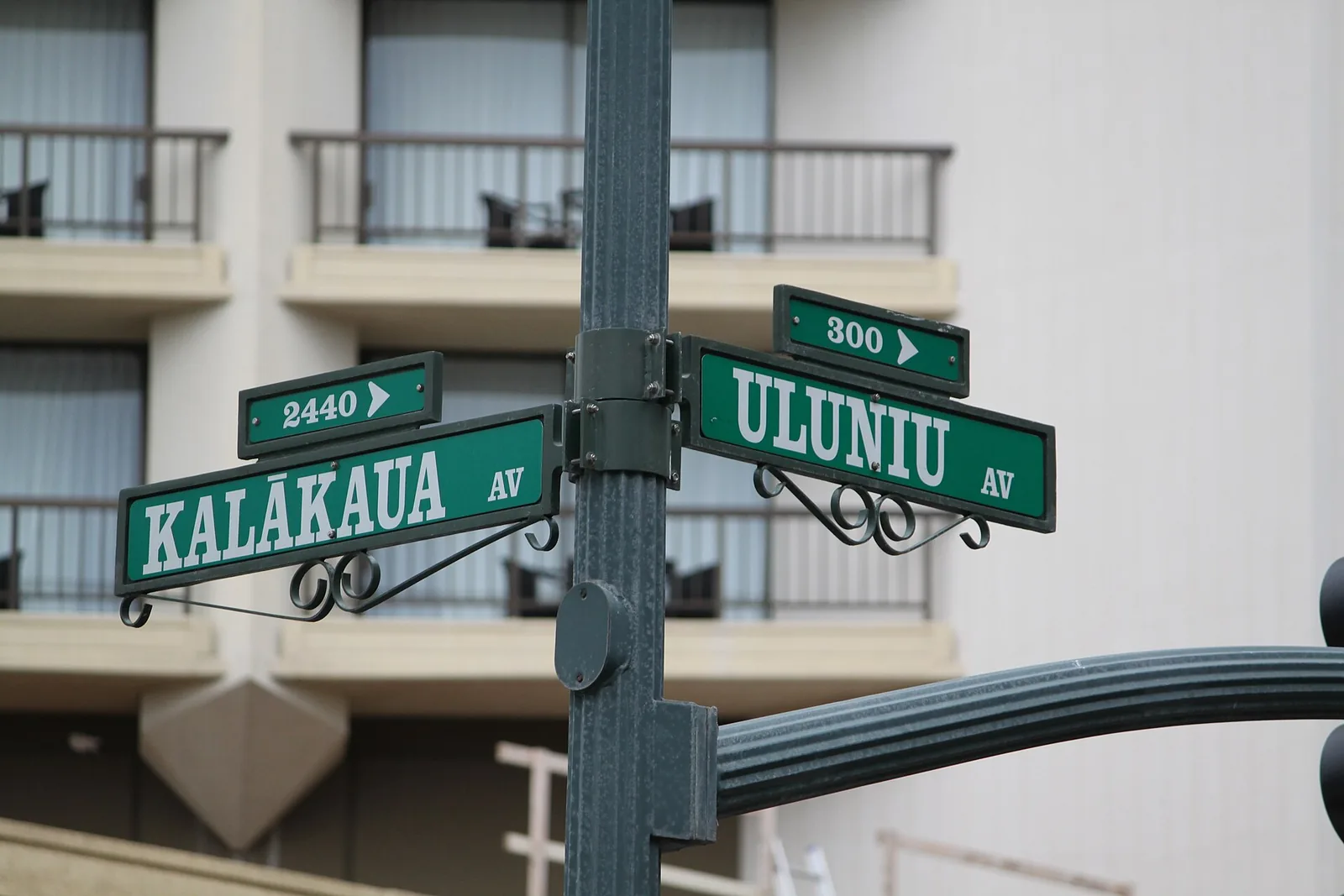
The avenue actually begins well inland, and by the time it reaches Waikīkī it has already passed the Hawaiʻi Convention Center at 1801 Kalākaua and crossed the Ala Wai Canal, dug between 1921 and 1928 to drain the wetland that Waikīkī used to be. Most visitors join it at the canal bridge or at the king’s statue just beyond, and that’s where this walk starts. Street numbers climb as you head towards Diamond Head: the Moana Surfrider is at 2365, the Waikīkī police station at 2401 and the aquarium at 2777, which makes addresses easy to place.
1. The King Kalākaua statue
Waikīkī starts with its namesake. At the ʻEwa end of the district, a bronze Kalākaua stands in a plaza ringed with flower beds, and it was donated by the Japanese-American community to mark 100 years since the first Japanese contract labourers arrived in Hawaiʻi in 1885, an immigration that followed the king’s visit to Japan. It’s a good place to get your bearings: the hotels begin here, and the avenue runs straight on towards Diamond Head.
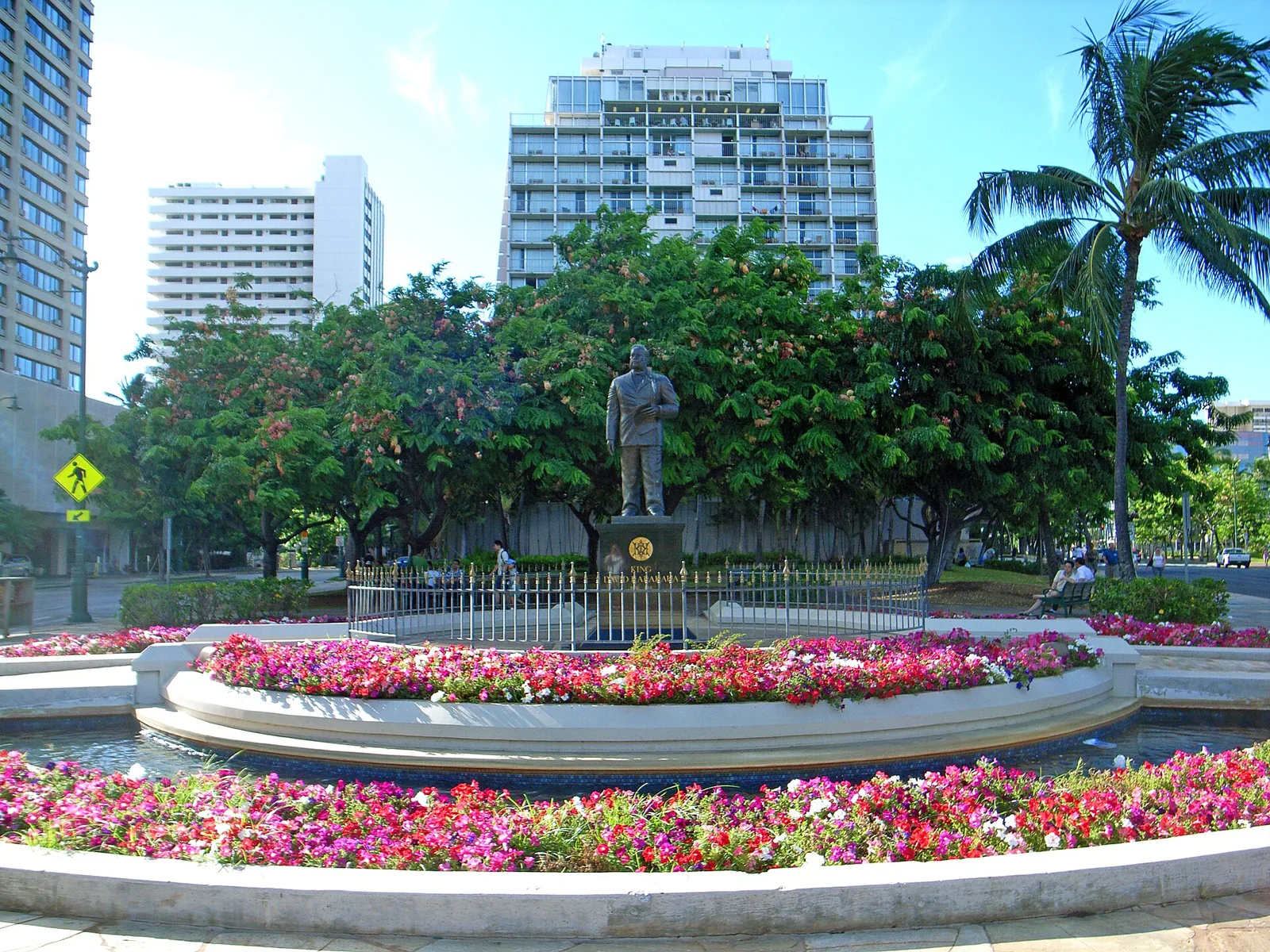
Cost: free · Hours: open-air · Allow: 10 minutes
2. Fort DeRussy and the U.S. Army Museum
A short detour makai, towards the sea, takes you to the lawns of Fort DeRussy and the U.S. Army Museum of Hawaiʻi at 2131 Kālia Road. Entry is free from Tuesday to Saturday, 10:00 to 17:00; it’s closed on Sundays, Mondays and federal holidays. On a hot afternoon it’s as good for the air conditioning as for the exhibits, and the beach beyond the lawn is one of the roomiest in Waikīkī’s hotel stretch.
Cost: free · Hours: Tuesday–Saturday 10:00–17:00 · Allow: 1 hour
3. Waikiki Beach Walk and Lewers Street
Lewers Street and the Beach Walk development between Kalākaua and the sea are where Waikīkī does cheap, good food. Musubi Café Iyasume, at 227 Lewers Street, sells musubi from 07:00 to 21:00 daily, and Liliha Bakery’s outlet on the second floor of Waikiki Beach Walk, at 226 Lewers, opens from 07:00 to 22:00. Our guide to the best restaurants in Waikīkī has the full list.
Cost: musubi and pastries at counter prices · Hours: Iyasume 07:00–21:00, Liliha 07:00–22:00 · Allow: 30 minutes
4. The Royal Hawaiian Center
The open-air shopping centre at 2201 Kalākaua Avenue opens daily from 10:00 to 21:00, and it’s more interesting than its shop list suggests. Free cultural classes run on most days through December 2026, in the Royal Grove and at Helumoa Hale on the second level of Building C, with late-morning and early-evening sessions; check the centre’s events page for the day’s class. On 29 November and 20 December 2026 it also hosts free stargazing evenings, from 18:30 to 21:00, at Ka Lewa Lanai on the fourth level of Building A.
Behind the centre, the pink Royal Hawaiian hotel, built in 1927, sits on the beach; walk through to its Mai Tai Bar, open daily from 10:30 to 23:00, for the classic view down the sand to Diamond Head. Rock-A-Hula’s 750-seat theatre is on the fourth floor of the centre’s Building B. On a rainy day the centre is a good refuge; our rainy-day guide has more ideas.
Cost: free to browse; classes free · Hours: daily 10:00–21:00 · Bus: Routes 2, 8 and 13 serve central Waikīkī · Allow: 1–2 hours
5. International Market Place
Across the avenue at 2330 Kalākaua, International Market Place first opened in 1956 as a shopping and entertainment centre, closed for a complete rebuild in 2013 and reopened on 25 August 2016. The rebuilt centre keeps its great banyan tree at the heart of the courtyard; the original centre was the creation of restaurateur Donn Beach, who kept a treehouse in its branches. Restaurants fill the upper floors, including Liliha Bakery on the third floor (07:00 to 22:00 daily) and chef Roy Yamaguchi’s Eating House 1849. Check the centre’s own site for its opening hours.
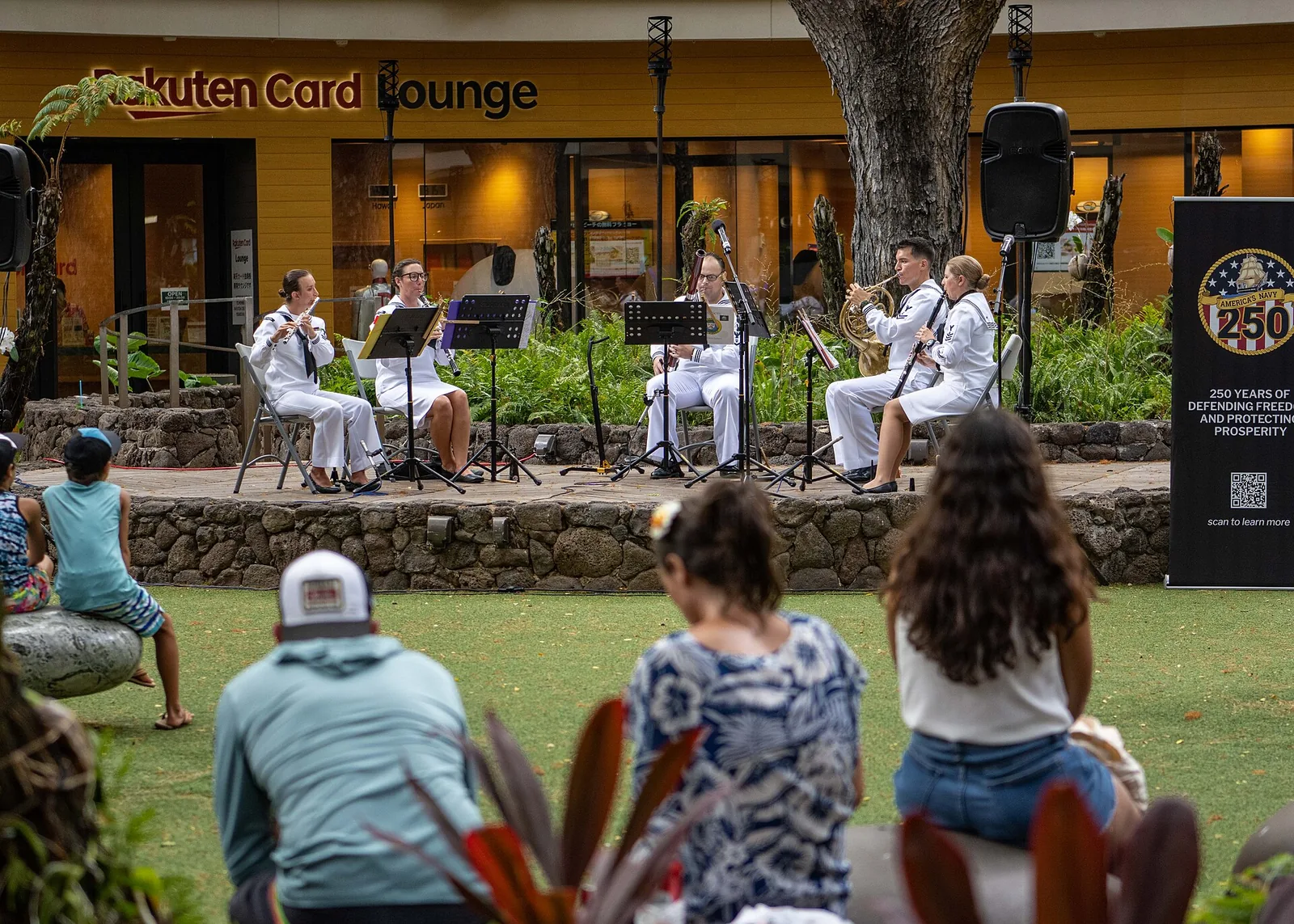
Cost: free to browse · Hours: check the centre’s site · Allow: 1 hour
6. The Moana Surfrider
The white colonial front of the Moana Surfrider has faced the avenue since 11 March 1901, when it opened as Waikīkī’s first major hotel. Walk through the lobby to the courtyard, where a banyan planted in 1904 now stands about 75 feet high and 150 feet across, and out to the beach. The Beach Bar, steps from the sand, opens daily from 11:00 to 22:30, and the lobby wine bar, Vintage 1901, from 17:30 to 22:00 except on Mondays and Tuesdays.
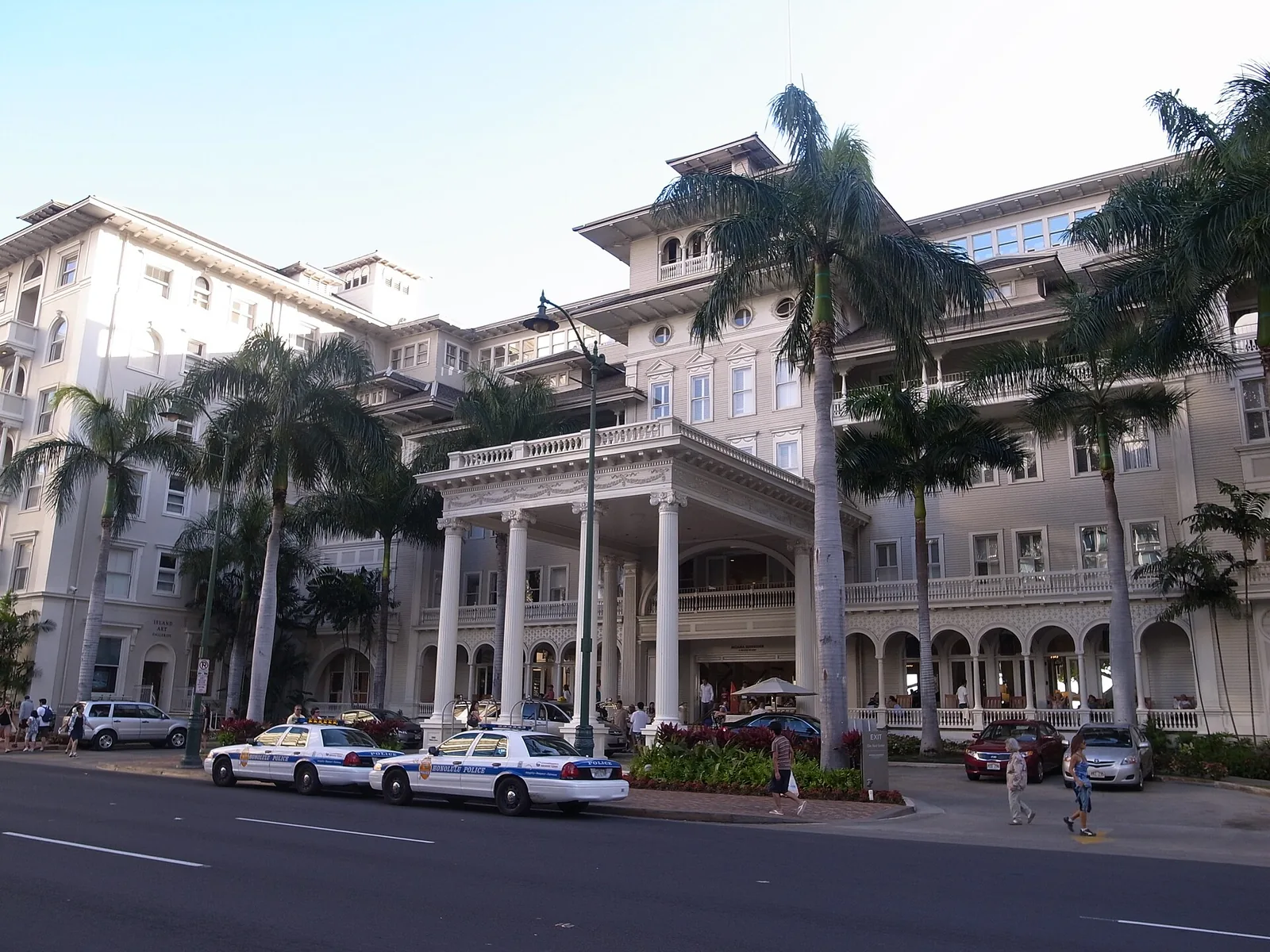
Cost: free to look · Hours: Beach Bar 11:00–22:30 · Allow: 30 minutes
7. The Duke Kahanamoku statue and Kūhiō Beach
Where the hotels on the makai side give way to open beach, the avenue becomes Waikīkī’s front porch. Gordon Fisher’s bronze of Duke Kahanamoku, the Olympic swimmer who helped carry surfing to the world, has stood on Kūhiō Beach since 1990 and is rarely without fresh lei. Beside it, the Kapaemahu stones sit behind their railing, and the Waikīkī police station is a few steps away. On most Saturdays the free Kūhiō Beach Hula Show takes over the hula mound by the statue from 18:30 to 19:30, weather permitting; check the show’s own page for cancelled dates. Our guide to Waikīkī surf lessons covers the beach stands that launch from this stretch.
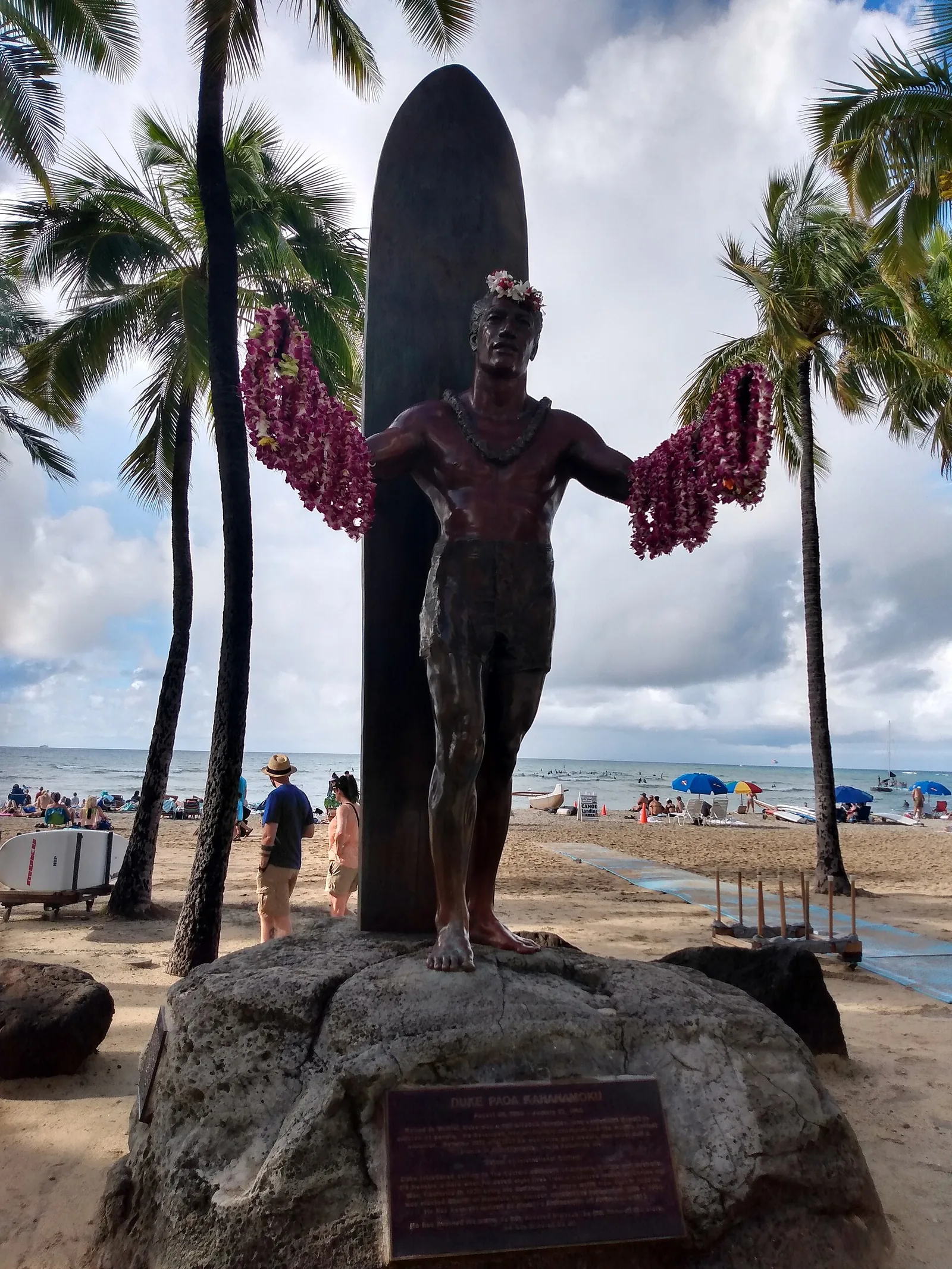
Cost: free · Hours: hula show Saturdays 18:30–19:30 · Bus: Routes 2 and 13 · Allow: 30 minutes, or 90 for the hula
8. St. Augustine by-the-Sea
On the mauka side of the avenue, opposite Kūhiō Beach, the soaring white A-frame front of St. Augustine by-the-Sea, Waikīkī’s Catholic church, is one of the most striking buildings on the strip. It’s a working parish, so visit quietly and check the parish’s own site for service times before you go inside.
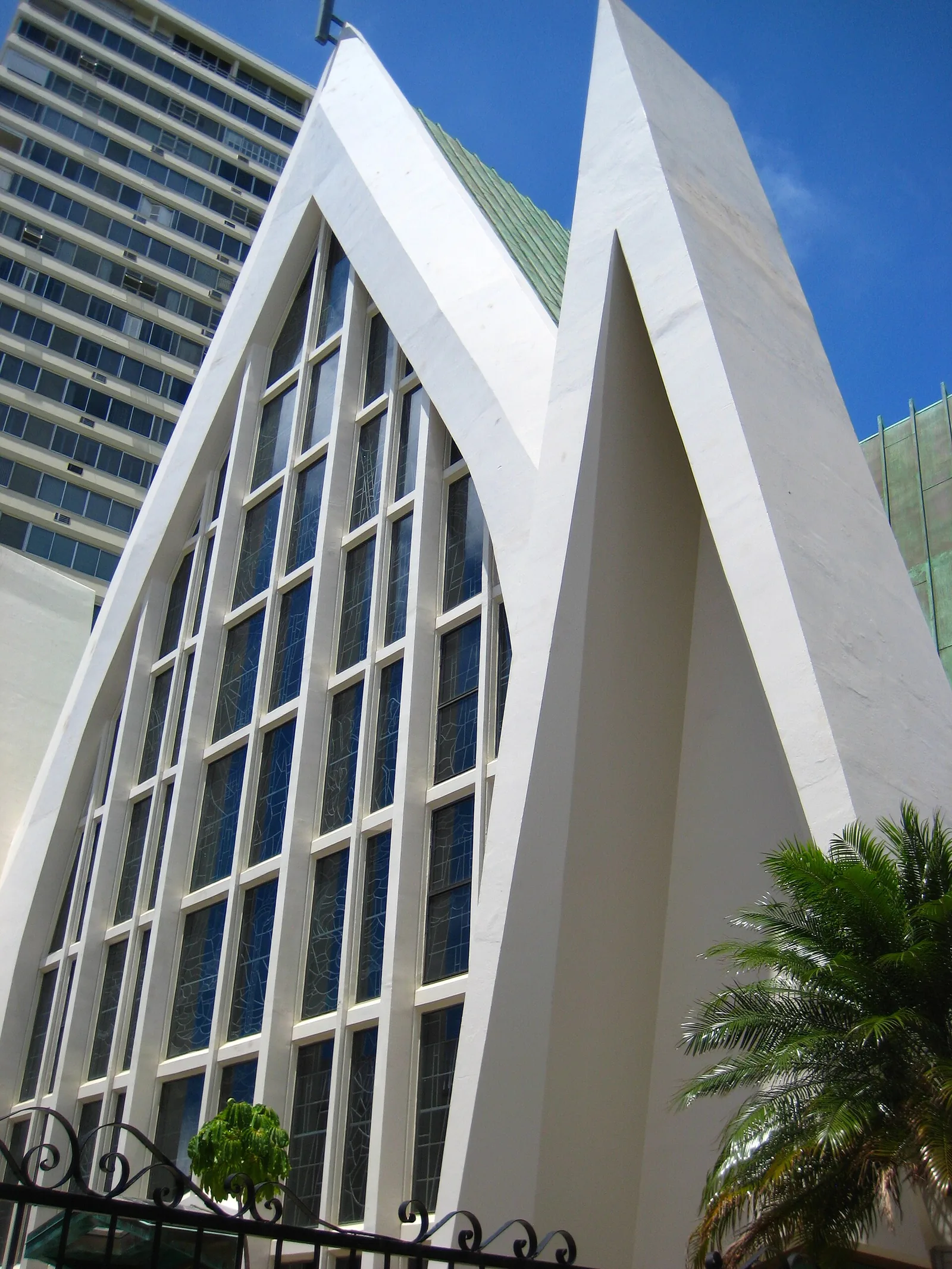
Cost: free · Allow: 15 minutes
9. The Kapahulu corner and the Honolulu Zoo
At the junction with Kapahulu Avenue, the hotels end and the parkland begins. The Honolulu Zoo is on the corner, open daily from 10:00 to 16:00 with last entry at 15:00; tickets cost $21 for adults and $13 for children aged 3 to 12, and its Kapahulu Avenue car park charges $1.50 an hour. Turn up Kapahulu for Leonard’s Bakery at number 933, open from 05:30 to 19:00, and Hula’s Bar & Lei Stand on the second floor of the Waikiki Grand Hotel at 134 Kapahulu, open from 11:00 to 02:00.
Cost: zoo $21 adults, $13 ages 3–12 · Hours: zoo 10:00–16:00 · Bus: Route 13 and the W Line on Kapahulu Avenue · Allow: 2–3 hours with the zoo
10. Kapiʻolani Park and the Waikīkī Shell
Beyond the zoo, Kapiʻolani Park spreads inland and along the shore, with old trees, wide lawns and a bronze statue of the queen it’s named after. The city closes the park from midnight to 05:00. The open-air Waikīkī Shell, in the park, hosts concerts through the year, with a couple of thousand fixed seats and room for about 6,000 on the lawn; check the Blaisdell Center’s events calendar for what’s on.
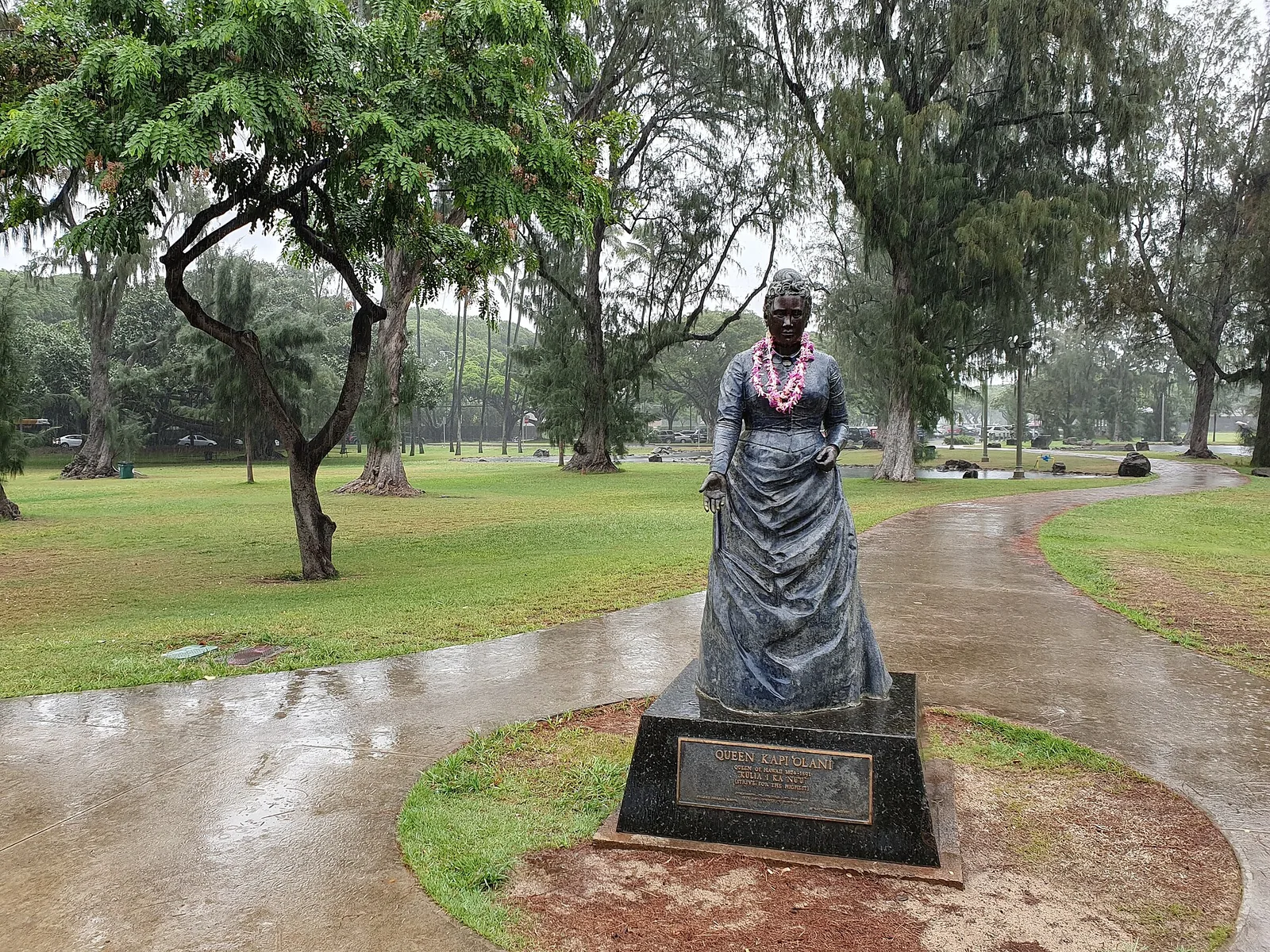
Cost: free · Hours: park closed 00:00–05:00 · Bus: Route 2 · Allow: as long as you like
11. The Waikīkī Aquarium, the Natatorium and Kaimana Beach
The last stretch of the avenue runs along the shore. The Waikīkī Aquarium, at 2777 Kalākaua, is open while it goes through renovations; check its own site for hours and prices before you go. Next door, the War Memorial Natatorium’s arch fronts a saltwater pool completed in 1927 and closed to the public since 1979. Beyond it, Kaimana Beach is where many Honolulu residents swim, and a good place to end the walk with your feet in the water. From here Route 2 continues round to Diamond Head, if you’re hiking the crater.
Cost: aquarium tickets on its site; beach free · Bus: Route 2 · Allow: 1–2 hours
Kalakaua Avenue Through the Day
The avenue changes character by the hour, and timing your walk around it makes a difference.
- Early morning: the coolest, quietest time. Leonard’s opens at 05:30 a short walk up Kapahulu, Eggs ‘n Things at 2464 Kalākaua opens at 06:00, and the Waikīkī Trolley’s Diamond Head Line leaves on its first run of the day at 06:38.
- Late morning: the Royal Hawaiian Center opens at 10:00 and its free classes begin, the zoo opens at 10:00 and the Army Museum at 10:00 from Tuesday to Saturday. The beach is filling up, so it’s a good time to be off it.
- Midday: the hottest and most crowded hours on the pavement. Duck into the shopping centres or the Army Museum, or take lunch on Lewers Street.
- Late afternoon: the best light of the day. The Royal Hawaiian’s Mai Tai Bar opens at 10:30 and the Moana’s Beach Bar at 11:00, and the walk back along the avenue at sunset, with the hotel fronts turning gold, is the classic Waikīkī stroll.
- Evening: on Saturdays, the Kūhiō Beach Hula Show from 18:30; on Fridays, the Hilton’s fireworks at 19:45, best seen from the ʻEwa end. Duke’s, on the beach side of the avenue, has live music until midnight.
Shopping on Kalakaua Avenue
The avenue’s shopping falls into three kinds. The block around the Royal Hawaiian Center is lined with international luxury brands, the same ones you’d find in any big city, so come for the window-shopping rather than the bargains. The two big centres, the Royal Hawaiian Center and International Market Place, mix those labels with Hawaiian-made goods, restaurants and free entertainment. And the side streets, Lewers above all, have the convenience stores, souvenir shops and food counters you’ll actually use.
If you want Hawaiʻi-made gifts rather than designer labels, look for products labelled “Made in Hawaii”, and remember that fresh fruit and flowers have to clear agricultural inspection before you fly home. Our guide to shopping in Honolulu covers the rules, the farmers’ markets and the best shops beyond the avenue.
Eating Along the Avenue
Kalākaua is lined with places to eat, and the honest advice is to choose carefully, because the busiest frontages charge for the location. A few reliable stops sit right on the avenue or a block off it. Eggs ‘n Things, at 2464 Kalākaua, serves breakfast from 06:00 to 14:00. Maui Brewing Co. Waikīkī, at the Waikiki Beachcomber by Outrigger at 2300 Kalākaua, pours its own beer with a full menu from 11:00 to 23:00. Duke’s, at the Outrigger Waikiki Beach Resort, is open from 07:00 to midnight with live music, and Lulu’s Waikīkī, at 2586 Kalākaua, is open every day from breakfast through late night.
The Royal Hawaiian Center gathers sit-down restaurants including Wolfgang’s Steakhouse, Restaurant Suntory, The Cheesecake Factory, P.F. Chang’s and Island Vintage Wine Bar, and International Market Place’s upper floors have Liliha Bakery and Eating House 1849. For cheap eats, walk one block inland to Marugame Udon at 2310 Kūhiō Avenue, open from 10:00 to 23:00 daily.
Kalākaua Avenue With Children
Children tend to love the avenue more than adults expect, as long as you break it up. Aim for the zoo in the morning, the Duke statue and the Kūhiō Beach pools at midday, and the hula show on a Saturday evening. The Waikīkī Trolley’s child fares are lower than adults’, $23 on the Ocean View Line and $15 on the Diamond Head Line for a day, and the Royal Hawaiian Center’s free stargazing evenings on 29 November and 20 December 2026 are a good, unusual night out. The zoo’s two-hour Twilight Tour costs $30 for adults and $25 for children aged 2 to 12; check the zoo’s site for the days it runs.
Parades and Events on the Avenue
Kalākaua is Honolulu’s parade route, and the city closes it for the big events.
- Waikīkī Holiday Parade: the 2026 parade was scheduled for the evening of Friday 27 November, along Kalākaua from Saratoga Road to Monsarrat Avenue and into Kapiʻolani Park; check the organiser’s site for the next date.
- Honolulu Marathon: Sunday 13 December 2026, with a 05:00 start; the Kalākaua Merrie Mile runs the day before, on 12 December, and the race expo is at the Hawaiʻi Convention Center at 1801 Kalākaua. The city’s 2026 events list shows roads on the course, including Kalākaua, closing from 02:30 and reopening at about 16:00 on race day; check honolulumarathon.org for the final closures before you plan a drive.
- Honolulu Festival: 5 to 7 March 2027, with a grand parade on its schedule; check the festival’s site for the parade day and route.
- Later in 2027: the Pan-Pacific Festival, the King Kamehameha Day floral parade, the Aloha Festivals and Duke’s OceanFest all use the avenue or the beach beside it; check each organiser’s site for the 2027 dates.
Our guide to Hawaiʻi events and festivals has the full calendar.
Getting Around Kalakaua Avenue
Walking is the best way to see the avenue, but it’s long, and there are three good ways to cut it short.
TheBus. Routes 2, 8 and 13 serve central Waikīkī, and Route 2 carries on past Kapiʻolani Park towards Diamond Head. A ride costs $3.25 in cash or $3.00 for a two-hour pass on a HOLO card, which caps fares at $7.50 a day. New timetables for Routes 2, 8 and 42 and the W Line take effect on 6 December 2026, so check thebus.org before you rely on a schedule. Our guide to getting around Oʻahu has the rest.
The Waikīkī Trolley. The trolley company runs several lines from Waikīkī. A one-day adult ticket costs $35 on the Ocean View Line or the Historic Honolulu Line, $22 on the Diamond Head Line, $15 on the Kakaʻako Line and $6 on the Ala Moana Line, with children’s fares lower; a one-day pass for all lines is $64 for adults and $35 for children, and there are four- and seven-day passes. The ticket desk is in the lobby of the Waikiki Shopping Plaza, open daily from 08:00 to 17:00, and tickets can also be bought from drivers. Check the operator’s live map for which line runs where.
Biki bikes. The city’s bike-share has docks along the avenue, including at Kalākaua and ʻEna, Kalākaua and Kaʻiulani, Waikīkī Gateway Park, Saratoga Road, Beachwalk and Kalākaua and Paoakalani. Check gobiki.org for current prices before you ride.
Practical Tips for the Avenue
- Put the phone away at crossings. Honolulu’s distracted-walking ordinance, in force since 25 October 2017, makes it an offence to look at a phone or other device while crossing the street, with fines of $15 to $99 according to the police department. Cross at the lights.
- Mind the heat. The avenue’s shade comes and goes; walk early or late, carry water and use the shopping centres as cool stops.
- Parking: if you’re driving in for the day, the zoo’s Kapahulu Avenue car park, at $1.50 an hour, is the easiest base for the Diamond Head end.
- After dark: the avenue stays lit and busy into the evening. Our guide to Waikīkī nightlife covers where to go once the shops close.
- Photos: the Duke statue at sunset, the Moana’s banyan and the Royal Hawaiian’s pink walls are the classic shots; our guide to Oʻahu’s most photogenic places has more.
Still choosing a base? Our guide to where to stay on Oʻahu explains which end of the avenue suits you, and our list of things to do in Waikīkī fills the rest of the day.
Frequently Asked Questions
What is Kalakaua Avenue known for?
It’s Waikīkī’s main street, running parallel to the beach and lined with landmark hotels such as the Moana Surfrider, opened in 1901, and the Royal Hawaiian, built in 1927. It also has the Royal Hawaiian Center and International Market Place, the Duke Kahanamoku statue on Kūhiō Beach, and the zoo and Kapiʻolani Park at the Diamond Head end.
Who was Kalākaua?
David Kalākaua was king of Hawaiʻi from 12 February 1874 until his death on 20 January 1891. Known as the Merrie Monarch for his love of music and his convivial personality, he championed the revival of hula. The avenue, formerly Waikiki Road, was renamed after him, and a bronze statue of the king, a gift from the Japanese-American community, stands at Waikīkī’s ʻEwa end.
What is free to do on Kalākaua Avenue?
Plenty. The Kūhiō Beach Hula Show runs on Saturdays from 18:30 to 19:30, the Royal Hawaiian Center holds free cultural classes on most days, and it hosts free stargazing on 29 November and 20 December 2026. The statues of Kalākaua and Duke Kahanamoku, the Moana’s banyan courtyard and Kapiʻolani Park cost nothing, and the U.S. Army Museum is free from Tuesday to Saturday. Our guide to free things to do on Oʻahu has more.
Is Kalākaua Avenue closed for the Honolulu Marathon?
Parts of it, on race day. The 2026 Honolulu Marathon starts at 05:00 on Sunday 13 December, and the city’s events list shows roads on the course, including Kalākaua Avenue, closing from 02:30 and reopening at about 16:00. Check honolulumarathon.org for the final closures, and plan to walk or take the bus that morning.
How do you get along Kalākaua Avenue without walking?
TheBus Routes 2, 8 and 13 serve Waikīkī for $3.25 a ride in cash, with fares capped at $7.50 a day on a HOLO card. The Waikīkī Trolley sells one-day passes for all lines at $64 for adults, and Biki bike-share docks line the avenue. Check gobiki.org for bike prices and thebus.org for timetables.
When is the best time to walk Kalākaua Avenue?
Early morning, when the pavement is cool and the beach is quiet, or late afternoon into sunset, when the light is soft and the bars and the hula mound come to life. Avoid the middle of the day on a hot day, and check the events calendar: the avenue closes for parades and the Honolulu Marathon.
Is Kalākaua Avenue safe at night?
It’s the busiest, best-lit street in Waikīkī and stays lively into the evening, with bars, restaurants and hotel lobbies open late. Use the same sense you would in any city: keep valuables out of sight, stick to the lit, busy stretches after the bars close, and don’t go into the ocean after dark. Kapiʻolani Park and Kūhiō Beach Park close from midnight to 05:00.
Photo Credits
- Kalākaua Avenue (featured): Frank Schulenburg, CC BY-SA 4.0
- King Kalākaua statue: tata_aka_T from Tokyo, JAPAN, CC BY 2.0
- International Market Place: U.S. Navy photo by Petty Officer 2nd Class Jeremy Boan, public domain
- Moana Surfrider: moore, CC BY-SA 3.0
- Duke Kahanamoku statue: DestinationFearFan, CC BY-SA 4.0
- St. Augustine by-the-Sea: Brian Burger from Victoria, Canada, CC BY 2.0
- Queen Kapiʻolani statue: Syced, CC0
- Kalākaua Avenue street signs: Jeremy from Sydney, Australia, CC BY 2.0