Lanikai, the beach at the top of almost every list of the best beaches in Oahu, has had no legal parking on its loop road since 1 July 2026. Waimea Bay, the other favourite, is a calm blue swimming hole in summer and a place that kills strong swimmers in winter. That’s the problem with most beach lists: they tell you which beaches are pretty, not which ones you can reach, swim at or safely enjoy in the month you’re here. Below are 30 beaches, coast by coast, each with its summer and winter swimming conditions, whether there’s a lifeguard, where to park, what facilities to expect and how long to allow, plus the safety advice that matters most. Drowning is the leading cause of injury death among visitors to Hawaiʻi. Every beach below is beautiful; not every one is safe every day.
Update, 10 September 2026: After Hurricane Lowell, the Department of Health put a brown-water advisory on the waters around the whole of Oʻahu. Stay out of the sea until it’s lifted, and for 72 hours after any heavy rain. Farrington Highway is also closed through Nānākuli and Mākaha, cutting off most west-side beaches for now. Check the Clean Water Branch advisories before you swim.
The best beaches in Oahu at a glance
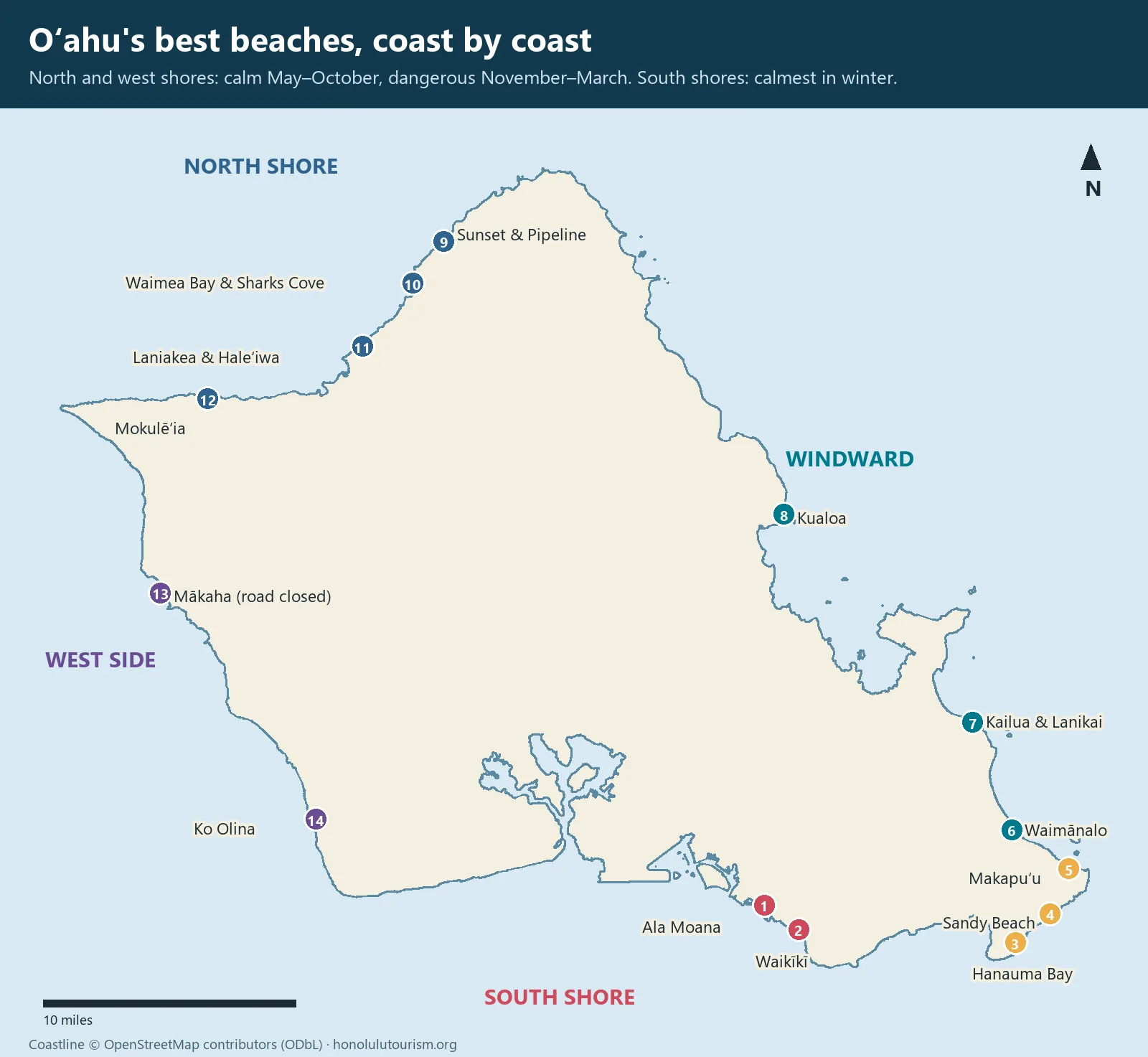
Oʻahu’s beaches follow two simple rules. North- and west-facing shores are calm from about May to October and can be deadly from November to March, when big swells arrive from North Pacific storms. South-facing shores reverse the pattern, with bigger surf in summer and calm water in winter. The windward, east-facing coast gets steady trade-wind chop all year but rarely the giant surf. Choose your beach by the season, then by what you want to do.
| Beach | Coast | Summer swim | Winter swim | Lifeguard | Best for |
|---|---|---|---|---|---|
| Ala Moana and Magic Island | South | Good | Very good | Yes | Families, laps |
| Kahanamoku (Waikīkī) | South | Good | Very good | Yes | Toddlers, nervous swimmers |
| Central Waikīkī | South | Good; surf offshore | Very good | Yes | Surf lessons, the scene |
| Queen’s Surf | South | Fair | Good | Yes | Easy snorkelling |
| Kaimana (Sans Souci) | South | Good | Very good | Yes | Morning swims |
| Waiʻalae and Kahala | South | Wading | Wading | No | Quiet, reading |
| Hanauma Bay | Southeast | Good | Good | Yes | Snorkelling |
| Sandy Beach | Southeast | Dangerous | Dangerous | Yes | Watching only |
| Makapuʻu | Southeast | Calm days only | Dangerous | Yes | Views, expert bodysurfers |
| Kaupō | Windward | Good on calm days | Fair | Check | Beginner snorkellers |
| Waimānalo Bay | Windward | Good | Good near towers | Yes | Long walks, space |
| Bellows | Windward | Good | Fair | Check | Weekend picnics |
| Lanikai | Windward | Very good | Good | No | Sunrise, kayaking |
| Kailua Beach Park | Windward | Very good | Good | Yes | Families, kayaks, kites |
| Kāneʻohe sandbar | Windward | By boat | By boat | No | A day on the water |
| Kualoa Regional Park | Windward | Good | Fair | Yes | Picnics, scenery |
| Kahana Bay | Windward | Good | Fair | Check | Calm, local |
| Lāʻie beaches | Windward | Good | Caution | Check | Quiet days |
| Kuilima Cove | North Shore | Very good | Sheltered, check | Check | Families, snorkelling |
| Sunset Beach | North Shore | Good | Dangerous | Yes | Sunsets, surf-watching |
| ʻEhukai and Pipeline | North Shore | Good | Dangerous | Yes | Watching Pipeline |
| Pūpūkea and Sharks Cove | North Shore | Very good | Dangerous | Yes | Summer snorkelling |
| Waimea Bay | North Shore | Very good | Dangerous | Yes | Summer swimming |
| Laniakea | North Shore | Not a swim beach | Not a swim beach | No | Turtle-watching |
| Haleʻiwa | North Shore | Good | Caution | Yes (Aliʻi) | Town beach, surf lessons |
| Mokulēʻia | North Shore | Fair | Dangerous | No | Solitude |
| Ko Olina lagoons | West | Very good | Very good | Check | Small children |
| Pōkaʻī Bay | West | Very good | Good | Check | Calm, local (road closed) |
| Mākaha | West | Good | Dangerous | Yes | Local surf culture (road closed) |
| Yokohama Bay | West | Calm days only | Dangerous | Check | Remote coast (closed) |
“Check” means lifeguard cover is seasonal, part-time or unconfirmed. Honolulu’s Ocean Safety Department staffs 44 towers around the island from 8am to 6:30pm every day, and keeps the official list of tower locations. If there’s no tower, assume nobody is watching.
South shore: Honolulu and Waikīkī
The south shore is Oʻahu’s safest swimming coast for most of the year, protected by reef and at its calmest in winter. Summer south swells bring surf to the outer reefs, but the inner water usually stays gentle.
1. Ala Moana Beach Park and Magic Island
Honolulu’s own beach, and one of the best-value beach days on the island. A long strip of sand sits behind an offshore reef, with a calm swimming channel where locals swim laps before work. At the ʻEwa end, the Magic Island lagoon is enclosed by rock walls and calm enough for toddlers. There are free car parks along the park road, which fill on sunny weekends, and the park closes from 10pm to 4am. Ala Moana Center is across the road.
Arrive before 9am at weekends to park near the Magic Island end, where the lagoon is. On weekdays you’ll find space almost any time. It’s also the handiest beach after a morning at Pearl Harbor, about 20 minutes away.
Lifeguard: yes · Parking: free park lots · Best: all year; calmest in winter · Bus: any route to Ala Moana Center · Allow: half a day
2. Kahanamoku Beach, Waikīkī
At the ʻEwa end of Waikīkī, in front of the Hilton Hawaiian Village, a curving breakwater and a broad reef keep the water unusually flat, and the sand shelves so gently that small children can wade a long way out. It’s the beach for nervous swimmers, and the front row for the Hilton’s fireworks at 7:45pm on Fridays.
Lifeguard: yes · Parking: hotel garages; scarce · Best: all year · Bus: any Waikīkī route · Allow: 2–3 hours
3. Central Waikīkī
The postcard stretch in front of the Royal Hawaiian and the Moana Surfrider, and around the Duke Kahanamoku statue at Kūhiō Beach. The water is easy and the reef breaks up the surf, which is why this is where most people learn to surf, with group lessons from $95 and outrigger canoe rides for $48. It’s also some of the most crowded sand in Hawaiʻi between 10am and 4pm. Our section-by-section guide to Waikīkī Beach covers every stretch.
Lifeguard: yes · Parking: Honolulu Zoo lot $1.50 an hour, 4 hours maximum · Best: all year · Bus: 2, 13 or the W Line · Allow: as long as you like
4. Queen’s Surf and Kapiʻolani Beach Park
Past the Kapahulu groin, the hotels give way to lawn and big shade trees. The reef just offshore, inside the Waikīkī Marine Life Conservation District, is the easiest snorkelling in Honolulu on a calm morning, with turtles and reef fish. It’s a local favourite, long the most LGBTQ+-friendly beach in the city, and far quieter than central Waikīkī.
Lifeguard: yes · Parking: Kapiʻolani Park meters, 25 cents per half-hour · Best: calm mornings · Bus: 2 or 13 · Allow: half a day
5. Kaimana Beach (Sans Souci)
At the Diamond Head end of Waikīkī, beside the closed War Memorial Natatorium, this sheltered pocket of sand and reef is where Honolulu residents swim before work. It’s calm most mornings. Hawaiian monk seals sometimes haul out here; if one does, stay at least 50 feet away, or 150 feet from a mother and pup.
Lifeguard: yes · Parking: Kapiʻolani Park meters · Best: early mornings · Bus: Route 2 · Allow: 1–2 hours
6. Waiʻalae Beach Park and the Kahala beaches
East of Diamond Head, a string of narrow sandy pockets sits in front of some of Honolulu’s grandest houses, reached by public paths between them. The water is shallow over reef, better for wading and a quiet read than for swimming, so bring reef shoes. Every beach in Hawaiʻi is public up to the vegetation line; use the marked rights of way.
Lifeguard: no · Parking: small car park at Waiʻalae Beach Park · Best: quiet weekdays · Bus: routes via Kahala · Allow: 1–2 hours
Southeast coast: Hanauma Bay to Makapuʻu
This is Oʻahu’s most dramatic coastline, and its most dangerous. One of the island’s best snorkelling bays sits a few minutes from two of its worst shorebreaks.
7. Hanauma Bay
A flooded volcanic crater and marine preserve with the easiest reef snorkelling on the island. Reservations open online 48 hours ahead at 7am Hawaiʻi time and sell out in minutes; entry is $25, children 12 and under are free, and everyone watches a short conservation video. It’s closed on Mondays and Tuesdays. Hanauma is also where snorkelling safety matters most: the bay recorded 16 snorkel-related drownings over a nine-year period. Swim with a buddy, stay inside the reef and get out if you feel breathless.
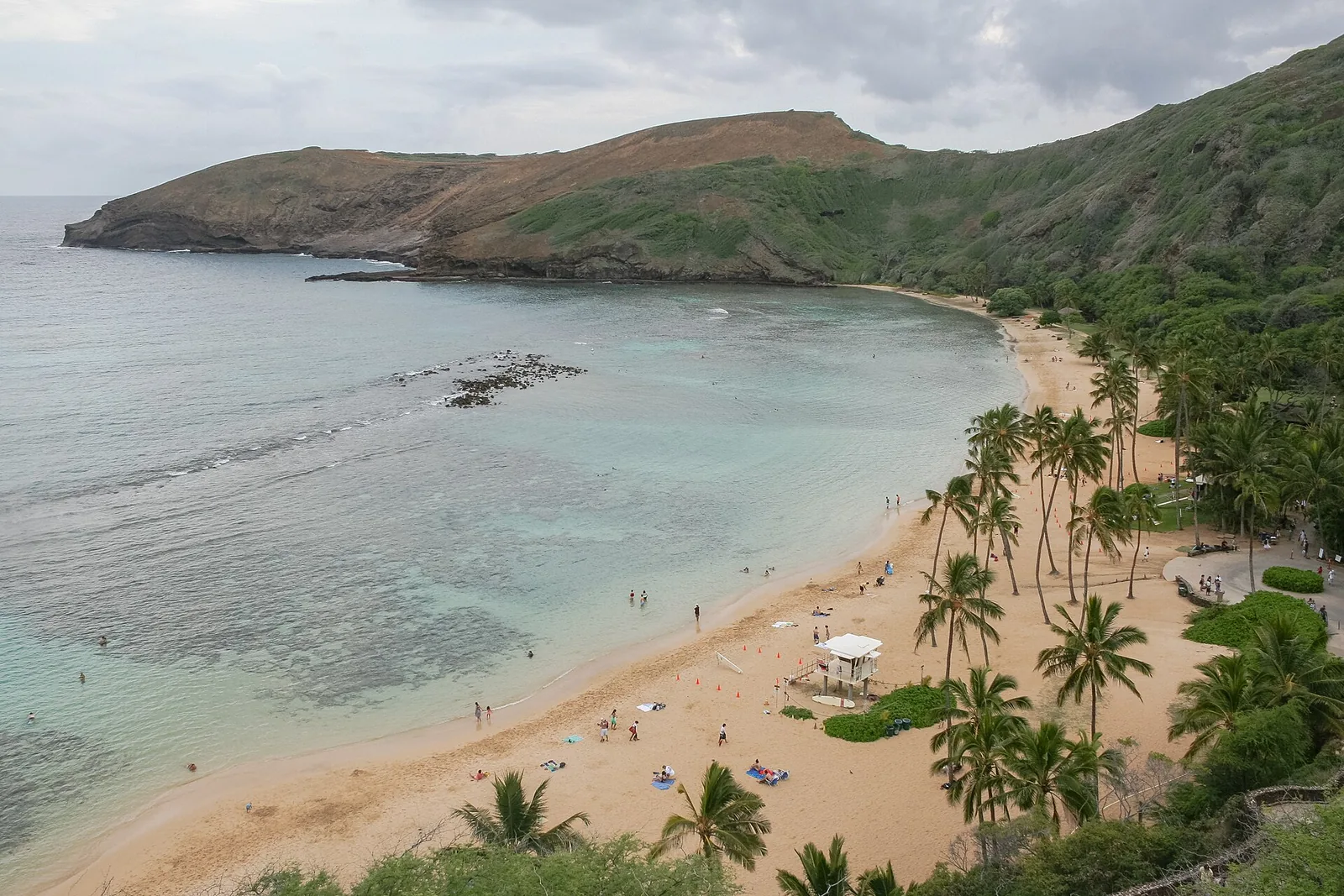
Book the earliest entry you can. The water is clearest and calmest before the trade winds pick up, and the reef fish are at their busiest in the morning.
Cost: $25 · Hours: entry 6:45am–1:30pm; beach cleared from 3:30pm; closed Mon–Tue · Book: 48 hours ahead at 7am HST · Lifeguard: yes · Bus: none direct; Roberts Hawaiʻi bundle about $65 · Allow: 3 hours
8. Sandy Beach
Watch, don’t swim. Sandy Beach’s powerful shorebreak dumps straight onto shallow sand, and it causes serious neck and spine injuries every year, often to visitors who thought it looked fun. The local bodyboarders who ride it have grown up here. Come for the spectacle, the wide sand and the sunrise, and stay out of the water.
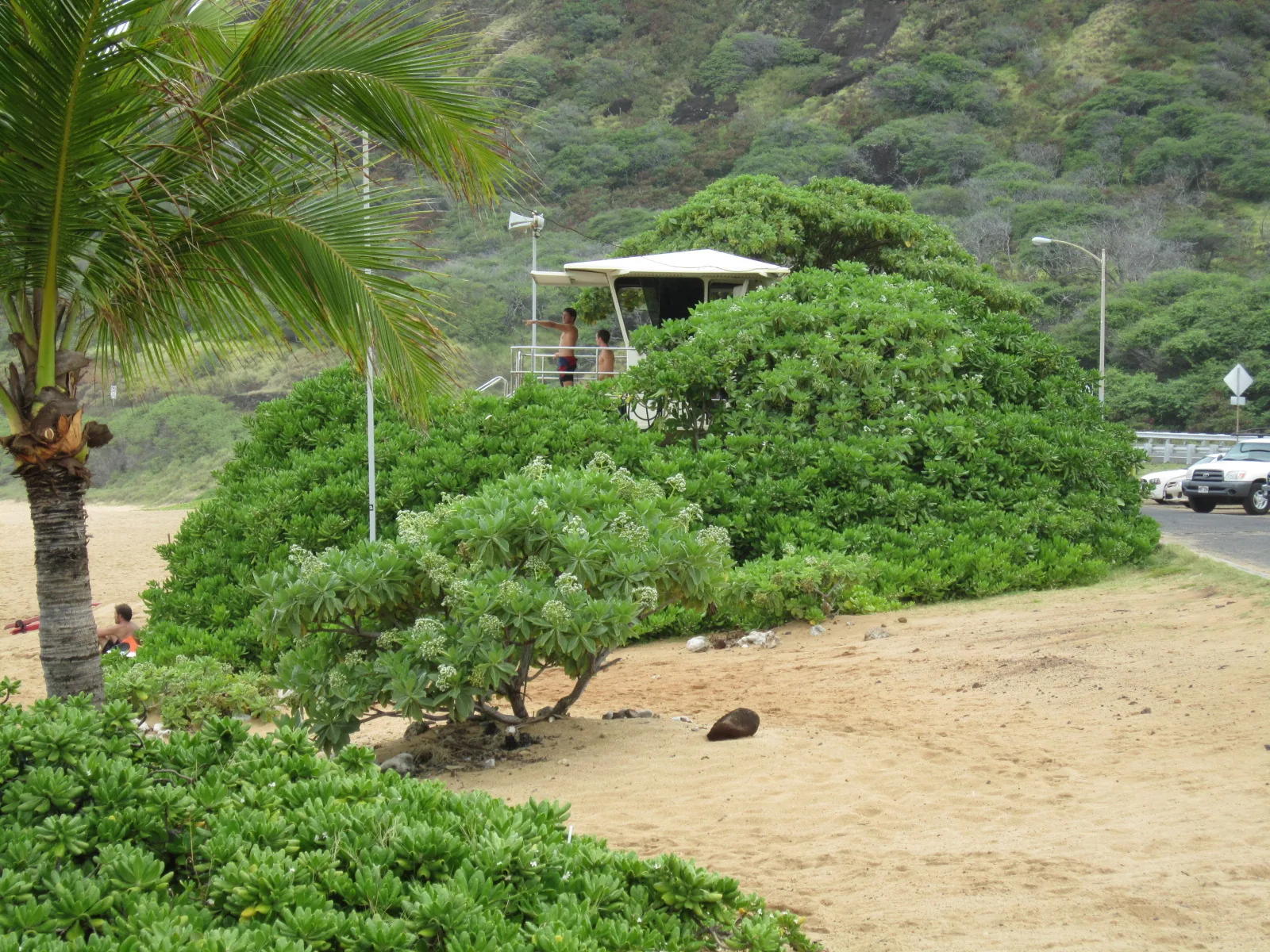
Sunrise here is spectacular, and the car park is almost empty before 7am. By the afternoon it’s full of local bodyboarders and their families.
Lifeguard: yes · Parking: large free car park · Best: watching only · Bus: Route 23 · Allow: 30 minutes
9. Makapuʻu Beach
Beneath the lighthouse cliffs, Makapuʻu is one of the most beautiful beaches on the island and one of the most dangerous. The shorebreak is heavy in winter, and even in summer it is a spot for expert bodysurfers only. On the calmest summer days, strong swimmers go in near the lifeguard. Everyone else should enjoy the view of Mānana (Rabbit Island) from the sand, then walk the lighthouse trail above.
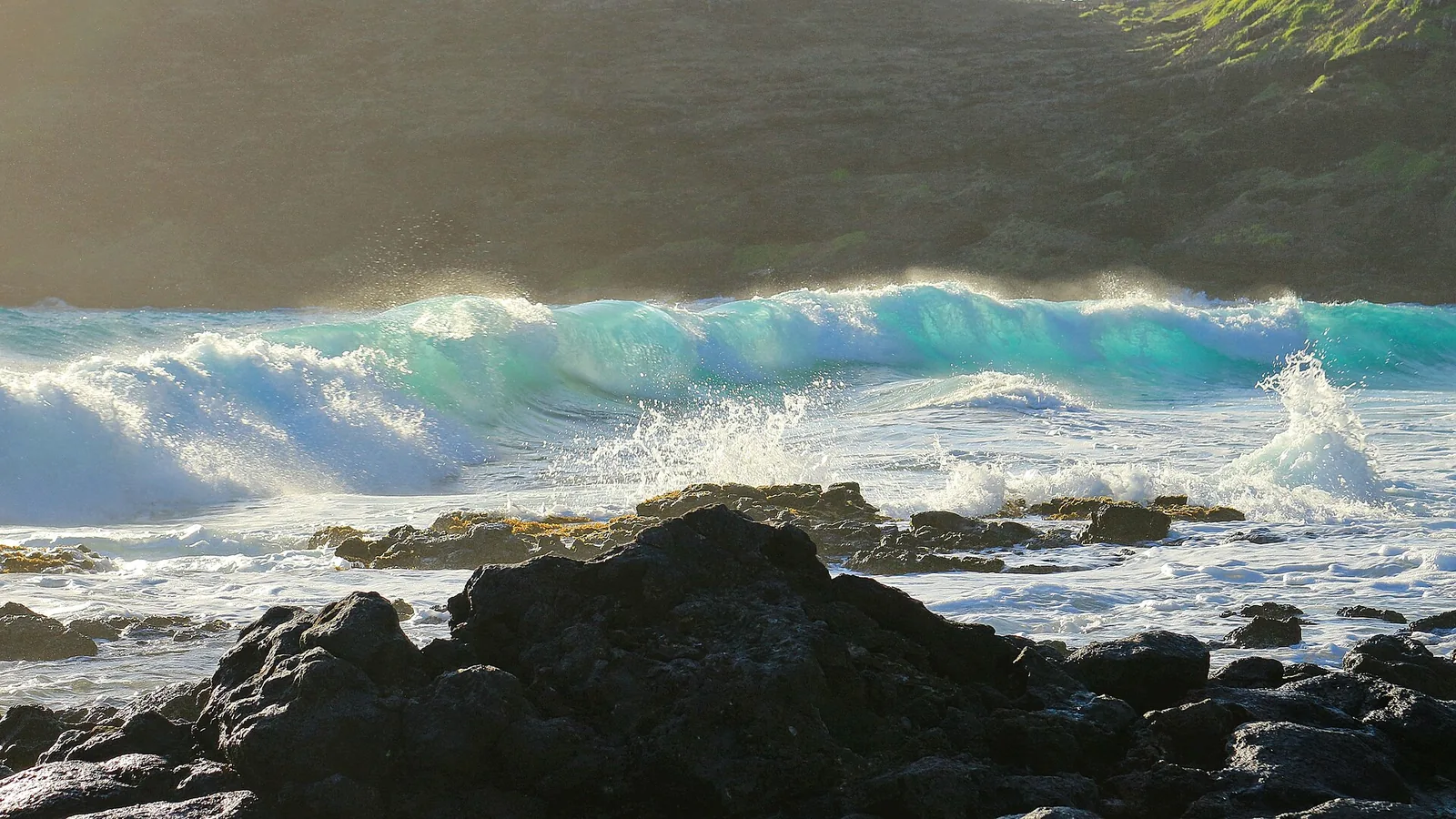
The small beach car park fills early at weekends. The lighthouse trail has its own car park just up the road, so you can walk the trail and look down on the beach instead.
Lifeguard: yes · Parking: small lot, fills early · Best: calm summer days, experts only · Bus: Route 23 · Allow: 1 hour
Windward coast: Waimānalo to Lāʻie
The windward side has the island’s softest white sand and bluest water, with steady trade winds, offshore islands and the Koʻolau cliffs behind. It’s also the wettest coast, so check the forecast and the brown-water advisories after rain.
10. Kaupō Beach Park
Just north of Makapuʻu, near Sea Life Park, this small, rocky-edged park has calm, shallow water inside a reef on quiet days, and it’s popular with local families and beginner snorkellers. It’s less dramatic than its neighbours but far gentler.
Lifeguard: check · Parking: small roadside lot · Best: calm summer days · Bus: Route 23 to Sea Life Park · Allow: 1–2 hours
11. Waimānalo Bay and Waimānalo Beach Park
A long turquoise bay backed by the fluted Koʻolau cliffs, with miles of soft sand and ironwood trees for shade. It’s rarely crowded, and it’s a proud Native Hawaiian community rather than a resort, so buy lunch from local stands, take your rubbish home and swim near the lifeguard towers.
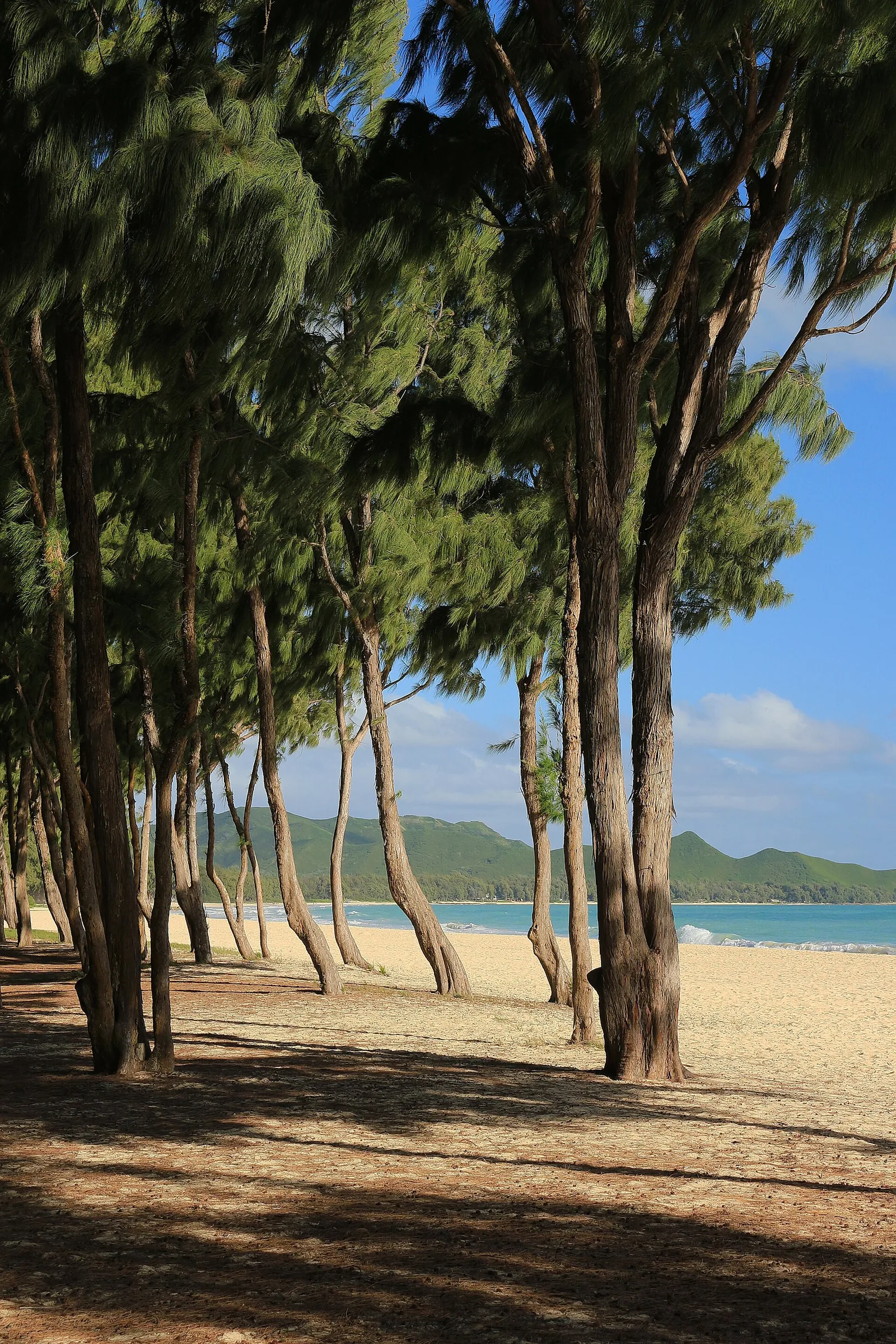
Weekday mornings are almost empty. Weekends bring local families with tents and barbecues, which is part of the charm, so share the space.
Lifeguard: yes, at the beach park · Parking: free park lots · Best: all year · Bus: routes via Waimānalo · Allow: half a day
12. Bellows Field Beach Park
Next to Waimānalo, this beach sits on a military reservation and is open to the public only at weekends and on federal holidays. When it’s open, it’s a lovely, uncrowded stretch of sand with ironwood shade and gentle water, popular with local families for weekend picnics and camping.
Lifeguard: check · Parking: free when open · Best: summer weekends · Allow: half a day
13. Lanikai Beach
Powdery sand, shallow turquoise water and the twin Mokulua islands offshore make Lanikai one of the most photographed beaches in Hawaiʻi. It faces east, so sunrise is the time to come. Since 1 July 2026, parking has been banned all day on Mokulua and ʻAʻalapapa drives, with the side streets restricted from 10am to 4pm and towing enforced. Park at the free Kailua Beach Park boat-ramp lot and walk 10 to 15 minutes. There are no lifeguards, restrooms or showers.
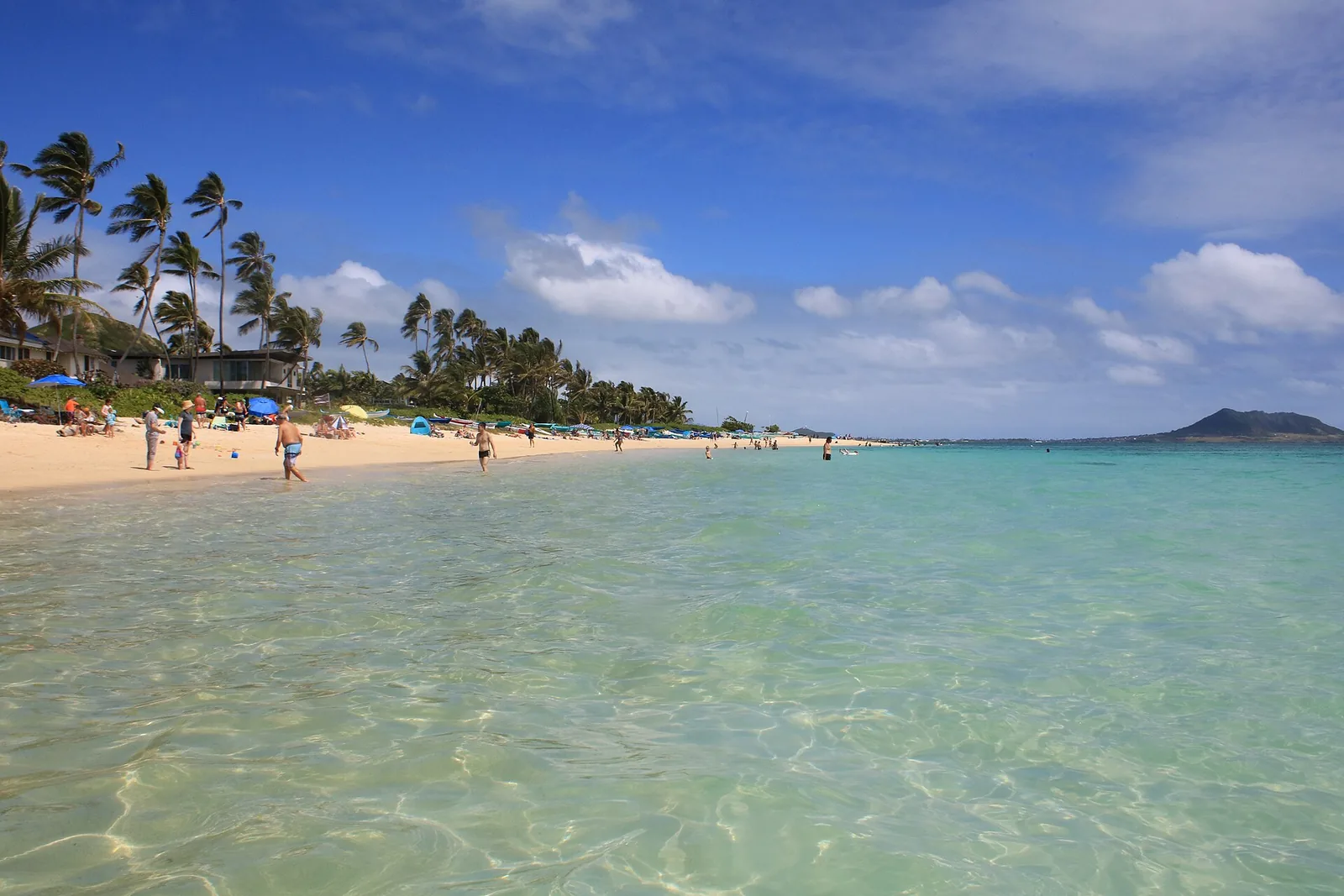
For sunrise, leave the Kailua Beach Park lot by about 6:15am; the walk is flat and follows the road. By mid-morning the sand fills with kayakers landing from Kailua.
Lifeguard: no · Parking: none; walk from Kailua Beach Park · Best: sunrise, all year · Bus: Route 67 to Kailua, then walk · Allow: 2–3 hours
14. Kailua Beach Park
Two miles of soft sand on a wide bay, with gentle water, lifeguards, restrooms and showers, and a free car park at the boat ramp. It’s the best all-round family beach on the windward side. Kailua Beach Adventures rents single kayaks for $74 for a half day for the paddle to the Mokulua islands. Landing on Moku Nui needs a $3 state permit per person, Monday to Saturday only; Moku Iki is always off limits. On windy afternoons, the bay fills with kitesurfers and windsurfers.
The boat-ramp lot fills by late morning at weekends, so come early or after 3pm. Mornings are also calmer, before the wind picks up for the kitesurfers.
Lifeguard: yes · Parking: free boat-ramp lot · Best: all year; mornings before the wind · Bus: Route 67 · Allow: half a day
15. The Kāneʻohe sandbar (Ahu o Laka)
Not a beach you can walk to, but one of the island’s most memorable places to stand in the sea. At low tide, a sandbar rises in the middle of Kāneʻohe Bay, knee-deep and ringed by reef and mountains. Captain Bruce runs a relaxed trip for $180, Monday to Saturday. Weekends bring a local party crowd.
Cost: $180 by boat tour · Book: ahead · Best: weekdays at low tide · Allow: about 3 hours
16. Kualoa Regional Park
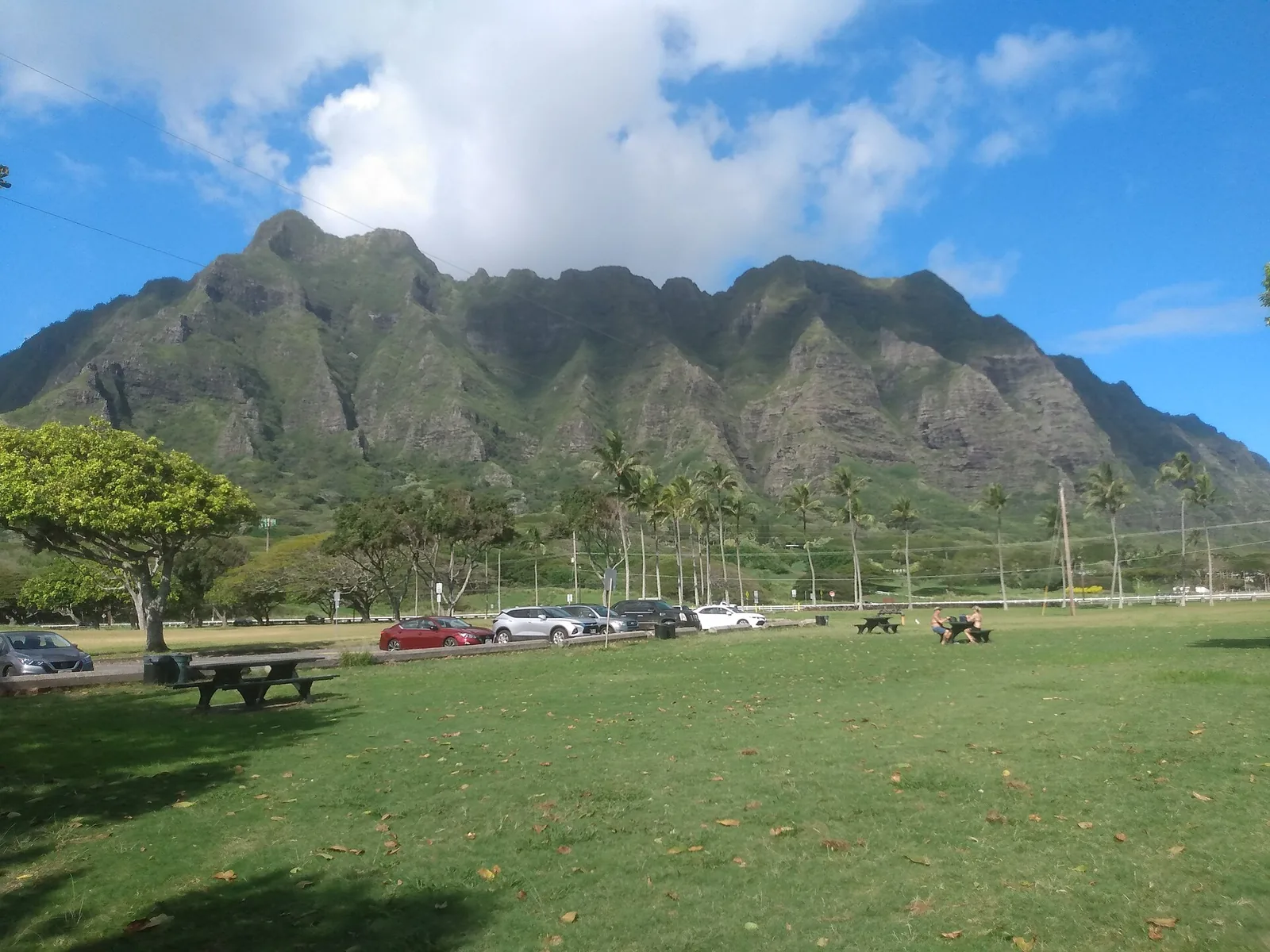
A big grassy beach park beneath the jagged Kualoa ridge, looking out to the islet of Mokoliʻi. The water is shallow over reef, fine for a cooling swim, and the setting is one of the most striking on the island. There are restrooms, picnic tables and plenty of lawn for a long lunch.
Come in the morning, before the trade winds strengthen and the clouds build on the ridge. It’s an easy stop on the way up the windward coast to the North Shore.
Lifeguard: yes · Parking: free park lots · Best: all year · Bus: Route 60 · Allow: 1–2 hours
17. Kahana Bay
A deep, sheltered bay where a stream meets the sea beneath a green valley. It’s calm most of the year and popular with local families, but after rain the stream muddies the water, so give it a miss if it looks brown.
Lifeguard: check · Parking: roadside and park lot · Best: dry spells · Bus: Route 60 · Allow: 1 hour
18. Lāʻie’s beaches: Hukilau and Kokololio
Near the Polynesian Cultural Center, Lāʻie’s beaches are quiet, local and mostly visitor-free, with soft sand and shade. They face north-east, so winter swells can make the water rough; in summer they’re gentle. Pair them with an evening at the Cultural Center.
Lifeguard: check · Parking: small lots · Best: summer · Bus: Route 60 · Allow: 1–2 hours
North Shore: Turtle Bay to Mokulēʻia
The North Shore is two coasts in one. From November to March, it’s the world’s most famous surf arena, and swimming at most of its beaches is out of the question. From about May to October, the same beaches go flat and become some of the best swimming and snorkelling on the island.
19. Kuilima Cove, Turtle Bay
At the northern tip of the island, a reef shelters this small cove beside the Turtle Bay resort, making it one of the few North Shore spots with calm water for much of the year. It’s excellent for children and beginner snorkellers in summer. In big winter swells, check conditions before going in.
Lifeguard: check · Parking: public access through the resort · Best: summer · Bus: Route 60 · Allow: 2 hours
20. Sunset Beach
Two miles of wide golden sand, living up to its name at the end of the day. In summer it’s a gentle swimming beach. In winter it hosts some of the biggest surf on the island, with powerful rip currents that make swimming dangerous, and the waves are a show in themselves.
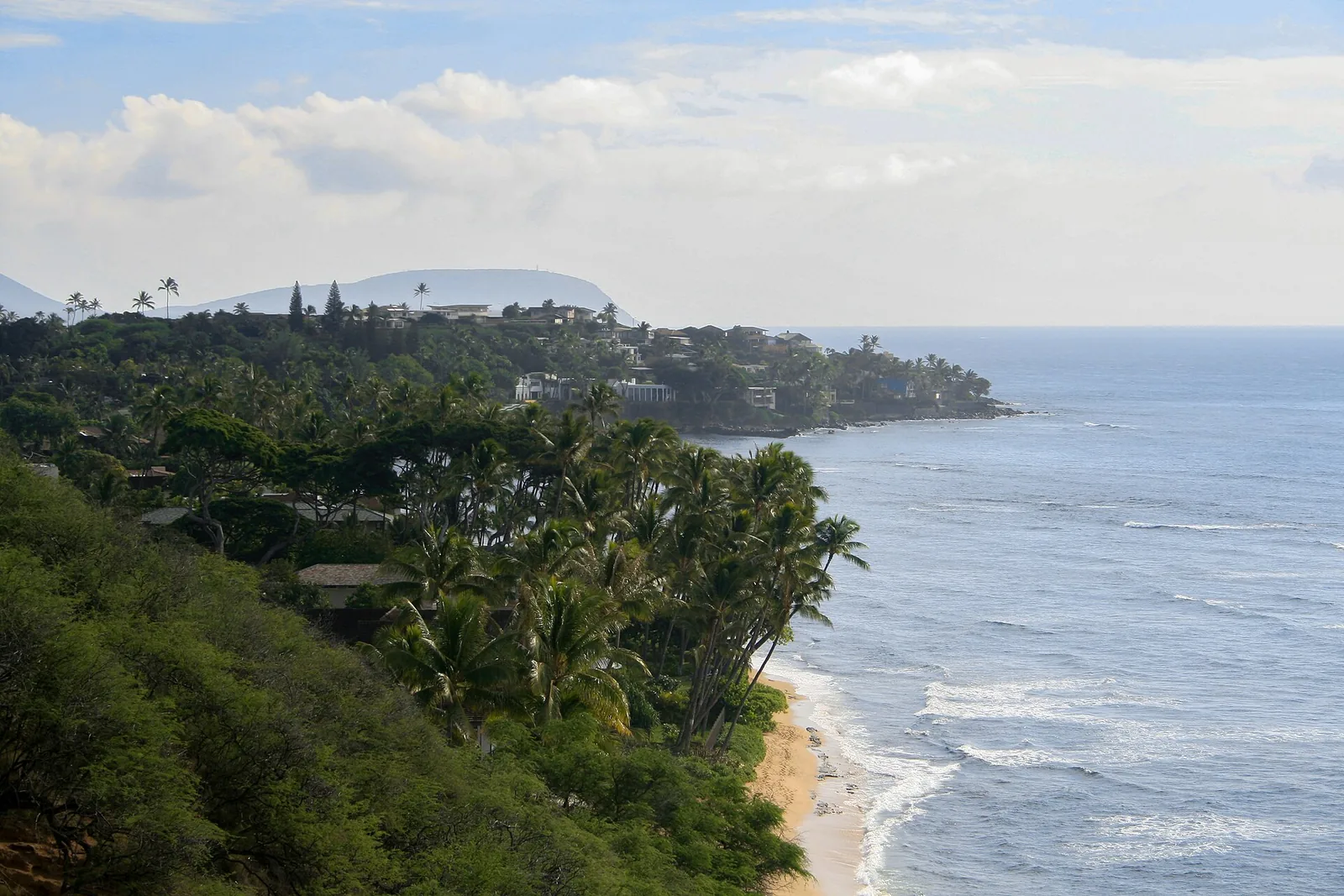
On big winter swell days, arrive before 8am or be prepared to park a long way off and walk. In summer, late afternoon is the time to come, for a swim and then the sunset.
Lifeguard: yes · Parking: park lot and roadside · Best: summer swims, winter sunsets · Bus: Route 60 · Allow: 2 hours
21. ʻEhukai Beach Park and the Banzai Pipeline
From November to March, Pipeline throws the most photographed waves on Earth onto shallow reef a short paddle from the sand. Watching is free and unforgettable; swimming is not an option. In December 2026, the Lexus Pipe Masters has a waiting period from 8 to 20 December. In summer, the same beach goes flat and quiet.
On contest days, park well away and walk along the beach path; the roadside fills by early morning, and the police do ticket illegal parking.
Lifeguard: yes · Parking: small lot; roadside fills fast in winter · Best: winter watching · Bus: Route 60 · Allow: 1–2 hours
22. Pūpūkea Beach Park and Sharks Cove
Inside the Pūpūkea Marine Life Conservation District, lava-rock pools and reef make Sharks Cove the best shore snorkelling on the North Shore from about May to October. The name isn’t a warning. In winter, surf sweeps across the rocks and pulls people off them, so stay well back. Wear reef shoes, take nothing and swim near lifeguard tower 28.
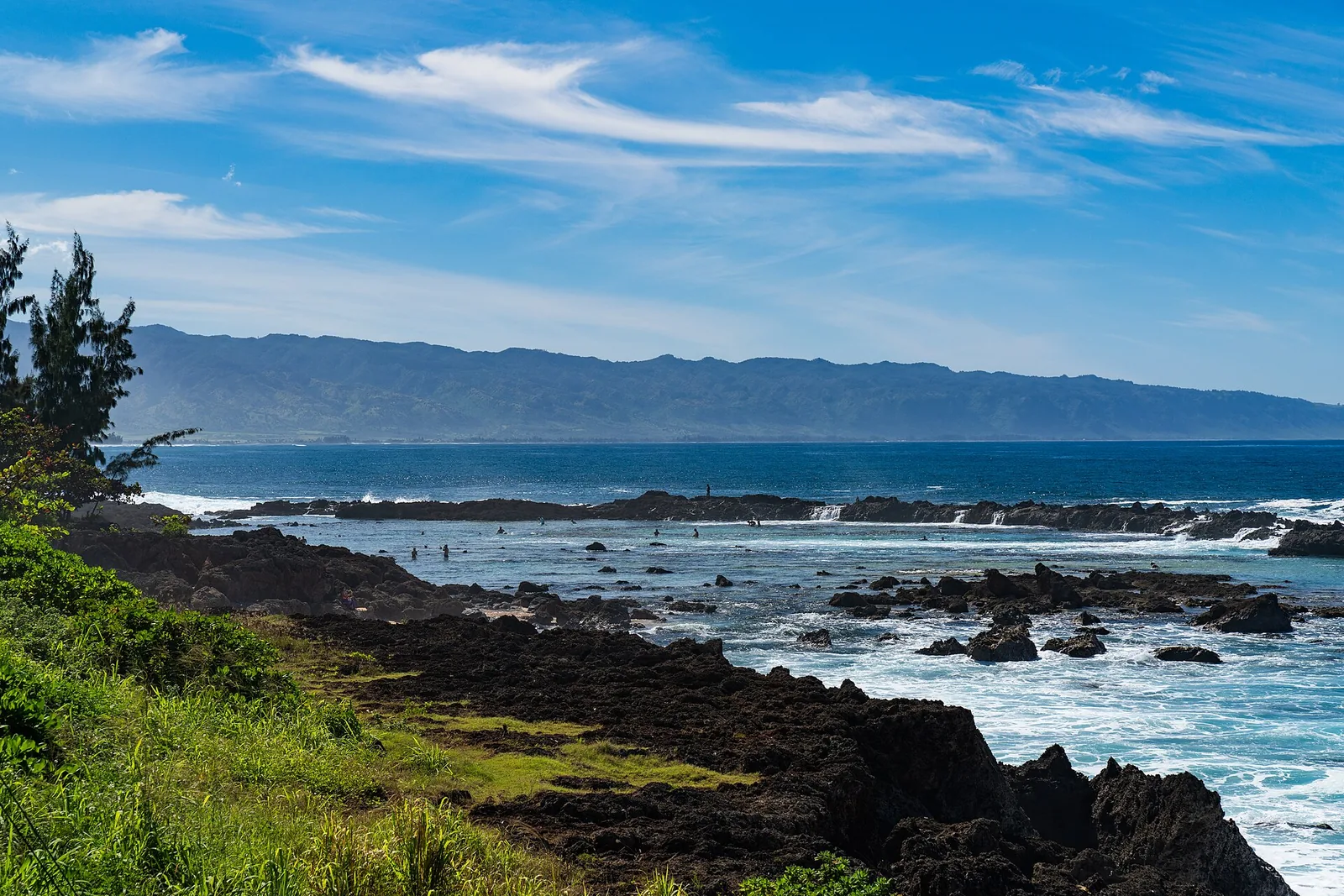
Arrive before 9am in summer. The car park is small, and the water is calmest and clearest early, before the crowds and the afternoon breeze.
Lifeguard: yes · Parking: small lot across the road · Best: May–October · Bus: Route 60 · Allow: 2 hours
23. Waimea Bay
In summer Waimea Bay is a glassy, deep-blue swimming hole, one of the most beautiful swims in Hawaiʻi. From roughly November to March it becomes a big-wave arena, and the Eddie Aikau contest runs only when faces reach about 40 feet. Skip the rock jump in any season: it’s higher than it looks, and people are hurt there every year. The small car park fills by mid-morning.
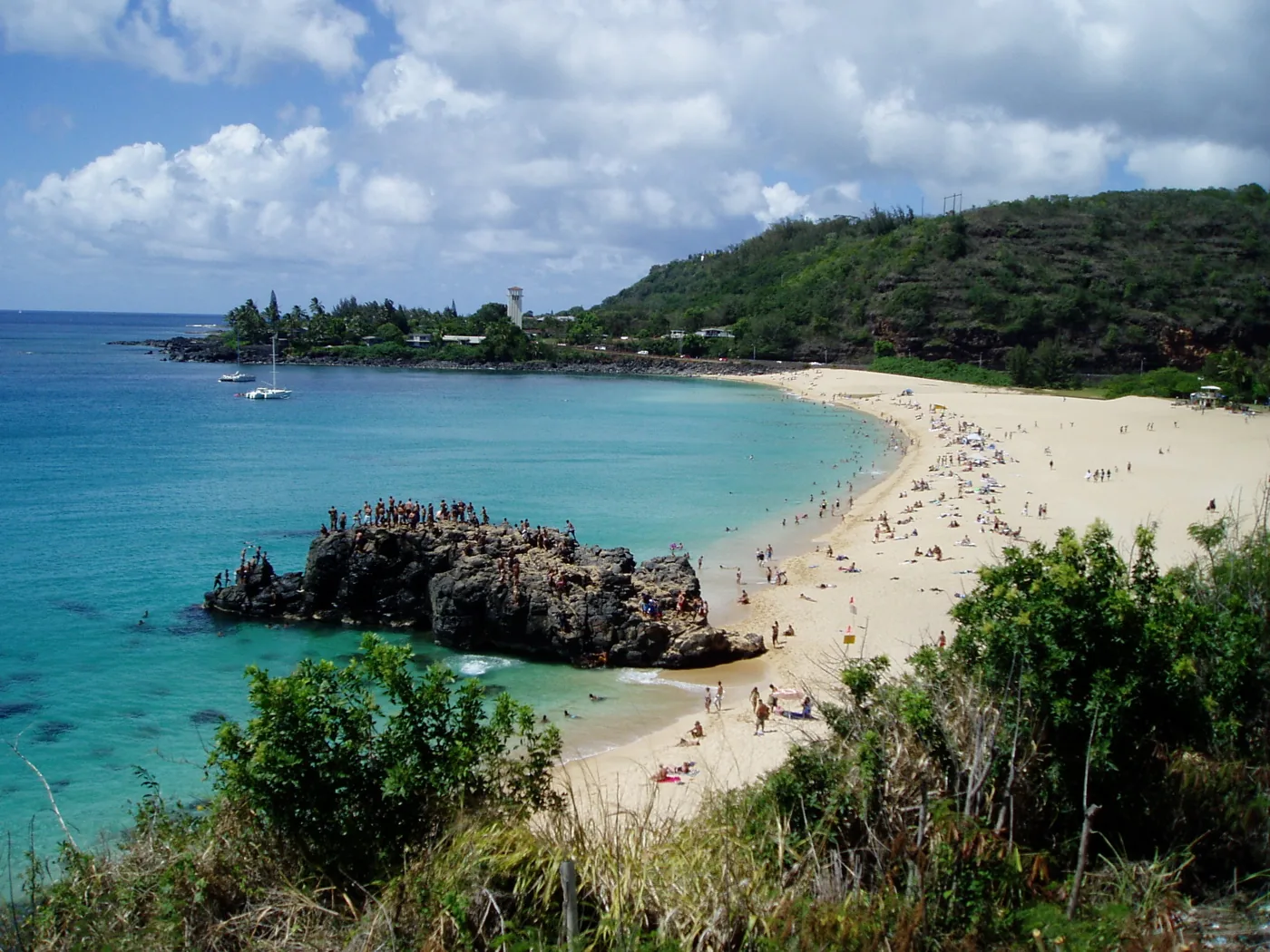
Aim to be parked by 9am in summer. In winter, on a big day, you’ll need to be earlier still, and a long walk from wherever you can legally park is part of the experience.
Lifeguard: yes, tower 29, 8am–6:30pm · Parking: small lot, fills by mid-morning · Best: summer swimming, winter watching · Bus: Route 60 · Allow: half a day in summer
24. Laniakea Beach
Green sea turtles often haul out on the sand here to rest. It isn’t a swimming beach, with rocks and surf along the shore, but it is one of the easiest places on the island to see turtles. Keep at least 10 feet away, never touch them, and don’t stop on the highway shoulder to look.
Lifeguard: no · Parking: scarce; never on the highway shoulder · Best: mornings · Bus: Route 60 · Allow: 30 minutes
25. Haleʻiwa Aliʻi and Haleʻiwa Beach Park
The town beaches of Haleʻiwa sit either side of the harbour. Aliʻi Beach Park has a lifeguard and a well-known surf break, used for gentle lessons in summer and by experienced surfers in winter. Haleʻiwa Beach Park, across the harbour, is calmer in summer and a good place to swim after lunch in town.
Lifeguard: yes, at Aliʻi · Parking: free park lots · Best: summer · Bus: Route 60 · Allow: 1–2 hours
26. Mokulēʻia
West of Haleʻiwa, Mokulēʻia’s long, empty beaches are among the least visited on the island, with views of the Waiʻanae mountains and gliders and skydivers from the nearby airfield, where Skydive Hawaii charges $198 online. It’s windy and exposed, with dangerous winter surf and no lifeguards, so it’s for solitude rather than swimming.
Lifeguard: no · Parking: roadside · Best: calm summer days · Allow: 1 hour
West side: Ko Olina and the Waiʻanae coast
The leeward west side is the driest, sunniest coast on Oʻahu. For now, much of it is out of reach: after Hurricane Lowell, Farrington Highway is closed through Nānākuli and Mākaha, and the Keawaʻula and Mākua sections of Kaʻena Point State Park are closed.
27. Ko Olina lagoons
Four man-made lagoons, sheltered by rock breakwaters, give some of the calmest swimming on the island, ideal for small children. They’re open to the public, with free parking in four small lagoon car parks between sunrise and sunset; arrive early, as the public spaces fill fast. The sunsets over the open ocean are superb.
At weekends, the public stalls in the lagoon car parks can be full by mid-morning. If they are, try another lagoon’s lot rather than parking on the road.
Lifeguard: check · Parking: four free lots, sunrise to sunset · Best: all year · Bus: impractical · Allow: half a day
28. Pōkaʻī Bay
In Waiʻanae, a breakwater shelters Pōkaʻī Bay, making it one of the calmest swimming beaches on the west side and a much-loved local family spot. With Farrington Highway closed after the storm, check road status before you plan a visit, and treat it as someone’s neighbourhood beach.
Lifeguard: check · Parking: park lot · Best: all year, when the road reopens · Allow: 2 hours
29. Mākaha Beach Park
The heart of west-side surf culture. Mākaha is a gentle swim on calm summer days and a heavy winter surf spot, with waves up to 25 feet and strong rip currents. It’s deeply local: no drones over homes, no parking where signs say not to, and nothing valuable in the car. For now, the road through Mākaha is closed.
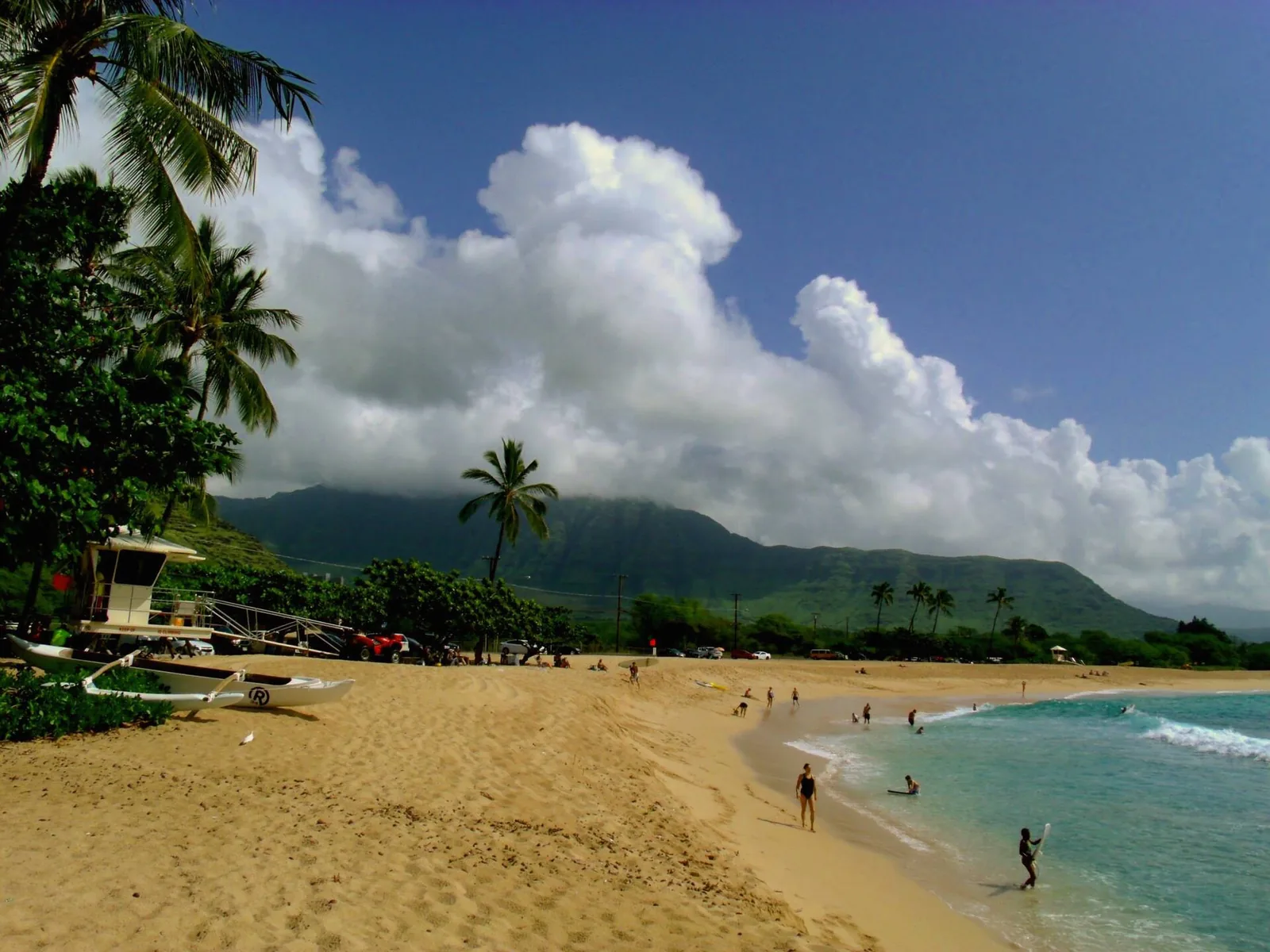
Lifeguard: yes · Parking: park lot · Best: calm summer days · Allow: half a day, once the road reopens
30. Yokohama Bay
At the end of the road, where the west coast runs out towards Kaʻena Point, Yokohama Bay’s white sand and blue water feel like the edge of the island. It’s calm on some summer days and dangerous in winter, and it’s remote, with few facilities. The Keawaʻula section of Kaʻena Point State Park, which includes it, is closed after Hurricane Lowell.
Lifeguard: check · Parking: closed for now · Best: calm summer days, when reopened · Allow: half a day
The best beaches in Oahu for every kind of day
- Small children: Ko Olina’s lagoons, Magic Island at Ala Moana and Kahanamoku Beach in Waikīkī.
- Snorkelling: Hanauma Bay all year; Sharks Cove and Kuilima Cove in summer; Queen’s Surf on calm mornings.
- Swimming laps: Ala Moana’s channel and Kaimana Beach.
- Soft sand and space: Waimānalo, Kailua and, at weekends, Bellows.
- Sunrise: Lanikai, walking in from Kailua Beach Park.
- Sunset: Sunset Beach, Ko Olina and Queen’s Surf.
- Watching big surf: Pipeline, Sunset Beach and Waimea Bay from November to March.
- Turtles: Laniakea, from a respectful distance.
- Learning to surf: Waikīkī, all year.
- Solitude: Mokulēʻia and the Kahala pockets.
For how the beaches fit into a wider trip, see our Oʻahu itinerary, which gives each coast its own day.
Beach days from each base
Where you stay shapes which beaches you’ll actually use. From Waikīkī, the south shore is on your doorstep, Ala Moana is a short walk or bus ride away, and Hanauma Bay is about 30 minutes by car. From Ko Olina, the lagoons are the daily beach, but the rest of the island’s best sand is an hour or more away in traffic. From a North Shore base at Turtle Bay, Kuilima Cove, Sunset Beach and, in summer, Sharks Cove and Waimea Bay are all within about 20 minutes. From Kailua, Kailua Beach, Lanikai and Waimānalo are all close. Our guide to where to stay in Oʻahu compares the bases, including the holiday-rental rules that make short Kailua stays tricky.
If you only have time for a handful of beaches, pick one from each coast: Ala Moana or Waikīkī for an easy swim, Hanauma Bay for snorkelling, Kailua or Lanikai for the windward colours, and Waimea Bay in summer or a morning watching the surf at Pipeline in winter.
Off limits for now, and always
Some beaches and shorelines are closed at the moment, and a few are never open. As of September 2026, after Hurricane Lowell:
- Farrington Highway is closed through Nānākuli and Mākaha, which cuts off Pōkaʻī Bay, Mākaha and the rest of the Waiʻanae coast.
- Kaʻena Point State Park‘s Keawaʻula section, including Yokohama Bay, and its Mākua section are closed.
- The Mokulēʻia permit gate area is closed.
Other restrictions are permanent. Moku Iki, the smaller Mokulua island off Lanikai, is always off limits, and Moku Nui’s interior is closed to protect nesting seabirds. Bellows Field Beach Park is open to the public only at weekends and on federal holidays. Anywhere signed kapu or no trespassing means exactly that: don’t enter, and don’t go looking for places kept deliberately off the map. Check Hawaiʻi State Parks for reopening news before you drive out west.
Beach safety: the rules that save lives
Drowning is the leading cause of injury death among visitors to Hawaiʻi. State health figures for 2015–2019 averaged about 80 ocean drownings a year, 57 per cent of them visitors, and snorkelling is involved in nearly 30 per cent of visitor drownings. The state’s snorkel safety study found that rapid-onset pulmonary edema, fluid building up in the lungs during exertion, is a factor in some of those deaths, not just swallowing water. None of this means stay out of the sea. It means respect it.
- Swim at a lifeguarded beach, and talk to the lifeguard before you go in. Towers are staffed from 8am to 6:30pm.
- When in doubt, don’t go out. If you’re unsure about the conditions, watch for 15 minutes first.
- Read the season. North and west shores are dangerous in winter; south shores get summer swells.
- Beware shorebreak. Waves breaking directly onto the sand at Sandy Beach, Makapuʻu and in winter at Waimea cause serious spine injuries.
- Know how to escape a rip current. Don’t fight it: swim parallel to the shore, or float and signal for help.
- Snorkel with a buddy, in a mask that fits, and stop, float and signal if you feel short of breath.
- Stay out after heavy rain for 72 hours, and while a brown-water advisory is posted.
- Check the box jellyfish calendar. They reach south-facing beaches about eight to ten days after each full moon; for the rest of 2026, around 4–6 October, 2–4 November, 2–4 December and 31 December to 2 January.
- Give wildlife space. Keep 10 feet from turtles and 50 feet from monk seals, or 150 feet from a mother and pup.
- Protect the reef. Use mineral sunscreen, since oxybenzone and octinoxate are banned, and never stand on coral.
Beach parking on Oʻahu: what to expect
Parking decides more beach days than the weather does. A few rules of thumb:
- Arrive early. At popular beaches, especially at weekends and on the North Shore in summer, small car parks fill by mid-morning. Before 9am you’ll usually find a space.
- Never park illegally. Tow-away zones are enforced, notably in Lanikai, where parking has been banned all day on the loop road since 1 July 2026. Don’t stop on highway shoulders to look at turtles or surf.
- Use the free public lots. Most beach parks have free car parks, including Ala Moana, Kailua’s boat ramp, Waimānalo, Kualoa, Sandy Beach, Haleʻiwa and the four Ko Olina lagoon lots between sunrise and sunset.
- In Waikīkī, pay. The Honolulu Zoo lot charges $1.50 an hour with a four-hour maximum, and the Kapiʻolani Park meters 25 cents per half-hour.
- Leave nothing in the car. Break-ins at beach car parks are common. Take valuables with you or leave them at the hotel, and many locals leave the glovebox open so thieves can see it’s empty.
- Or skip the car. TheBus reaches Ala Moana and Waikīkī, Kailua on Route 67, and the windward coast and North Shore on Route 60, and a HOLO card caps fares at $7.50 a day.
Beach etiquette and practicalities
Every beach in Hawaiʻi is public up to the line of vegetation, and public rights of way lead to the sand even through the most exclusive neighbourhoods. Use them, park legally, and keep noise down in residential areas. Take your rubbish home; many beaches have no bins.
Beach parks close overnight, usually from 10pm, and Ala Moana Beach Park closes from 10pm to 4am, though the sand itself stays open. Car break-ins are common at beach car parks, so leave nothing in view. Kapu signs, or no-trespassing signs, mean exactly that: don’t enter. And if a beach has a lifeguard tower, swim in front of it.
For more of what the island offers beyond the sand, see our list of things to do in Oʻahu, and for the month-by-month surf calendar, our guide to the best time to visit Hawaii.
What to bring for a beach day
- Mineral sunscreen, a hat and a rash vest: the sun is strong even on cloudy days, and sunscreens with oxybenzone or octinoxate are banned.
- Reef shoes for rocky entries at Sharks Cove, Kahala and the windward reefs.
- Snorkel gear that fits. A leaking or fogging mask is a safety problem, not just an annoyance. Test it in shallow water first.
- Shade: an umbrella or a pop-up tent for beaches without trees, such as Lanikai and central Waikīkī.
- Plenty of water and snacks, because many beaches have no shops nearby.
- A bag for rubbish, since bins are scarce and often full.
- A card for parking machines in Waikīkī; elsewhere, parking is usually free.
If snorkelling is the main event rather than a beach-day extra, our guide to snorkeling on Oahu rates every site by season and entry difficulty and walks through the Hanauma Bay booking routine.
Frequently Asked Questions
What are the best beaches in Oahu for swimming?
In summer, Waimea Bay, Sharks Cove, Kailua and Lanikai are superb. All year, Ala Moana, Waikīkī, Kaimana and the Ko Olina lagoons are the calmest. In winter, avoid north- and west-facing beaches, where big swells make swimming dangerous. Wherever you go, swim at a lifeguarded beach and ask the lifeguard about conditions first.
Which Oʻahu beaches have lifeguards?
Honolulu’s Ocean Safety Department staffs 44 towers from 8am to 6:30pm daily, including Ala Moana, Waikīkī, Hanauma Bay, Sandy Beach, Makapuʻu, Waimānalo, Kailua, Kualoa, Sunset Beach, Pipeline, Sharks Cove, Waimea Bay, Haleʻiwa and Mākaha. Lanikai, Laniakea and Mokulēʻia have none. Check the department’s tower list for current locations.
Where can I park for Lanikai Beach?
Not on the Lanikai loop. Since 1 July 2026, parking has been banned all day on Mokulua and ʻAʻalapapa drives, and side streets are restricted from 10am to 4pm, with towing enforced. Park at the free Kailua Beach Park boat-ramp lot, which has restrooms and showers, and walk 10 to 15 minutes to the Lanikai access paths.
Is it safe to swim on the North Shore in winter?
Usually not. From roughly November to March, large swells bring powerful waves, shorebreak and rip currents to Sunset Beach, Pipeline, Waimea Bay and Sharks Cove. Watch from the sand. From about May to October, the same beaches are often calm and excellent for swimming and snorkelling, with lifeguards on duty.
Which Oʻahu beach is best for small children?
The Ko Olina lagoons, Magic Island at Ala Moana Beach Park and Kahanamoku Beach in Waikīkī all have sheltered, shallow water. Kailua Beach Park is a good windward option in calm conditions. Always stay within arm’s reach of young children, even in calm water, and choose a beach with a lifeguard tower.
Where can I see turtles on Oʻahu?
Laniakea Beach on the North Shore is the best-known spot, where green sea turtles often rest on the sand. You’ll also see them while snorkelling at Hanauma Bay, Sharks Cove and off Waikīkī. By law, keep at least 10 feet away, never touch or feed them, and don’t chase them in the water.
Do I need a reservation for any Oʻahu beaches?
Only Hanauma Bay, which requires a timed reservation released online 48 hours ahead at 7am Hawaiʻi time, costs $25 and is closed on Mondays and Tuesdays. Every other beach is free and open without booking, though parking can be limited, and Lanikai has no legal parking on its loop road.
When is the water warmest on Oʻahu?
The sea is warmest in late summer and early autumn, peaking around 80–82°F at Waikīkī in September, and coolest in February and March, at around 75–76°F. It’s comfortable for swimming all year, though some people like a thin wetsuit top for long winter snorkels.
Photo Credits
- Kualoa Regional Park (featured): DestinationFearFan, CC BY-SA 4.0
- Map: honolulutourism.org; coastline data © OpenStreetMap contributors, ODbL
- Hanauma Bay: Diego Delso, CC BY-SA 3.0
- Sandy Beach: Jeremy from Sydney, CC BY 2.0
- Makapuʻu Beach: Robert Linsdell, CC BY 2.0
- Waimānalo Beach: Robert Linsdell, CC BY 2.0
- Lanikai Beach: claralieu, CC BY 2.0
- Sunset Beach: Diego Delso, CC BY-SA 3.0
- Sharks Cove, Pūpūkea: Tony Webster, CC BY 2.0
- Waimea Bay: Travisthurston, CC BY-SA 3.0
- Mākaha Beach Park: Nicolai Edgar Andersen, CC BY-SA 4.0