At 7:00am Honolulu time, two days before any given visit, the day’s online tickets for Hanauma Bay go on sale, and on a busy week they can be gone before most people have found the right page. That single booking window shapes more trips than any reef map. But the island’s best-known bay is only one answer, and anyone serious about snorkeling oahu needs a second: which coast is calm in the month you are here, how hard each entry is, and what the ocean can do to a confident swimmer who is not paying attention.
This guide covers every snorkel site worth your time on Oʻahu, sorted by season and by how difficult the entry is, followed by surfing, canoeing, kayaking, boat trips, whale watching and diving. Prices are for 2026 and are included where we have checked them. Where a figure has not been confirmed, we describe what you get instead.
One current note. Hurricane Lowell passed west of the islands on 7–8 September 2026, and the state Department of Health posted a brown-water advisory around the whole of Oʻahu afterwards. Advisories are lifted as sampling comes back clean. Before any swim this month, check the Clean Water Branch advisory map on the Hawaiʻi Department of Health site.
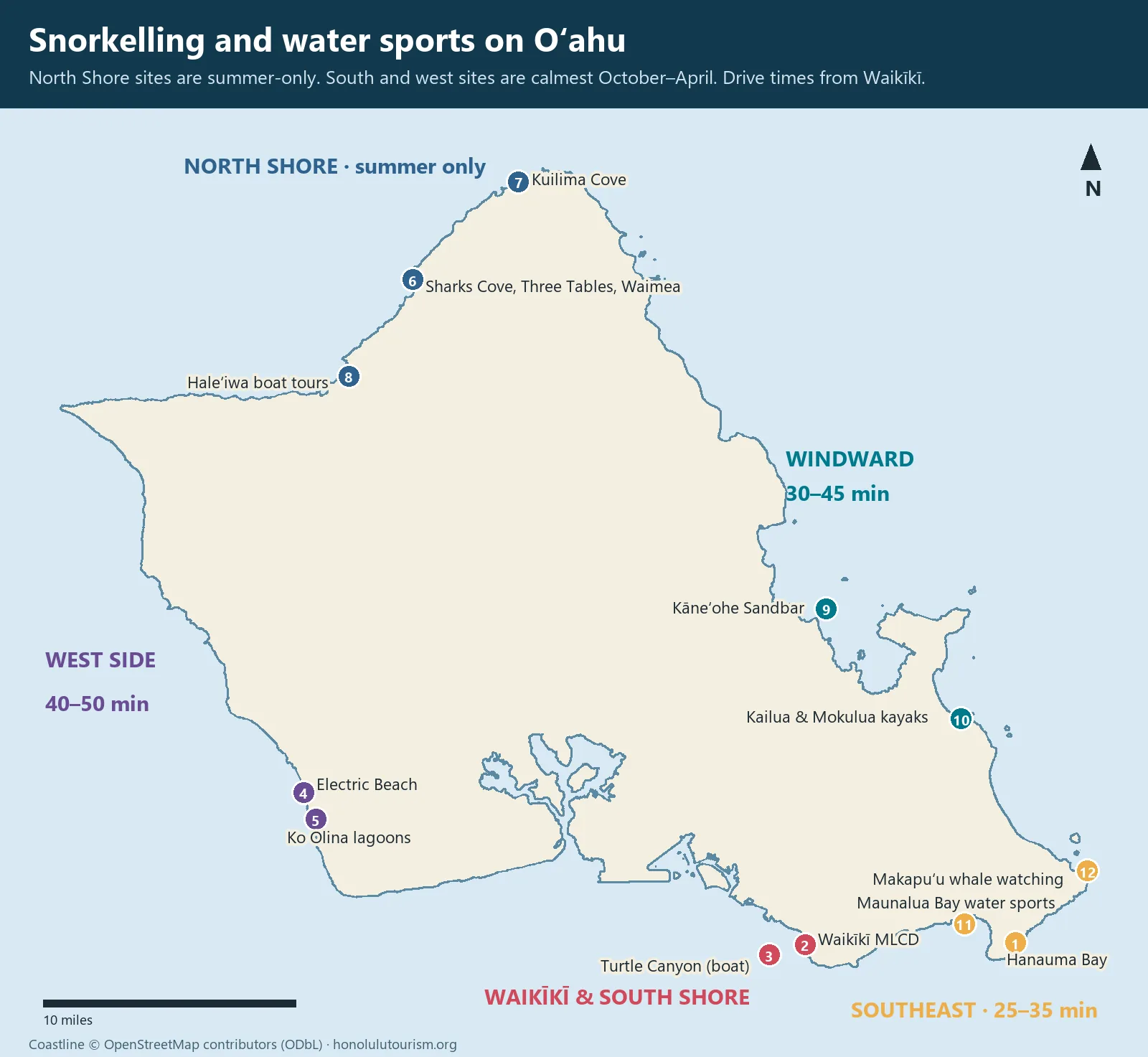
Snorkeling Oahu by season: where the water is calm
The single most useful fact about Oʻahu’s ocean is that its shores take turns. From roughly November to March, big swells from North Pacific storms hit the north- and west-facing coasts. The North Shore’s famous reefs turn into surf breaks, and places that are glassy lagoons in July become lethal. From roughly May to September, the pattern reverses: the North Shore goes flat and clear, while southern swells bring waves to Waikīkī and the south shore. These are tendencies, not guarantees. A winter day can be calm on the North Shore and a summer day rough in the south, so look at the water and the lifeguards’ signs before you get in.
Water temperature is kind all year: around 75–76°F at its coolest in February and March, and 80–82°F at its warmest around September. Most adults are comfortable in a rash guard; children and thin adults may want a thin wetsuit top for a long session in late winter.
We rate entries on a four-point scale. 1 means you walk off sand into calm, shallow water. 2 is a sand entry into deeper water or with some current. 3 means rocks or reef underfoot, reef shoes, and timing your entry between waves. 4 is open ocean with current, for strong, experienced swimmers only.
| Site | Coast | Summer (May–Sep) | Winter (Nov–Mar) | Entry | Lifeguard | Cost |
|---|---|---|---|---|---|---|
| Hanauma Bay | Southeast | Good | Good | 1–2 | Yes | $25 + $3 parking |
| Waikīkī MLCD (Queen’s Surf, Kaimana) | South | Fair, can be choppy | Good | 2 | Yes | Free |
| Turtle Canyon (boat) | South | Fair | Good | Boat ladder | Crew | About $80 per person |
| Ko Olina lagoons | West | Good | Good | 1 | No public tower | Free |
| Electric Beach | West | Fair | Variable | 3–4 | No | Free |
| Sharks Cove | North Shore | Excellent | Dangerous | 3 | No tower at the cove | Free |
| Three Tables | North Shore | Good | Dangerous | 2–3 | No | Free |
| Waimea Bay | North Shore | Good at the rocks | Dangerous | 2 | Yes, 8am–6:30pm | Free |
| Kuilima Cove | North Shore | Good | Fair, sheltered | 1–2 | Check on the day | Free |
| Kāneʻohe Bay (sandbar) | Windward | Fair | Fair | Boat | Crew | Tour prices vary |
Pair this with our best time to visit Hawaiʻi guide if you have not fixed your dates. For snorkelling alone, April–May and September–October are the sweet spots: the North Shore is still reasonably calm, the south shore has settled, and there are fewer people in the water.
Hanauma Bay: the booking playbook
Hanauma Bay is a collapsed volcanic crater on the flank of Koko Head, open to the sea on one side, with a shallow reef flat inside that shelters from most swell. It became Hawaiʻi’s first Marine Life Conservation District in 1967, and after decades of being loved to death, the City and County of Honolulu now runs it as a nature preserve with timed entry, a limit on visitors and a compulsory education video. The fish life is the best of any shore-entry site near Honolulu: parrotfish, surgeonfish, butterflyfish, Moorish idols and the occasional turtle.
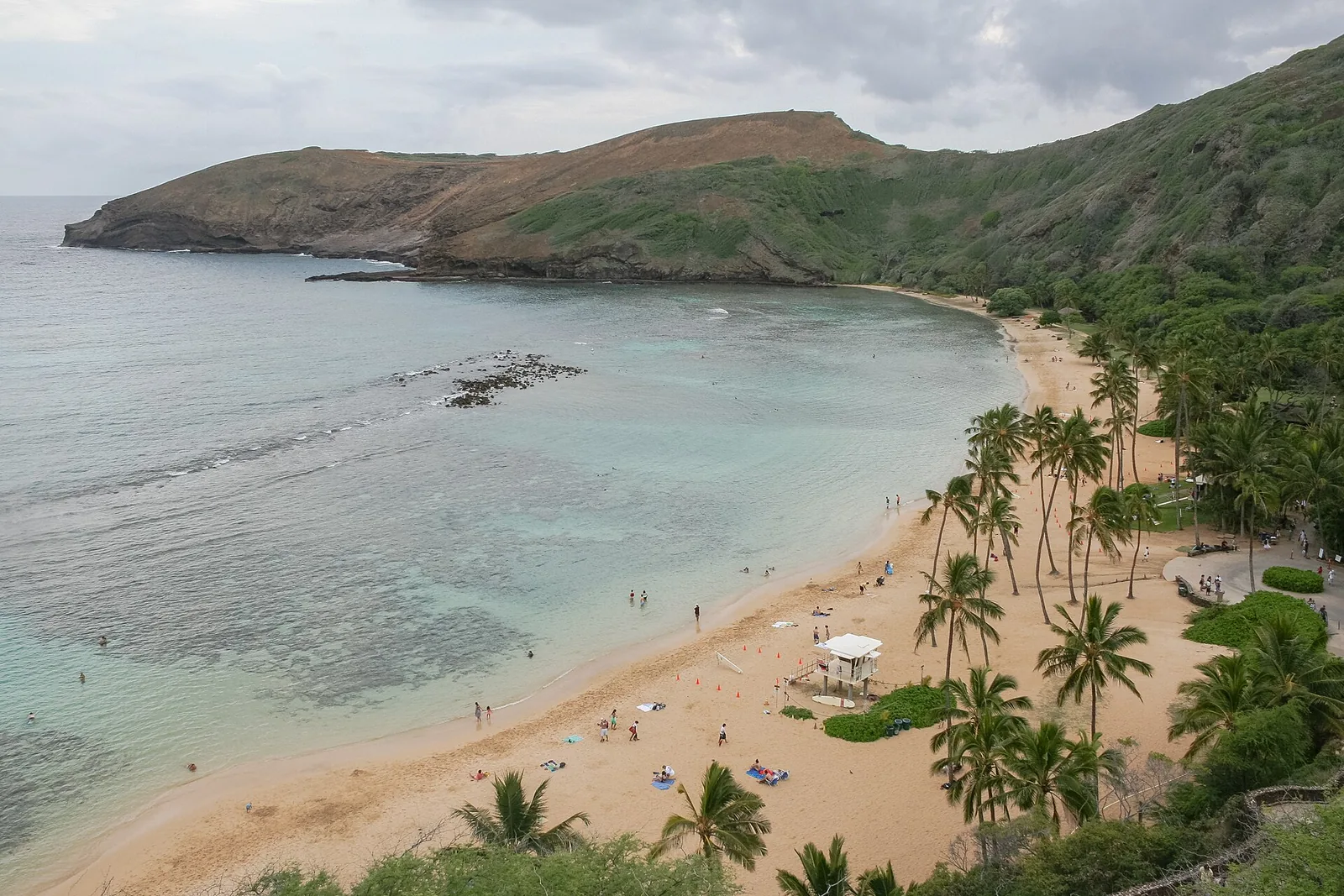
How to get a Hanauma Bay reservation, step by step
1. Work out your booking day. Reservations open 48 hours ahead at 7:00am Hawaiʻi time. To visit on a Friday, you book on Wednesday morning. The bay is closed every Monday and Tuesday, and on Christmas Day and New Year’s Day, so no tickets are sold for those dates.
2. Set everything up the day before. Bookings are made only through the official City and County of Honolulu parks reservation system, reached from pros.honolulu.gov. Create your account in advance, save your card details if the system allows, and decide who is going. The name on the booking must match a photo ID, tickets are non-transferable, and sales are final.
3. Be on the page at 6:55am. If you are coming from the mainland, remember the clock: 7:00am in Honolulu is 10:00am or 1:00pm on the West or East Coast in summer. Sign in, open the Hanauma Bay booking page, and wait.
4. Refresh at exactly 7:00am and take the first slot that works. Do not hold out for a perfect 8am time. Early morning is best for calm water and parking, but any slot before about 11am is fine. Pay straight away; a slot sitting in an unpaid basket is not yours.
5. If you miss out, have a fallback. Roberts Hawaii sells a package combining entry with transport from Waikīkī and Ala Moana, at about $65 a person and bookable up to a month ahead. It costs more, but it removes the 7am lottery and the parking problem entirely. Children aged 12 and under do not need a paid ticket.
On the day at Hanauma Bay
The bay opens at 6:45am. Nobody is admitted after 1:30pm, the beach is cleared at 3:30pm, and the preserve closes at 4pm. After the entry desk, everyone watches a nine-minute video on reef protection and safety; it is actually useful. A steep paved path leads down to the beach, taking around ten minutes on foot.
Parking costs $3 for non-residents, and the car park closes when it is full, which on busy days can be mid-morning. There is no confirmed direct TheBus route any more, so the realistic options are driving early, a rideshare, or the Roberts Hawaii package.
Bring your own mask, snorkel and fins. Do not rely on renting at the bay. Pack reef shoes, reef-safe mineral sunscreen, water and snacks. Food is limited, and nothing on the reef may be touched, stood on or fed.
Stay inside the reef. The inner reef flat is shallow at low tide, so swim over the sandy channels rather than scraping across the coral. Beyond the outer edge, currents run strongly along the sides of the bay, and the areas known as Witches Brew and Toilet Bowl on the bay’s flanks are genuinely dangerous. Snorkelling at Hanauma is not risk-free even in calm water: state figures record 16 snorkel-related drownings here over a nine-year period, among about a million visitors a year. Read the safety section below before you go.
Cost: $25 entry per non-resident adult, $3 parking, 12 and under free · Hours: Wed–Sun 6:45am–4pm, last entry 1:30pm · Book: pros.honolulu.gov, 48 hours ahead at 7:00am HST · Bus: no direct route; drive, rideshare, or a Roberts Hawaii package · Allow: 25–35 minutes’ drive from Waikīkī, 3–4 hours at the bay
The best snorkel spots on Oʻahu, site by site
Waikīkī Marine Life Conservation District: Queen’s Surf and Kaimana
The easiest reef to reach from a Waikīkī hotel sits off the Diamond Head end of the beach, from roughly the Kapahulu groin towards the old War Memorial Natatorium. It has been protected as a Marine Life Conservation District since 1988, so fishing is restricted and the fish are relatively bold. Enter at Queen’s Surf Beach, swim out beyond the shallow sand, and look for coral heads and turtles. Kaimana Beach (Sans Souci), a little further along, is calmer and popular with families.
Be realistic: this is not Hanauma. Visibility is often only moderate, and summer south swells can make the water choppy and cloudy. But it is free, it is a ten-minute walk away, and it has lifeguards. Our Waikīkī Beach guide explains each section of the shoreline.
Box jellyfish drift onto south-facing beaches about eight to ten days after a full moon. On our calculation for the rest of 2026 that means roughly 4–6 October, 2–4 November and 2–4 December; the Waikīkī Aquarium publishes the official calendar. Lifeguards post warning signs when they arrive. Stay out of the water on those days.
Cost: free · Hours: lifeguards 8am–6:30pm · Book: no · Bus: walk from Waikīkī, or Routes 2 and 13 to Kapahulu Avenue · Allow: 1–2 hours
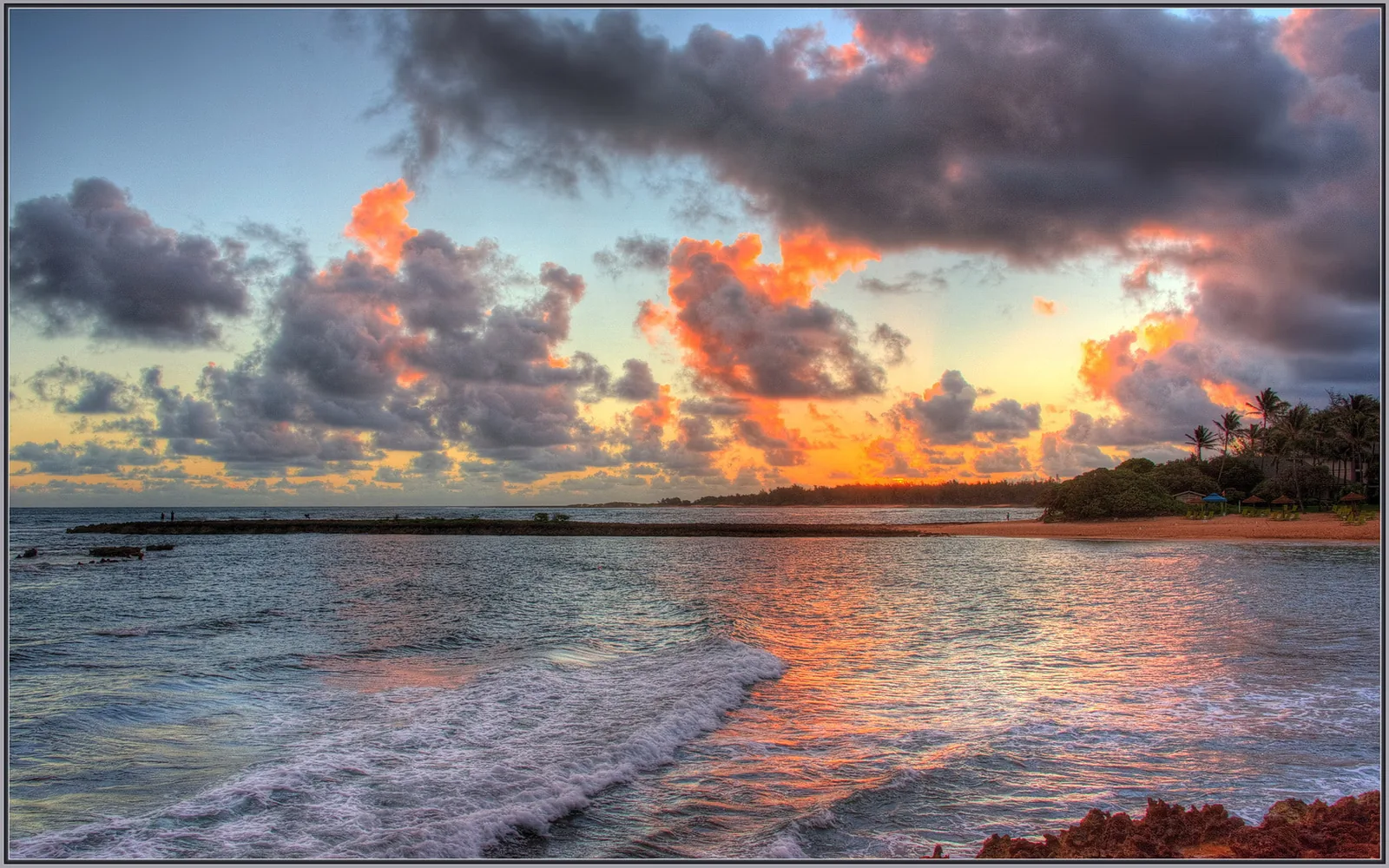
Kuilima Cove, Turtle Bay
Kuilima Cove sits beside the Turtle Bay resort at the northern tip of the island, and it is the North Shore’s most forgiving site. A natural reef wall encloses a small, shallow pool of calm water, so it stays swimmable on many days when the rest of the coast is closed out. Fish life is modest but steady, and it is the best place on the North Shore to take children snorkelling. Public access parking at the resort is limited, so arrive early. In big winter swells, surge can still push through the reef gap, so check conditions and stay well away from the opening.
Cost: free, via public beach access · Hours: daylight · Book: no · Bus: Route 60 from Ala Moana, a long ride · Allow: 1 hour’s drive from Waikīkī, 2 hours on site
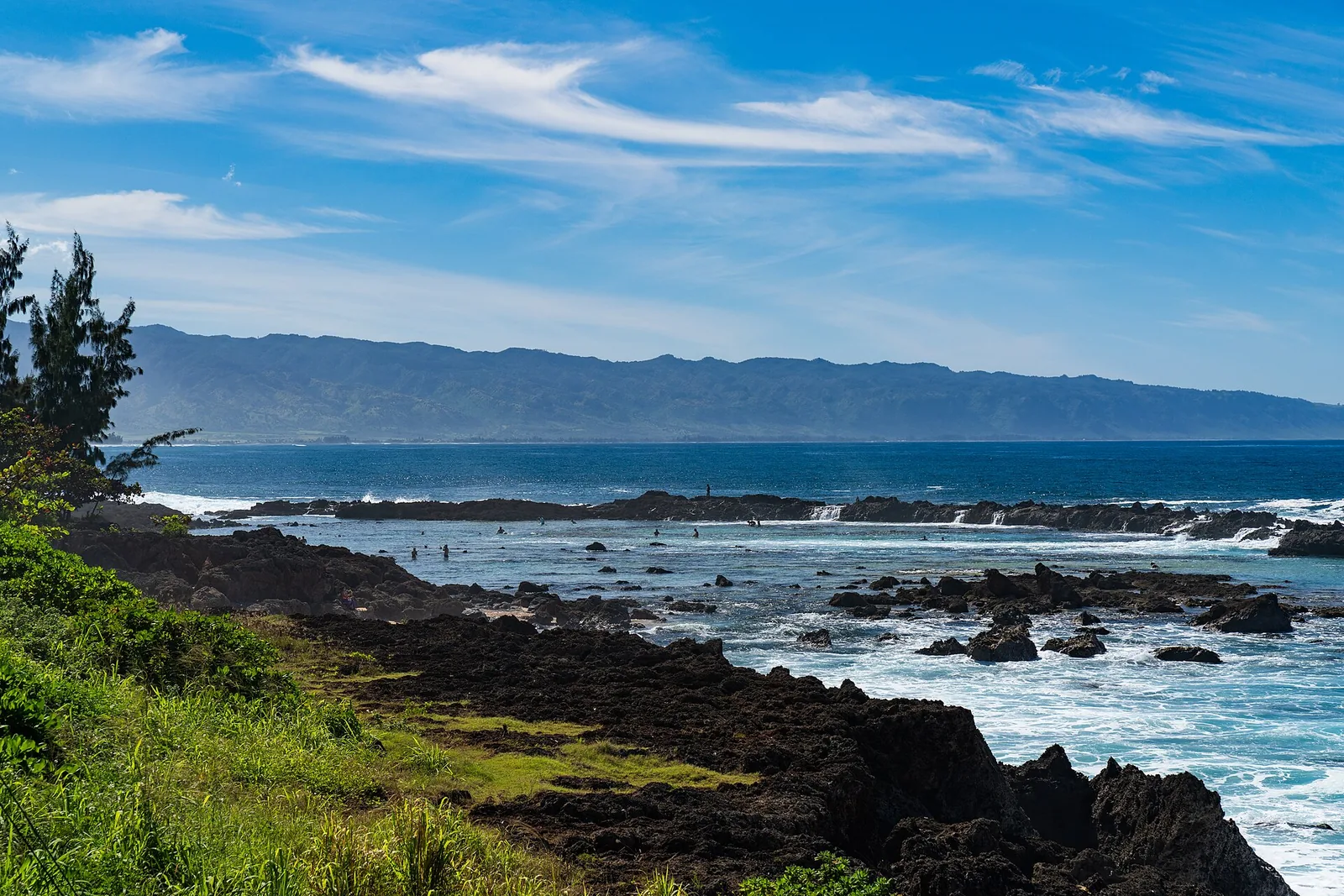
Sharks Cove, Pūpūkea
In summer, Sharks Cove is the best shore snorkelling on Oʻahu: lava arches, swim-throughs, deep clear pools and a big range of reef fish, all inside the Pūpūkea Marine Life Conservation District. The name refers to the shape of the coastline rather than any unusual number of sharks. The entry is over sharp lava rock, so wear reef shoes and move slowly. The cove’s inner pools are calm and suit confident beginners; the outer cove is for stronger swimmers.
It is calm roughly from May to October only. In winter the cove takes the full force of North Shore swells, and people have been swept off the rocks. If there is white water breaking over the outer rocks, do not get in. For a guided option, Waikiki Adventures runs a self-guided Sharks Cove package from its Kailua shop with gear and transport, from $38.
Cost: free · Hours: daylight; best before 10am · Book: no · Bus: Route 60 to Pūpūkea · Allow: 50–60 minutes’ drive from Waikīkī, 2 hours on site
Three Tables and Waimea Bay
Three Tables, just south of Sharks Cove, takes its name from three flat sections of reef visible at low tide. It is a sandy entry and slightly gentler than Sharks Cove, with good fish around the tables and ledges. The same summer-only rule applies.
Waimea Bay is best known for big-wave surfing in winter, but in summer it can be as still as a lake. Snorkel along the rocks on the left-hand side of the bay, looking out to sea. The lifeguard tower (Tower 29) is staffed from 8am to 6:30pm. People jump from the large rock in the bay; injuries and drownings have happened there, and we would not do it. Parking at both sites is very limited in summer. Our North Shore guide covers where to park and what else to fit into the day.
Cost: free · Hours: daylight; Waimea lifeguards 8am–6:30pm · Book: no · Bus: Route 60 · Allow: 1–2 hours each
Electric Beach, Kahe Point
Warm water from the Kahe power plant flows out of two large pipes offshore, and the warmth and current attract big schools of fish, turtles and, some days, spinner dolphins. On a calm day it is some of the most impressive snorkelling on the island. It is also a serious open-ocean swim with no lifeguard tower, a current around the outflow and a rocky entry.
This site is for strong swimmers only, in a group, on a calm day. Do not go in when surf is breaking over the entry. If dolphins appear, federal rules prohibit swimming with them or approaching within 50 yards. West-side beach parks also have a long-standing problem with car break-ins: leave nothing in the car, not even in the boot. If you would like a guide, marine-ecology snorkel tours from Electric Beach run at about $125 per adult, including gear and photos.
After Hurricane Lowell, sections of Farrington Highway further up the coast in Nānākuli and Mākaha were closed. Kahe Point is south of those sections, but check the state road updates before driving the west side this month.
Cost: free · Hours: daylight · Book: no · Bus: not practical · Allow: 40–50 minutes’ drive from Waikīkī, 1.5 hours on site
Ko Olina lagoons
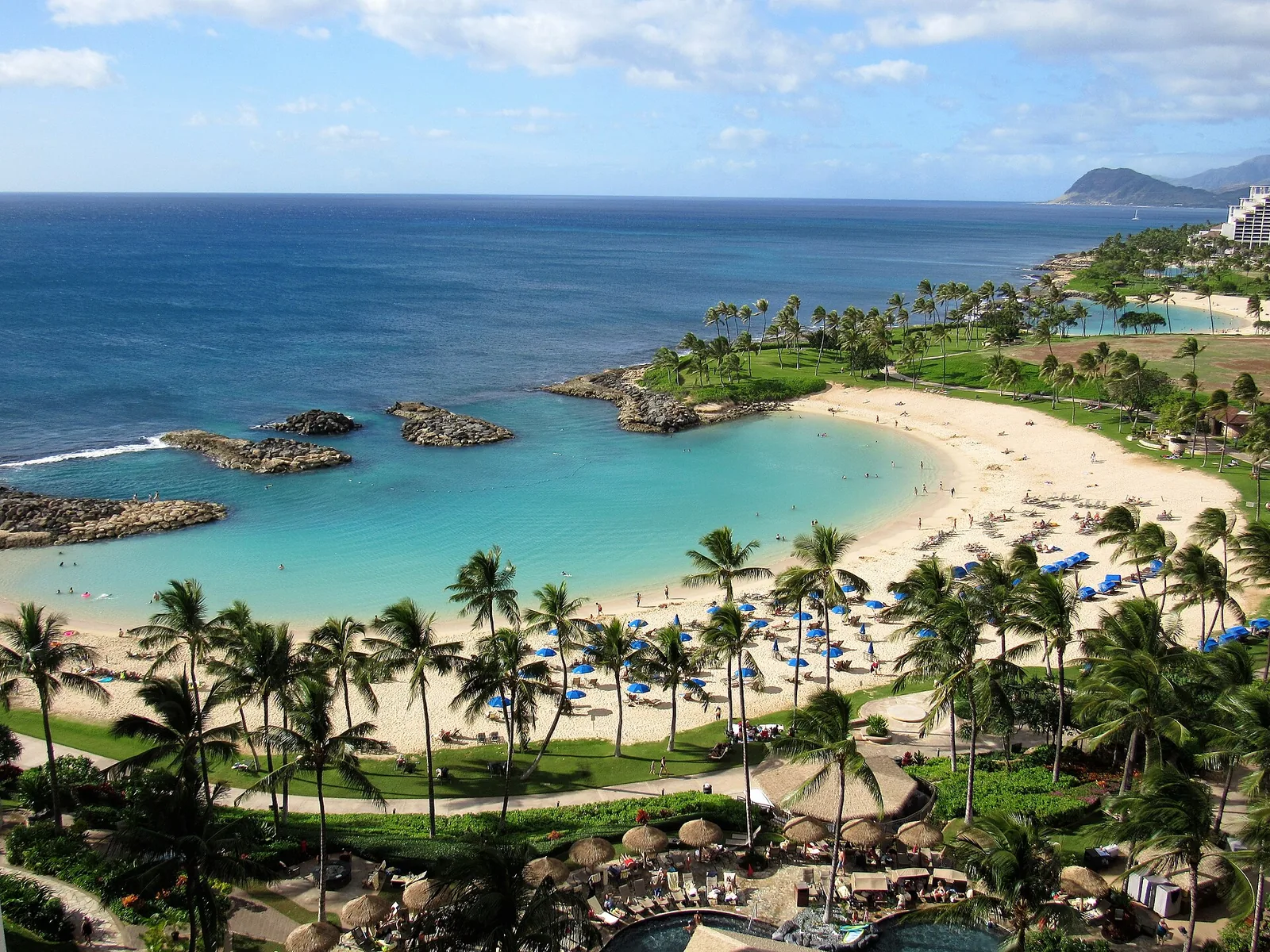
The four man-made lagoons at the Ko Olina resort are protected by rock breakwaters, and they are the calmest water on Oʻahu. That makes them the right place for a first-time snorkeller, a nervous swimmer or a small child to learn to breathe through a snorkel. The fish life is limited, clustered around the rocks at the lagoon mouths. Do not swim out through the gaps in the breakwater, where the current is much stronger. The lagoons are open to the public, with free parking from sunrise to sunset in public lagoon lots that fill early at weekends.
Cost: free · Hours: sunrise to sunset · Book: no · Bus: not practical · Allow: 40 minutes’ drive from Waikīkī, half a day
Turtle Canyon by boat
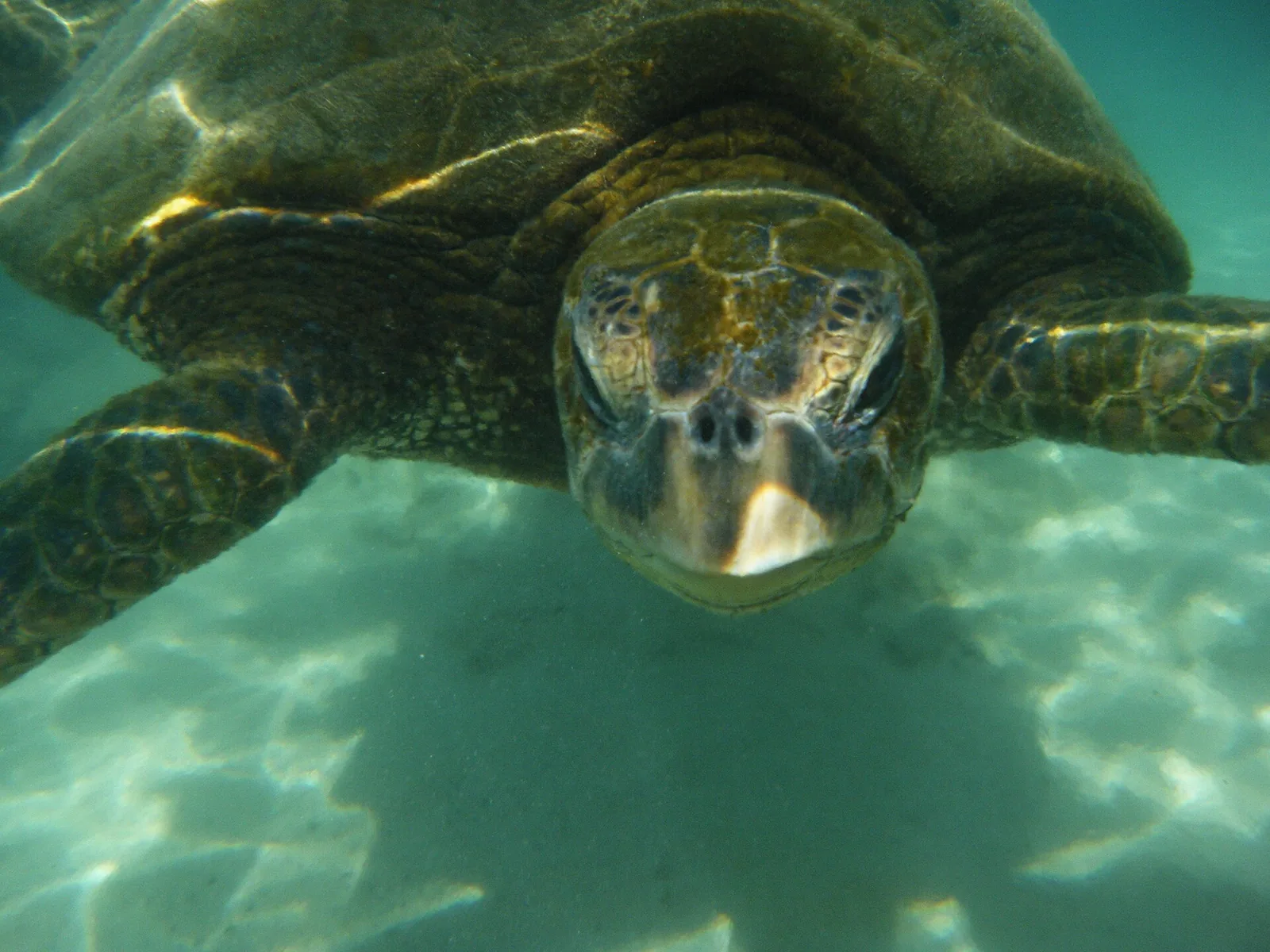
A short boat ride off Waikīkī, Turtle Canyon is a reef area where green sea turtles gather to be cleaned by fish. Several operators run snorkel trips there. Holokai Catamaran’s version, for example, is about $80 for two and a half hours. Turtle sightings are very likely, though not guaranteed. Honu often swim right up to snorkellers; keep 10 feet away and let them pass. It is illegal to touch or chase them.
The honest drawbacks: the site is busy with several boats at once, the water can be choppy, and people prone to seasickness should take something before boarding. The upside is that there is no 7am booking contest, no parking, and a crew watching the water.
Cost: about $80 per person · Hours: morning and midday departures · Book: online, a few days ahead · Bus: departs from Waikīkī beach · Allow: 2.5–3 hours
Kāneʻohe Bay and the sandbar
Kāneʻohe Bay is the largest sheltered bay in the main Hawaiian Islands. Its famous sandbar, Ahu o Laka, emerges at low tide in the middle of the bay, and boat tours anchor there for swimming and wading. It is a lovely, unusual half-day out, but go for the setting rather than the snorkelling: water clarity in the bay is often only moderate. Captain Bruce’s sandbar trip, for example, costs $180 and runs Monday to Saturday.
Cost: tours from about $180 · Hours: timed to the tide · Book: online, a week or more ahead in summer · Bus: not practical; drive to Heʻeia Kea harbour · Allow: 30 minutes’ drive from Waikīkī, 3–4 hours
Snorkeling Oahu safely: what actually keeps people alive
This is the part most guides skip. Drowning is the leading cause of injury-related death among visitors to Hawaiʻi, and snorkelling is involved in almost 30 per cent of visitor drowning deaths. A state-funded snorkel safety study found that many of the people who died were not weak swimmers in big surf. They were often middle-aged or older, in calm water, and something went wrong quietly. One factor researchers identified is rapid-onset pulmonary oedema, fluid building up in the lungs during exertion in the water.
What that means in practice:
- Swim at a lifeguarded beach whenever you can. Honolulu’s Ocean Safety Department staffs 44 lifeguard towers on Oʻahu, from 8am to 6:30pm daily. Talk to the lifeguard before you get in; they know the currents that day.
- Never snorkel alone, and keep an eye on each other, not just the fish.
- Test your gear in water you can stand in. If the mask leaks or the snorkel floods, fix it before you swim out.
- If you feel short of breath, stop. Lift your head, spit out the snorkel, float on your back and signal for help. Breathlessness, coughing or a gurgling chest in the water are warning signs, not something to push through.
- Be cautious about full-face masks. Their safety has been widely questioned, and some tour operators do not allow them. A traditional mask and snorkel you have practised with is the better choice.
- Wear a flotation vest or carry a float if you are not a strong swimmer. Nobody on a Hawaiian reef will think less of you.
- If you are caught in a current, do not swim against it. Swim parallel to the shore, or float and signal.
- Know when to stay out. Do not enter the ocean for 72 hours after heavy rain, when runoff carries bacteria, and respect any brown-water advisory. Never swim where surf is breaking over rocks or reef.
- Look after existing conditions. If you have a heart or lung condition, talk to your doctor before a trip built around snorkelling, and keep sessions short.
Wildlife and reef rules
Stay at least 10 feet from green sea turtles and 50 feet from Hawaiian monk seals (150 feet from a mother and pup). Do not swim with, approach or chase spinner dolphins within 50 yards. Do not touch, stand on or kick coral: it is a living animal, and a reef takes decades to recover. Do not feed fish. And do not take shells, rocks or coral home.
Sunscreen: what the law says
Hawaiʻi banned the sale of sunscreens containing oxybenzone and octinoxate from 1 January 2021, and those two chemicals are still the only ones covered statewide in 2026, despite what some websites say. Maui County goes further: since 1 October 2022, it has banned the sale, use and distribution of any non-mineral sunscreen without a prescription. On Oʻahu, the statewide rule applies. The simplest approach for any island is a mineral sunscreen based on zinc oxide or titanium dioxide, plus a long-sleeved rash guard, which means you need far less sunscreen in the first place.
Other water activities on Oʻahu
Surf lessons in Waikīkī
Waikīkī is one of the best places in the world to learn to surf. The waves roll in slowly over a shallow reef a long way offshore, so a beginner on a big foam board can stand up within an hour. Group lessons with Faith Surf School cost $95 for 80 minutes, with four or five students per instructor, and Waikiki Beach Services charges from $95 for 75 minutes. Book a morning lesson, when the wind is lighter. Summer brings the best south-shore waves; winter lessons still run on smaller surf.
Cost: from $95 · Hours: morning sessions best · Book: online, a day or two ahead · Bus: in Waikīkī, walk · Allow: 1.5 hours
Outrigger canoe rides
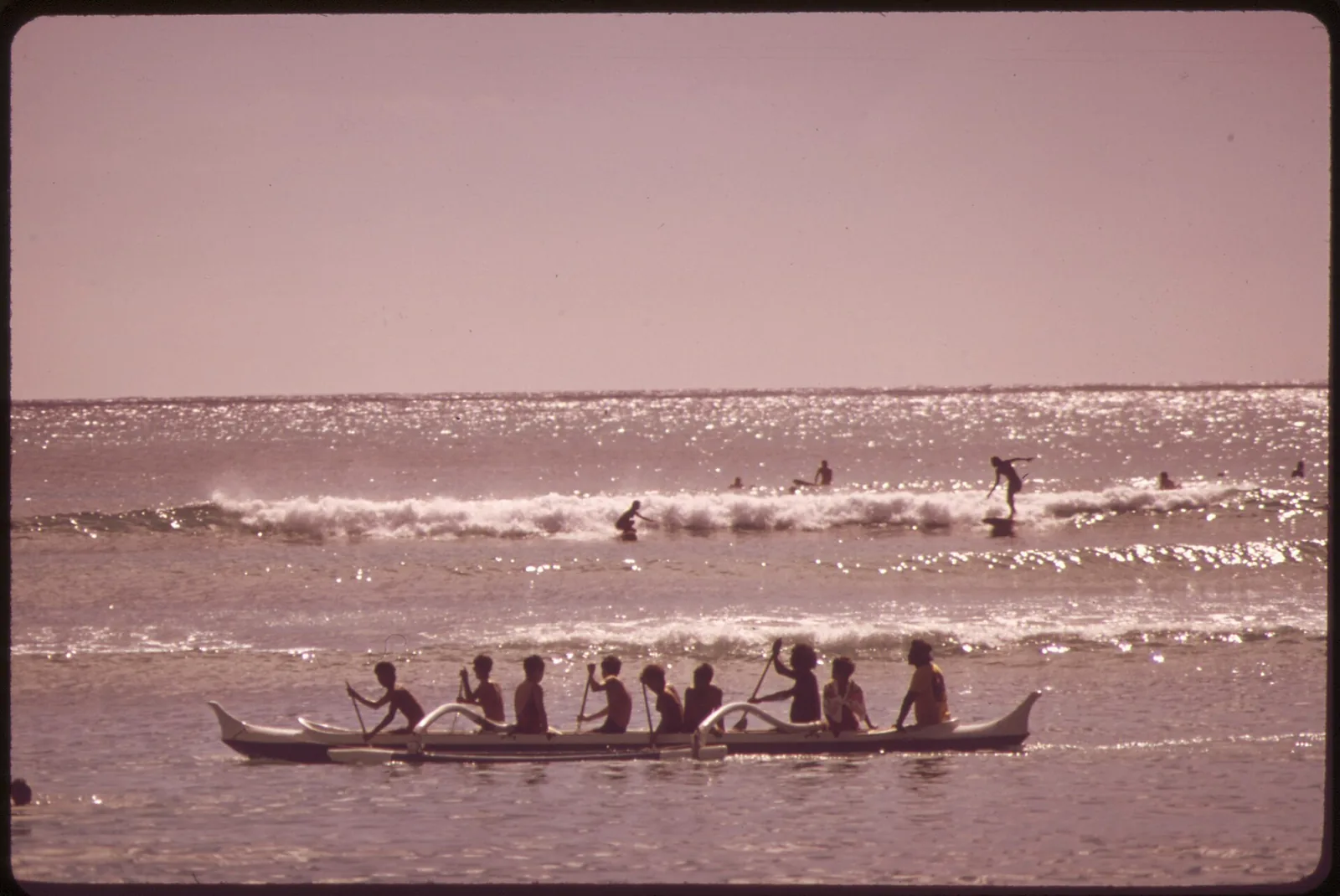
A beach-boy outrigger canoe ride at Waikīkī is a short, joyful thing: you paddle out with a crew, turn, and ride waves back towards the beach. Waikiki Beach Services charges $48 per person for three waves. It needs no fitness or swimming skill beyond getting in and out of the canoe, and children love it.
Cost: $48 per person · Hours: daytime · Book: at the beach stand · Bus: in Waikīkī · Allow: 30 minutes
Kayaking to the Mokulua islands
Paddling from Kailua Beach out to the twin Mokulua islets, or “Mokes”, is one of the classic Oʻahu half-days. Kailua Beach Adventures rents single kayaks at $74 for a half day. Landing on Moku Nui, the larger islet, requires a $3 per person state permit, and landing is allowed only from Monday to Saturday. Moku Iki, the smaller one, is off-limits at all times. The interior of Moku Nui is a closed seabird sanctuary, so stay on the beach. Trade winds make the return paddle much harder, so set out early and turn back if the wind builds.
Since July 2026, parking has been banned all day along Mokulua Drive and Aʻalapapa Drive in Lanikai. Park free in the boat-ramp lot at Kailua Beach Park.
Cost: $74 half-day single kayak, plus $3 landing permit · Hours: start by 9am · Book: rental online, permit from DLNR · Bus: Route 67 to Kailua · Allow: 35 minutes’ drive from Waikīkī, 4 hours
Stand-up paddleboarding
Paddleboards are for rent in Waikīkī, Kailua and Haleʻiwa. The sheltered southern end of Kailua Bay and the Anahulu River in Haleʻiwa are the easiest places to start. The ocean is harder than it looks: an offshore breeze can carry a paddler out faster than they can paddle back. Stay close to shore and wear the leash.
Sunset sails and boat trips
The Waikīkī catamarans launch straight from the sand. A sunset sail is a relaxed, sociable way to see the coastline and Diamond Head from the water. Holokai’s sunset sail costs $80, sailing at 5:30pm from March to September and 5pm from October to February, and Maitai’s costs $79. Expect a drink or two, some motion and fine photographs.
Whale watching
Humpback whales winter in Hawaiian waters, with the official season running from 15 December to 15 May, peaking between January and March. Maui has the densest concentration, but Oʻahu sightings are common. From shore, Makapuʻu Point and the Hālona Blowhole lookout are the best vantage points, ideally between 7am and 10am. By boat, the Star of Honolulu runs whale-watch cruises at $78.81, from 2 January to 20 March in 2027.
Scuba diving
Oʻahu has good beginner and intermediate diving. Off Waikīkī, the deliberately sunk wrecks of the YO-257 and the San Pedro attract turtles, eagle rays and whitetip reef sharks; the Sea Tiger is another well-known wreck dive. Summer brings easy North Shore dives at Sharks Cove and Three Tables. Uncertified visitors can try an introductory dive with a shop, which includes a pool or shallow-water skills session first. Do not fly within 18 hours of diving, and plan dives before, not after, any drive over the Pali or up to high ground.
Shark cage tours from Haleʻiwa
Boats from Haleʻiwa Harbor take small groups a few miles offshore, beyond state waters, where Galápagos and sandbar sharks gather. You float at the surface in a cage with a mask and snorkel; no diving certificate is needed. It is a real, close-up encounter, and it is not for everyone. Seasickness is common, and some people in Hawaiʻi object to commercial shark tours on cultural grounds. If you go, choose an operator that briefs you on shark behaviour, not one that sells it as a thrill ride.
Jet skis, parasailing and the submarine
Maunalua Bay, off Hawaiʻi Kai, is the island’s hub for jet skis, parasailing and banana boats. It is loud, short and fun, and it is the one place on the island where motorised water toys are concentrated. In Waikīkī, the Atlantis submarine dives to a reef and wreck site offshore. It is a good choice for non-swimmers and older relatives who still want to see a reef.
| Activity | Where | 2026 price | Time | Book ahead | Verdict |
|---|---|---|---|---|---|
| Hanauma Bay | Southeast | $25 + $3 parking | Half day | 48 hours, 7am | Worth the booking effort |
| Turtle Canyon snorkel | Waikīkī | About $80 | 2.5 hours | A few days | Good, busy, easy |
| Surf lesson | Waikīkī | From $95 | 75–80 minutes | A day or two | Best-value thrill on the island |
| Outrigger canoe | Waikīkī | $48 | 30 minutes | At the beach | Short and joyful |
| Mokulua kayak | Kailua | $74 + $3 permit | Half day | A few days | Classic, weather-dependent |
| Sunset sail | Waikīkī | $79–80 | 1.5 hours | A few days | Pleasant, not essential |
| Whale watch | Honolulu Harbor | $78.81 | 2–2.5 hours | A week | Jan–Mar only |
| Sandbar tour | Kāneʻohe Bay | From about $180 | 3–4 hours | A week or more | For the setting, not the fish |
| Electric Beach snorkel | West side | Free, or about $125 guided | 1.5 hours | Optional | Superb, experienced swimmers only |
Reading the ocean before you get in
Lifeguards on Oʻahu will tell you that most rescues begin with someone who never stopped to look. Spend five minutes on the sand before every swim, whatever the site.
Watch the sets. Waves arrive in groups with lulls in between. Count for a few minutes. If the biggest waves in a set are breaking where you plan to enter or exit, that is your answer, even if the water looked flat when you parked.
Look for the rip. A rip current often shows as a gap in the breaking waves, a darker or smoother channel, or foam and sand moving steadily out to sea. Swimmers who get caught are pulled along it, not under. Stay calm, swim across it parallel to the beach, and signal if you need help.
Plan your exit first. Getting out is harder than getting in, especially over rock. Choose the exit before you start, and aim to be back at it with energy to spare, not at the end of your strength.
Read the signs and flags. Hawaiʻi uses standard warning signs for strong currents, high surf, dangerous shore break and jellyfish. They are put up on the day for a reason. And ask the lifeguard. It takes thirty seconds, and they are glad to be asked.
Check the forecast the night before. The National Weather Service Honolulu office publishes a surf forecast and high-surf advisories by shore. If there is a high-surf warning for north-facing shores, plan a south or west-side day instead.
Snorkelling with children
Oʻahu is a good place for children to learn, provided the adults do the planning. Start in water where everyone can stand, such as the Ko Olina lagoons or the shallow, sandy areas at Hanauma Bay, and let a child practise breathing through the snorkel with their face in the water before they try to swim.
Buy or bring a mask that actually fits a child’s face; adult masks leak, and a leaking mask ends a session in tears. A brightly coloured snorkel vest makes a small swimmer easy to see and gives them somewhere to rest. Keep sessions to 20 or 30 minutes, with warm-up breaks on the sand, because children chill quickly even in 78°F water.
One adult should be in the water within arm’s reach, and another watching from the shore. Hanauma Bay is free for children aged 12 and under, and the education video there is a good way to explain why nobody touches the coral or the turtles.
A good first snorkel day on Oʻahu
If you only have one day for the ocean, this is how we would spend it. Book Hanauma Bay for an early slot, arriving by 7:30am, when the water is at its calmest and the car park still has space. Watch the video, walk down, and snorkel inside the reef in two sessions of 45 minutes, with a rest in between. Leave by 11am, before the midday crowd peaks.
Drive ten minutes back towards Honolulu for lunch; a poke bowl eaten at a beach park is the right meal. In the afternoon, rest, then take a Waikīkī surf lesson or an outrigger canoe ride in the late-afternoon light. Finish with a sunset sail or simply a swim at Queen’s Surf, staying inside the lifeguard hours. In summer, swap Hanauma for Sharks Cove and Kuilima Cove, and have lunch at the Haleʻiwa and Kahuku shrimp trucks.
Gear: bring, buy or rent?
If you will snorkel more than twice, bring your own mask and snorkel from home, fitted and tested. A mask that fits your face is the single biggest improvement in comfort and safety. Fins are bulky; rent them, or buy a cheap pair from an ABC Store or a big-box shop on arrival. Waikīkī shops rent full sets by the day and by the week, and some deliver to your hotel the evening before.
Also pack reef shoes for Sharks Cove and rocky entries, a long-sleeved rash guard, mineral sunscreen, a dry bag, anti-fog drops (or baby shampoo), and a flotation vest for anyone who is not a confident swimmer. Leave jewellery and valuables at the hotel.
If you are staying out of town, choosing a base near the water you want matters. Our where to stay on Oʻahu guide compares Waikīkī, Ko Olina and Turtle Bay, and our getting around Oʻahu guide covers which sites work by bus.
What to skip
Snorkelling in winter on the North Shore. The photographs of Sharks Cove are summer photographs. In winter, it is a place to watch the surf from a safe distance.
Jumping off Waimea’s rock, or the ledges at China Walls in Portlock. Both have caused serious injuries and deaths.
Tours that promise swimming with dolphins. Approaching spinner dolphins within 50 yards is illegal, and the rule exists to protect their resting behaviour.
Waiting until the last minute for Hanauma Bay in peak season. Either be ready at 7am two days out, or book the transport package.
Chasing turtles for a selfie. The turtle will come to you, and if it does not, that is its choice.
For more on beaches for swimming rather than snorkelling, see our best beaches on Oʻahu guide. To fit Hanauma Bay and a North Shore snorkel into a wider trip, use our Oʻahu itinerary, and then refuel with poke from our Honolulu food guide. For everything else on the island, start with our things to do on Oʻahu guide.
For helicopter flights, lūʻau and land-based attractions, with 2026 prices and honest verdicts, see our guide to Oʻahu tours, lūʻau and attractions.
Frequently Asked Questions
Is snorkeling Oahu safe for beginners?
Yes, if you choose the right place and follow the rules. Start at Ko Olina’s lagoons, Kuilima Cove or inside the reef at Hanauma Bay, all of which are calm on most days. Snorkel with a partner, near a lifeguard, in gear you have tested in shallow water. Stop and float on your back if you feel breathless. Snorkelling is involved in almost 30 per cent of visitor drownings, so take it seriously.
How far in advance can I book Hanauma Bay?
Reservations open 48 hours ahead at 7:00am Hawaiʻi time through the City and County of Honolulu’s official parks reservation system. Popular dates sell out within minutes. Be signed in before 7am and take the first reasonable slot. Alternatively, Roberts Hawaii sells an entry and transport package from Waikīkī, bookable up to a month ahead, for about $65 per person.
When is the best time of year to snorkel on Oahu?
It depends on the coast. The North Shore, including Sharks Cove, is calm roughly from May to October and dangerous in winter. The south and west shores, including Hanauma Bay and Ko Olina, are usually calmest from November to April, though they are snorkelable all year. April–May and September–October give you the best choice of sites at once.
Can you see sea turtles while snorkeling on Oahu?
Very likely. Green sea turtles are common at Turtle Canyon off Waikīkī, at Electric Beach, along the Waikīkī reef and on the North Shore. The law requires you to stay at least 10 feet away. Do not touch, chase or block a turtle, even if it swims towards you. Let it pass, and enjoy watching it from a respectful distance.
What sunscreen is allowed in Hawaii?
Statewide, it is illegal to sell sunscreen containing oxybenzone or octinoxate. On Maui, the rule is stricter: only mineral sunscreens, based on zinc oxide or titanium dioxide, may be sold or used. The easiest choice for all islands is a mineral sunscreen, combined with a long-sleeved rash guard to reduce how much you need.
Do I need to be a strong swimmer to snorkel in Hawaii?
For calm, lifeguarded sites such as the Ko Olina lagoons, Kuilima Cove or the inner reef at Hanauma Bay, you need basic swimming ability and confidence floating face down. Wear a snorkel vest if you are unsure. Open-water sites such as Electric Beach, and the outer reef at Sharks Cove, are only for strong, experienced swimmers in calm conditions.
Photo Credits
- Map of snorkelling and water activities: honolulutourism.org, coastline data © OpenStreetMap contributors (ODbL)
- Hanauma Bay: Diego Delso, CC BY-SA 3.0
- Kuilima Cove at dawn: Terry Lucas, CC BY 3.0
- Sharks Cove, Pūpūkea: Tony Webster, CC BY 2.0
- Ko Olina lagoons: Farragutful, CC BY-SA 4.0
- Green sea turtle: Narrissa P. Spies, CC BY-SA 4.0
- Reef triggerfish: Brian Gratwicke, CC BY 2.0
- Outrigger canoes at Waikīkī: Charles O’Rear, public domain
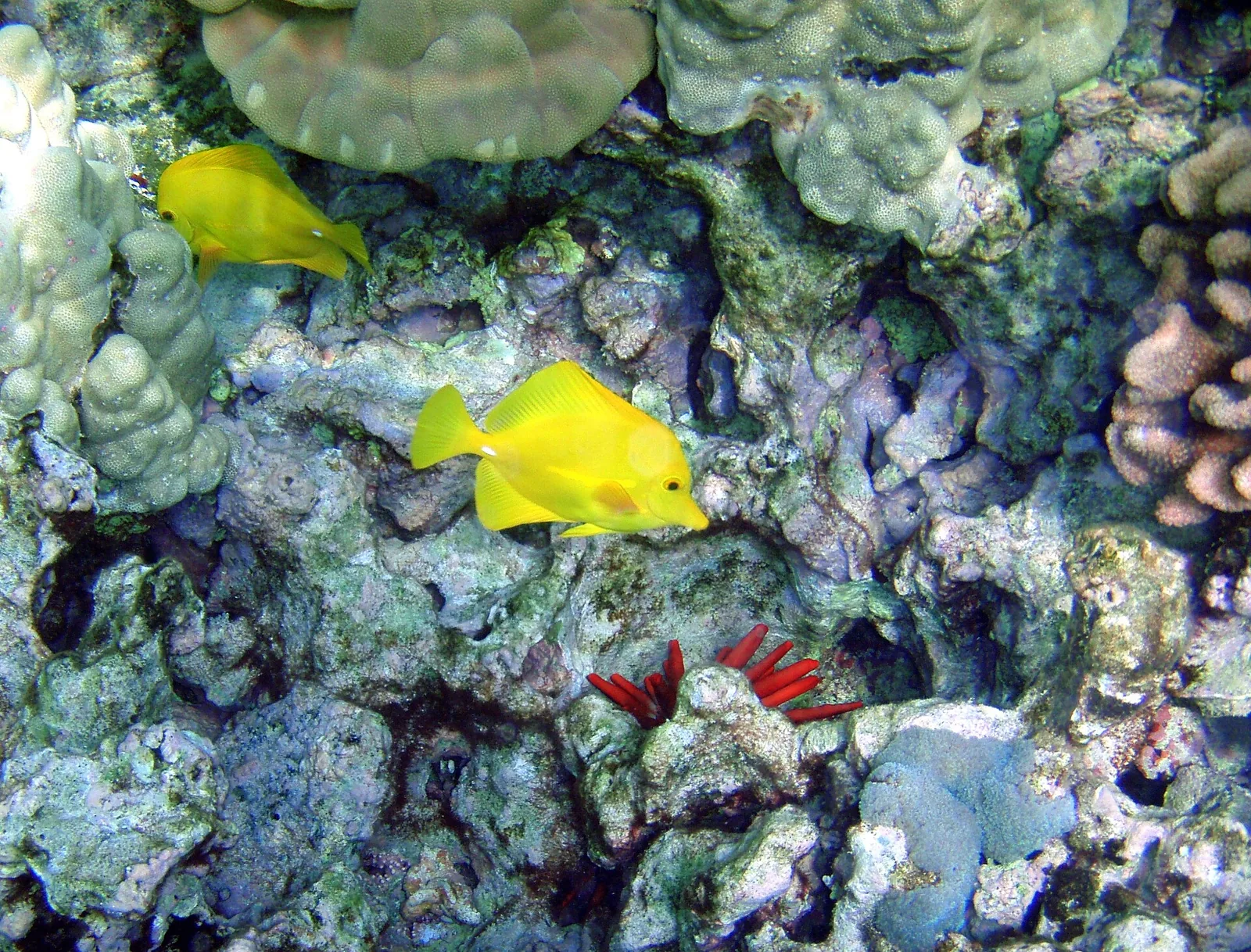
- Yellow tang on a Hawaiian reef (featured image): Brocken Inaglory, CC BY-SA 3.0